A new partnership in the Carolinas is changing how students discover construction—before they’ve already ruled it out
One of the biggest challenges facing the construction industry isn’t just a shortage of skilled labor—it’s a lack of early exposure to trades careers. Too many students never consider the trades as a solid option, not because they’re not interested, but because they’ve never been shown what a career in the industry actually looks like. When it’s time to make career choices, the trades aren’t even on their radar.
According to Angela Gardner, VP of Workforce Development at ABC Carolinas, some students enter the trades with strong mechanical aptitude because they grew up working on a family farm or in a rural community. Others, however, have had little to no hands-on exposure and may not yet know how to read a measuring tape, a foundational skill that is essential in the skilled trades.
That’s not a pipeline problem—it’s an awareness problem. And it starts earlier than most contractors think.
This is where educational initiatives and hands-on exposure come in. For instance, in March, ABC Carolinas and Stiegler EdTech announced a new partnership aimed at high school students in the Carolinas. The initiative combines immersive technology with hands-on learning to pique curiosity and give students a sense of what working in the trades looks like.
The partnership gives students a glimpse into the industry through a combination of technology, gaming, and hands-on experiences. In an industry like this, it’s not just about bringing awareness—it’s about changing perception and building interest around the trades before that decision point has passed.
“The truth is that in-person experiences where there are adults who care, who are guiding the learning, and it’s very structured, those have historically the best outcomes,” said Pasha Maher, President and Co-Founder of Stiegler EdTech. “Using gaming, which 97% of kids report [playing] at least once a month, helps them … get engaged [and] become a part of the community.”
It also helps build a sense of verification and credibility, increasing interest among students who exchange referrals and get intrigued enough to check out the courses.
The urgency behind this shift is big. Industry projections estimate the construction sector will need to recruit as many as 349,000 workers in 2026 to meet demand. The growing number of retirements, coupled with the lack of young people entering the workforce, is straining the industry as it attempts to cope.
Traditional pathways into construction aren’t keeping up. Many students don’t perceive the trades as a viable career option or even understand the multitude of opportunities, so they fall back on what they have heard from teachers, counselors, parents – meaning the industry is losing talent before they even have a chance to engage them. The window to change that is in high school, and in many cases, it’s already closing.
The initiative signals a shift toward meeting students where they are and on terms that resonate through the use of technology, gamification, and interactive experiences.

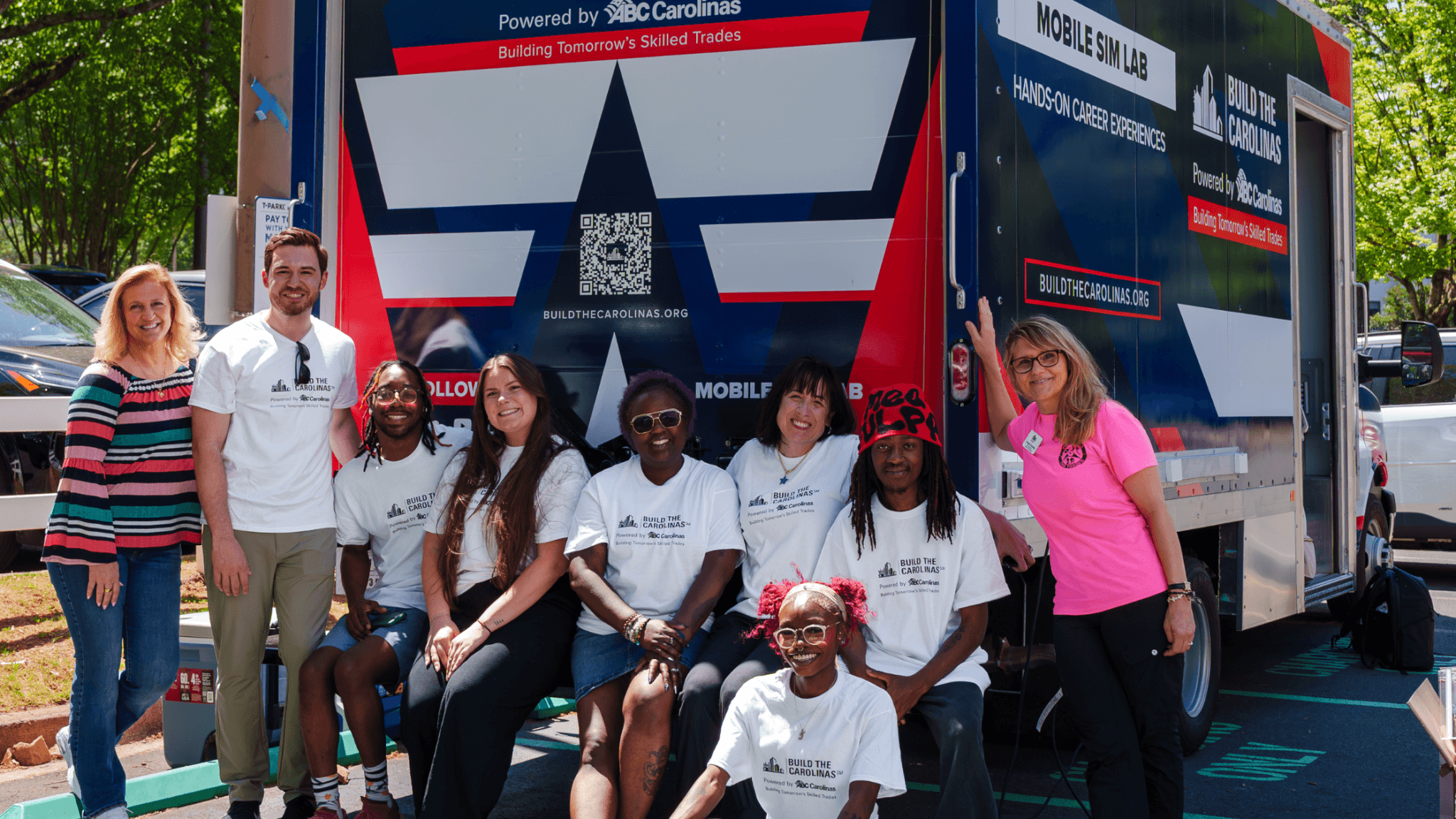
It doesn’t stop at introducing students to construction—it shows them where they fit within it. Students explore in-demand pathways, including electrical, HVAC/plumbing, welding, carpentry, BIM/VDC/CAD, and even project management. But rather than learning through static materials, they’re engaging in a way that sticks: through digital challenges, games, hackathons, and in-person activations. A mobile simulation van brings real-world scenarios directly to students, making the experience tangible in a way that classroom learning never could.
This hands-on approach is further supported by digital credentialing, which enables them to learn while expanding their portfolios. And because this program is open to both in-school and out-of-school youth across various communities, it expands its reach to students who otherwise might not have an entry point into the trades.
According to Maher, social capital (who you know) is often the only hiring tool available to contractors. In a labor market as tight as it is, a referral—“Hey, this guy is good”—carries more weight than an actual credential. But that’s not a sustainable method for closing a workforce gap of this size. The goal is to shift to a skills-focused hiring environment where students can pursue and obtain workforce-relevant certifications earlier, giving them either a clearer path into the skilled trades—and giving employers something more concrete to work from than just a word-of-mouth recommendation.
For contractors, that’s a meaningful shift. Currently, hiring decisions at the entry level often come down to word-of-mouth referrals or K-12 career fairs. This program is designed to give employers something more concrete to work with.
What makes initiatives like this so impactful is direct access—students interact with construction professionals, potential employers, and contractors throughout the program, not just at a career fair at the end of the school year. One idea being explored is a portal that would give employers direct access to student resumes, creating a more formal connection between program graduates and companies looking to hire them. While there is no set timeline for launch, there is hope of having something up and running by the end of 2026.
This creates a pipeline between students and employers, enabling contractors to connect with future talent earlier and allowing students to explore lucrative entry-level construction roles. Employers also get to work with students who already have some experience through internships and hands-on training, a win-win for everyone involved. Contractors can hire talent earlier, reduce risk, and work with entry-level workers who are better prepared for the job.
The labor shortage in the construction industry isn’t going to be solved by a single program, but initiatives like this are changing the starting point. It’s a shift toward meeting the next generation of workers where they are—through interactive, skills-based learning. The industry has spent years trying to fill jobs. This is an attempt to fill the pipeline first.
If you are interested in learning more, visit www.buildthecarolinas.org and follow them on social media.
The construction workforce gap won’t be closed by job postings alone—it starts with changing who knows the trades are an option. For more coverage on the recruitment strategies, training programs, and partnerships building the next generation of construction workers, subscribe to the Under the Hard Hat newsletter and follow us on LinkedIn.