
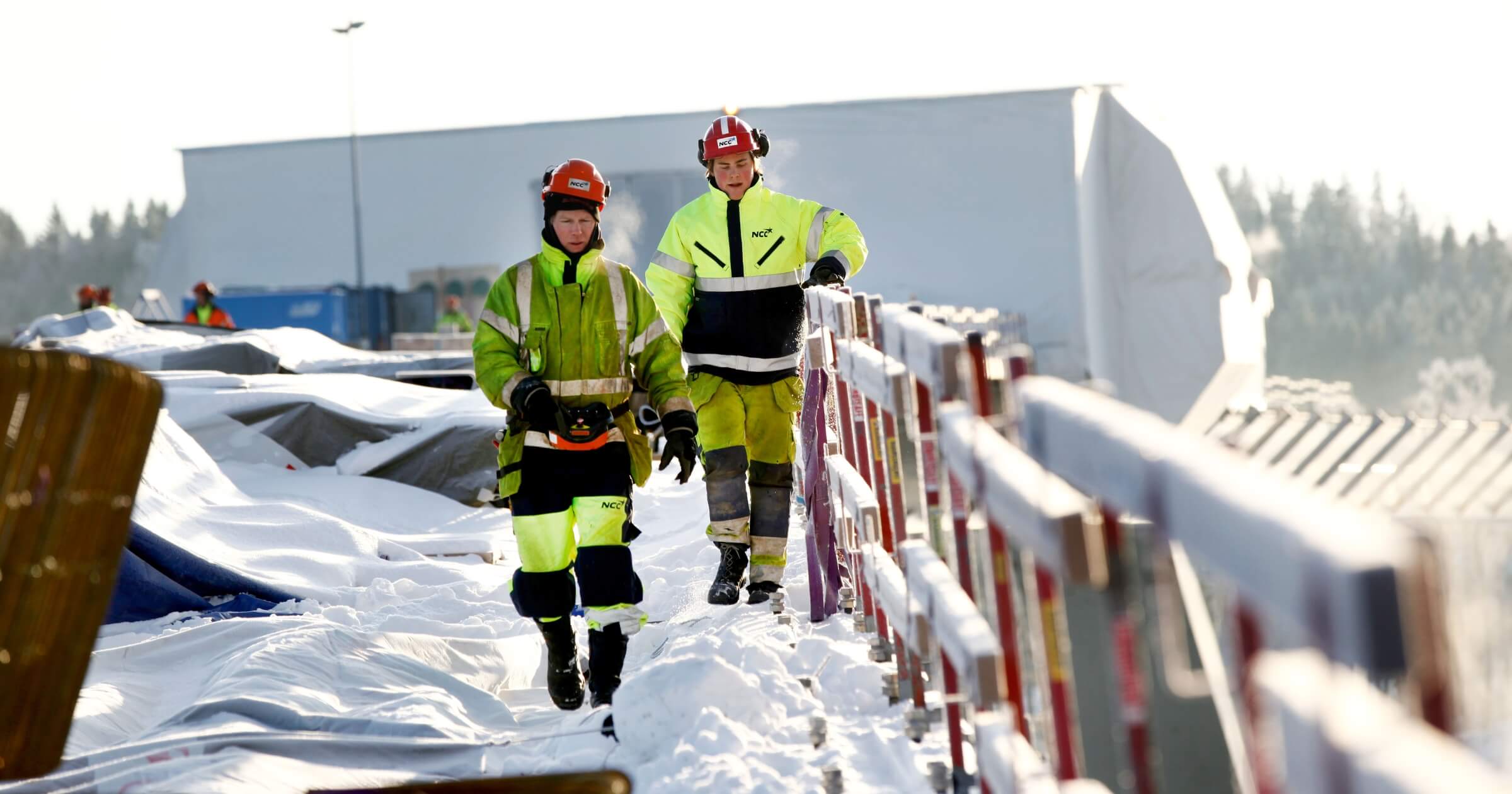
Every winter, construction and trades crews face the challenge of working in freezing conditions. The cold exposure slows tasks, increases the likelihood of mistakes, and makes workers more susceptible to accidents. Numb fingers, stiff muscles, and mental fatigue all add up to one clear fact: low temperatures directly affect how safely and effectively a job gets done. In this article, you’ll learn what happens to the body under prolonged cold exposure and how to prepare for it to maximize safety and keep projects on track.
Quick look
- Cold exposure reduces worker safety, focus, and physical performance.
- Key risk factors include air temperature, moisture, and wind chill.
- Reduced dexterity, mental alertness, and fatigue increase the risk of accidents.
- Effective cold-weather strategies include taking warm-up breaks, wearing proper gear, and implementing integrated safety protocols.
How cold exposure affects worker performance
When workers spend time in cold conditions, three key environmental factors can take a toll on both their physical well-being and their productivity at work.
Air temperature
Cold air makes the body work overtime to maintain core warmth. Once muscle temperature falls below about 27°C, strength and coordination start to drop, and even simple tasks can take longer to complete. People who spend regular time in cold conditions also report more aches and pain in their neck, shoulders, and legs, showing how ongoing exposure can wear down the body over time. People who work in cold environments at least 25% of the time are statistically 1.6 times more likely to experience chronic pain in these areas. Lower body temperature also constricts blood vessels near the skin, which can make fingers and hands feel stiff, numb, or slow to respond.
Moisture from humidity and damp clothing
Even slight dampness from rain, humidity, or sweat can dramatically increase heat loss. Wet clothing loses nearly all its insulating ability because water conducts heat much more efficiently than air. Staying dry is important; wet gear feels uncomfortable, makes the body lose heat faster, and raises the risk of hypothermia. Workers feeling damp are also less effective, because the chill hits them twice as fast, and their body wastes energy trying to stay warm.
Wind chill and exposed skin
Wind makes cold air feel even colder by whisking away the tiny layer of warm air surrounding your skin. That means a moderately cold day can feel freezing when the wind picks up. This increases the risk of frostnip and frostbite on unprotected skin. Working in windy, cold conditions can reduce overall work efficiency, slow mental focus, and make hands or fingers stiff, especially during tasks that need fine motor control.
Physiological and task-related performance impacts of cold weather
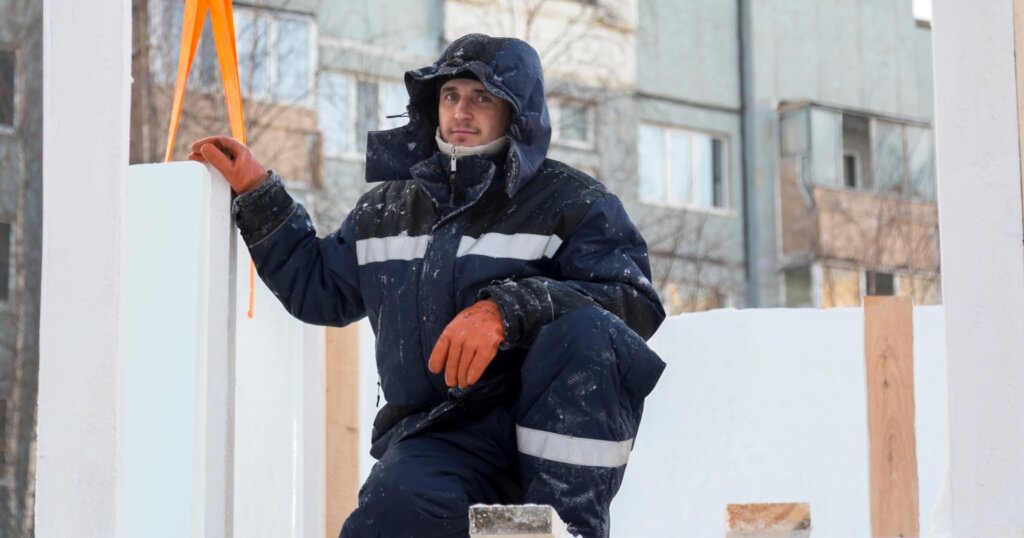
A trade worker at a construction site during winter. Photo courtesy of Shutterstock.
Loss of manual dexterity and weakened grip
When temperatures drop below freezing, both skin and core temperatures fall, and hand performance suffers. One study found that when temperatures dropped to around −5°C, workers struggled with simple tasks such as pegboard tests and grip strength exercises, even while wearing regular protective gear. That kind of cold made hands slower and weaker during even simple tasks.
Other research found that as wind chill and exposure time increase, dexterity and grip strength decline sharply, with performance drops tightly linked to those chilling conditions. Simply put, the colder it gets and the longer you’re exposed, the less steady your hands become.
Even wearing protective gloves can’t fully solve the problem. In one study, workers at 5°C or below still took longer to finish finger and hand tasks, despite wearing gloves. Gloves help, but they can’t fully counteract the cold’s slowing effect.
Slowed mental alertness and increased fatigue
Cold also chips away at your brainpower and energy. When your body is burning extra energy to stay warm, mental sharpness can fade faster, and fatigue can set in sooner. This state of mental and physical exhaustion increases the likelihood of attention lapses or slower reactions.
In addition, winter’s shorter daylight hours can weigh on people’s moods and energy levels. Reduced focus tied to seasonal changes may further slow down decisions and raise the odds of safety slips.
Elevated accident rates and injury likelihood
All these effects, including slower hands, dulled thinking, and weariness, contribute to more injuries on the job. Cold exposure has been linked to a higher rate of workplace accidents, including slips, falls, and direct mishaps with tools or equipment.
A recent study links extreme temperatures with roughly 2,600 workplace accidents a year, costing about CHF $91M annually in Switzerland alone. While data from Canada or the U.S. may differ, these figures show the real and immediate risk cold places pose to workers and their sites.
Mitigation strategies for cold construction sites
Working in the cold is unavoidable for many construction crews, but the risks can be managed. With the right systems and planning, companies can protect their workers, reduce injuries, and keep projects moving—even in harsh weather conditions.
Install temperature monitoring and define cold thresholds
Digital sensors and simple thermometers can give real-time updates on conditions across a site. Setting clear thresholds, such as stopping outdoor work when temperatures fall below a certain level or when wind chill reaches dangerous limits, helps remove guesswork and protects workers from overexposure. These guidelines also make it easier for supervisors to enforce safety rules consistently.
Enforce proper protective clothing and moisture management
The best way to dress for the cold is to layer up. A dry, sweat-wicking base keeps moisture off the skin, an insulated layer traps heat, and a waterproof shell helps block out snow and rain. Additionally, gloves, warm boots, and face coverings protect against frostbite, while reflective or high-visibility clothing helps workers remain visible in low-light conditions. Because sweat or wet clothing accelerates heat loss, workers should always have access to dry gear. A strong clothing policy can prevent hypothermia before it becomes a risk.
Schedule frequent breaks and warming protocols
Short, regular breaks in a heated trailer or shelter allow workers to warm up, restore circulation, and recover from fatigue. Even 10-minute breaks can help reduce the chance of accidents by keeping workers more alert and physically capable. Other cold-weather tips include consuming warm beverages and snacks rich in carbohydrates or protein to provide energy and help the body regulate its temperature more effectively.
Integrate cold protection plans into safety protocols
Cold stress prevention should be built into every site’s health and safety program. This means training supervisors to spot early signs of hypothermia or frostbite, ensuring emergency response plans are in place, and giving workers the knowledge to monitor their own health. A proactive strategy that includes cold exposure awareness shows crews that their safety is valued and helps prevent small problems from escalating.
Bottom line
Cold exposure slows the body, dulls the mind, and increases the chance of accidents on site. For workers in construction and the trades, that means reduced productivity and a greater risk of injury when conditions turn harsh. Simple steps, such as checking site temperatures, ensuring crews have the right gear, incorporating warm-up breaks, and planning for cold stress, can make a big difference. When these measures are part of everyday routines, workers are more likely to stay safe, alert, and productive, even when the weather turns rough.
Stay ahead of the cold and other jobsite challenges. Subscribe to our newsletter for more safety insights and industry updates.