
The cost to build a tennis court in your backyard depends heavily on the size, materials used, your location, and whether you do most of the work yourself or hire professionals. A small DIY court with simple surfacing costs far less than a full-size, high-end court with lighting, fencing, and premium surface. The material you choose, whether that’s asphalt, clay, synthetic turf, concrete, or acrylic, can affect both the upfront price and long-term maintenance costs. Local labor rates, site preparation (including grading and drainage), and permits can add significant costs. This article helps you estimate realistic price ranges for building a tennis court in your backyard, provides examples from different budgets, and breaks down the factors that drive the cost, enabling you to plan wisely.
How much does it cost to build a tennis court in your backyard?
Here are some rough ranges to give you an idea of what to expect:
| Tier | Typical cost (USA) | Typical cost (Canada) |
| Low-end / DIY / small court | US$15,000 – US$30,000 | CAD$20,000 – CAD$40,000 |
| Mid-range / standard full-size, better surfacing, some features (fencing, lighting) | US$40,000 – US$80,000 | CAD$60,000 – CAD$120,000 |
| High-end / pro-grade, luxury surfaces, high-quality lighting, full landscaping, etc. | US$90,000 – US$150,000+ | CAD$130,000 – CAD$200,000+ |
Small or basic court builds land at those low-end numbers. For a full-size court (78 × 36 ft for doubles, plus runoff space) with good surfacing and standard fencing, expect the mid-range. If you want pro-level surfacing, premium accessories, full lighting, etc., you’ll be in the high-end territory.
Key factors affecting the cost of a tennis court in your backyard
Size
Larger courts require more materials (base, surfacing, etc.), more excavation, more drainage work, longer fence lines, and more lighting. If your backyard only allows a smaller court or half-court, costs drop significantly. However, keep in mind that leaving some run-back space (space behind the baseline and along the sidelines) improves playability and safety, which adds to the size and cost.
Materials
The surfacing material is one of the most significant factors influencing the cost. Here are some common materials, with pros and cons:
- Asphalt
- Pros: Relatively affordable, solid performance, and a good lifespan if well-maintained.
- Cons: Needs resurfacing every few years, can crack, absorbs heat, and can be rough on joints.
- Concrete (plain or post-tensioned)
- Pros: Long life, minimal maintenance, durable, and stable surface.
- Cons: Higher upfront cost, more complex base and form work, may crack without proper reinforcement and expansion joints.
- Clay
- Pros: Softer on joints, good for a slower game, traditional appearance.
- Cons: Requires frequent maintenance (watering, rolling, and leveling), and is not suitable for wet or freezing weather.
- Synthetic turf / artificial grass
- Pros: Less water use, less maintenance than real grass, usable more often, softer feel.
- Cons: Premium cost, replacement is eventually required, and it may not meet the preferences of purists.
- Acrylic or “hard court” overlays
- Pros: Good bounce, color variety, durable finish, moderate maintenance.
- Cons: The upfront cost is higher, and the overlay may need resurfacing, which affects its lifespan.
Complexity
If your court is just a flat rectangular play area, costs are lower. If you want custom logos, team colors, multi-sport lines, curves, landscaping, or built-in seating, these “extras” add labor and material cost. Additionally, drainage aesthetics, retaining walls, slopes, or special features (such as covered seating or benches) increase complexity.
Labor cost
Installing a tennis court is labor-intensive. Labor includes site preparation (grading, removal of topsoil, and leveling), foundation work, pouring a base or laying asphalt/concrete, finishing surfacing, painting lines, installing fencing, and lighting. Labor rates often vary depending on where you live; urban areas generally have higher labor rates than rural areas. If you hire a specialty contractor vs a general landscaping contractor, prices differ.
Location – Regional differences
Where you live changes the cost. Shipping materials, contractor availability, cost of living, and local climate (which may require different base preparation/drainage) all affect the price. What costs relatively little in a rural area might cost 30-50% more in a dense city. Additionally, cold climates may require frost protection or special base materials, which can increase costs.
Permits
You’ll likely need permits for excavating, grading, fence installation, and lighting. Permit fees depend on municipality size and rules. Some areas require environmental or drainage approvals. Failing to obtain permits can result in fines or the removal or modification of the structure. Include permit cost early in your estimate.
Drainage and site preparation
If your backyard is already flat with good soil, the cost stays lower. If you need to regrade land, remove obstacles (such as rocks and tree roots), install French drains, or correct slopes, that adds up. Poor drainage will damage the court surface and lead to costly repairs later.
Fencing, lighting, and accessories
Fence costs, nets, lighting, backboard, seating, and wind screens all contribute. Basic chain-link fences are usually the most affordable option; premium fencing or decorative materials cost more. Lighting encompasses not only fixtures but also wiring, poles, and electrical work. Accessories improve use but add cost.
Maintenance & lifespan costs
Don’t just think about up front—how much surface upkeep will be required, how often cracks will be repaired, how often painting lines will be needed. Surfaces like clay require more upkeep, while grass needs regular mowing and watering. Premium surfaces may cost more upfront, but they can save money in the long run if they last longer.
Basic vs. high-end tennis court examples
Building a backyard tennis court can vary significantly in cost, depending on the materials, size, and features you choose. Below are examples of different budget levels, configurations, and approximate costs to help you understand what you can expect at each price point.
Budget Level: Basic / DIY
Example configuration: A smaller court measuring approximately 60’×30′, featuring a compacted base, simple asphalt surface, minimal fencing, and no lighting or premium finishes.
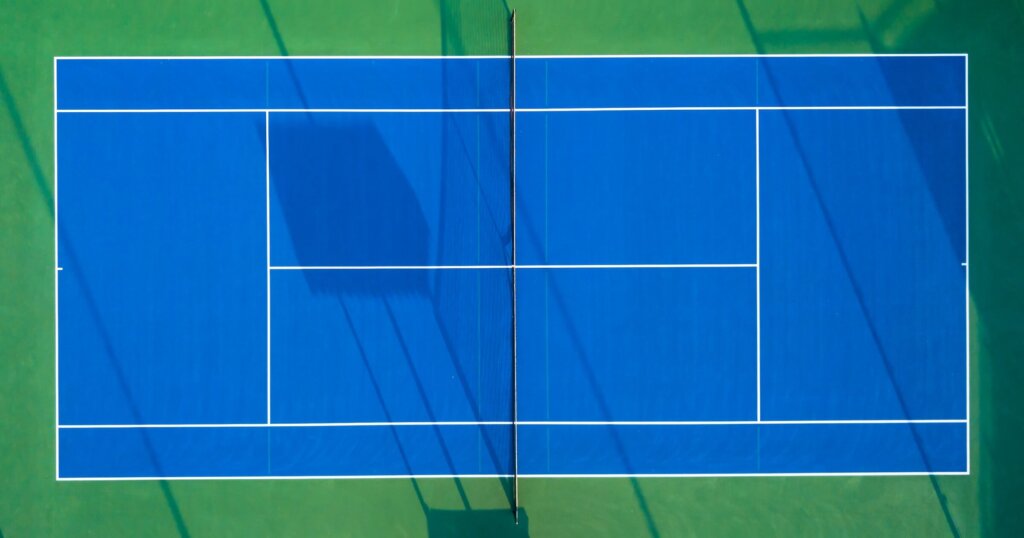
Single standard tennis court. Photo courtesy of Shutterstock.
What you get: A functional play area suitable for practice and recreation, with lower maintenance expectations.
Approximate cost: $20,000–$35,000 USD
VersaCourt estimates that the cost of a backyard tennis court can range from $22,000 to $30,500, depending on various factors, including size, land preparation, and surfacing options.
Budget level: Mid-range
Example configuration: A full-size doubles court with a standard base, surfacing with an overlay (acrylic or similar), decent fencing, some lighting, and small seating or shelter.
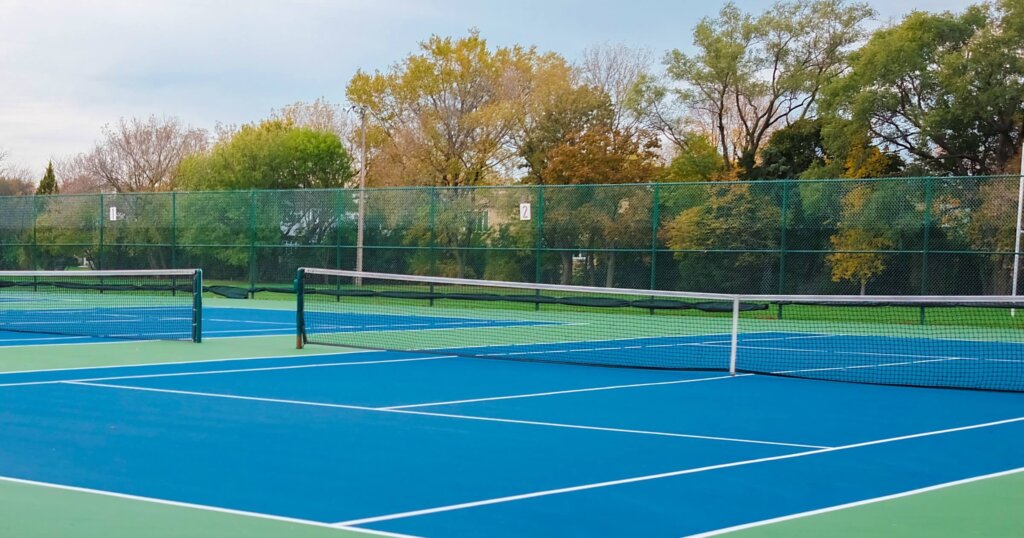
Private side by side tennis courts. Photo courtesy of Shutterstock.
What you get: Improved bounce, enhanced aesthetics, usability during twilight hours, and a more durable surface.
Approximate cost: $50,000–$80,000 USD
Budget Level: High-end
Example configuration: A professional-grade base (post-tensioned concrete or premium concrete), a custom surface, full lighting for nighttime play, premium fencing, landscaping, and possibly a pavilion or covered seating area.
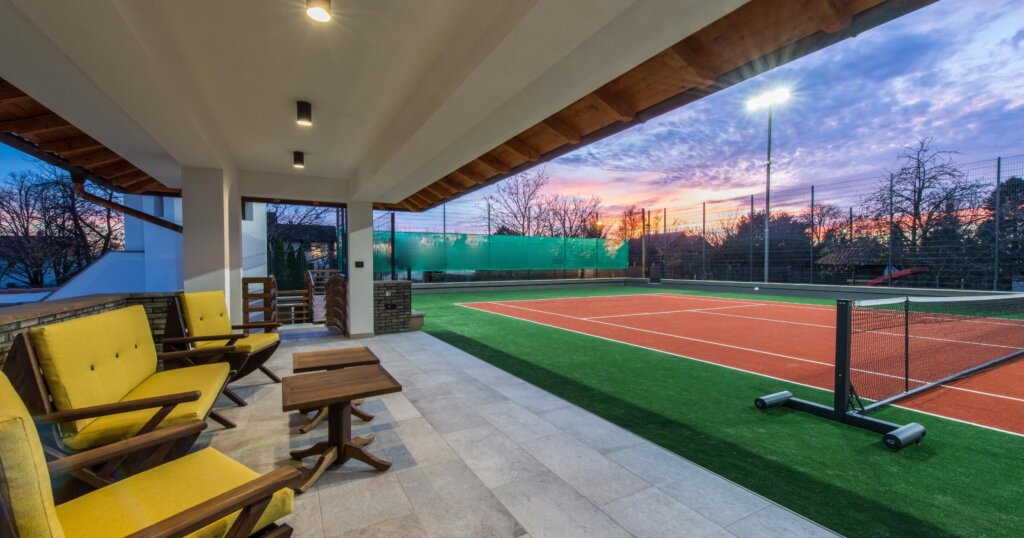
Tennis court at a private estate. Photo courtesy of Shutterstock.
What you get: A court ready for competitive play and heavy use, with a long lifespan, excellent finish, and comprehensive amenities.
Approximate cost: $90,000–$150,000+ USD
According to Let’s Go Tennis, building a tennis court can cost anywhere from $25,000 to $150,000, depending on factors such as size, type, accessories, and other considerations.
* Please note that these costs are approximate and can vary based on location, contractor rates, and specific project requirements. It’s advisable to obtain multiple quotes from local contractors to get an accurate estimate for your specific situation.
Things to consider for pricing variations
- Local labor and materials costs differ. The price of asphalt, concrete, and even fencing materials can swing significantly depending on where you live. Contractor rates also shift by ZIP code, with urban markets typically costing more due to higher overhead and demand.
- Climate influences baseline costs. If you live in an area with heavy rainfall, snow, or freeze-thaw cycles, your court will need a stronger base and more advanced drainage. These additions can raise upfront costs but help prevent expensive repairs later.
- Always get local quotes. A contractor who visits your property can spot issues like sloping ground, poor soil, or tree roots that a generic estimate would overlook. These site-specific challenges can add thousands to the final price, so a detailed quote is worth the time.
- Use a cost calculator or compare multiple bids to find the best value. Online tools give a rough starting point, but they don’t reflect regional price differences. Collecting several contractor estimates will give you a clearer sense of realistic numbers, rather than relying on general averages.
- Decide early whether you want to DIY parts of the build. Tasks such as site leveling, painting court lines, or installing fencing can help reduce costs if you’re confident in your skills. But if mistakes happen, repairs may end up costing more than hiring a professional from the start.
- Permit and inspection fees can add up. Many municipalities require permits before breaking ground on a backyard court, especially if grading or drainage work is involved. Fees aren’t always steep, but failing to secure the correct paperwork could delay construction or result in fines.
- Seasonal demand affects contractor pricing. Tennis court builders and paving contractors are busiest in late spring and summer. Scheduling work during their peak season often means higher bids, while booking in early spring or late fall can sometimes result in lower costs.
If you found this article helpful in estimating the cost to build a tennis court, you might also like these related articles on outdoor projects:
- Cost to build a swimming pool
- How much does it cost to build a house in the US
- How much money does a dam cost
Want to stay updated on construction, architecture, and trade projects? Subscribe to the Under the Hard Hat newsletter, so you catch all our new cost guides & build stories.