Anxiety doesn’t always show up as full-scale panic. Sometimes it’s a tight jaw, a shallow inhale, or that restless feeling you get when your phone lights up with work emails at 10 p.m. Breathing techniques give your body something to follow when your thoughts feel scattered. Deep breathing techniques for anxiety, such as diaphragmatic breathing, 4-7-8 breathing, and alternate nostril breathing, are effective because they slow your heart rate, reduce that wired feeling, and bring your breathing back down from the top of your chest into your diaphragm. This guide walks through practical breathing exercises for anxiety that you can use at work, in the car, in bed, or in any space where anxiety symptoms creep in.
Quick Look
- Slow, steady breathing activates the body’s relaxation response and lowers stress hormones.
- Resonance breathing sets a consistent rhythm that supports heart rate variability and focus.
- Pairing breath with muscle relaxation can ease physical symptoms like tight shoulders and jaw tension.
- Practicing breathing exercises daily builds a baseline of calm, making stress easier to manage at work, while driving, and before sleep.
- These techniques can be used discreetly on job sites, during meetings, or at home to reduce anxiety symptoms and relieve stress more quickly.
Why breathing helps with anxiety
Fast breathing, racing thoughts, tight muscles—these are signs your body has slipped into a fight-or-flight response. When stress levels increase, breathing becomes shallow and rapid. That reduces carbon dioxide levels too quickly, which can make symptoms like numb fingers, dizziness, and chest tension even worse. Simple relaxation techniques like deep breathing send a direct signal to the vagus nerve, which influences the parasympathetic nervous system—the part responsible for relaxation and recovery.
When your exhale exceeds your inhale and you slow the breath cycle, your heart rate variability improves. Research shows that taking slow, deep breaths can reduce anxiety symptoms in healthy adults and people with chronic stress. This includes regulating the heart rate and increasing muscle relaxation. Breathing exercises for anxiety can help you regain control faster than trying to talk yourself down from a panic response.
Best breathing techniques for anxiety
Diaphragmatic breathing (belly breathing)
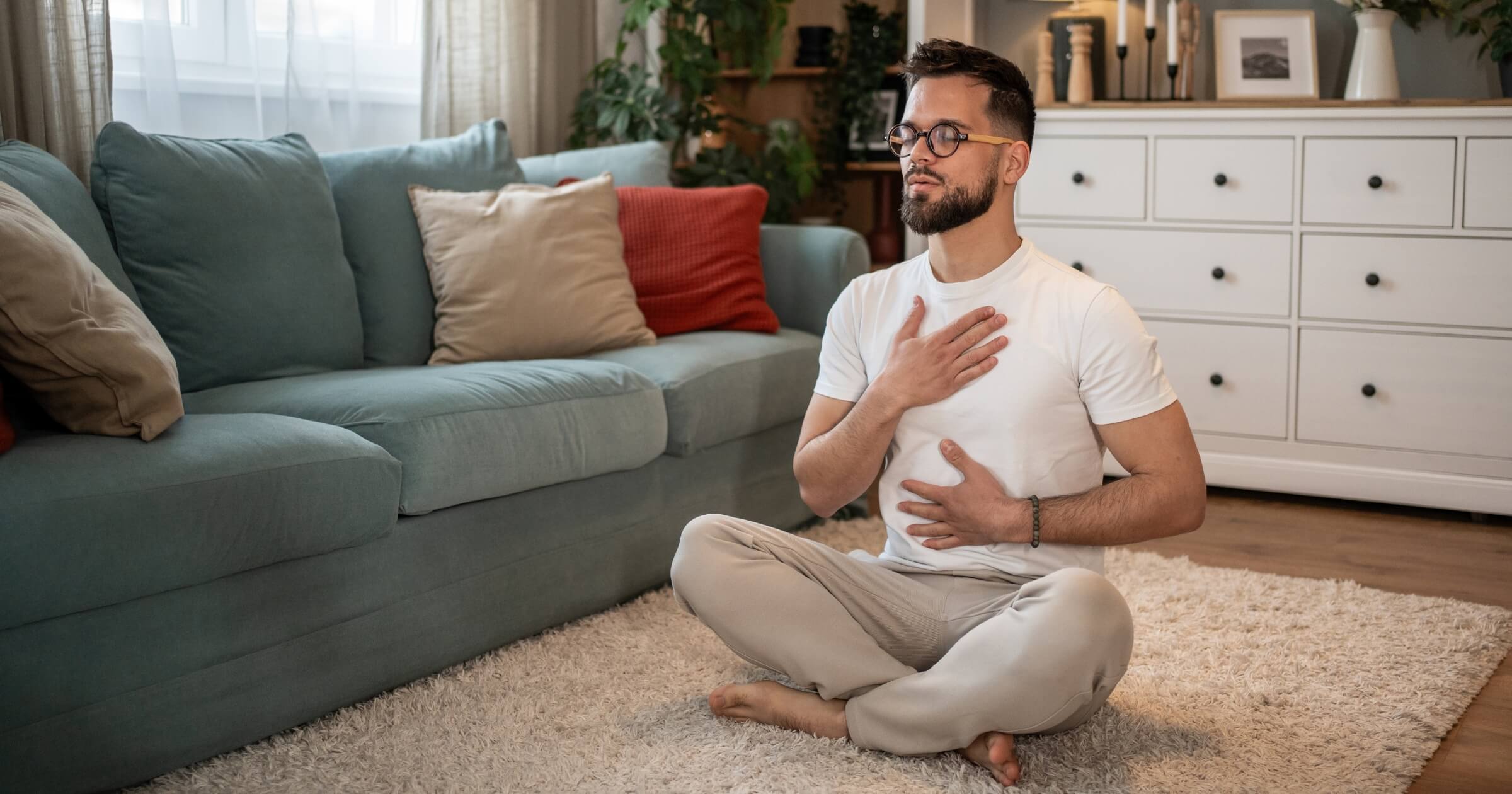
Diaphragmatic breathing trains your body to breathe from the diaphragm instead of lifting the shoulders and chest. That upper chest pattern is common in people who experience stress and anxiety regularly. To practice, sit or lie down with one hand on your stomach and the other on your upper chest. Breathe in slowly through your nose. Focus on pushing the breath downward, allowing your belly to rise under your hand while keeping your chest mostly still. Hold your breath briefly, then exhale through your mouth in a slow, steady stream.
If you’re someone who holds tension in your shoulders or jaw, belly breathing can help soften this by shifting the breathing effort lower in the body. It’s useful before sleep, before a meeting, or after a tense moment. The more you repeat the cycle, the easier it becomes to trigger a relaxation response without having to think about it.
Four-square breathing (known as box breathing)
Four-square breathing, also known as box breathing, is a structured technique that works well for individuals experiencing anxiety who prefer a clean pattern. Breathe in through your nose for a count of four. Hold your breath for four. Exhale through the mouth for four. Hold again for four before repeating the cycle. Counting in your head keeps your attention anchored, preventing your breathing from becoming irregular.
Many workers in high-pressure environments, such as heavy equipment operators, site supervisors, and emergency responders, use this breathing technique to prevent hyperventilation. The brief holds keep carbon dioxide from dropping too quickly, which helps reduce symptoms like lightheadedness and tingling. Box breathing is also helpful if you’re someone who unintentionally holds your breath when concentrating or stressed.
4-7-8 breathing method
The 4-7-8 breathing technique stretches the exhale, allowing the body to slow down sooner. Breathe in through your nose for a count of four. Hold your breath for seven. Exhale through your mouth for a count of eight, like you’re letting air out slowly through a valve. That long exhale activates the parasympathetic response even if your heart is still racing.
This breathing exercise can help you fall asleep, reduce anxiety before medical or performance-related situations, or reset your breathing pattern after being startled or overwhelmed. Many people report that the first round can feel uncomfortable due to the prolonged breath hold. That’s normal. The goal is to slow the urge to gasp and reduce the nervous system’s tendency to over-breathe.
Alternate nostril breathing (Nadi Shodhana)
Alternate nostril breathing is a pranayama practice used to balance the breath. Sit upright. Rest your left hand on your lap. With your right hand, use your thumb to close your right nostril and inhale slowly through your left nostril. Pause. Then use your ring finger to close your left nostril and exhale through your right. Inhale again through the right nostril, pause, switch your fingers, and exhale through the left. That completes one cycle.
This breathing method slows your breathing rhythm and engages both sides of your diaphragm, which can help you calm anxiety. Alternate nostril breathing works well when symptoms of anxiety show up as mental restlessness or difficulty focusing. The hand movement and controlled breath pattern can also serve as grounding when you’re experiencing feelings of dissociation or sensory overload.
Resonance breathing (coherent breathing)
Resonance breathing, also known as coherent breathing, maintains equal inhale and exhale lengths, typically around five to six seconds each. Begin by taking a slow, deep breath through your nose, counting to five. Exhale for the same count. There are no holds in this breathing technique, making it smoother and more fluid for those who find breath-holding uncomfortable.
This method works well for reducing stress in healthy adults and is often used as a daily nervous system reset. Resonance breathing regulates heart rate variability and helps your body shift out of a constant low-level stress pattern. It’s particularly useful during long workdays or after extended screen time, as breathing tends to become shallow without us noticing.
Progressive relaxation with breathing
Progressive relaxation with breath combines muscle awareness with controlled breathing. Start at your feet or hands. Inhale slowly, and as you do, gently tense one muscle group—like your shoulders, hands, or jaw. Hold the breath and the tension briefly. Exhale and fully release the muscle tension. Repeat the cycle, moving across different muscle areas.
Anxiety can cause your breathing to become restricted without you noticing it. Pairing breath with muscle release gives your brain a clear cue: tension on inhale, release on exhale. This breathing exercise can help if your symptoms are more physical—tight back, clenched teeth, stiff neck. Doing this before bed or after a long work shift can ease the body out of that wired state.
When to use these techniques
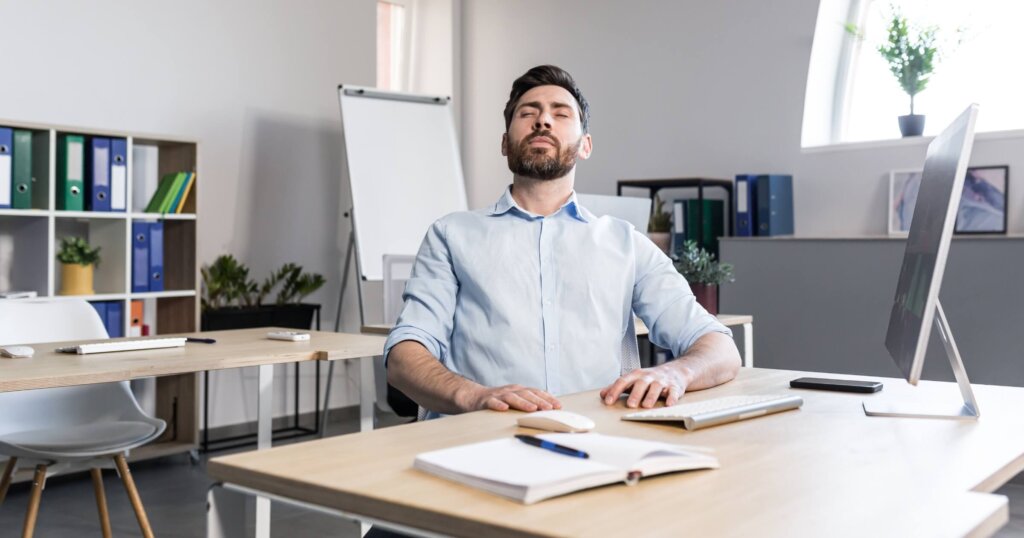
Photo courtesy of Shutterstock.
Practicing breathing exercises for anxiety during calm moments trains your system so the breathing shift becomes automatic under pressure. If you only attempt deep breathing during high stress, it can feel too hard to control. Repetition builds familiarity and reduces resistance from your nervous system when anxiety symptoms start rising.
Use breathing methods during everyday stress triggers instead of waiting for a panic spike. These include:
- Before a difficult conversation or meeting
- During long stretches of driving or commuting, when stress creeps in gradually
- When standing in line and noticing your breath getting short or tight
- Right before bed, when your mind starts listing tasks you still haven’t done
- During screen-heavy work sessions, to stop your breath from becoming shallow
Breathing exercises for anxiety don’t require a quiet room or meditation setup. Box breathing can be done during a walk. Diaphragmatic breathing can be practiced while lying on your back watching TV. Alternate nostril breathing can be done in a break room or a parked truck. Practicing in different settings makes it easier for your body to accept the breathing shift when anxiety symptoms build quickly. Luckily, these simple breathing exercises can be done anywhere, anytime you are feeling stressed.
People in high-demand trades often push through stress signals because there’s no time to stop work. Breathing gives you a method that doesn’t require stepping away from a task; you can slow your inhale and exhale while still present on-site or at your desk. Controlled breathing lowers stress responses faster than letting your breathing become shallow and reactive.
Small cues help you remember to breathe:
- Each time your phone buzzes
- Before opening an email that you know will spike stress
- After climbing stairs or carrying heavy gear, to reset the heart rate
- When sitting in traffic and feeling your jaw tighten
- Before responding to a message that stirred up frustration
Breathing techniques are not meant to erase stress but to keep your breathing from spiraling into a fight-or-flight pattern that drains energy. Holding the breath briefly, extending the exhale, or grounding yourself with rhythmic breathing helps you regain control before anxiety symptoms take over.
Final thoughts
Breathing exercises for anxiety give your body a manual override when stress builds faster than you can process it. Some people like the structure of box breathing, others respond better to progressive relaxation or coherent breathing. Try different methods and see which breathing exercise feels natural enough to use during everyday stress—not just during intense anxiety.
If this kind of mental health tool is helpful to you, you might want to explore more guides here:
- How to reduce nighttime anxiety
- Toolbox talk – Topics for mental health
- Mental health books
- How to stop overthinking
To get new anxiety and stress relief tools made for people who work in high-stress environments, subscribe to our newsletter and get updates straight to your inbox.