
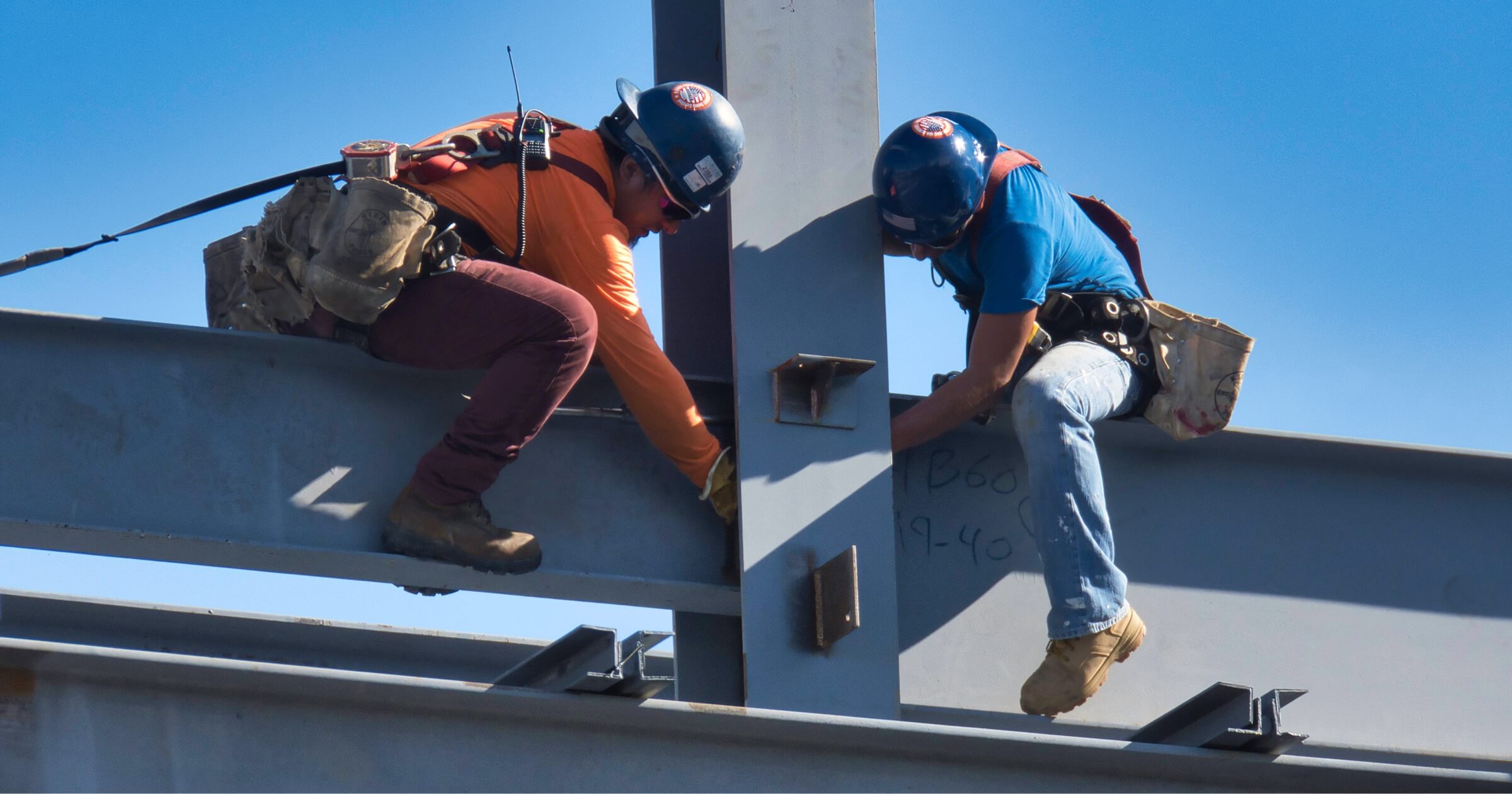
From skyscrapers to bridges, ironworkers are the ones who make America’s biggest structures stand tall. These skilled tradespeople weld, cut, and assemble the steel frameworks that keep our cities growing. With a national push to rebuild aging infrastructure and a wave of retirements creating new opportunities, ironworkers are in high demand. Most begin their careers through ironworker apprenticeship programs, which are the main pathway into this essential trade. In this guide, we’ll look at how ironworker apprenticeships work, how long they take, what you need to apply, and where to find some of the best programs across the country.
Quick look
- Program length: Three to four years
- Training hours: About 6,000 to 8,000 hours of on-the-job training and around 600 hours of classroom instruction
- Average pay after completion: $50,000 to $95,000 per year, depending on experience and location
- Basic entry requirements: High school diploma or GED, good physical fitness, ability to pass a drug test, and a valid driver’s license
- Union programs: Offered through the International Association of Bridge, Structural, Ornamental and Reinforcing Iron Workers (IW), which provides training, benefits, and job placement
- Application period: Varies by region and local union office
*Figures reflect national and regional averages based on BLS data and postings from U.S. Ironworkers locals and the International Union.
What do ironworkers do?
Ironworkers build the steel bones of our cities. They cut, weld, and install metal on buildings, bridges, and factories. Whether it’s a new high-rise or a huge bridge over a busy highway, ironworkers make sure every piece of steel is strong and secure.
This trade is important for maintaining growth nationwide. Many ironworkers are retiring, and new projects keep popping up everywhere. That means there’s a high demand for people who know how to do this work. In fact, jobs for structural iron and steel workers are expected to grow about 4% from 2024 to 2034, which is about average for most jobs.
Most people start through an ironworkers apprenticeship program. These programs let you earn money while you learn, combining classroom lessons with real job experience.
What is an ironworkers apprenticeship?
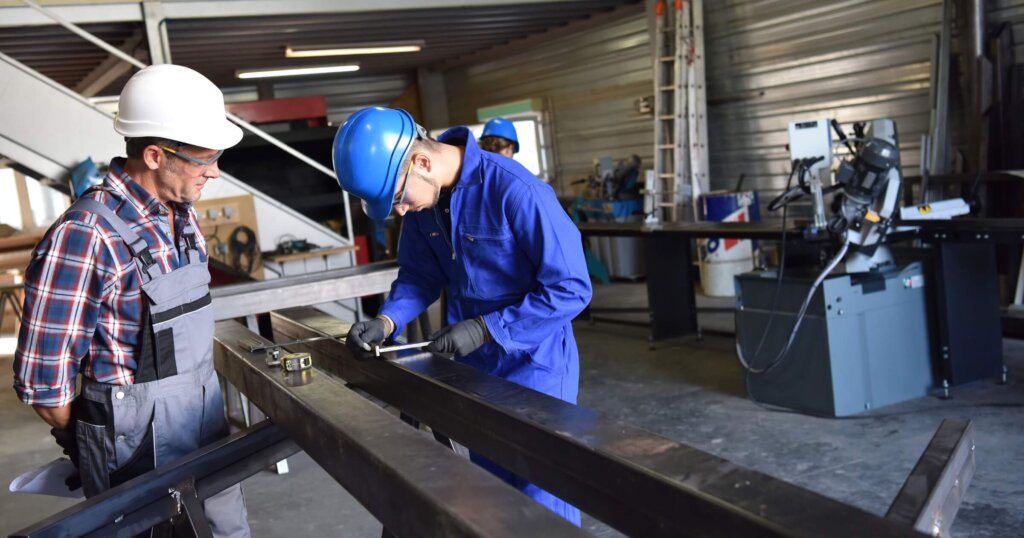
Ironworker apprenticeship programs are a mix of classroom learning and hands-on job training. It’s designed to help new workers learn the trade while earning a paycheck. Apprentices work under the guidance of experienced journeymen, gaining real-world experience on construction sites while also studying in a classroom setting.
During the first year, most apprentices start with the basics: job safety, proper tool use, rigging, and moving and securing heavy materials. As they progress, they learn advanced skills like welding, blueprint reading, rebar tying, and steel erection. By the final year, apprentices can take on complex tasks such as connecting large steel beams, installing ornamental ironwork, or reinforcing concrete structures.
One of the biggest benefits of an apprenticeship is that you earn while you learn. Apprentices receive regular pay increases as their skills grow and often gain access to health insurance, pension plans, and other union benefits. Upon completion, they become certified journeymen and can join the International Association of Bridge, Structural, Ornamental, and Reinforcing Iron Workers (IW) or similar organizations, giving them access to job opportunities across the country.
How long is an ironworkers apprenticeship?
Most ironworker apprenticeship programs last about 3 to 4 years. During that time, apprentices complete between 6,000 and 8,000 hours of on-the-job training (OJT) and roughly 600 to 800 hours of classroom instruction. This mix helps trainees build both the physical skills and technical knowledge needed to succeed in the trade.
For example, the Ironworkers Local 40 program in New York City runs for four years and includes a combination of classroom sessions, safety training, and supervised fieldwork. Apprentices also receive pay raises at regular intervals as they gain experience and meet training milestones.
In most programs, apprentices start at about 50 percent of a journeyman’s wage. Their pay increases as they advance through the program, eventually reaching the full journeyman rate upon graduation and certification. This step-by-step approach allows apprentices to earn a steady income while mastering one of the most essential trades in construction.
Top ironworker apprenticeship programs across the U.S.
- Ironworkers Local 1 Apprenticeship – Chicago, IL | 4 years | Apply Here
- Ironworkers Local 40 & 361 JATC – New York, NY | 4 years | Apply Here
- Ironworkers Local 7 Apprenticeship – Boston, MA | 4 years | Apply Here
- Ironworkers Local 86 JATC – Seattle, WA | 4 years | Apply Here
- Ironworkers Local 10 – Kansas City, MO | 3-4 years | Apply Here
- Ironworkers Local 416 & 433 – Los Angeles, CA | 4 years | Apply Here 416 | Apply Here 433
- Ironworkers Local 808 – Orlando, FL | 4 years | Apply Here
- Ironworkers Local 377 & 378 – San Francisco, CA | 4 years | Apply Here
- Ironworkers Local 512 – Minneapolis-St. Paul, MN | 4 years | Apply Here
- Ironworkers Local 401 – Philadelphia, PA | 4 years | Apply Here
- Ironworkers Local 155 J.A.T.C. – Fresno, CA | 4 years | Apply Here
General entry requirements for ironworker apprenticeship programs
Getting into an ironworkers apprenticeship program is open to anyone willing to learn the trade and put in the work. Most programs share similar entry requirements to make sure applicants are ready for both the physical and technical parts of the job.
Here’s what you’ll typically need:
- Minimum age: 18 years old
- Education: High school diploma or GED
- Driver’s license: Often required since many job sites are spread across large regions
- Drug screening and physical assessment: Applicants must pass basic health and drug tests to make sure they can handle the physical demands of the trade safely
- Comfort with heights and outdoor work: Ironworkers spend much of their time working high above the ground and in all kinds of weather conditions
- Background check: Some programs or employers may require one, depending on the job site or project type
If you meet these requirements, you can start applying through your local union office or training center. Many locals post open application periods on their websites, like those found in our top apprenticeship programs list. You can also explore other trade opportunities through The Best Trade Apprenticeships in Construction.
Types of ironworker apprenticeship programs
There are several ways to become an ironworker, depending on where you live and who you train with. Each program has a slightly different structure, but all aim to help you learn the trade safely and effectively while earning a steady income.
Union apprenticeships
Most ironworkers in the U.S. train through union programs offered by the International Association of Bridge, Structural, Ornamental, and Reinforcing Iron Workers. These programs follow a structured system that includes scheduled pay increases, benefits such as health coverage and retirement plans, and guaranteed job placement upon completion of training.
Non-union or open-shop programs
Some apprenticeships are offered through private contractors or state agencies instead of unions. These programs may provide similar training but often have different pay scales, fewer benefits, and less long-term job security than union options.
Specializations
Ironworkers can focus on different areas of the trade:
- Reinforcing (rebar): Installing steel bars and mesh to strengthen concrete.
- Structural: Erecting and connecting steel frameworks for buildings and bridges.
- Ornamental: Working on decorative or architectural metalwork such as railings, gates, or facades.
- Rigging: Using cranes, cables, and pulleys to move and position heavy steel components safely.
Public vs. private employers
Apprentices may work on both public infrastructure projects, such as bridges, transit systems, and schools, or private sector construction, including commercial buildings, stadiums, and factories. Public projects often focus on large-scale, long-term builds, while private jobs can vary more in size and pace. Both offer valuable experience and a chance to grow within the trade.
What daily life looks like during an ironworkers apprenticeship
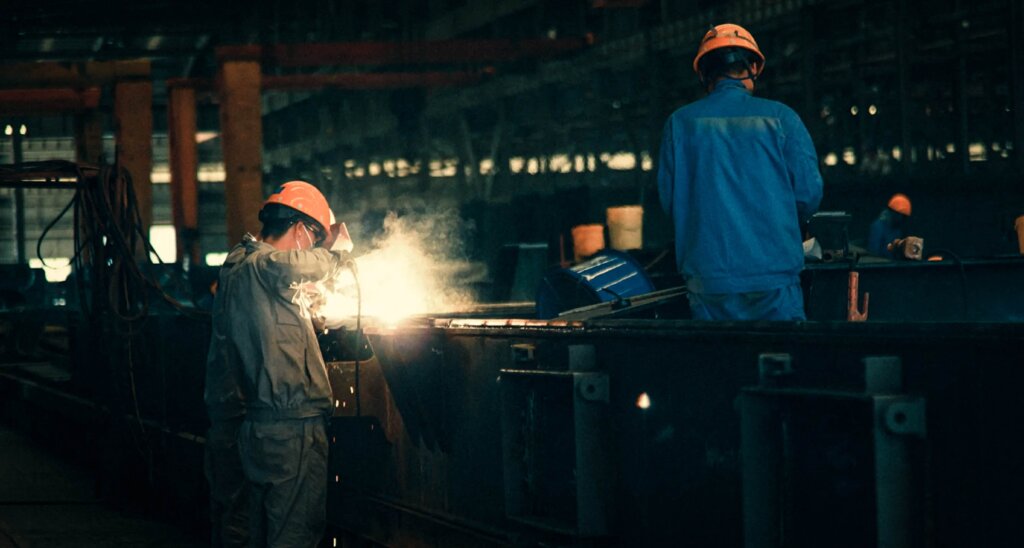
Life as an ironworker apprentice is active, hands-on, and rarely the same from one day to the next. Most apprentices start their day early, often before sunrise, and spend long hours working outdoors in all types of weather. The work can be physically demanding, but it’s also rewarding to see the projects you help build take shape.
A typical week includes 40 or more hours of on-the-job training under the supervision of skilled journeymen. Apprentices also attend classroom lessons in the evenings or on weekends to learn technical skills and theory. Topics often include workplace safety, crane signaling, blueprint reading, welding techniques, and rigging procedures.
As apprentices move into their third and fourth years, they take on more responsibility and perform complex tasks with less supervision. This might include connecting large steel beams, welding at heights, or leading smaller crews on job sites. By graduation, most apprentices are confident, experienced, and ready to work as fully qualified journeymen in one of the most respected trades in construction.
Average ironworker salary in the U.S.
When considering a career as an ironworker, one of the most appealing aspects is the earning potential at different stages of your career. Here’s a closer look at typical salaries with real data.
Entry-level (0 to 5 years): For those just out of an apprenticeship, wages often start around $40,000 to $55,000 annually. While this exact number may vary by region and union status, it aligns with the lower wage percentiles reported by the Bureau of Labor Statistics (BLS) for the occupation of structural iron and steel workers. For example, the 10th percentile is listed at about $40,510 for this category.
Journeyman level (after apprenticeship): Once fully trained and working independently, wages rise significantly. BLS projects 4% growth for ironworkers from 2024–2034; the median annual wage for structural iron and steel workers is $62,700 (May 2024). BLS also notes apprentices usually start at about 50% of journey-level pay and receive increases as they learn. In many metro areas and especially within union programs, total compensation (including benefits and overtime) can push journeymen into the $70,000 to $90,000+ range annually. For example, state-specific data show that annual wages exceed $90,000 in some areas.
Union vs Non-Union: Pay can vary depending on whether you work in a union or non-union setting. Union ironworkers often earn more and receive stronger benefits because their contracts include health insurance, retirement plans, and set wage increases as they move up in skill. Many locals also help members find steady work once they complete their apprenticeship.
Alternatively, non-union or open-shop jobs may offer less predictable pay and fewer benefits, though they can still provide valuable experience for those starting out. Wage sheets from local unions show journeyman rates substantially above starting apprentice levels. These numbers reflect national averages and trends and will vary by region, specialisation, employer type, union status, overtime, and perks.
Here’s a comparison chart showing how wages for ironworkers vary across the U.S.:
Ironworker wages by state (May 2024 BLS Data)
| State | Annual Mean Wage | Hourly Mean Wage | Notes |
| New York | $95,370 | $45.85 | Among the highest wages nationally; strong union presence. |
| Illinois | $94,760 | $45.56 | High construction activity and strong local unions. |
| Washington | $90,710 | $43.61 | Driven by infrastructure projects in Seattle and western WA. |
| New Jersey | $89,580 | $43.07 | Above-average pay due to regional cost of living. |
| California | $77,870 | $37.44 | Large workforce and steady demand statewide. |
| Minnesota | $74,390 | $35.76 | Competitive union rates in Minneapolis–St. Paul region. |
| Florida | $62,380 | $29.99 | Lower cost of living; growing demand for bridge and high-rise projects. |
| Texas | $49,940 | $24.01 | More non-union contractors and rural projects lower the mean. |
| Ohio | $59,200 | $28.46 | Moderate pay tied to industrial and infrastructure work. |
| Pennsylvania | $70,380 | $33.84 | Strong union network centered around Philadelphia and Pittsburgh. |
| Oregon | $82,410 | $39.62 | Above-average wages supported by union training programs. |
| Colorado | $71,010 | $34.14 | Steady demand in Denver metro and Front Range construction. |
| Georgia | $55,270 | $26.57 | Growing demand due to Atlanta’s commercial development. |
*Wages reflect average or median annual earnings for the occupation of “structural iron and steel workers” per BLS data. U.S. National median (all states): $62,700 annually | $30.14 hourly.
Is an ironworkers apprenticeship program right for you?
Becoming an ironworker isn’t for everyone, but for those who love working with their hands and seeing the results of their labor rise high above the ground, it can be one of the most rewarding careers in construction.
Challenges of working as an ironworker
Ironwork is physically demanding and often requires long hours outdoors, no matter the weather. You’ll need to be comfortable working at heights and following strict safety procedures every day. Travel may also be part of the job, especially for large infrastructure projects that move from site to site.
Rewards
The trade offers excellent pay, strong benefits, and long-term job security. Many ironworkers say one of the best parts of the job is the pride that comes from pointing to a bridge, skyscraper, or stadium and saying, “I helped build that.”
Soft skills needed
Success in this field also takes problem-solving, teamwork, and reliability. Ironworkers rely on each other for safety and efficiency, so trust and communication are key.
If this sounds like the kind of work you’d enjoy, contact your nearest union hall or training center through the International Association of Bridge, Structural, Ornamental, and Reinforcing Iron Workers to learn more about how to apply. To continue your research north of the border, you might also consider checking out the Biggest Steel Companies in Canada.
If you’re ready to start a hands-on career that builds the world around you, exploring apprenticeship options is the best first step. Whether you’re drawn to ironwork, electrical, or other skilled trades, there are many programs designed to help you learn, earn, and grow.
Want to stay up to date on training opportunities, union openings, and career tips in the skilled trades? Sign up for our newsletter and get the latest news delivered straight to your inbox.