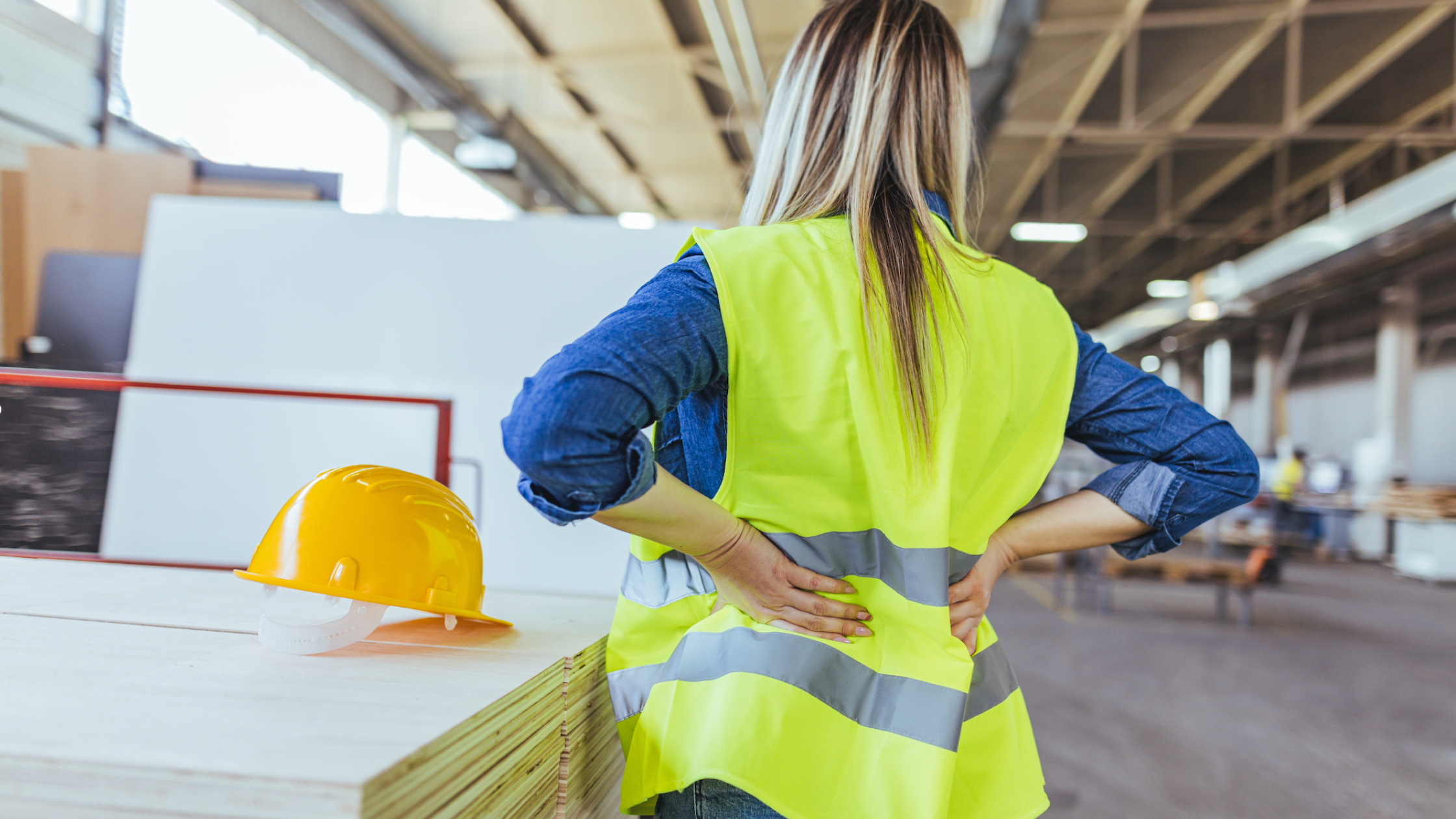
When you’re on the jobsite, the big hazards—falls, struck-by, caught-in—get a lot of attention. However, the slow wear and tear from bending, lifting, reaching overhead, and hammering all day add up. This article pulls back the curtain on how ergonomic injuries in construction strike quietly, and what you can do to fight back.
Quick look
- Ergonomic injuries in construction often develop gradually through lifting, bending, and repetitive motion rather than single accidents.
- Musculoskeletal disorders (MSDs) make up about 30% of all days-away-from-work cases in construction, according to the U.S. Bureau of Labor Statistics.
- High-risk tasks include heavy lifting, overhead work, tool vibration, and long periods in awkward postures without rest.
- Prevention depends on worker participation, better tool and task design, job rotation, and early reporting of soreness or fatigue.
- Investing in ergonomic wellness programs reduces compensation claims, lost time, and turnover—while improving worker strength and mobility.
Why ergonomic injuries in construction matter
Construction work exposes a worker’s body to heavy lifting, awkward postures, repetitive tasks, and vibration—and all of these raise the risk of musculoskeletal disorders (MSDs). When a labourer carries steel beams, a carpenter bends over for drywall installation, a pipefitter reaches overhead all day, or an electric tool operator uses vibrating tools for hours, the physical demands add up. MSDs, defined by the Occupational Safety and Health Administration (OSHA) as injuries to muscles, nerves, tendons, joints, and other soft tissue related to work tasks, account for a significant share of days-away-from-work cases.
These injuries build gradually—they don’t always grab headlines like a fall from height does—but chronic back pain, shoulder strain, nerve irritation in the hand, and reduced mobility lead to lost productivity, more missed time, and a growing cost burden. For instance, in the U.S. private sector in 2018, some 30 percent of days-away-from-work injury cases were MSDs.
From a business standpoint, ignoring these risks means incurring higher workers’ compensation costs, lower productivity, increased turnover, and potentially more severe injuries in the future. In the trades—construction, engineering, architecture—making site ergonomics and physical wellness part of your safety strategy should matter as much as choosing the proper PPE.
The key risk factors for ergonomic injuries in construction
High force and heavy lifting
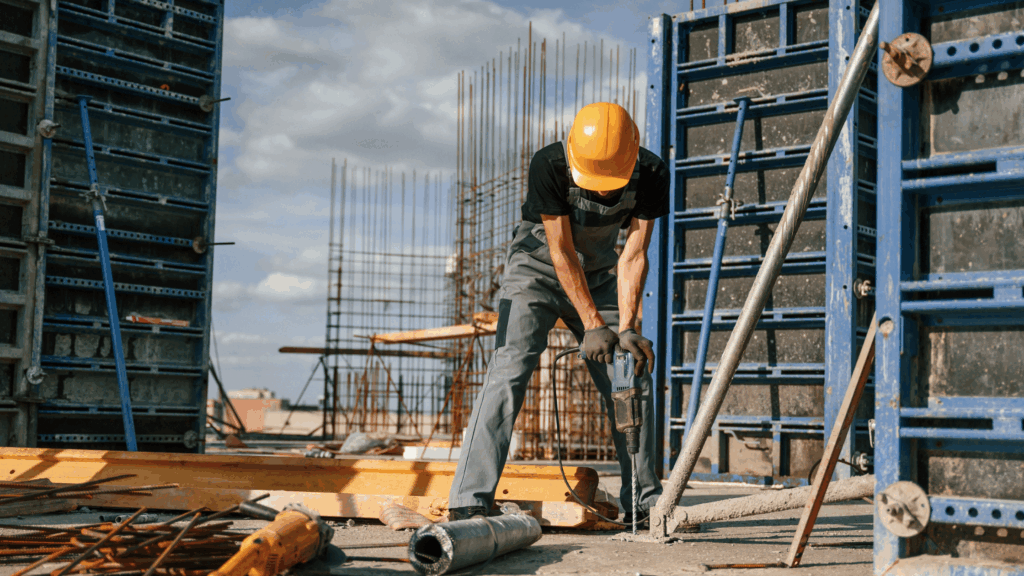
When materials are heavy and require significant force—such as carrying beam sections, shifting concrete forms, or hoisting loads by hand—the spine, hips, and lower limbs bear the brunt. The effort of lifting, pushing, or pulling heavy loads repeatedly stresses the muscles and joints beyond what the body is designed to handle, increasing the risk of sprains, disc issues, or worse.
Awkward and prolonged postures
Work that forces the body into off-balance positions, such as kneeling on subfloors, bending at the waist while screwing drywall, reaching overhead for lights, or spending hours on hands and knees, leaves certain muscle groups loaded for long periods. Prolonged loading without recovery increases fatigue, micro-damage, and ultimately, injury.
Repetition and prolonged task exposure
When a task is repeated many times, like when you are drilling anchors, hammering rebar ties, or applying finish touches, the same muscle groups, tendons, and joints are stressed over and over. Over time, micro-traumas accumulate, and the body has less time to recover from them. Ergonomic research shows repeated tasks raise the risk of MSDs.
Contact stress and vibration exposures
Using hand tools that vibrate (such as jackhammers or impact drivers) or tools that press hard against body parts (such as kneeling on concrete or leaning elbows on hard surfaces) can create localized stress. Vibration can lead to nerve and circulatory damage in the hands; contact stress can cause inflammation of tendons or nerves. The impact may not be immediately apparent, but it builds up over time.
Static loading and limited recovery
Holding a position—such as overhead drilling, stationing scaffolding above shoulder level, or standing in one posture for an extended period—limits circulation, increases fatigue, and restricts recovery. Over time, a worker may feel stiffness, aching, and reduced movement.
Task-schedule and workload patterns
When tasks are scheduled back-to-back with minimal breaks, or the same crew repeats the same motion day after day without variation, there’s little chance for muscle groups to rest or adapt. Construction sites often demand pace and continuity—that exacerbates the risk of ergonomic injuries in construction. While not always labelled in ergonomic checklists, schedule design matters.
Common injuries in construction and how they show up in the field
Back and lower-body strain – drivers, carriers, bending tasks
Workers who hitch loads on flatbeds, carry formwork into place, and repeatedly bend to tie rebar or finish slabs often report experiencing lumbar (lower back) pain, strained hamstrings, or hip fatigue. The onset may be subtle: first a twinge, then a persistent ache, and eventually, lost days or mobility issues.
Neck, shoulder, arm issues – overhead work, tool handling
Tasks that force arms above shoulder height (running conduit, ceiling finish, overhead plumbing), or that involve heavy tool-handling (saws, grinders), create shoulder fatigue, rotator-cuff strain, and neck stiffness. These are often dismissed as “just part of the job” until they become limiting or chronic.
Wrist/hand injuries – vibration tools, repeated gripping
Grip-intensive work, such as tying wire, using impact drivers, or handling small parts, combined with vibration (from jackhammers or overhead tools), can lead to tendonitis in the wrist, nerve entrapment (carpal tunnel syndrome), or early-onset arthritic changes. These are subtle, and the worker may compensate until the pain stops them from performing tasks.
Chronic fatigue, micro-injuries, and reduced mobility – the “silent” effect
Microtears in muscle, incremental tendon damage, and joint stress with incomplete repair can accumulate over weeks/months. The worker walks more slowly, lifts differently, and avoids certain motions. It doesn’t make headlines, yet productivity dips and other injuries become more likely.
Lower-extremity joint degeneration – knees and hips
When kneeling on hard surfaces, repeatedly squatting to finish flooring, climbing scaffolding, or shifting heavy loads by foot, the knees and hips may accumulate cartilage stress, bursitis, or chronic joint pain. Over the years, this may limit mobility both on and off the job.
Tendon and ligament injury in unexpected areas
Sometimes tasks don’t appear high-risk for lifting but involve stabilizing loads, awkward reach, or twisting, such as pulling cables from trenches while bent or spinning to unscrew fasteners overhead. These actions place twisting and torque loads that stress ligaments. The result can be sprains that linger and shorten careers.
Preventive practices for site ergonomics and physical wellness
Ergonomic assessment & participatory approach
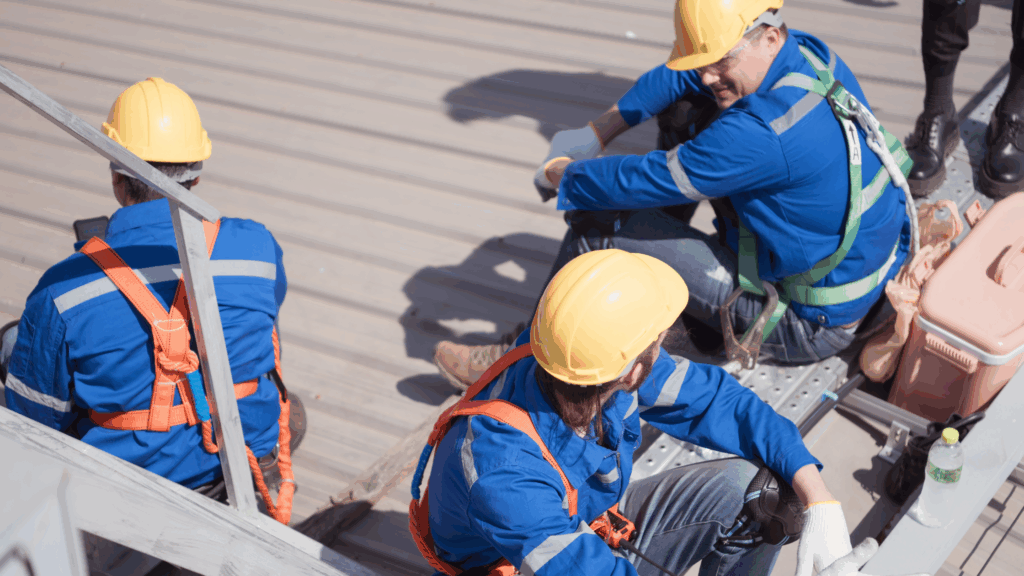
Bring workers into the assessment. Ask them: which tasks leave you sore? Which motions feel “off” after a shift? Use their input to map tasks, identify where lifting is heavy, where access is awkward, and which tools vibrate excessively. The OSHA “Elements of Ergonomic Programs” notes that worker involvement is a core element.
Training and tool/task design
Teach proper lifting techniques: keep the load close, bend your knees, and avoid twisting. Train crews to recognise signs of fatigue or soreness and to stop before the pain becomes injury. Choose ergonomic tools (lighter-weight, vibration-reduced handles) and adjustable work heights so workers don’t constantly reach overhead or bend deeply. Sites should link to movement-and-mobility material, like our mobility tips every skilled laborer needs to move better and work safer.
Job rotation, breaks, and recovery built into schedule
Rotate crews between heavy lifting, overhead work, and finishing tasks to prevent the same muscle groups from being overused day after day. Schedule micro-breaks—short stretches or change-in-posture every hour or two. Use warm-up routines (see our 10 core exercises to keep your construction career injury-free) to prep the body.
Engineering controls and equipment
Use mechanical assists, such as hoists, lifts, material carts, and scaffolding, at the correct heights. Adjust benches or platforms so workers maintain neutral postures. Choose power tools that reduce vibration or have a counter-balance. For kneeling tasks, provide knee pads or platforms. For hand-arm vibration, use anti-vibration gloves and limit exposure. OSHA guidance emphasises engineering solutions over relying solely on worker technique.
Monitoring, reporting, and early intervention
Encourage the reporting of early symptoms—such as aching wrists, stiff backs, and numb fingers—before they become lost-time injuries. Keep track of near-misses and complaints, and act promptly. Provide early access to physical therapy to prevent minor issues from escalating.
Wellness-and-mobility routines
Incorporate daily movement routines: gentle stretches, dynamic warm-ups before shift start, and cooldown routines at the end of the day. These help tissue repair and reduce fatigue accumulation, allowing your muscles to warm up and cool down before and after strenuous physical work.
Data feedback and continuous improvement
Use injury logs, workers’ compensation claims, restricted-duty records, and worker mobility check-ins to identify which tasks continue to drive discomfort. Adjust accordingly. For instance, if a given crew reports repeated shoulder strain while working with overhead drywall, redesign the scaffolding, reduce the time spent in that posture, or provide assistive tools.
How firms measure success and ROI in ergonomic wellness programs
Companies can track several metrics: a reduction in days-away-from-work injuries tied to musculoskeletal disorders, fewer compensation claims for back/shoulder/hand injuries, improved mobility and ability of workers to perform high-force tasks without downtime, lower turnover (since chronic pain drives people out of trades), and fewer minor injuries escalating into major ones. Because ergonomic injuries in construction are often subtle, they’re easy to overlook. However, each missed day or reduced shift capacity impacts the bottom line, including lost work hours, replacement labor costs, decreased morale, and delayed schedules.
By measuring the before-and-after effects of an ergonomics initiative (for example, mechanical assist devices, training, and rotation schedules), a firm can justify its investment. Moreover, site leaders can survey workers on soreness, fatigue, and their ability to complete shifts without discomfort, and monitor overtime and restricted-duty incidents. The cost of a seemingly “minor” hand-tendon irritation may escalate into surgery and months off work; catching it early and designing tasks differently avoids that leap.
Final thoughts
Day-to-day physical stresses on construction sites are frequently overlooked because they don’t cause visible damage like a fall or collapse. But over weeks, months, and years, they take a toll on the workforce—slowing crews, forcing missed shifts, increasing turnover, and raising costs. Site superintendents, safety managers, operations leads, and workers themselves must treat ergonomics and physical wellness as integral parts of safety and health. Start by identifying tasks that leave crews sore, run short warm-ups, and review tool design and lifting practices, then build small improvements. Over time, the gains stack: fewer aches, stronger tradespeople, fewer injuries.
If you found this helpful and want to stay ahead in construction safety and wellness, join our community—subscribe to our newsletter for timely updates and best-practice articles built for trades, architects, and engineers.