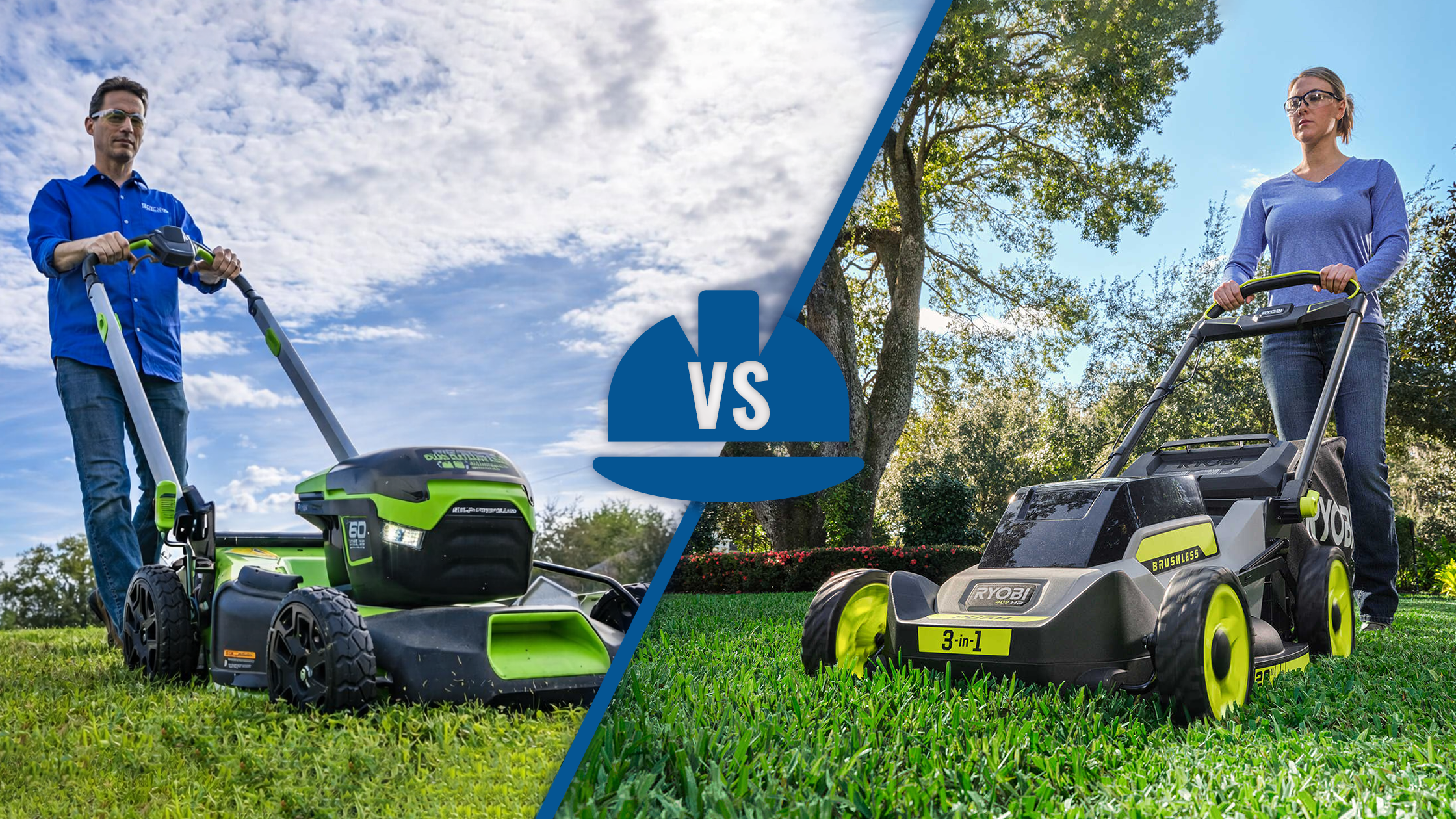
Debating between a Greenworks vs Ryobi lawn mower for your next lawn trim? Many homeowners want something powerful, easy to use, and a good match for the size of their yard. In this article, we’ll compare the Greenworks 60V 21” Self-Propelled Mower with the Ryobi 40V HP Brushless 20” Push Mower to help you decide which one fits your needs. We focus on the things that matter most in everyday mowing, like power, runtime, comfort, and value.
As an Amazon Associate, we earn from qualifying purchases. Some of the links below are affiliate links, meaning that at no extra cost to you, if you click through and make a purchase, we may earn a commission.
Overview of the models
Greenworks 60V 21” Self-Propelled Lawn Mower
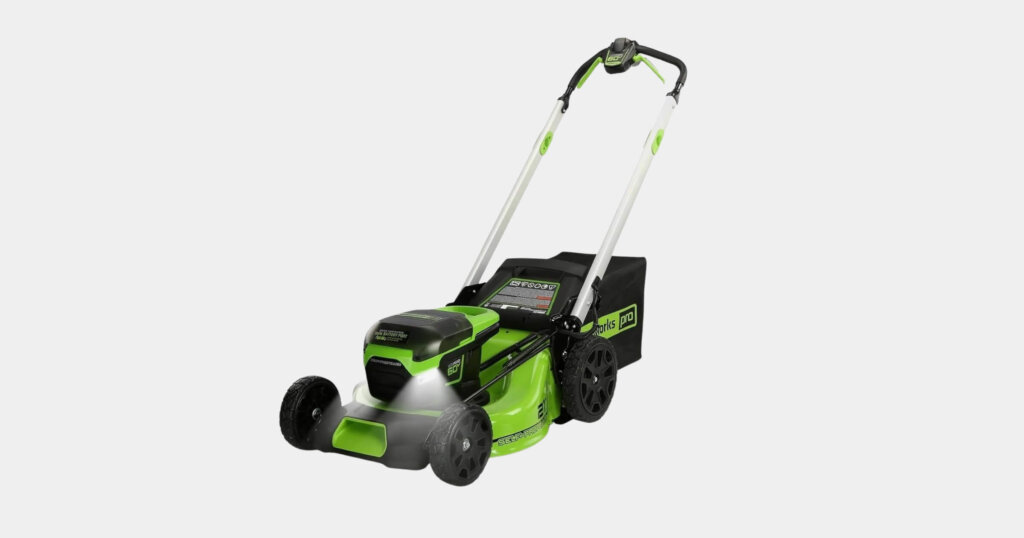
The Greenworks 60V 21” Self-Propelled Mower is built for homeowners who want strong cutting power with less effort. It runs on a 60V system and features a 21” steel deck, making it a good match for medium-sized lawns and thicker grass. Some versions come with two 4.0 Ah batteries, and the mower can use them together for longer runtime. It starts with a simple push button, and the self-propel feature helps you move across the yard without feeling like you are pushing a heavy machine. Reviews note its strong blade speed, smooth handling, and solid performance in tougher grass.
Ryobi 40V HP Brushless 20” Push Mower
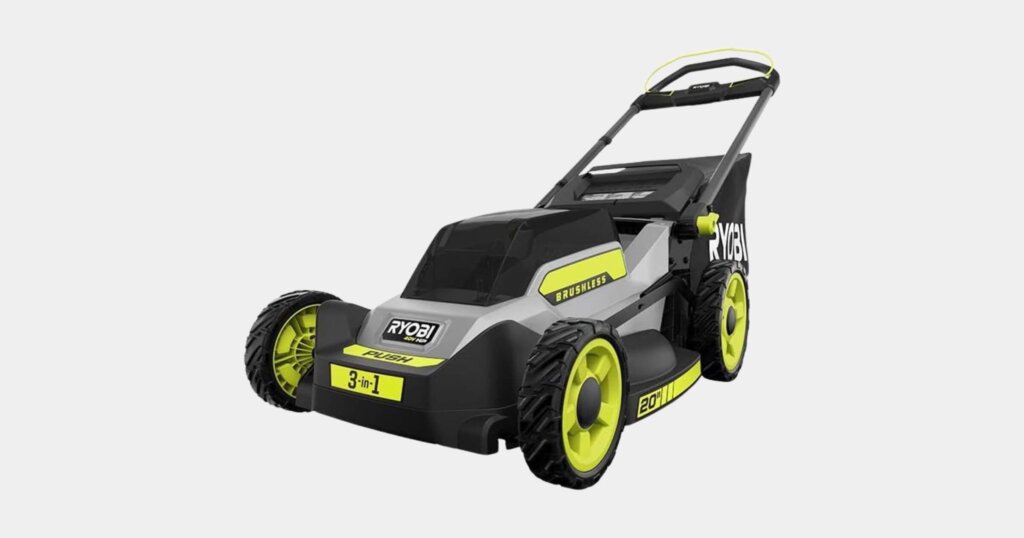
The Ryobi 40V HP Brushless 20” Push Mower is a solid choice for homeowners who want something easy to handle and budget-friendly. It runs on Ryobi’s 40V system and features a 20” deck, making it a good fit for smaller or medium lawns. The brushless motor is designed to give better power and longer life, and one version even claims to deliver more power than a 150cc gas mower. Ryobi also has one of the largest 40V ecosystems on the market, so if you already own other Ryobi tools, this mower fits right in. It is known for being lightweight, simple to use, and great value for everyday mowing.
Specifications comparison: How do the models compare on paper?
Here is a quick look at how the Greenworks 60V 21” Self-Propelled Mower and the Ryobi 40V HP Brushless 20” Push Mower stack up side by side. This table shows the main differences in power, size, runtime, and features, followed by how each model performs in real yard conditions.
| Specification | Greenworks 60V 21” Self-Propelled | Ryobi 40V HP Brushless 20” Push Mower |
| Voltage | 60V | 40V |
| Deck size | 21” (self-propelled) | 20” (push) |
| Motor/drive type | Brushless, self-propelled | Brushless, push type |
| Runtime/battery system | Up to about 1 hour using two batteries, with a claim of mowing up to three-quarters of an acre | Up to about 45 minutes with a 6.0 Ah battery, with a claim of handling up to half an acre |
| Weight | Around 65 pounds, depending on the version | Weight varies by model. |
| Warranty | 4-year tool and battery warranty | 5-year tool warranty and 3-year battery warranty |
Greenworks vs Ryobi lawn mower: Which one packs more punch?
Greenworks (60V System): Stronger punch for tougher lawns
Because Greenworks uses a 60V system, it has more electrical headroom than many 40V models. For example, one review noted that it reached a peak blade speed of about 3,200 RPM in turbo mode, “toward the top of the standard range for a gas mower.”
That extra power and speed matter when you’re dealing with thick turf, wet or heavy grass, or slopes. The self-propelled drive also reduces the effort required by the user, letting the mower pull you more than you pull the mower. In real-world tasks, this means:
- On a yard with dense or tall grass, the Greenworks may hold up better without bogging down.
- On a sloped surface, the self-propel drive gives a clear advantage, letting you focus on steering rather than pushing.
- If you want to mow faster or cover more ground, the 21″ deck plus higher voltage can help.
That said, the review also noted that in very tough/muddy or wet conditions, battery consumption increased faster than expected: “long wet grass drained the battery much faster than I would have expected.” So while the power is there, real lawn conditions still affect performance.
Ryobi (40V System): Good for everyday yards with excellent value
The Ryobi 40V HP model may not match the top end of the 60V systems, but it has strong credentials. According to reviews, this model “delivers more power than a 150cc gas mower, making it a true gas replacement.” It claims up to 45 minutes of runtime using the included 40V 6.0 Ah battery, ideal for up to a half-acre. In real-life mowing:
- On a relatively flat yard with normal grass growth, this Ryobi model will likely perform very well.
- The 20″ deck is slightly smaller than the 21″, meaning you might need an extra pass on wider lots, but for many homeowners, that difference is minor.
- The value orientation means you get a lot of usable performance for less cost, especially if you already own Ryobi 40V batteries and tools.
Which performs better under what conditions?
- If your lawn is large-ish, has thick or wet grass, or has slopes, the Greenworks mower brings the extra power and self-propel drive that make those tougher jobs easier.
- If your yard is smaller (half-acre or less), mostly flat with typical grass conditions, and you’re focused on great value and simpler pushing, the Ryobi model is more than capable.
- Consider also long-term battery wear, service, and how often you’ll face “hard cuts” (thick grass, overgrowth, slopes). If those are rare, the 40V Ryobi might be “good enough” and more efficient for routine use.
In short, the Greenworks model is the more powerful machine when you push the limits. The Ryobi model is the smart, everyday performer for most typical homeowners.
Ease of use and ergonomics: Which is more beginner-friendly?
When it comes to comfort and everyday handling, both mowers are easy to learn. The biggest difference is that the Greenworks model is self-propelled. This means it helps pull you forward, taking a lot of the effort out of mowing larger or uneven lawns. It can feel heavier than the Ryobi, but the self-propel drive makes up for that if you have slopes or a bigger yard.
Both mowers have simple controls. The Greenworks mower features a push-button start, a single lever to adjust the cutting height, and foldable handles that make storage easier. Ryobi also keeps things simple with one-touch fold handles, and many users who already own Ryobi tools will appreciate that the 40V batteries match the rest of their setup.
Since both models are electric, vibration and noise levels are lower than what you would expect from a gas mower. One review noted that the Greenworks mower is noticeably quieter in use, making mowing feel smoother and less tiring.
For storage, both options fold up for vertical placement, which helps save space. The Ryobi has a smaller 20” deck, so it may be slightly easier to tuck into a tight garage or shed.
Overall, beginners who want something light and simple may find the Ryobi easier to manage. Homeowners with larger lawns or small slopes may prefer the Greenworks since the self-propelled feature takes the pressure off your arms and makes longer mowing sessions feel easier.
Greenworks vs Ryobi lawn mower: Which one gives more bang for your buck?
It’s important to consider not just the sticker price of the mower but also the cost of batteries (and chargers) if they are sold separately.
Price ranges and battery cost
- The Ryobi 40V HP Brushless 20″ Push Mower often comes with a battery and charger in the bundle, depending on the retailer. That means if you already own Ryobi 40V batteries, the incremental cost for the mower alone is lower.
- The Greenworks 60V 21″ Self-Propelled model is a premium setup: higher voltage, self-propel drive, larger deck, and stronger performance. As a result, the base cost is higher. Also, if batteries are not included, you’ll need two higher-capacity 60V batteries, which adds to the total investment.
Value for different yard conditions
- If your yard is about a half-acre, fairly flat, and the grass is well-maintained, the Ryobi 40V model likely delivers more than enough performance for the price. You’ll get a solid cordless experience, and unless you have very thick grass or tough conditions, you may not need the extra power of a 60V system.
- If your yard is about three-quarters of an acre or more, has thicker turf, slopes, or you want the convenience of a self-propelled drive to minimise effort, then investing in the Greenworks 60V model makes sense. The extra performance can justify the higher price, the self-propel ease, and the larger deck that reduces mowing time.
For homeowners who want reliable performance at a lower cost, especially those who already own or plan to build on the Ryobi 40V tool ecosystem, the Ryobi mower represents excellent value. For users who often face tougher mowing conditions or simply want the highest convenience (self-propel, larger deck, higher voltage), the Greenworks mower is worth the extra investment.
What extra features do they offer?
Greenworks 60V 21″ Self-Propelled Lawn Mower
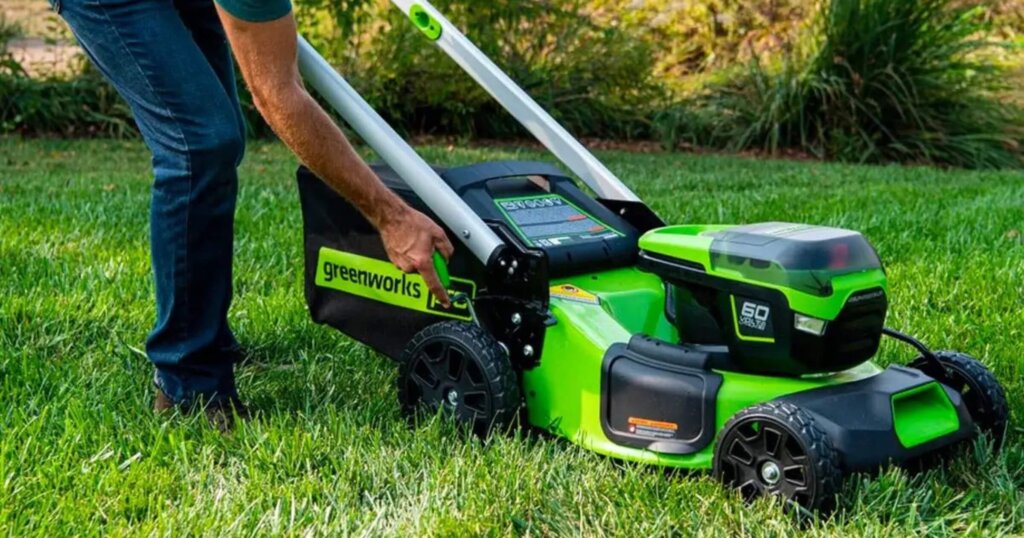
- Self-propelled drive: The mower moves, and you steer, which reduces effort when mowing larger areas or slopes.
- LED headlights: Built into the deck for better visibility in low-light or early-morning mowing.
- 4-in-1 function: Offers mulching, bagging, side discharge, and a leaf pickup mode for flexible yard cleanup.
- 60V tool ecosystem: Greenworks offers a strong lineup of 60V tools, so if you commit to their platform, you get access to other high-voltage products.
Ryobi 40V HP Brushless 20″ Push Mower
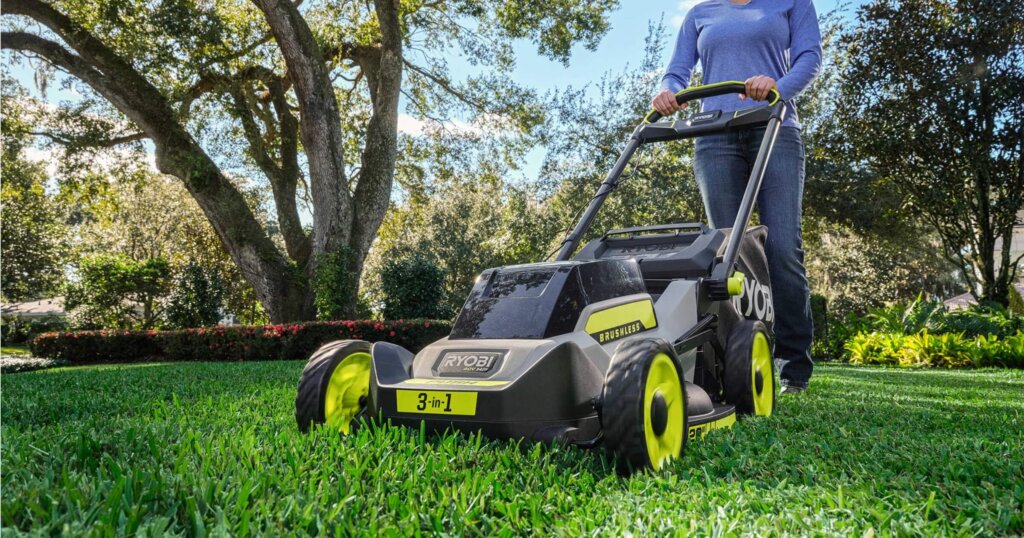
- Cross-cut multi-blade system (available in some Ryobi 21″ variants): Improves cutting performance and gives a finer finish on turf.
- One-touch fold handles for easy storage: Great for compact garages or sheds.
- Massive 40V ecosystem: Ryobi has one of the largest cordless platforms in the 40V range, meaning many users may already own compatible batteries or tools, which lowers the total cost of ownership.
- Push-type design keeps things simple and reliable.
Ecosystem note: If you already have Ryobi 40V batteries or plan to build a tool collection with the 40V line, the mower integrates smoothly. On the other hand, choosing Greenworks’ 60V system gives you excellent performance and access to a growing high-voltage ecosystem, though it may be slightly less common than Ryobi’s 40V ecosystem.
Greenworks vs Ryobi lawn mower: Pros and cons summary
Greenworks 60V 21” Self-Propelled: Pros
- Strong 60V power that handles thick or tall grass well
- Self-propelled drive that makes mowing easier on larger lawns or gentle slopes
- Large 21” deck that helps you cover more ground in less time
- Solid build quality with helpful features like LED headlights and easy fold storage
- Good runtime claims, with Greenworks noting it can cut up to about three-quarters of an acre with two batteries
Greenworks 60V 21” Self-Propelled: Cons
- Higher price due to the powerful 60V system and the self-propel feature
- Heavier than many push models, which may matter in tight spaces
- Batteries can add to the cost if you need extras or a higher capacity
- Might feel like too much mower for very small or simple yards
Ryobi 40V HP Brushless 20” Push Mower: Pros
- Great overall value, especially for small or medium-sized yards
- Works with Ryobi’s wide 40V battery system, so many users can share batteries with other tools
- Lighter weight and a smaller 20” deck make it easier to steer and store
- Strong performance claims that it can deliver more power than a 150cc gas mower
Ryobi 40V HP Brushless 20” Push Mower: Cons
- Lower 40V voltage means it has a little less power for thick or heavy grass
- Push-style design requires more effort on slopes or bigger yards
- A smaller 20” deck can slow you down if you have a wide or long lawn
- Runtime is shorter compared to higher-end 60V systems, which may matter for larger spaces
Which lawn mower should you buy?
Choosing the right mower really depends on the size and shape of your yard, and on the kind of mowing experience you want. If your lawn is small to medium in size, up to about half an acre, and it’s mostly flat, the Ryobi 40V HP Brushless 20” Push Mower is a great value pick. It’s easy to handle, simple to store, and works well for everyday mowing. It is also a wise choice if you already use Ryobi’s 40V tools, since you can share batteries across your equipment.
If your yard is larger or has thicker turf or gentle slopes, the Greenworks 60V 21” Self-Propelled Mower is likely the better fit. The extra power and self-propel drive make mowing faster and easier, especially when the grass is heavy or the ground is uneven.
Before you decide, think about your future tool needs, how much storage space you have, and how often you deal with harsh mowing conditions. You can also check out our guides on the best battery powered lawn mowers and the best self propelled lawn mowers to explore more options.
For even more gear reviews and easy tips for homeowners, subscribe to our newsletter.