
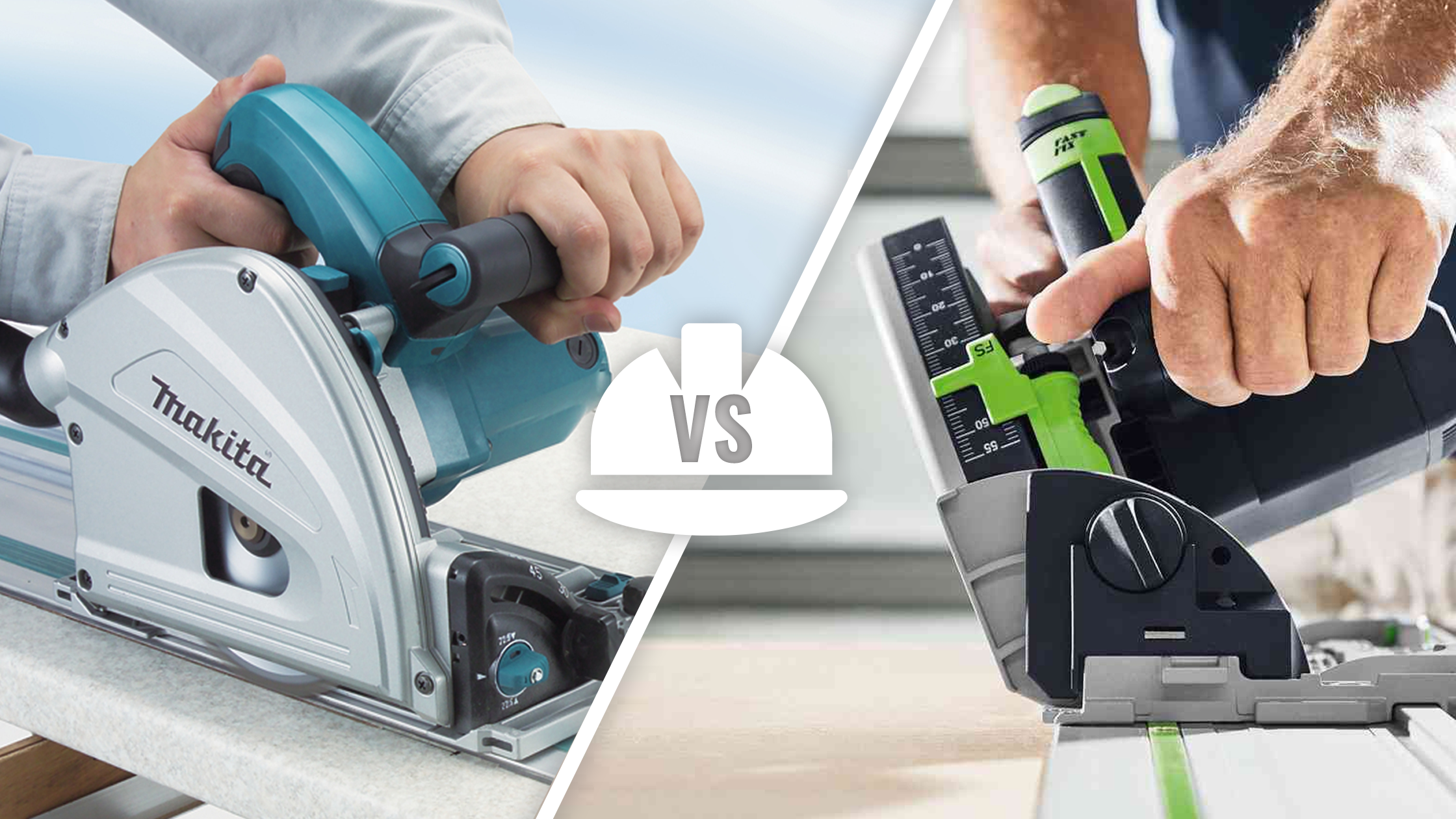
If you are trying to decide between the Makita track saw vs Festool track saw for your woodworking projects, look no further. Many pros, remodelers, cabinetmakers, and serious DIYers want a saw that can cut a straight line through plywood and sheet goods without stress. This guide compares the Makita 6-1/2″ Plunge Cut Circular Saw (model SP6000J) and the Festool TS 55 FEQ-F Plus head-to-head. We’ll cover specs, cut quality, cut depth, bevel range, dust collection, ease of use, and how each saw performs in real day-to-day woodworking. By the end, you will know which track saw fits your workflow and whether the Festool or Makita track saw is better for your projects.
Both the Makita SP6000J and the Festool TS 55 FEQ-F offer clean cuts, smooth plunge action, and reliable power. But they feel different in the hand, they offer different levels of precision, and they sit at different price points. If you work with long rail setups, rough-sawn lumber, or beveled cuts, those details matter.
Helpful note before we dive in: Makita officially labels the SP6000J as a “plunge circular saw,” but when you pair it with the guide rail that comes in the kit, it works exactly like a track saw. Many woodworkers even refer to it as the Makita track saw because the plunge action and rail system let you cut long, straight lines just like any other track saw. For this comparison, we’re looking at the Makita SP6000J as a full track saw setup.
As an Amazon Associate, we earn from qualifying purchases. Some of the links below are affiliate links, meaning at no extra cost to you, if you click through and make a purchase we may earn a commission.
Makita SP6000J in a nutshell
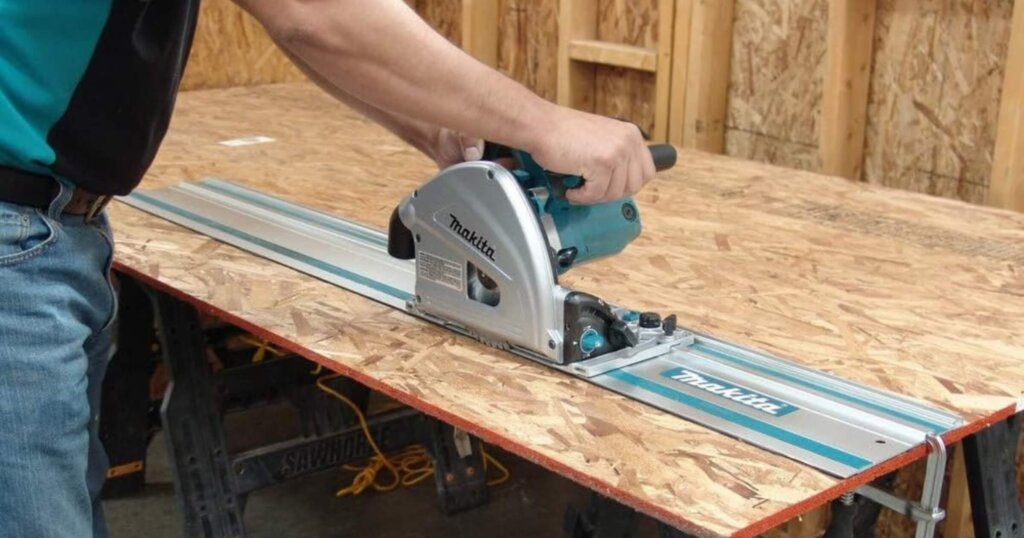
If you want a track saw that delivers strong power, good value, and clean cuts without breaking the bank, the Makita SP6000J is a dependable choice. This model is widely used in woodworking, cabinetmaking, and general carpentry because it delivers smooth cuts, good depth, and solid accuracy at a reasonable price.
- The SP6000J uses a 12-amp motor with variable speed from about 2,000 to 5,200 RPM, which helps you dial in the right speed for different materials. This makes it easy to cut even thicker lumber with good control.
- With a 6½” blade, the SP6000J cuts up to about 56 mm at 90 degrees and around 40 mm at a 45-degree bevel. The bevel range goes from -1° to 48° with stops at 22.5° and 45°. That extra bevel range is helpful for trim work and angled cuts.
- One of the biggest wins for the SP6000J is that it works with Makita guide rails and also plays nicely with many third-party guide rail systems. This is helpful if you already own rails from other brands or want flexibility without paying premium rail prices.
- You get smooth plunge action, enough power for most woodworking tasks, and a lower price than premium brands. Many woodworkers say they used the SP6000J for cabinetry and furniture builds and felt it handled everything they needed without issues.
Standout features
- Smooth plunge with minimal wobble
- Easy speed adjustment
- Good for breaking down plywood, cutting lumber, and making bevel cuts
- Clean, reliable cut quality for the price
Festool Track Saw TS 55 FEQ-F in a nutshell
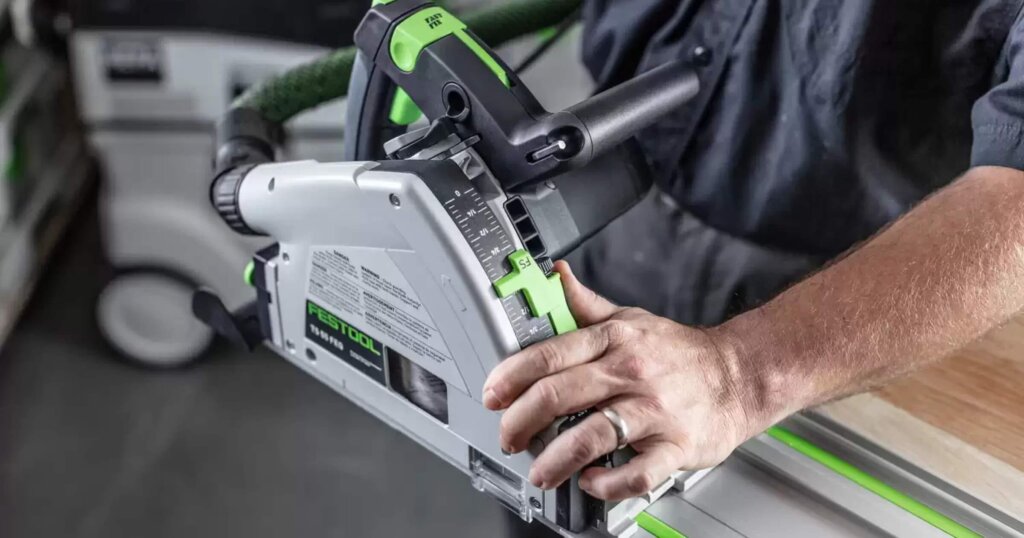
If you ask finish carpenters or cabinetmakers which track saw they trust most, the Festool track saw often comes up first. The TS 55 FEQ-F is known for clean cuts, better precision, and one of the best dust collection systems you can get in a saw.
Using a high-performance motor and a smooth plunge action, it helps you cut a straight line through plywood and sheet goods with minimal effort. The depth adjustment is extremely precise, which is helpful for built-ins, furniture work, and tight-fitting joinery.
- The Festool rail system holds the saw tight on the guide rail for a very stable cut. The splinter guard and overall rail design help keep edges clean on both sides of the cut.
- One of the biggest advantages of the track saw is dust collection. When paired with a Festool dust extractor, the TS 55 FEQ-F pulls dust right at the blade. This keeps your view clear, the workspace cleaner, and the air safer to breathe.
- Festool has a long history of engineering tools that last. The TS 55 FEQ-F feels steady, accurate, and easy to control. While it costs more than the SP6000J, many woodworkers say the better precision and cleaner cuts justify the price.
Specifications comparison: How do Makita and Festool compare on paper?
Here is a simple side-by-side look at the Makita SP6000J track saw and the Festool TS 55 FEQ-F track saw.
| Specification | Makita SP6000J | Festool TS 55 FEQ-F |
| Motor power/voltage | 12-amp corded motor | 1200-watt corded motor |
| No-load speed (RPM) | 2,000 – 5,200 RPM | 2,000 – 5,800 RPM |
| Bevel range | –1° to 48° (with stops at 22.5° and 45°) | –1° to 47° |
| Max depth at 90° | About 56 mm (2-3/16″) | About 50 mm (on rail) |
| Max depth at 45° | About 39–40 mm | About 38–43 mm, depending on whether the saw is used on the rail. |
| Weight | About 9.7 lbs | About 9.9 lbs |
| Corded vs cordless | Corded (SP6000J only) | Corded (Festool TS 55 FEQ-F only) |
| Battery platform | None for this model (Makita cordless is separate) | None for this model (Festool cordless is TSC series) |
| Track/guide rail compatibility | Works with Makita guide rails and many third-party rails | Works with Festool rail system only |
| Dust collection performance | Good, especially when paired with a shop vac, but not perfect | Excellent dust collection with Festool extractors |
| Warranty | 1–3 years, depending on region | 3-year service warranty (with registration) |
Both saws sit in the same weight class, use similar RPM ranges, and deliver strong cutting power. The SP6000J gives you a little more cutting depth and a slightly wider bevel range, which helps when working with thicker materials or when you want more flexibility.
Festool focuses more on clean cuts and accuracy. The TS 55 FEQ-F is known for better dust collection, smoother rails, and a splinter guard that helps you get straighter, cleaner edges. While the cutting depth is a touch lower, most woodworkers do not find that limiting because the tool is built for precision work.
If you want more cut depth and value, the Makita SP6000J is a great pick. If you want cleaner edges, better dust control, and a track saw that feels locked in for fine cabinetry, the Festool TS 55 FEQ-F stands out.
Performance and power: Which track saw packs more punch?
Cutting power and speed
The Makita SP6000J has plenty of strength for hardwoods, plywood, melamine, and most engineered materials. Its 12 amp motor keeps a steady pace, and users often say it does not bog down unless pushed very hard. It handles long rip cuts well and gives you enough speed to move through sheet goods without burning the material.
The Festool TS 55 FEQ-F has slightly more refinement in how it delivers power. Even though its wattage is similar, many woodworkers say the saw runs at a more consistent speed when cutting hardwood or dense plywood. The motor control system helps prevent drops in RPM, so the blade stays cleaner in the cut and feels smoother. The TS also has strong stall resistance, which helps when you are cutting thicker or more stubborn materials.
Because both tools are corded models, there are no battery or runtime limitations to consider. You get full power all the time, which is helpful for long sessions, large sheets of plywood, or repeated cuts in hardwood.
Cut quality and accuracy
Both saws produce clean, straight cuts, but the Festool track saw tends to leave a sharper edge, especially when paired with the rail system and splinter guard. Users who work in cabinetry often report that the TS 55 FEQ-F delivers better cut quality with less sanding or edge cleanup.
The Makita SP6000J still cuts very cleanly, and for many jobs, the difference is small. But in side-by-side use, the Festool saw usually wins in precision, especially when cutting melamine or laminated sheet goods, where chipping can be a problem.
Plunge action and bevel cuts feel smooth on both saws. The Makita plunge mechanism is easy to control and has a solid feel, but the Festool plunge is often described as “smoother” and more controlled, which can help when making detailed cuts or working on finish carpentry.
Real-world tasks
Both saws handle long rip cuts well. The SP6000J has more than enough power for these tasks, and many owners on Reddit and retailer reviews say it handles day-to-day woodworking tasks with confidence.
For finish carpentry or cabinetry, the Festool TS 55 FEQ-F usually stands out. It leaves smoother edges and holds a straighter line with less effort. This makes it a strong pick for trim work, built-ins, or any job where accuracy matters.
Beginners may find the Makita SP6000J easier to start with because it costs less yet delivers strong performance. It is forgiving, powerful, and reliable. The TS 55 FEQ-F is more precise, but some new users say the system feels more sensitive until you get the hang of it.
From owner reviews and woodworking forums, the overall takeaway is simple. The SP6000J gives you great power and performance for the money, while the Festool track saw gives you more precision, smoother cuts, and more consistent speed under load. Both are excellent tools, but they shine in different areas depending on your work style.
Makita Track Saw vs Festool track saw: Which is more beginner-friendly?
When you think about how a saw feels in your hands, how easy it is to control, how tired you get after a long day, and how smooth the plunge feels, that’s where ergonomics matters. Here’s how the Makita and Festool track saws compare when it comes to ease of use and comfort.
Handling and balance
Both the Makita SP6000J and the Festool TS 55 FEQ-F weigh about the same (around 9.7–9.9 lbs), which helps a lot when cutting long boards or large sheets of plywood. Neither feels heavy compared with full-size circular saws or table saws, so there’s less fatigue during long jobs.
In terms of balance, many woodworkers say the Makita feels a bit more “solid and sturdy.” Its weight feels evenly distributed, so it tracks well on the guide rail without wobbling. The Festool, on the other hand, often feels slightly more refined and smoother, especially when you start and finish a plunge, which helps if you want cleaner cuts or are using the saw for finish work.
Grip and controls
The plunge mechanism on both saws is intuitive and easy to operate. On the Makita, the plunge lever and control feel familiar and straightforward. The Festool’s plunge mechanism feels a little softer and smoother, which makes precise control easier, especially when you are working on delicate projects or cabinetry.
Switch layout on both tools is user-friendly. Many users, including those who wear gloves, say they can comfortably start, stop, and plunge without too much fumbling. For beginners, that means less frustration and safer operation.
Vibration and noise
Because both are well-built saws, vibration is minimal on both the Makita and the Festool. Noise levels are similar to those of plunge saws, loud enough to warrant hearing protection, but not so loud as to feel rough or grating after a few cuts. Continuous cutting on either saw is manageable.
That said, some users report the Festool feels a bit smoother in operation, less “buzz” or jerkiness, which can make a difference if you are doing a lot of cuts in a session.
One-handed or overhead use/portability
Given that both tools weigh under 10 lbs and have compact bodies, you could maneuver them with one hand briefly (for example, to reposition a board or lift the saw off the rail). But for actual cutting, both saws are best handled with two hands for control, safety, and precision.
If you need to transport the saw to job sites or move around a workshop, both are light enough to carry easily. Many woodworkers say they toss them in a van or take them to job sites without trouble.
Verdict on ergonomics
If you are just starting out and want a reliable track saw with straightforward controls, balanced weight, and no fuss, the Makita SP6000J is very comfortable and beginner-friendly. It feels accessible and forgiving.
If you care about smoother operation, finer control, and a more refined feel, especially for trim work, cabinetry, or detailed projects, the Festool TS 55 FEQ-F arguably offers a more polished, ergonomic experience.
Both saws are easy to use, but if you value a smoother plunge, subtle control, and an experience a little more “pro-level,” the Festool stands out. For basic usability and good balance without the premium price tag, the Makita SP6000J is hard to beat.
Price and value: Which one gives more bang for your buck?
If you’re still on the fence between the Makita or a Festool track saw, price and value can swing your decision.
Cost breakdown: Kit price, track costs, accessories, and ecosystem
- The Makita SP6000J typically costs significantly less than a Festool kit. For many DIYers and small shops, it’s an affordable entry into precision cutting. If you already have guide rails or use third-party rails, the overall cost stays reasonable. Because it’s corded, you don’t need to consider battery investment.
- The Festool TS 55 FEQ-F comes with a premium price tag. If you want the full experience, rail system, splinter guard, dust extractor, and possibly other accessories, you’ll invest more upfront. Festool’s ecosystem tends to be more expensive, including replacement rails or dust extractors.
Where Makita gives better value
- For general woodworking, shop work, or remodeling where you cut lots of plywood, sheet goods, or rough lumber, the Makita SP6000J gives you clean cuts at a fraction of the cost of a Festool system.
- If you own third-party guide rails already or don’t need the extras (splinter guard, dust extractor), Makita keeps your budget low.
- For beginners or hobbyists who want solid results without investing heavily, Makita delivers reliable performance without the commitment.
Where Festool justifies its premium
- If you do fine woodworking, cabinetry, furniture building, or trim work, the TS 55 FEQ-F can save you time on cleanup and finishing.
- Having a reliable dust collection system, especially in a professional shop environment, can make the extra cost worthwhile.
- If you value a complete, integrated system (rail, extractor, accessories) and want long-term durability and consistent cut quality, this track saw is a great choice.
Best value vs premium performance pick
- Best value pick: Makita SP6000J. For woodworkers who want a dependable track saw without breaking the bank, especially for simpler renovation projects. A good balance of power, cut quality, and price.
- Premium performance pick: Festool TS 55 FEQ-F. For those who care about precise cuts, finish carpentry, cabinetry, minimal cleanup, and a smoother workflow. The extra cost pays off when you want that polished, professional result every time.
Makita Track Saw vs Festool track saw: What extra features do they offer?
Extra features and accessories matter, especially if you care about convenience, precision, and long-term flexibility. Here’s how the two stack up.
Festool: Cleaner cuts, better dust control, finished results
- Integrated rail system and precise alignment: The Festool rail system is designed to work as a full unit: saw, rail, splinter guard, and often a clamp or two. Because everything is proprietary, you get tighter alignment and more stable cuts when doing straight-line rips or trim work.
- Smooth plunge and bevel control: The Festool TS 55 FEQ-F gives you refined control when plunging or beveling. That means more consistent bevel cuts and more control over depth, a big plus when you want accurate cuts for cabinet parts, trim, or furniture pieces.
- Premium kit accessories (if bought as a bundle): Many Festool kits include rails, splinter guards, a carrying case or Systainer bag, and sometimes adapter fittings for dust extraction. If you buy the full set, you immediately get a full cutting system ready for professional work.
Makita: Versatility, flexibility, and compatibility
- Wide guide rail and accessory compatibility: One big advantage of the Makita track saw is its flexibility. The Makita SP6000J works with Makita guide rails and often also fits many third-party guide rail systems. That makes it easier to reuse existing rails or to mix and match rails and accessories.
- More freedom with rail choice and cost savings: Because you aren’t locked into a proprietary rail ecosystem, you can shop around for rails, clamps, or accessories, sometimes at a lower cost than a fully bundled proprietary system. This can keep total cost down while giving flexibility for sheet goods, long rips, or unusual cut setups.
What they don’t offer (compared side by side)
- Neither saw has a “scoring cut mode” built into its stock blade system, though with the right blade and rail setup, you can get very good results.
- Neither system really supports one-handed cutting or overhead work safely; both are best used with two hands on the rail and stable support.
- With Makita, dust collection works, but it is not as refined as Festool’s system.
If you want a full-featured, professional-grade track saw system with consistent results, the Festool TS 55 FEQ-F clearly stands out.
If you prefer flexibility, lower cost, and the ability to pair the saw with different rails or accessories, the Makita SP6000J delivers a strong value and avoids locking you into a proprietary ecosystem.
Pros and cons summary
Makita SP6000J: Pros
- Excellent value for the money; you get a strong, capable track saw without a premium price tag.
- Smooth plunge action and reliable power for plywood, sheet goods, and lumber cuts.
- Wide rail compatibility; works with Makita rails and many third-party guide rail systems.
- Good cut quality for its price range; clean, straight cuts for general woodworking.
- Simple and straightforward design; no need for proprietary accessories or a full tool ecosystem.
Makita SP6000J: Cons
- Dust collection is okay when connected to a vacuum, but not as refined as with Festool.
- Finish quality (especially on melamine, laminate, or delicate sheet goods) can be a bit rougher compared to premium saws.
- Lacks the premium rail-system fit and splinter-guard stability that enhance cut precision.
Festool TS 55 FEQ-F: Pros
- Elite dust collection system; keeps the cut line visible, reduces cleanup, and minimizes airborne particles.
- Unmatched precision and cut quality; excellent for cabinetry, trim work, and finish carpentry.
- Smooth, controlled plunge and bevel action; easier to get clean, accurate cuts every time.
- Premium railway system and splinter guard; delivers stable, straight-line cuts and cleaner edges.
- Durable build and professional-grade engineering; designed to perform consistently over years of use.
Festool Track Saw: Cons
- Much higher initial cost; purchasing the saw, rails, and dust extraction gear adds up quickly.
- Proprietary ecosystem; replacement rails, accessories, and extractors tend to be more expensive than generic options.
- For beginners, the fine precision and system complexity can feel more sensitive and less forgiving.
- Less cutting depth compared to some competitors, though cut quality and precision often make up for it.
Which track saw should you buy?
Choose the Makita SP6000J if you want a budget-friendly, reliable, and no-fuss saw that still delivers strong performance. It’s perfect for:
- DIYers or hobbyists working on occasional wood projects or renovation jobs.
- Shops and builders who cut a lot of plywood or sheet goods and value flexibility and cost-effectiveness.
- Anyone who already owns guide rails or plans to mix and match rail systems without being locked into a proprietary ecosystem.
Conversely, choose the Festool track saw if you care deeply about precision, cut quality, and a refined woodworking experience. It’s especially ideal for:
- Cabinetmakers, furniture builders, finish carpenters, or anyone doing fine joinery or trim work.
- Professionals or serious DIYers who value smooth, accurate cuts and clean edges.
- Those who want the convenience of an integrated system and don’t mind paying more for a premium finish.
For more saw comparisons, check out these guides:
- Top 10 circular saws on the market
- Top reciprocating saws for budget, cordless power, and ergonomic performance
For more tool guides and hands-on breakdowns like this one, subscribe to our newsletter and stay updated with new reviews, tips, and must-know gear insights.