
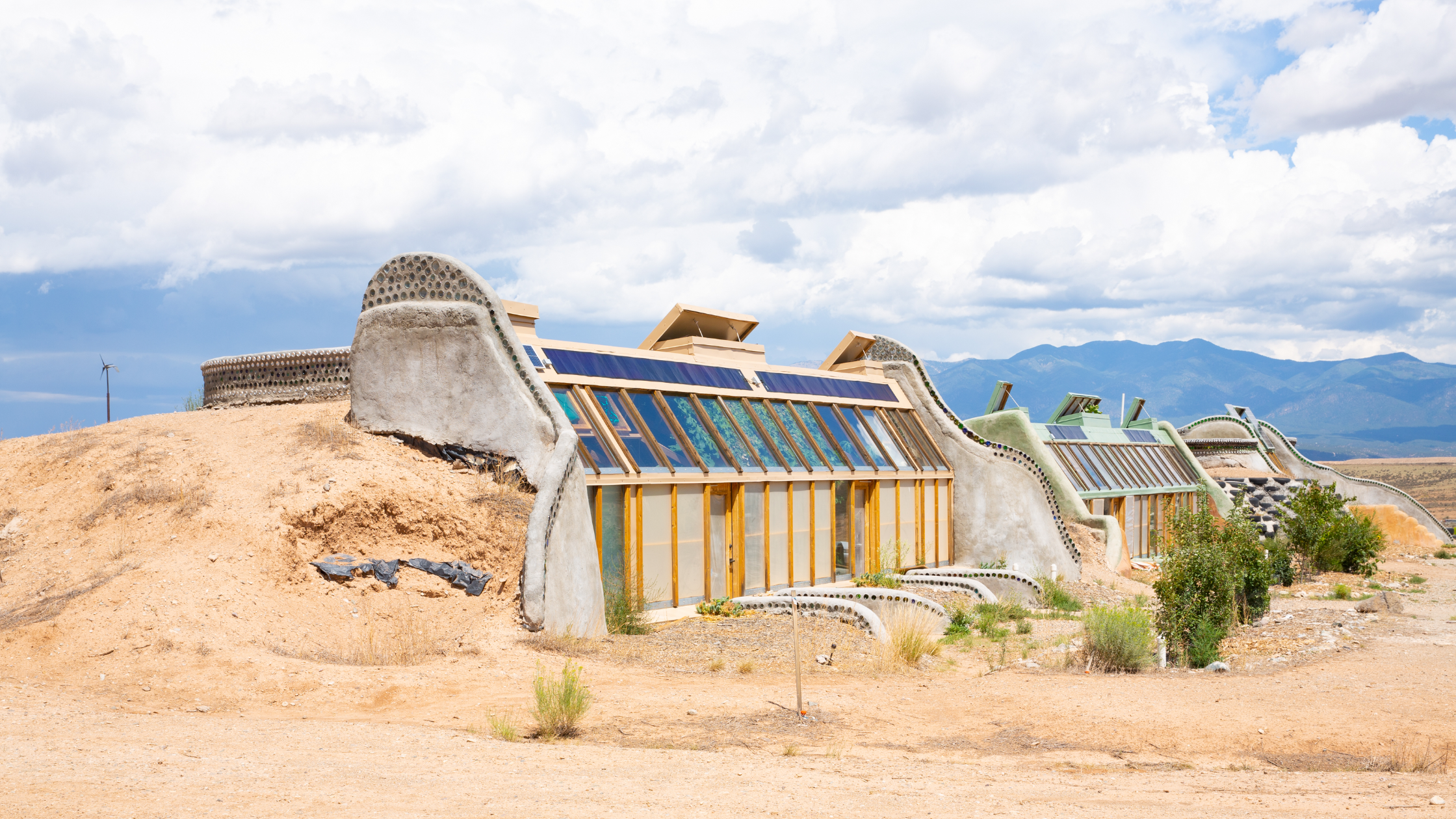
It’s no secret that more residential builders are looking for ways to make developments more sustainable, but some home designs and builders are miles ahead in eco-consciousness. In this article, we’re going to break down what Earthship homes are, how they work, and the benefits and challenges of this unique home-building trend.
What is an Earthship home?
Earthships are self-sustaining homes that use passive solar design. Pioneered by Michael Reynolds, they use natural and recycled materials like bottles, cans, and earth-packed tires primarily for structure, and natural light as their power source. These homes are designed to be completely off-grid, sometimes using wind turbines and battery storage as supplementary energy sources. Earthship builders even treat their own water.
Food production happens on-site for those with Earthship homes. They use natural temperature swings to maintain efficient heating and cooling, keeping the space thermally stable as the seasons change.
How Earthship biotecture homes work
Thermal mass heating and ventilation with tire walls
Earthships, thanks to their passive solar design, maintain an impressively stable indoor climate year-round without the need for a modern HVAC system. Their design involves building walls on the north, east, and west sides with thick, earth-packed old tires. They naturally absorb, store, and slowly release heat. On the south side, the walls are lined with floor-to-ceiling windows.
During the day, the interior walls capture warmth from sunlight filtering in through the windows, and at night, they slowly release that heat after the sun goes down. This minimal-heat-loss design keeps the home comfortable day in and day out, in almost any climate. On particularly hot days, the same tire walls will absorb excess heat, effectively preventing any spikes in temperature.
Solar energy systems
Like many modern sustainable homes, Earthships use solar panels to generate electricity. But Earthships primarily use off-grid panels and store their energy in deep-cycle batteries. This system supports powering appliances, lights, and other home systems, with inverters converting direct current (DC) to alternating current (AC) for use.
Earthships are designed to consume very little energy, so the solar setup can be much smaller than that used in traditional homes. Some, but not all, Earthship homeowners also use backup generators or wind turbines to supplement their power. The main idea in any variation is to produce on-site renewable energy and remain agile and consistent during outages or grid instability.
Rainwater harvesting
The roof system used in Earthship homes is designed to collect both rainwater and snowmelt, channeling the water through gutters into on-site cisterns. The water is then cycled through a pressurization and filtration system, making it potable for cooking, bathing, and drinking.
Even in dry climates, Earthship homes maintain abundant water supplies by reusing water repeatedly. It’s a holistic water strategy that allows residents to be independent of well and municipal water lines.
Greywater & blackwater systems
Earthships reuse their water supplies in a cascading loop: after use in showers or sinks, the water becomes greywater, which is then reused for interior planters. Here, it helps grow oxygen and food-producing plants, which biologically filter the water as it moves through the system.
Once the greywater is cleaned by the botanical cells, it’s pumped to its final use, flushing toilets. After this stage, it becomes blackwater, which is treated in an outside septic tank or biological cell designed to break down waste and support the outdoor landscaping. This system effectively means minimal water waste and reduced environmental impact from sewage.
Indoor greenhouse
Because the south side of the Earthship is mostly windows, a long indoor greenhouse thrives in its light, serving multiple roles. This space is the warmest and brightest, and filters indoor air while regulating humidity. In some Earthships, even in cold climates, it also produces food year-round.
Plants in the Earthship’s greenhouse are part of the greywater system. They absorb and naturally filter used water, boosting indoor air quality while growing foods like tomatoes, peppers, kale, and sometimes figs and avocados. It also adds natural beauty to the space and keeps residents as self-sustaining as possible.
Popular Earthship designs
While Earthship homes share a similar build and design, several models exist and are adapted to suit the home’s needs or climate. The design also occasionally deviates by location, adding new functionality or cultural flair. Here are a few notable Earthship designs and communities.
Greater World Earthship Community: Taos, New Mexico
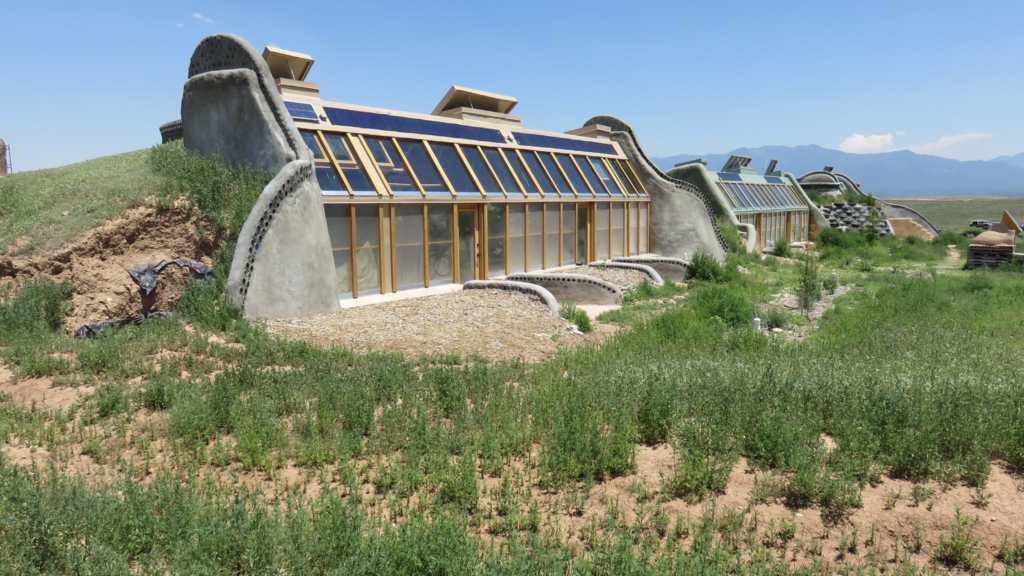
This community of Earthships is the largest in the world, spanning hundreds of acres of off-grid land. It’s unique in that it also serves as a kind of living laboratory, with nearly every Earthship offshoot variation and Earthship school being tested there. From basic “survival” models to luxury Earthship models, the community demonstrates how the design can scale from a single standalone to a self-sustaining village.
The Vallecitos: Northern New Mexico
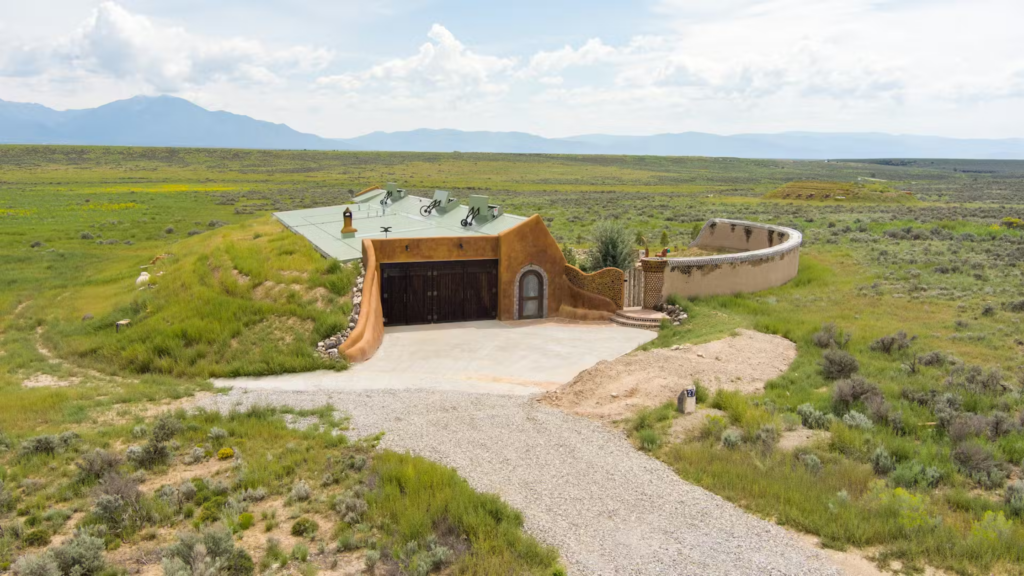
The Vallecitos-style Earthship is unique in that it employs a more advanced solar design and a more modern architectural aesthetic. It integrates an extended greenhouse corridor with deep thermal mass, making it highly efficient. This design also features custom artistic elements, giving the exterior a more sculptural look than a typical Earthship. The goal with this style was to make the typical earthship design look more modern and refined.
The Simple Survival Earthship
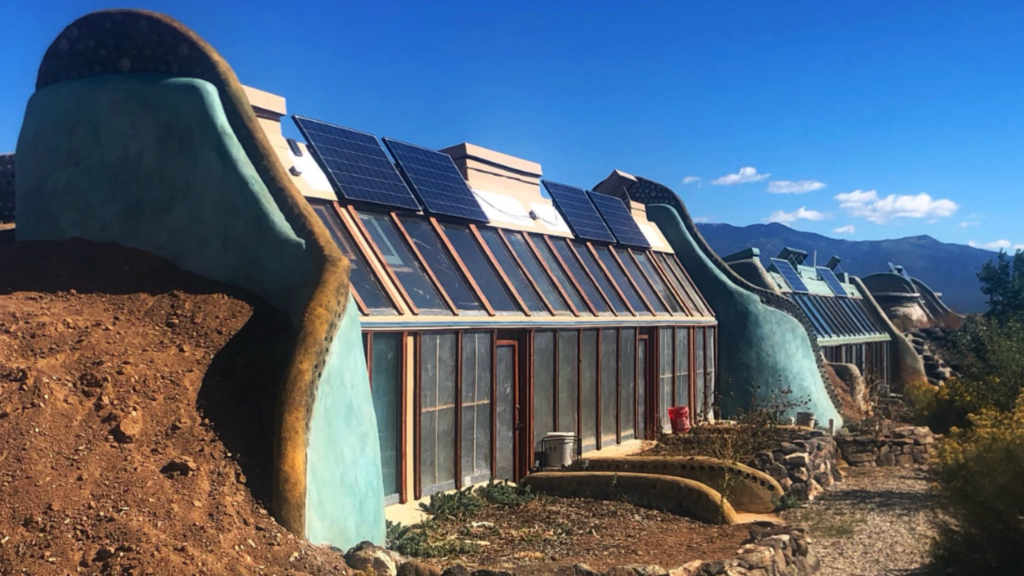
The aptly named Simple Survival Earthship focuses on rapid deployability, affordability, and sustainability. This design strips the Earthship down to only its most essential systems, and is often used in remote communities, as affordable (sustainable) housing, or in disaster-relief contexts.
These Earthships may be basic, but because the emphasis here is on quick builds, affordability, and minimal materials, they are some of the most enticing design options for those looking into Earthships for the first time.
Eve’s Garden / The Hobbit House Earthship
At the opposite end of the spectrum from the Simple Survival Earthship, Eve’s garden is a whimsical build with natural curves, rounded beams, and sculpted walls, much like a Hobbit House. While still self-sufficient and sustainable, the goal was artistic expression. These builds often have extensive bottle-wall mosaics, curved glazing in the greenhouses, hand-shaped finishes, and a more nature-forward look. The fantasy-like design speaks to those looking for eco-friendly designs with more charm and character.
How much does it cost to build an Earthship
Unsurprisingly, the cost to build an earthship varies. The final price tag will depend on where you live and other factors, including land and local permitting, available structural materials, solar and battery systems, finishing and design complexity, and more.
Generally, we can break down Earthship build costs into two different ranges. If you’re opting for a DIY build, the final price can range from $50,000 to $300,000. If you hire a professional builder, like Earthship Biotecture, your price range could be anywhere between $100,000 and $1.5 million.
For a better price estimate, contact local Earthship builders to compare quotes.
Benefits of Earthship homes
When we think about Earthship home benefits, it’s easy to blanket the pros as “sustainability.” Here’s what that looks like in more detail:
- Water efficiency: The rain capture system, from fresh to greywater to blackwater, drastically reduces home water waste. Homeowners can feel good knowing their water serves multiple purposes before it’s finally flushed.
- Energy independence: The Earthship’s solar and thermal design minimizes reliance on utilities, wells, and HVAC systems, ultimately lowering long-term costs.
- Disaster preparedness: The thick walls and impressive thermal mass provide durable protection against the elements and greater stability during extreme conditions and weather events.
- Reduced monthly expenses: Low (or zero) utility bills and operational costs mean Earthship owners save money while saving the environment.
- Sustainable living: The main reason the design is so popular is that it is made of both natural and recycled materials, and its overall low carbon footprint results in minimal environmental impact.
- Connection to nature: The open windows and greenhouse integration make for healthier, more natural living environments.
Challenges and considerations before building
With any residential build, no sustainable design is entirely perfect. When you’re building something highly functional and equally unconventional, it’s easy to run into bottlenecks. Here are some of the most common challenges and considerations to keep in mind before building.
- Permitting issues: Earthships, wherever they are, often face hurdles during the permitting process due to their core systems. Off-grid power, greywater reuse, earth-packed tires, and rainwater harvesting usually lie outside standard building codes. Some local officials are also completely unaware of Earthship engineering, meaning the review processes, inspections, and demand for engineering stamps of approval quickly increase final costs.
- Labor intensity: The earth-packed walls alone require potentially thousands of tires meticulously rammed with earth, which is a labor-intensive process. Even small walls can take weeks to complete, and most DIY builders, unless it’s their first time, greatly underestimate the physical work involved.
- Climate compatibility: Earthships can be modified to work almost anywhere, but the ideal climates are high sunshine, low humidity, and consistent, predictable day-to-night temperature swings. The conditions in states like New Mexico are perfect. Earthships in northern climates, such as New England, often require supplemental heating, additional insulation, and redesigned ventilation systems to prevent condensation.
- Maintenance: While Earthships are self-sufficient in terms of energy generation, it doesn’t mean the design is free of maintenance. Owners must actively manage their waste, water, and energy systems by checking battery banks, cleaning water filters, maintaining plants, and more. For those who are used to “set and forget” utilities, it can be a steep learning curve.
- Financing difficulty: Earthships often fall outside traditional lending criteria because most lenders prefer predictable, code-compliant homes with market comparables. Construction loans in particular are hard to secure, as Earthship materials and installation processes don’t follow regular contractor schedules or price structures.
Earthship visitor centers and who an Earthship is ideal for
There are no hard and fast rules around who can and can’t build and live in an Earthship home. However, people seeking off-grid independence, low-impact living, and sustainable housing make great candidates. Building and maintenance also require a lot of care and patience, so those comfortable with DIY projects and consistent upkeep might be better suited to the lifestyle. The Earthship visitor center in Tres Piedras, New Mexico, is a popular destination for people curious about the design and eager to learn more.
Additionally, if your area has flexible building codes, strong solar potential, and open land availability, you might have an easier time with the build itself. If there’s already a community of Earthship homes nearby, it’s even better.
Final thoughts
If blending sustainability, DIY, and off-grid independence is enticing to you, you might enjoy building and maintaining your very own Earthship home. After some careful planning, you can reap the benefits of long-term cost savings, a more disaster-resilient home, and a deeper connection to nature.
Keep in mind blockers like labor intensity, permitting issues, and climate compatibility. But if those are a non-issue, you can enjoy your Earthship build for years to come.
Subscribe to the Under the Hart Hat newsletter and follow us on LinkedIn to stay in the loop about sustainable housing design.