
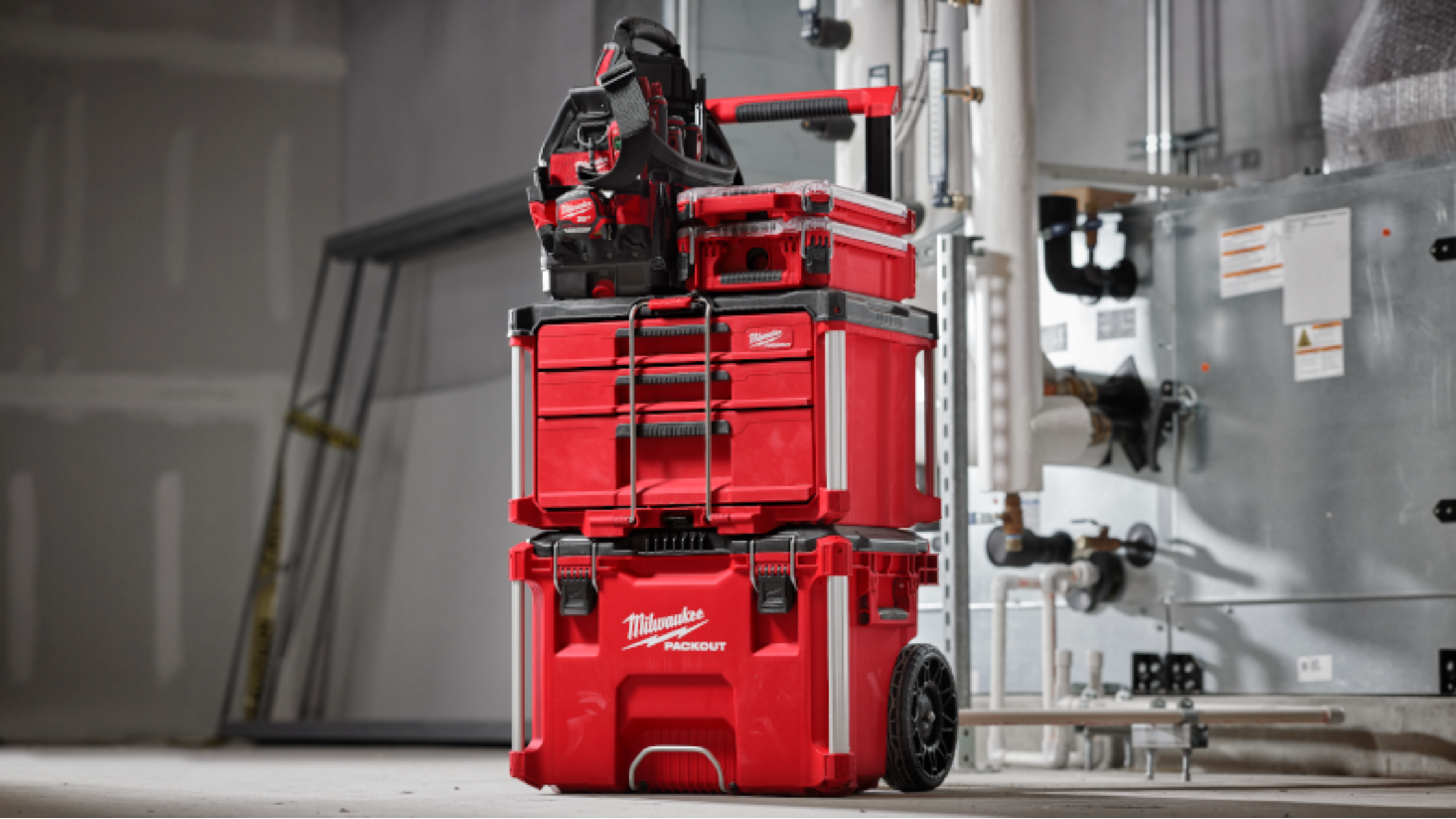
When you hit a jobsite, keeping your tools organised matters as much as having the right drill or impact driver. For trade professionals—from carpenters and electricians to plumbers and mechanical contractors—the right modular storage system can save time, prevent gear damage, and improve mobility. This article compares eight top packout system suites, including the Milwaukee Packout system and the DeWalt ToughSystem, to help you decide which modular toolbox setup fits your workflow. We’ll look at build quality, stackability, durability, and value for the tradesperson who hauls tools every day.
Top 8 packout systems for trade professionals
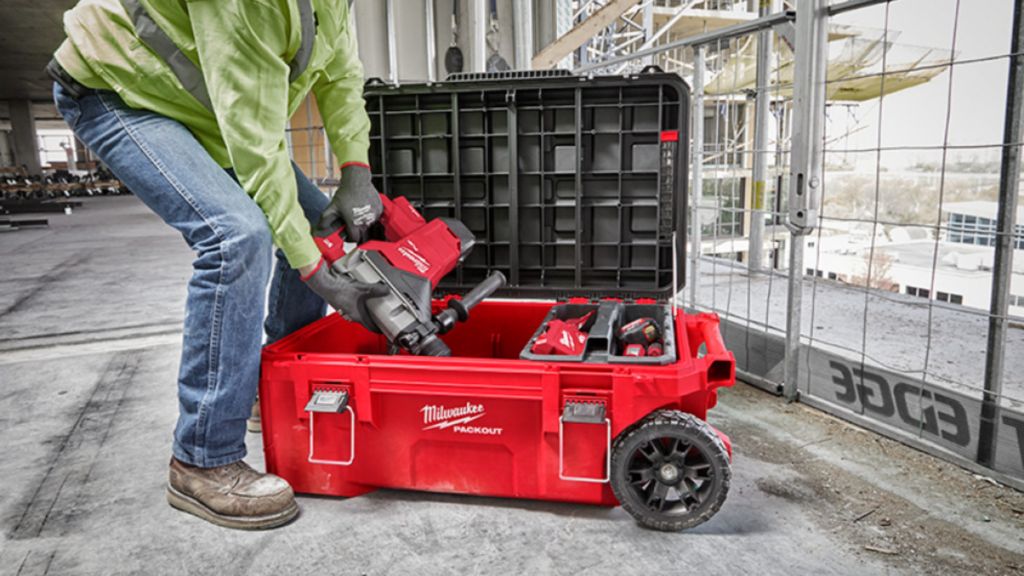
1. Milwaukee 22‑inch PACKOUT Modular Tool Box Storage System
| Pros | Cons |
| – Impact-resistant polymer body with metal-reinforced corners and IP65 weather seal. – Widest range of compatible modules and accessories within its ecosystem, including bags, organizers, and wall plates. – Heavy-duty weight capacity on rolling boxes (up to 250 lb in some models) and large all-terrain wheels make it job-site-tactically mobile. | – Higher upfront costs than some competing systems. – Slightly heavier modules make moving full stacks more effort. – Some users report stack wobble or handle flex on large configurations. |
Key features
- IP65-rated weather and dust protection
- Modular cleat system for locking boxes together
- Large 9″ wheels in a rolling base
- Metal-reinforced latches and lock points
- Vast accessory ecosystem (battery rack attachments, organizers, totes)
For a contractor who hauls tools in a van or across multiple job sites, the Milwaukee PACKOUT system performs its primary function—modular tool transport and storage—with a level of durability built to withstand jobsite abuse. The reinforced corners, weather-seal, and large wheels mean you can roll it on rough ground, through dust and rain, and expect the boxes to lock together and stay secure. As one Reddit user noted, “The Packout system is just fantastic. I abuse them regularly, and they hold up really well. Keeps everything neatly organized so I can grab one or two stacks and have what I need for a job.”
Where it falls short is in cost and weight: filling a full stack means you’ll have dozens of pounds to move, and some vans or shelves may struggle with the volume or weight. It’s best for trade pros who carry many tools and make storage a repeated daily workflow rather than for occasional DIYers.
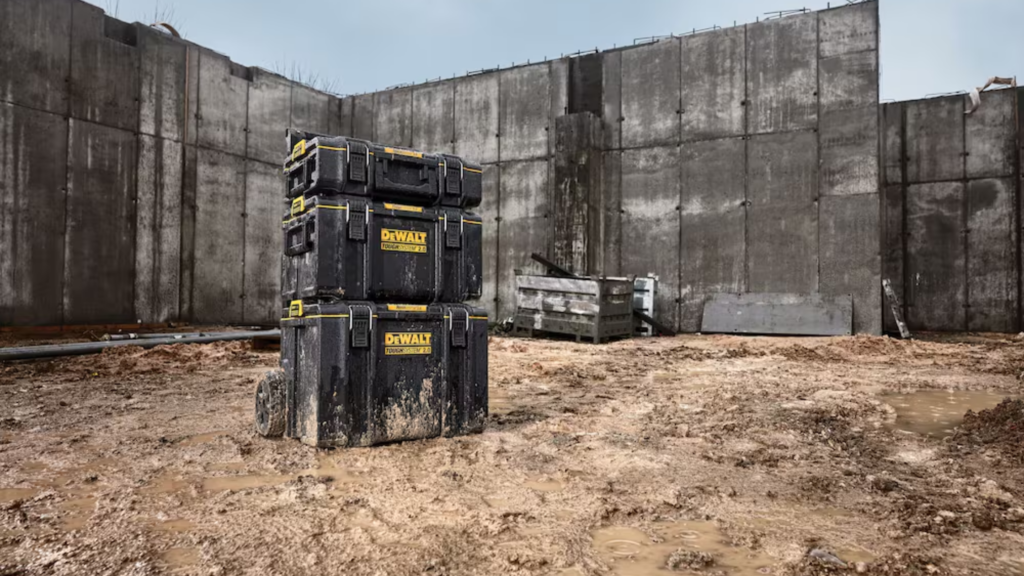
2. DeWalt TOUGHSYSTEM 2.0 3‑Piece Modular Tool Box Tower
| Pros | Cons |
| – Has a large stacked capacity: you get three modules in one set. – Auto-connect side latches and metal front latches provide quick stacking and secure closure. – IP65 rating for dust and water resistance means it handles jobsite mess and outdoor work. – Compatible backwards with older ToughSystem modules—you can integrate existing boxes. | – Bulky and heavier when fully loaded, making transport more effort in tighter spaces. – Some users say the lid trays inside may allow small items to shift during movement. – Handle/wheel system may not match the extreme ruggedness of ultra-premium systems. |
Key features
- Auto-connect stacking system for modules
- Metal wire front latches for durability
- Dust/water seal rated IP65 on select modules
- Compatible across the TOUGHSYSTEM 2.0 lineup
- The tower configuration allows mixing rolling carts, boxes, and worktop modules
This 3-piece set includes a small, a large, and a rolling toolbox, all from the TOUGHSYSTEM 2.0 line. It features patented auto-connect side latches (one-hand operation), durable two-piece metal front latches, and an IP65 rating for dust and water resistance. Reviewers noted how it handled rough conditions: “I loaded them up … sprayed them with water … pulled them over flat and bumpy ground … none suffered damage other than superficial scuff marks.”That level of durability makes it well-suited for construction trades or mobile van crews that need to haul a whole stack of tools and roll between job sites.
Where this particular set is less ideal is for minimal-load applications or tight-space setups: the whole tower is large and heavy (about 40 lbs for the set) and may not fit well in smaller vehicles or in tight van shelving. Some users report that the auto-connect latches still feel bulky in cramped spaces. This makes it best for professionals carrying multiple tool sets, mobile crews, or fleets where full modular stacking and heavy tool loads are the norm.
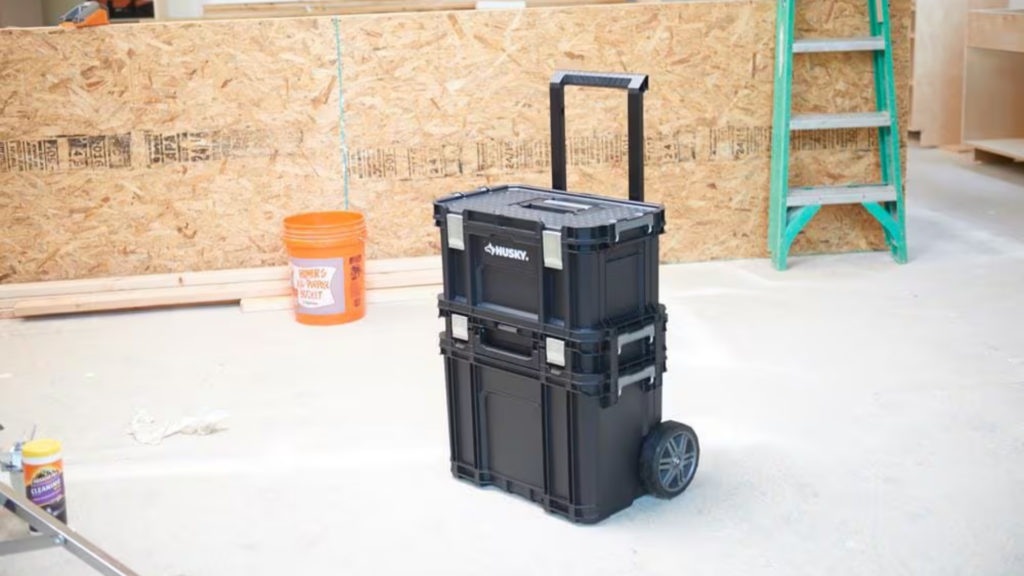
3. Husky Connect Rolling System
| Pros | Cons |
| – Affordable modular storage with a rolling base makes it accessible. – Good internal volume and mobility for service or smaller trade use. – Easy to customise with stackable boxes and organiser layers. | – Build toughness and accessory breadth less than pro-grade systems. – Bottom bin lacks a lid in some versions (reducing protection in transit). – May lack heavy-duty wheels and handle features for job-site abuse. |
Key features
- Rolling cart with telescoping handle and large wheels
- Stackable top small-parts organiser, mid-tool box, and bottom cart
- Interlocking stack system via sliders rather than metal latches
- Compatible with the Husky Connect line
The Husky Connect system offers practical modular storage for van service work, workshops, or lighter trade loads. One review called it “very roomy… the whole unit is very sturdy and easy to roll around the house that I am renovating.” For HVAC techs, service electricians, or mobile trades carrying moderate amounts of gear, the affordability and roll-cart design make it a workable solution.
Where it falls short is the harsher job-site environment: one Reddit user noted, “If you’re a tradesman or using these tool boxes daily for work, I’d probably recommend not going with the Husky.” It is best for light-duty trades, service rigs, or as backup/secondary storage rather than full-time heavy-haul systems.
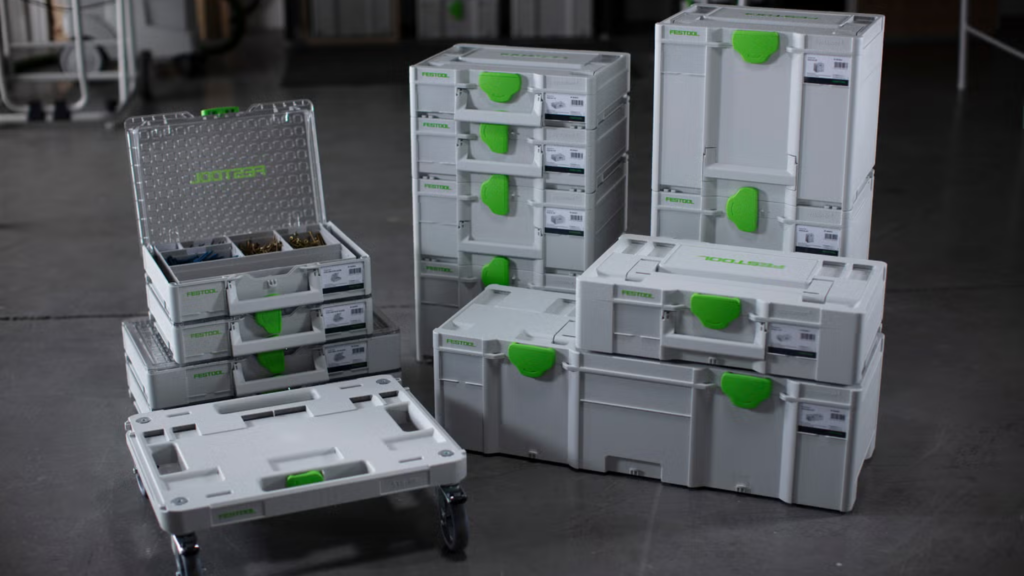
4. Festool Systainer 3 Modular Storage System
| Pros | Cons |
| – Pros praise excellent interior space efficiency and stackable design. – Built-in van-racking compatibility (rails/slots) makes it ideal for mobile tool setups. – Premium build quality, clean aesthetics, and strong durability for shop or finish-trade use. | – Higher cost compared to many utility-grade systems. – Limited large-module accessory ecosystem compared with brands like Milwaukee. – Some feedback that it may be less suited to heavy job-site abuse (rough terrain, repeated drops) than systems built for rough-haul. |
Key features
- Modular footprint (M and L sizes) to adjust for tool size and stack configuration
- Integrated side/van-mount rails and stacking racking system for vehicle installations
- Front and top handle options on smaller modules for easy carry
- Reinforced bottom and lid hinge structure designed for improved rigidity and transport stability
- Lock-loop slots for security on-site
The Festool Systainer 3 system serves trades professionals who demand clean, high-quality modular storage for tools, especially where precision, organisation, and mobility matter. One respected tool-review site commented that the Systainer 3 “provides efficient tool storage, protection, and transportation” and that its design upgrades are geared toward mobile workflows. The system shines when you need a manageable stack of organised modules that transition easily from shop to van, and when you want to present a tidy, professional image on site.
On the flip side, if your primary need is hauling dozens of large tools, moving heavy stacks across rough ground, or operating in extremely harsh job-site environments, you may find this system lacking some of the rugged features of top-tier job-site systems. One forum user put it this way: “Systainers are perfect for shop or interior job-site use. The Packout will tolerate far more abuse.” This system is best for finish carpenters, millworkers, mobile design/build crews, or tradespeople who already carry valuable tools and want organised, professional storage.
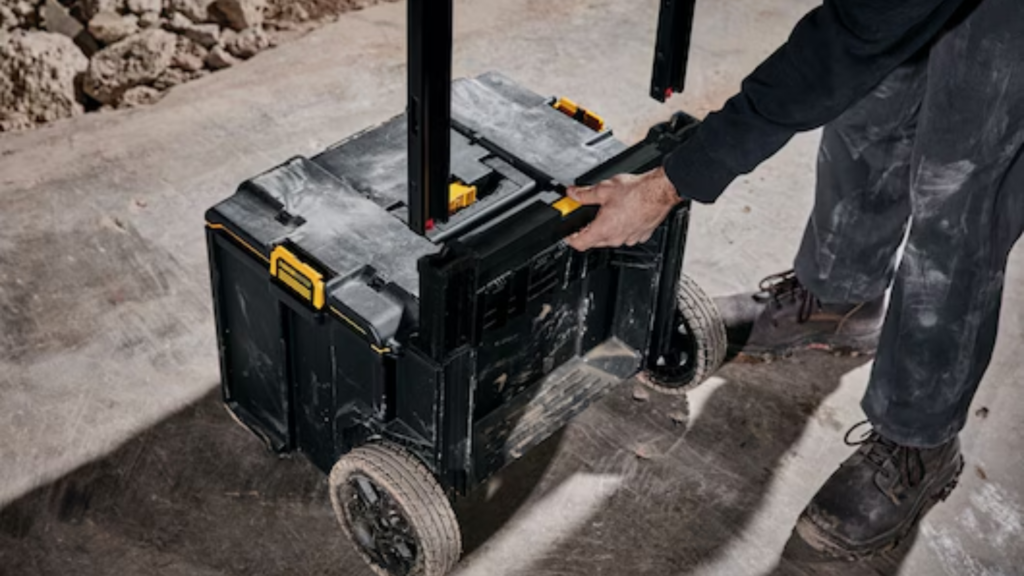
5. Dewalt TOUGHSYSTEM 2.0 Rolling toolbox
| Pros | Cons |
| – Great mobility: large all-terrain wheels, telescoping handle, and rolling base. – It retains many of the build features of the 3-piece tower (metal latches, IP65 rating, rugged design). – It gives you storage and mobility without the full system cost. | – Limited stacking or modular growth. – Less internal capacity than a multi-module tower stack—may not fit very large tool loads or multiple trades’ gear. – If your workload demands moving multiple boxes or large volumes of tools daily, this product may feel constrained compared to the whole tower system. |
Key features
- Modular storage design with stacking boxes, organizers, and a rolling base
- IP65 on specific modules, auto-connect latches
- Premium side handles, wide internal storage
- Full compatibility across the ToughSystem 2.0 lineup
This single rolling toolbox is part of the TOUGHSYSTEM 2.0 line and is geared primarily for mobility and simplicity. It incorporates the same auto-connect side latches and durable construction as the 3-piece tower, but focuses on one rolling unit with large wheels and a telescoping handle. Some users mention it handles well when moving a moderate tool set across job sites and trucks. Because it’s a standalone unit, it appeals to tradespeople who need a single, mobile box rather than a full stack.
The limitation becomes apparent if you later want to stack multiple boxes or build a full system: this single unit lacks the full tower’s capacity and module variety. Review discussions on Reddit mention that while it “rolls fine,” it doesn’t offer the same stacking stability or expansion as the complete 3-piece system. For a contractor who carries one set of tools and wants easy transport, this model fits. For a multi-module system or large tool fleet, the full tower is still the better fit.
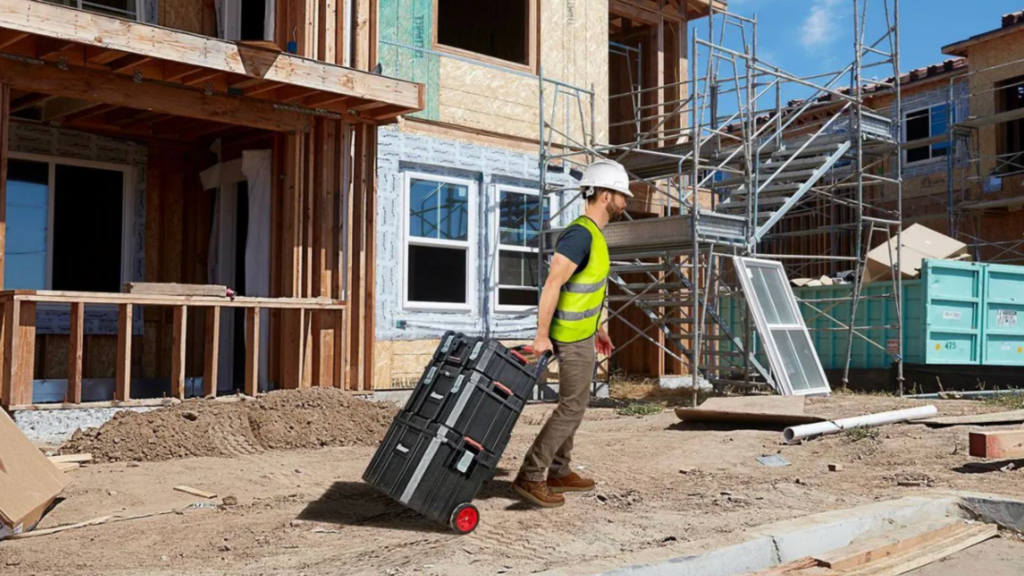
6. Bauer Pro Gear modular rolling tool box
| Pros | Cons |
| – Very budget-friendly modular system suitable for light trades or workshop backup. – Decent stacking ability and modular design for better organization. – Good choice for stationary storage or lighter mobile use. | – Build quality and accessory options are limited compared to premium systems. – Wheels, latches, and seals are less durable under heavy daily use. – Fewer compatible add-ons for van or large-scale setups. |
Key features
- Stackable modular boxes
- Interlocking lids and carry handles
- Mid-range capacity modules
- Value-oriented design for trades who prioritise cost
Bauer’s modular storage system is a pragmatic choice for trades professionals who want organization without the premium price tag. Each box stacks securely with molded locking points and durable plastic clips, keeping tools and accessories contained during transport. It’s light enough to move easily from workshop to service van, and reviewers on Harbor Freight’s site often praise its simplicity: “Good for light duty—holds my hand tools and small power tools perfectly for weekend work.”
Where this system starts to show limits is under daily, rough jobsite use. The plastic shells and wheel axles aren’t built to handle the same beating as Milwaukee or Ridgid gear, and the latches can loosen if heavily loaded. It’s not meant for constant lifting in and out of a work truck, or for hauling 100-lb stacks across gravel or concrete. For those scenarios, upgrading to a heavier-duty system makes sense. But for trades balancing cost and convenience, the Bauer Pro Gear hits a useful niche: inexpensive, flexible, and good enough to stay organized without overspending.
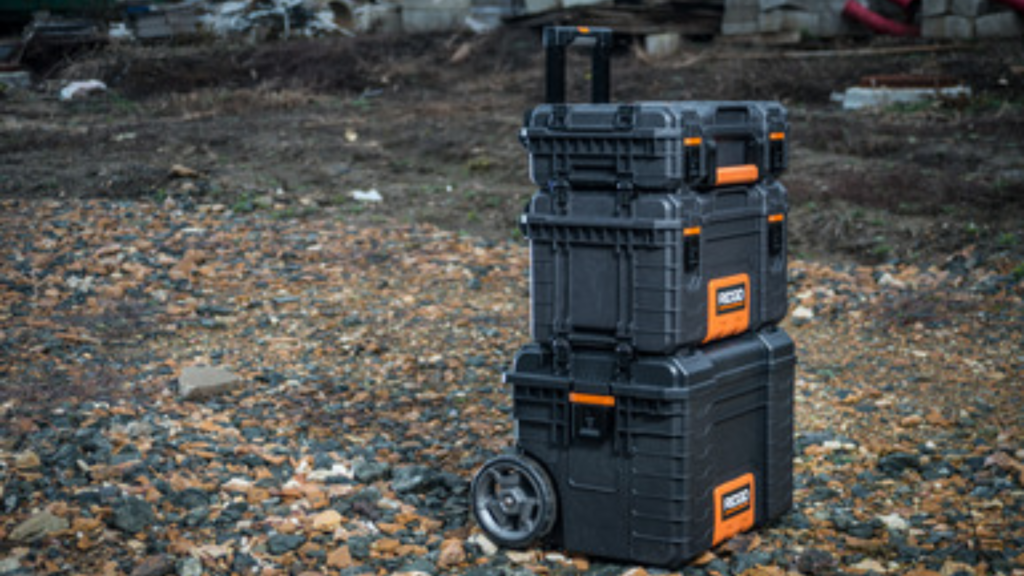
7. Ridgid Pro Gear/Stackable Tool Box System
| Pros | Cons |
| – Solid build, weather-sealed modules, and strong stacking/lock-together design. – Often better pricing than premium brand equivalents. – Good for electricians, plumbers, or mobile trade users who stack smaller tool sets. | – The accessory ecosystem is less extensive than Milwaukee’s or DeWalt’s. – Some box sizes may lack the internal depth of premium systems. – Mobility (wheels/rolling base) may be less refined in some configurations. |
Key features
- Heavy-duty resin construction
- Weather-sealed lids and metal latches
- Interlocking stack system
- Rolling base and cart options available
The Ridgid system delivers a strong balance of performance and price. In a Reddit discussion, one user noted: “Ridgid has a pretty solid offering for less.” For an electrician, plumber, or mobile service professional who stacks multiple boxes and shuttles gear between vans or job sites, this system gives stacking benefits without a premium cost.
The limitation surfaces when loads get very heavy or the terrain/haul demands are severe. If you haul massive tool suites, need ultra-rugged wheels, or dozens of accessories, you might notice reduced performance compared to the highest-tier systems. Best for mid-level contractors, subcontractors, and trade teams who appreciate value for money.
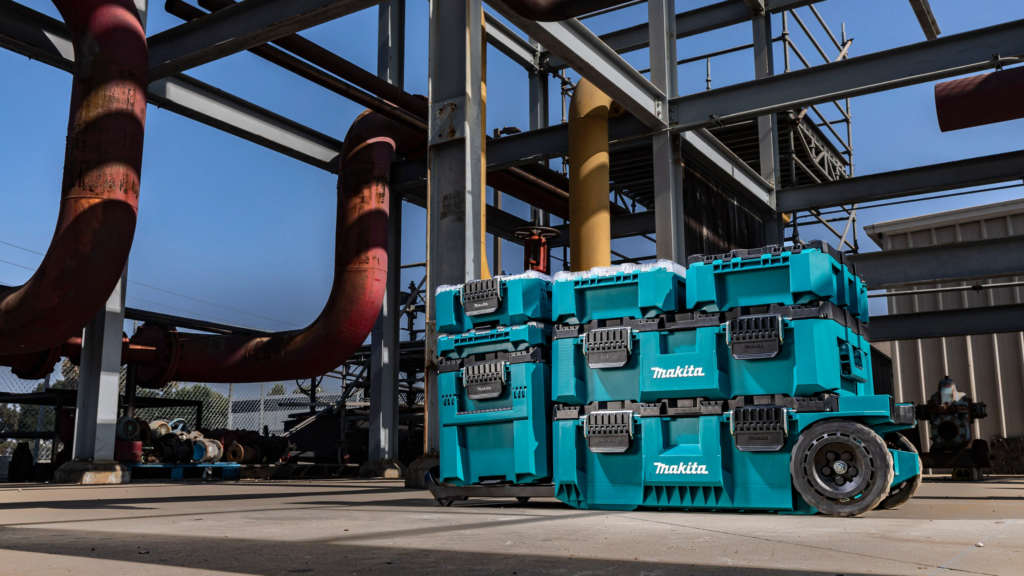
8. Makita MAKTRAK Modular Storage System
| Pros | Cons |
| – Premium build quality rated by reviews as one of the most rugged job-site modular boxes.- Unique dual-hinged lid access, heavy handles, and smart design features focused on tradespeople. – Fits trades who already operate Makita cordless tools and want matching storage. | – Higher price point for equivalent box size compared to other brands. – Fewer modules and accessories than the larger ecosystems. – Modular system is still relatively new and may have fewer aftermarket support/accessories. |
Key features
- Oversized latches, dual-hinge lids (open both sides) for access in tight vans
- Enhanced ergonomic handles
- Heavy-duty resin body designed for daily abuse
- Stack-and-roll modules including rolling chest, large toolbox & deep organizers
For the trade professional using Makita cordless tools, the MakTrak system aligns storage, branding, and build quality. Reviewers rated it among the most rugged modular box systems: one comment noted, “Premium build quality rated by reviews as one of the most rugged jobsite modular boxes.” When carrying tool sets, batteries, and accessories across sites, those design touches matter.
On the flip side, if you haven’t invested in Makita or are seeking the largest accessory ecosystem, you may find fewer third-party add-ons or module variations. This system is best for framing crews, finish carpenters, or mobile trades who already align with Makita cordless tools and want premium storage with brand consistency.
What to consider before buying a packout system
- Define your primary use case. Start by identifying whether you need boxes for van/mobile service trips, jobsite transport between floors, or workshop storage. A rolling cart with large wheels matters if you move across rough ground; stationary wall-mounted modules matter if you load once and leave in a shop.
- Assess power and performance requirements. If you carry large power tools, lifts, or heavy loads daily, you’ll benefit from higher weight-rating modules, reinforced handles, and larger wheels. For light service work, you may prioritise internal volume and mobility.
- Review warranty and support options. Professional trades depend on the system every day—look for lifetime warranties, replaceable parts, and brand support. A box that fails halfway through a project can cost more than the initial savings.
- Check for safety and mobility features you need. This includes all-terrain wheels, lockable latches, stack-wobble resistance, and weather seals if you work outdoors. If you drive across rough roads, a stable stack matters.
- Ensure tool-ecosystem alignment and expansion potential. If your cordless tools are from one brand, a storage system from the same brand simplifies logistics for batteries, chargers, and storage. Also, look at how easily you can add modules in the future—some systems grow fast, others lock you into limited sizes.
- Budget vs future scalability. Many systems look good at entry level, but later modules, accessories, and upgrades add cost. Decide whether you’ll build a full fleet stack now or gradually expand.
- Space constraints and ergonomics. Consider van/trailer width, shop shelf height, and whether you’ll stack 4-5 boxes tall or keep one box per day. Mobility will vary depending on the stack’s size and how you handle moving it.
If you’d like deeper reviews on related shop storage gear, check out our articles on tool storage cabinets, best safety harnesses, best table saws, and best framing nail guns.
For ongoing tool reviews, workflow guidance, and construction trade-specific gear advice, subscribe to our newsletter at Under the Hard Hat.