
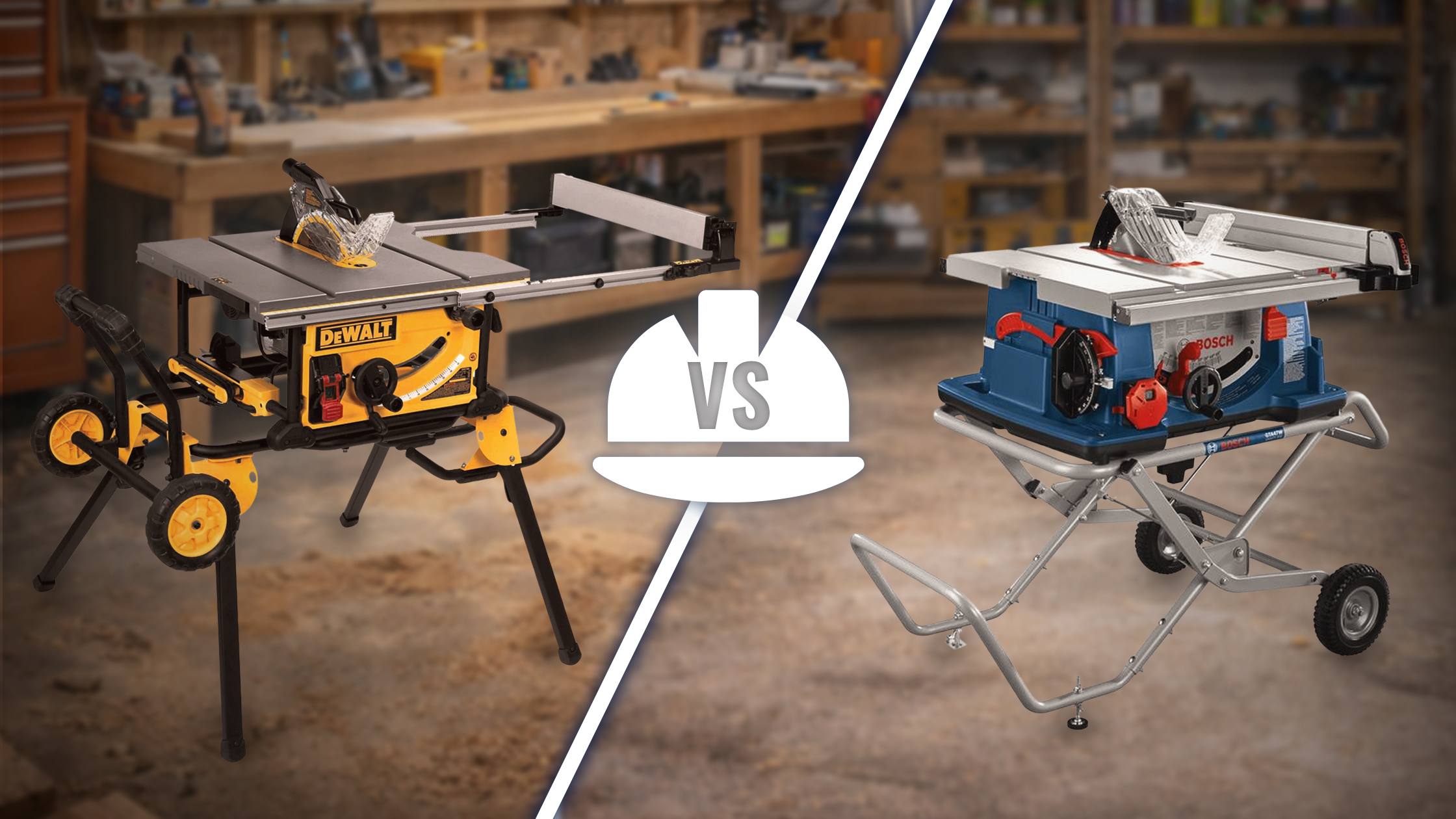
If you’re shopping for a reliable job-site table saw, the Bosch vs. DeWalt debate often comes up as one of the most common choices. In this article, we compare two of the most popular saws: the Bosch 4100XC-10 and the DeWalt DWE7491RS. We’ll walk through their specs, performance, ease of use, value, and what each is best for. This comparison is meant for carpenters, remodelers, and serious DIYers who need a saw that balances portability with professional-level power. By the end, you should have a clear idea of which saw best fits your workshop or jobsite needs.
As an Amazon Associate, we earn from qualifying purchases. Some of the links below are affiliate links, meaning at no extra cost to you, if you click through and make a purchase we may earn a commission.
Summary of Bosch and DeWalt Table Saws
Bosch table saw in a nutshell
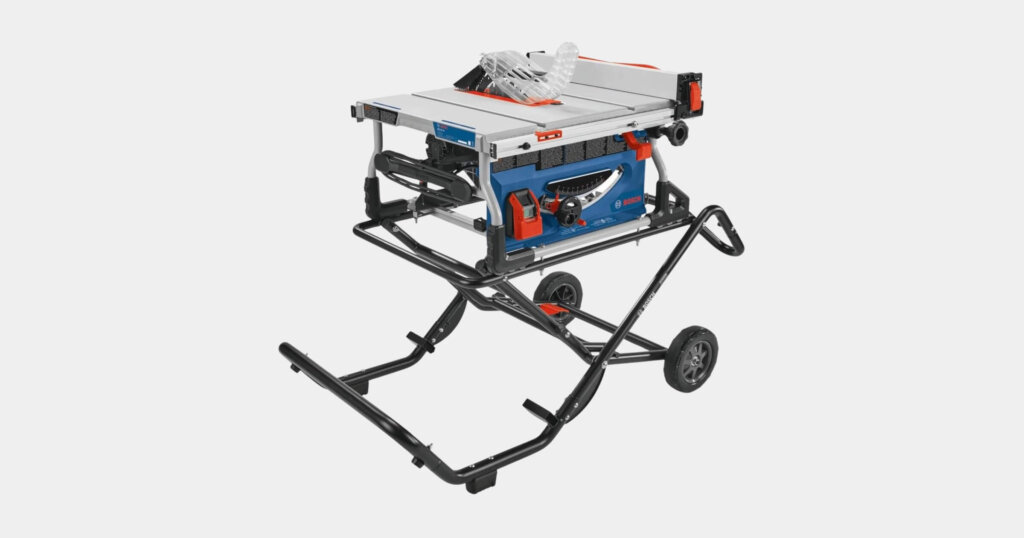
The Bosch 4100XC-10 table saw is a portable jobsite table saw equipped with a 15-amp motor. It uses a 10″ saw blade and comes with Bosch’s Gravity-Rise wheeled saw stand that folds down for transport and sets up quickly on site. The saw is known for being easier to move than many full-size saws. Many users praise its balance of portability, rigid build, and the ability to cut framing lumber, plywood, or sheet goods without a bulky cabinet saw. Reviewers say that the 4100XC-10 is suited for workshops, garages, or small contractor jobs where mobility and setup speed matter.
DeWalt table saw in a nutshell
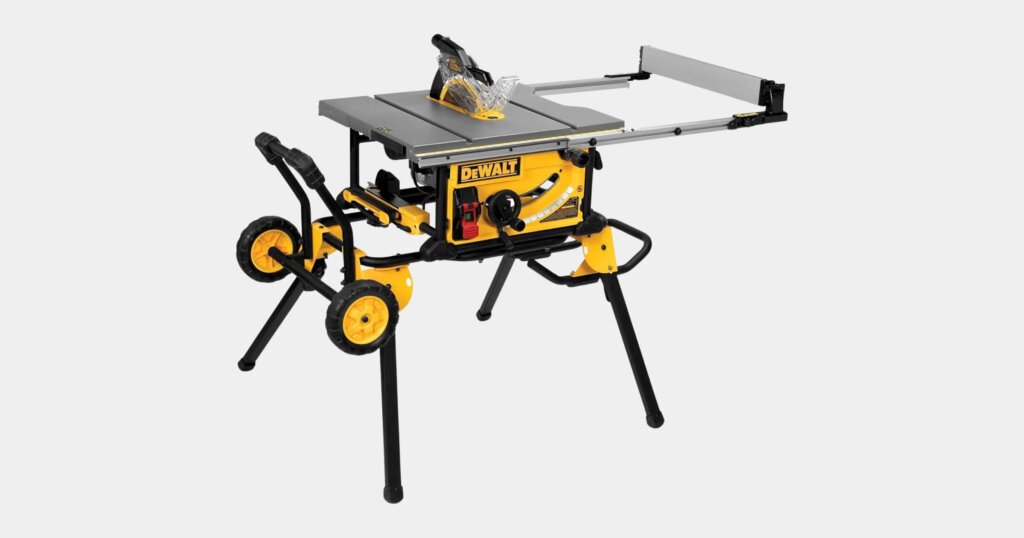
The DeWalt DWE7491RS is the brand’s flagship 10″ jobsite table saw with a rolling stand, designed for busy job sites and contractors who often move from job to job. It also runs on a 15-amp motor, supports 10″ blades, and offers a larger rip capacity, which makes working with full sheets or large boards easier compared to the Bosch model. Its rack-and-pinion telescoping fence system, on-board storage, and sturdy stand make set-up, ripping, and breakdown simpler for one person. Many users consider it one of the most capable portable table saws for framing, trim work, cabinetry, sheet goods, and general construction tasks.
Specifications comparison: How Bosch and DeWalt compare on paper
| Feature / Spec | Bosch 4100XC-10 | DeWalt DWE7491RS |
| Motor/Power source | 15 Amp, 120V corded | 15 Amp, 120V corded |
| Blade size | 10″ | 10″ |
| No-load speed (RPM) | 3,650 RPM | 4,800 RPM |
| Rip capacity (right side) | 30″ | 32.5″ |
| Rip capacity (left side) | 8–9″ | 24″ (varies by material/support) |
| Depth of cut at 90° | 3 1/8″ | 3 1/8″ |
| Stand type | Gravity-Rise wheeled stand (foldable, compact) | Rolling stand (telescoping legs, stable) |
| Weight | 60 lbs | 90 lbs |
| General use | Portable table saw, jobsite, or small shop | Jobsite table saw, more heavy-duty jobsite work |
Performance and power: Which saw packs more punch?
When it comes to raw cutting power and speed, the DeWalt DWE7491RS seems to edge ahead thanks to its higher blade speed of 4,800 RPM and plenty of power. That higher RPM tends to result in smoother cuts, particularly on hardwoods or tougher plywood, and can reduce tear-out and burning in dense woods.
The Bosch 4100XC-10, at around 3,650 RPM, is slightly slower but still handles framing lumber, plywood, and sheet goods without bogging down. Its motor remains consistent even under load, which suggests it delivers enough torque for most construction and cabinetry tasks—particularly with 2× materials, plywood, and general shop work. A user on Reddit said that they liked the bigger surface area compared to other saws.
For real-world tasks:
- If you’re ripping full sheets, trim stock, framing lumber, or making repetitive cuts on plywood/OSB, DeWalt’s higher blade RPM and higher power make it more efficient and easier to trust for consistent output.
- If you’re working in a small shop or moving saws between job sites—framing, cutting 2x lumber, plywood, and cross-cuts—Bosch remains competitive. Its power is enough for most standard materials, and its portability reduces setup effort.
Bosch vs Dewalt table saw: Which one is more beginner friendly?
Handling and portability
The Bosch 4100XC-10 wins for portability. Its gravity-rise wheeled stand is easy to collapse and roll into a van or garage corner. At 60 lbs, a single person can often manage loading/unloading, especially with lighter material. The DeWalt DWE7491RS, while heavier at 90 lbs, uses a rolling stand that folds, but still weighs more to handle. Many contractors find it manageable, but not as easy to move with one person compared to Bosch.
Setup and breakdown
Bosch’s stand tends to deploy more quickly because it’s lighter and simpler. For small spaces or frequent moves, this saves time. DeWalt’s stand offers greater stability and is sturdier for larger materials, but setup or teardown requires more effort. That trade-off tends to favor DeWalt if you’re working with heavy boards or sheet goods, or if you do precise ripping daily.
Noise, vibration, ease of control
Because DeWalt runs at a higher RPM, it can feel a bit more aggressive, especially on harder wood, but many users report clean, stable cuts under load. Bosch’s slightly slower spin is often described as “smooth” and manageable. Users who care more about control than speed tend to prefer it, especially for cross-cuts or smaller jobs where precision matters.
Beginner friendly
For someone setting up a small home shop or garage, the Bosch 4100XC-10 tends to feel less intimidating—lighter, easier to manage, and still powerful enough for everyday woodworking tasks. The DeWalt DWE7491RS, with its heavier build and broader capacity, appeals more to those who expect to handle large materials or frequent heavy-duty jobs.
Price and value: Which gives more bang for your buck?
These two saws tend to fall in similar price ranges (depending on retailer, sales, and stand inclusion). Given their specs and features:
- On a per-dollar basis, Bosch offers a strong mix of portability, reliability, and power. For someone who doesn’t rip full plywood sheets all the time, the smaller rip capacity and lower weight make it a wise investment—you get a solid, capable saw without overpaying for capacity you may not need.
- DeWalt’s larger rip capacity, robust motor speed, and heavy-duty stand give extra value if you regularly work with sheet goods, long boards, or framing lumber. For pros and contractors, that extra capability often pays off in saved time and fewer workarounds.
If you expect to cut wide boards or plywood frequently, or want a saw that doubles as a solid shop saw and jobsite saw, DeWalt delivers a bit more value per dollar. If you move job to job, value portability, or run a smaller shop, Bosch may be the smarter, more efficient choice.
Features & accessories: What extra perks do they offer?
- DeWalt DWE7491RS: Its rack-and-pinion telescoping fence system is impressive. It allows smooth, accurate adjustments and holds alignment under load—a big plus for consistent ripping. On-board storage keeps the blade guard, miter gauge, push stick, wrench, and cord wrap organized. The rolling stand makes transport and setup easier than older fixed-leg designs.
- Bosch 4100XC-10: The Gravity-Rise stand shines for quick setup and takedown. The saw’s cast-aluminum top gives a generous table surface for handling plywood or multiple boards. It tends to run a little more smoothly on startup (with less initial surge), which is helpful when power supply or circuit breaker capacity is limited.
Dust ports, blade guards, riving knives, and standard 10″ blade compatibility are similar on both, making them both suitable for workshop or jobsite use with basic dust collection and safety.
Bosch vs Dewalt table saw: Pros and cons summary
Bosch 4100XC-10
Pros:
- Light and portable; easy to move and store.
- Quick setup/breakdown thanks to the Gravity-Rise stand.
- Good power for framing lumber, plywood, and general shop work.
- Smooth power delivery; less startup surge.
- Great for small workshops, garages, or frequent mobility.
Cons:
- Rip capacity is lower than DeWalt (less ideal for wide sheet goods).
- Slower blade speed may feel less efficient on dense hardwoods.
- Stand may feel less stable under heavy load.
- Less ideal if you need consistent wide ripping or frequent sheet cutting.
DeWalt DWE7491RS
Pros:
- Higher blade speed for smoother cuts on hardwoods and sheet goods.
- Large rip capacity handles wide boards and full sheets.
- Rack-and-pinion fence delivers stable, accurate rip cuts.
- Rolling stand provides good stability and on-site mobility.
- Good balance of power, capacity, and portability for many contractors.
Cons:
- Heavier weight makes moving or shipping harder.
- Set up and breakdown take more effort compared to Bosch.
- Slightly larger footprint and storage requirements.
- For small shops or infrequent use, it may be overkill and less convenient.
Which table saw should you buy?
For a woodworker or contractor whose work frequently involves ripping wide boards, plywood, sheet goods, or framing lumber—especially on larger jobs—buy the DeWalt DWE7491RS table saw, as it stands out as the superior portable table saw. Its larger rip capacity, faster blade speed, sturdy fence, and rolling stand deliver strong performance and consistency day in and day out.
If your needs lean more toward mobility, occasional shop work, compact jobsite, or you value easy transport and quick setup with a smaller saw, you may lean towards the Bosch 4100XC-10. It gives you a lightweight, capable saw with enough power for most general woodworking tasks, making it ideal for a home garage, small shop, or jobsite where portability matters.
If you want more tool comparisons, jobsite tips, and construction-focused guides like this one, you can join our newsletter—it’s the easiest way to stay updated with fresh articles that help you work smarter in the field or the shop.