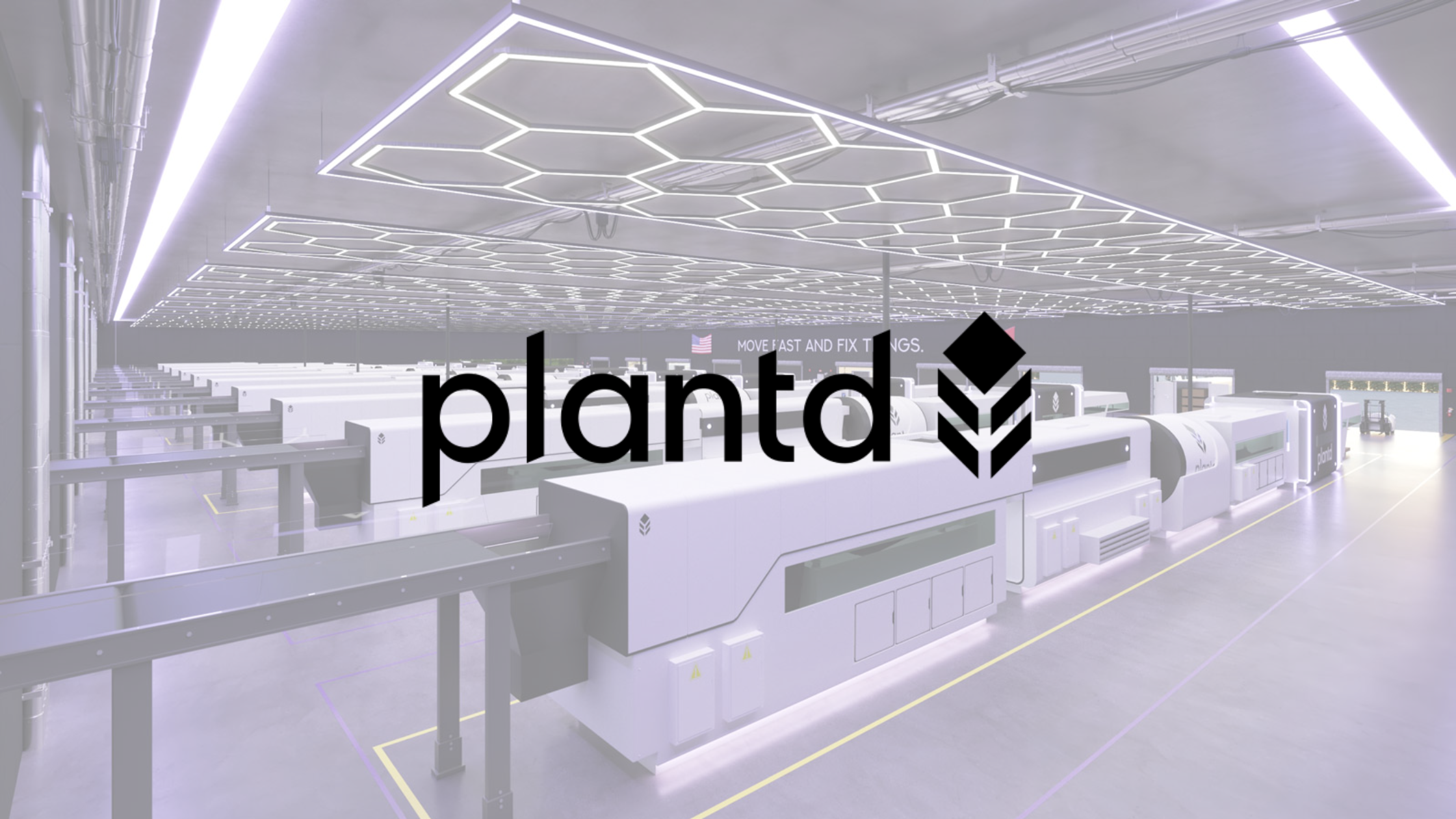
Plantd is a material company that’s rethinking how buildings are made—starting with the panels inside them. Based in North Carolina, the company was founded by former SpaceX engineers who wanted to reduce the carbon footprint of traditional construction materials without compromising strength or availability. Their focus is on producing engineered panels made from fast-growing perennial grasses that can be harvested multiple times a year. By replacing trees with grass and using automated manufacturing, Plantd aims to make carbon-negative materials at scale. Their mission isn’t just about sustainability—it’s about changing how the supply chain sources and builds the core components of homes.
Who they are and what they do
Plantd produces structural panels similar to oriented strand board (OSB) but made from rapidly renewable grasses instead of trees. The founders—Josh Dorfman, John Kingman, and Jordan Beasley—developed the idea after recognizing how slowly tree-based materials replenish. Their proprietary equipment compresses and bonds grass fibers under heat and pressure to form boards that match or exceed the strength and durability of conventional OSB. Each panel captures atmospheric carbon as the grass grows, locking it away in the finished product.
Their manufacturing line is fully electric and designed to minimize waste from start to finish. Instead of relying on deforestation or long timber supply chains, they contract directly with local farmers to grow perennial grass crops within a short radius of their production facility. This model reduces transportation-related emissions and creates new income opportunities for rural agricultural communities.
How Plantd is changing the industry
Traditional building materials—especially those used in framing and sheathing—are among the construction sector’s largest carbon sources. By shifting to renewable grass feedstock, Plantd’s process removes carbon from the air rather than adding to it. The company estimates its panels could store more carbon than they emit during production, giving them a clear advantage over wood-based products.
Beyond the environmental benefit, the grass-based approach also stabilizes material supply. Fast-growing grasses mature in less than a year and regenerate after harvest, eliminating the decades-long growth cycle of timber. That speed offers builders more predictable pricing and availability during lumber market swings. Plantd’s in-house-developed automated machinery enables continuous production with minimal human labor—lowering the cost per panel and increasing consistency.
Architects and builders are starting to take note. The company has partnered with several homebuilders to test these panels in new residential construction, with early reports showing comparable structural performance to traditional OSB. As codes and clients push for lower embodied carbon, materials like Plantd’s could play a major role in meeting those targets without forcing builders to change established construction methods.
Plantd’s work demonstrates how materials innovation can directly reduce emissions while maintaining high productivity—a combination that matters to everyone from framers to designers to developers.
To stay current on companies like Plantd that are reshaping construction materials and methods, subscribe to our newsletter at Under the Hard Hat.