
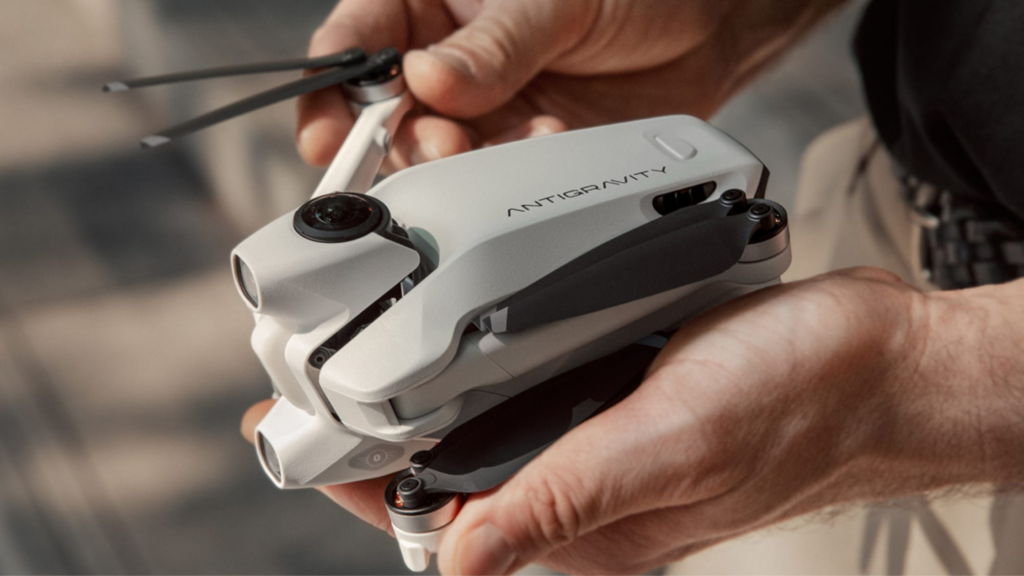
If you’re looking at the most innovative drone tech coming out of CES 2026, the Antigravity A1 is hard to miss. Unveiled as a CES Innovation Awards honoree, it’s the world’s first drone to capture full 8K 360-degree video with hands-free or assisted flight controls, opening new doors for creators, inspectors, and professionals who rely on immersive visuals.
What it is
The Antigravity A1 is a compact, lightweight drone designed to record spherical 360-degree footage in ultra-high 8K resolution. Instead of pointing a camera at a subject, the A1 captures everything around it at once, allowing users to reframe shots later during editing.
It’s built for content creators, surveyors, and professionals who want cinematic results without complex piloting skills. The drone focuses heavily on automated flight modes, stabilization, and ease of use, making it accessible even for users with limited drone experience.
Why it stands out
What truly sets the Antigravity A1 apart is its combination of 8K resolution and full 360-degree capture in a single flying platform. This is a first in the consumer and prosumer drone space. Traditional drones require careful framing and multiple passes, while the A1 captures the entire environment in a single flight.
“A1 takes the freedom of 360 capture and gives it wings,” said Michael Shabun, Spokesman for Antigravity. “It’s rare to see a team translate an idea into a completely new product category.”
The A1 has earned recognition from the CES Innovation Awards for its compact build and overall flight design. Instead of adding more controls, Antigravity has leaned into hands-free operation and integrated processing features to simplify how footage is captured and used.
For teams already flying drones for inspections or mapping, this kind of capture can complement photogrammetry workflows, particularly for site context and visual references, such as drone photogrammetry software, and can cut down on repeat flights to fill in missing data.
Why the Antigravity A1 matters
What stands out is how much information can be captured in one pass. Drones are already used regularly in construction and engineering to document sites and monitor progress. Adding a 360-degree view means crews can see not just the work itself, but the surrounding conditions at the same time.
The A1 is entering a market that is changing quickly, shaped by questions about DJI’s availability in the U.S. and a growing need for the best drones designed for specific tasks, such as photogrammetry. Instead of pushing flight performance alone, newer systems are being built to fit more cleanly into existing workflows.
Want more coverage on breakthrough construction and tech innovations? Subscribe to our newsletter for weekly insights, spotlights, and industry trends.