
As AI continues to sweep through every industry, a common knee-jerk reaction among workers of all types is to panic about job security. Maybe surprisingly, AEC engineers are also considering AI as a threat to their positions. In this article, we’ll detail how AI is changing engineering, which roles are most at risk, and how engineers can future-proof themselves for the future.
What parts of engineering are most exposed to automation
Automation is increasingly used in engineering to support the design, build, deployment, and maintenance of new systems. As it stands, automation is widely used for routine, pattern-based work where outputs are predictable and human intervention takes on a more quality-assurance role.
These tools improve on-site quality control, reduce labor costs, and free engineers from tedious maintenance and administrative duties. Plus, increased automation gives teams time to focus on new technologies and broader growth strategies. On the software side, automation also streamlines coding, databases, machine learning, and observability, effectively outsourcing many aspects of a traditional engineering role.
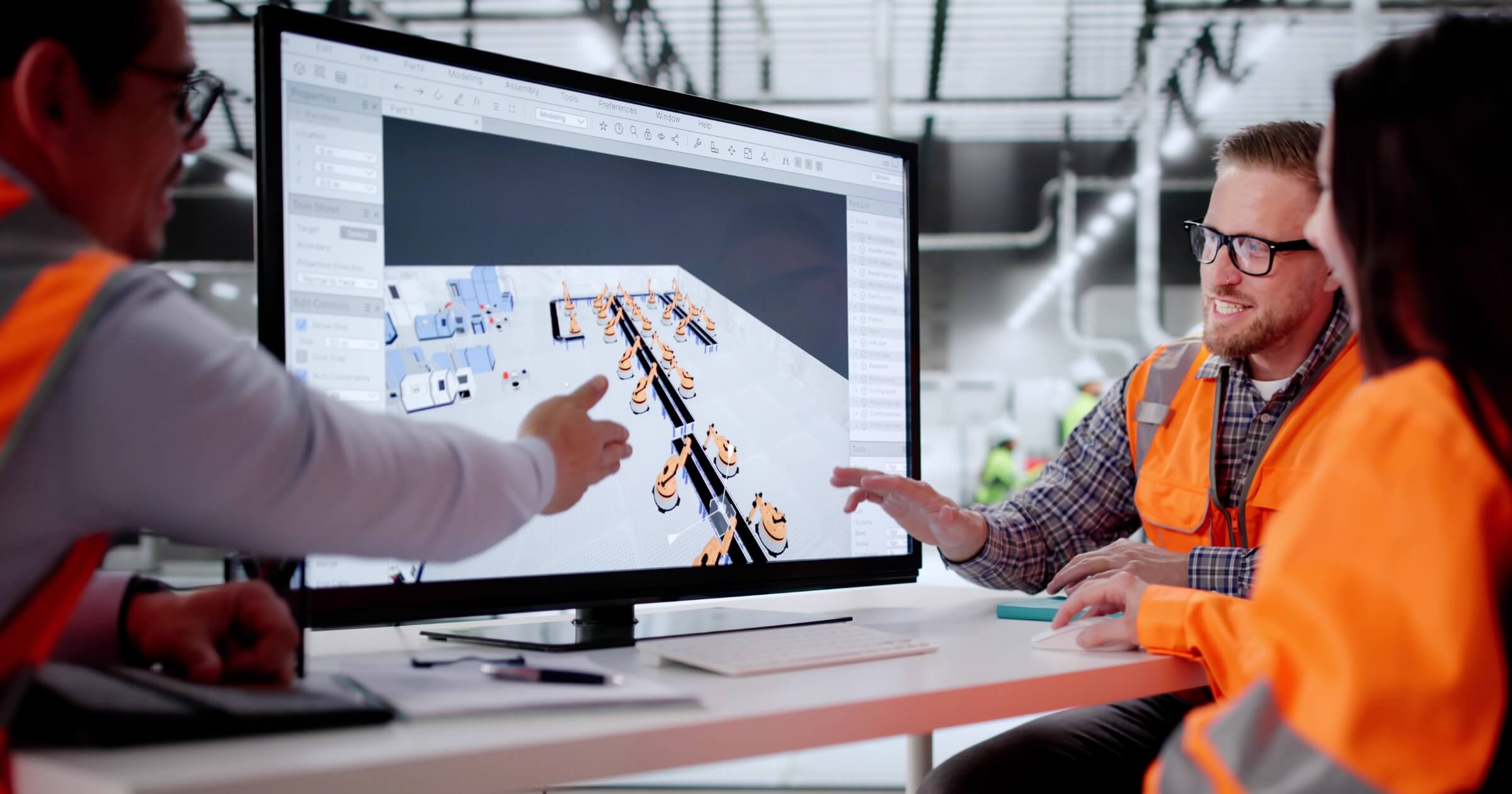
In manufacturing, AI-powered robots perform assembly, welding, quality assurance, and some predictive maintenance. Generative design software is also being largely overtaken by AI, with additive manufacturing, including 3D printing, as a focus area. These areas of automation innovation create optimized processes with less material and less human (engineering) output and oversight.
How AI is already changing engineering work
Most engineers haven’t had to worry quite yet about AI and automation taking over their jobs, but they have had to learn to integrate it into their workflows, at the very least. Many experts expect that by 2030, 80% of the US workforce will have at least 10% of their duties or tasks automated or otherwise affected by large language models. These tools, often low-code or no-code, already allow users to build customized apps with simple drag-and-drop interfaces.
Cloud automation tools often treat infrastructure as code, automating manual processes that engineers previously handled. As these tools learn more and become more capable, many expect developers’ technical skills to narrow and for their expertise to shift toward oversight and maintenance, rather than pure building and coding. Some of the daily engineering duties already being handled by AI include:
- AI-assisted design and simulation
- Analysis, design, planning, and documentation
- Scheduling and setup for routine deployments
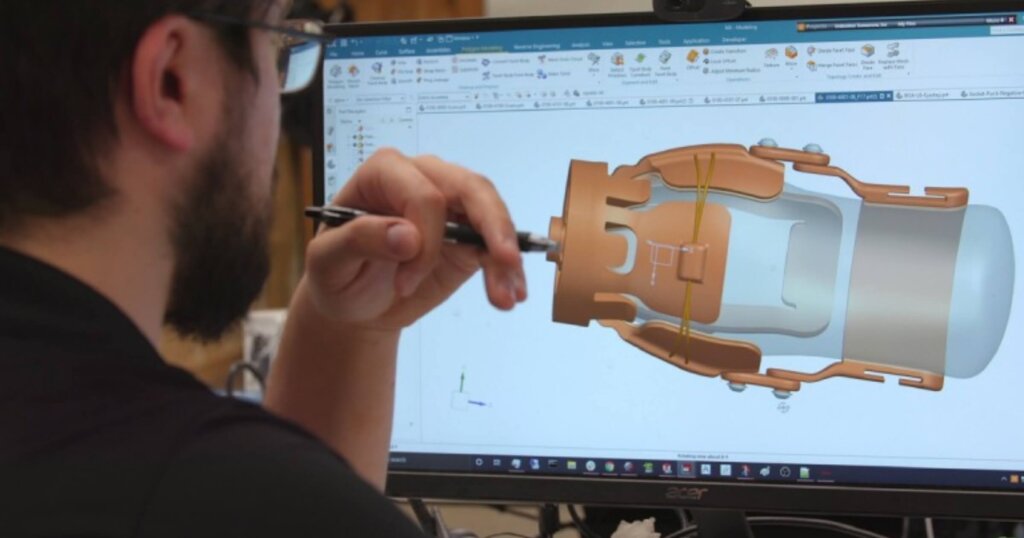
Engineers are now expected to refine AI-built operations rather than model entire products from the ground up. This approach is not only adopted in construction but also in architecture, aerospace, and manufacturing. It’s all about generating ideas faster and bringing products to market with that same velocity.
What engineering roles are likely to survive and evolve
To put it simply, those with skills that support products holistically have the best shot at long-term job security. Here are three types of roles expected to evolve or devolve.
1. Full-stack system thinkers: These engineers deeply understand entire systems and their complexities. They can master both the front and back end and apply products effectively to suit business models, supply chains, and user needs. They integrate and execute on technical solutions while tailoring them to the business’s needs.
These engineers take AI and automation and build strategies around their capabilities. Those who can combine their experience with AI and apply it to multiple (if not all) parts of the business will be an asset on any team.
2. Complex tool operators: While they may not have expertise across the entire business, they have deep knowledge of existing tools and workflows. They can integrate new AI and automation software, but might not be the ones to build or evaluate it. These engineers are particularly proficient in complex programming languages, simulation packages, and highly specialized tooling.
While valuable now, a complex tool operator may struggle to stay relevant as AI and automation improve. If these engineers fail to adopt new automation technologies in their day-to-day work, they risk becoming redundant in their roles. The pressure is on these engineers to choose a path and decide whether to adapt.
3. Baseline or irrelevant skill holders: These engineers have a baseline knowledge of their products and workflows, and fail (or refuse) to adapt to new tech. They tend to cling to an “if it isn’t broke, don’t fix it” mentality and ignore emerging trends in their field.
These baseline-skilled engineers are the ones who should be most concerned about becoming irrelevant to their teams. Whether management pushes for it or not, engineers who do not take ownership of their own upskilling may find themselves in this third group.
Risks and challenges to watch
While there are risks and challenges for engineers who fail to adapt to new tech, there are also risks for those who rely too heavily on it. As AI use ramps up across industries, engineers could face:
- Degrees or prior credentials that become obsolete: The original computer science background or the bootcamp they completed could become irrelevant if their new roles rely heavily on LLMs and AI.
- The market for specialists is becoming too saturated: Engineers with specialized skills will become a dime a dozen as everyone tries to set themselves (and their skill sets) apart from the competition.
- Skill erosion if the engineer relies too heavily on AI or automation: Over time, AI can erode first-principles reasoning, debugging intuition, and system-level understanding.
- Blind truths and hallucinations: AI can be confident and wrong. Subtle bugs can slip into production, and flawed designs can go unchallenged and fall through the cracks.
- Ethical concerns: Using AI consumes significant energy in data centers, which has a profound environmental impact.
- Security and compliance risks: Many automation and AI tools fail to protect sensitive data. If there’s a security breach and the AI has been trained on sensitive or confidential data, it could impact the entire company.
Savvy engineers will strike a balance between using AI to be more effective in their roles and using it to the point where it weakens their skills. They must maintain an understanding of their manual workflows to avoid underperforming if the AI bubble bursts.
How engineers and companies can adapt
There are many considerations engineers must keep in mind when adopting AI and automation, and there’s no training manual that comes with it. Here’s what engineers should be mindful of when looking to stay sharp and relevant:
- Build complementary skills: Learn about AI, and also develop stronger data literacy and systems thinking.
- Treat automation as a tool: AI and automation should be allies, not threats. Any reluctance to work with these tools is a quick way to becoming irrelevant.
- Invest in training and continuous learning: If you’re a backend engineer, develop and learn web development or frontend skills to become a jack of all trades, rather than a one-trick pony.
- Redesign workflows to work alongside automation: Using AI and automation, even in small ways, day-to-day, will help you upskill without trying.
As companies continue to hire, they should also be updating job descriptions and training programs. Engineers should ask directly how their job descriptions change with the use of AI and what training they can provide.
What the future of work may look like for engineers
As of now, most engineers don’t have to fret that the sky is falling. Automation and AI will inevitably replace some work, but many of those engineers will simply adapt and evolve into new roles. The World Economic Forum predicts that 92 million roles will be displaced within this decade due to tech trends, but another 170 million will be created. Millions of these new roles will go to those engineers willing to adapt and refocus on AI, who can think across disciplines while communicating with stakeholders and technology.
Engineering urgency is real. Technical skills are becoming obsolete faster than ever, and companies are already looking to make cuts wherever they can. But that means new roles are opening up in tandem, ones that involve AI and automation folded into the role. Engineers who commit to lifelong learning and upskilling, while strengthening their business acumen, will survive and potentially lead. That’s how they truly stay relevant and become irreplaceable in an organization.
Final thoughts
Ultimately, AI will transform the scope and role of engineers, but won’t eliminate the need for engineers overall. AI is already taking over simple, repetitive tasks and completing introductory coding and design work. For engineers who want to stay where they are, they must adapt to the technology rather than resist it.
Do keep in mind the risks, including becoming overreliant on technology, weakening your skills, and using unsafe tooling. But for those who manage to upskill, expand their expertise, and work AI and automation into their role, there should be nothing to worry about.
Like this and want more? Subscribe to our newsletter and follow us on LinkedIn to stay in the loop about AI in AEC.