
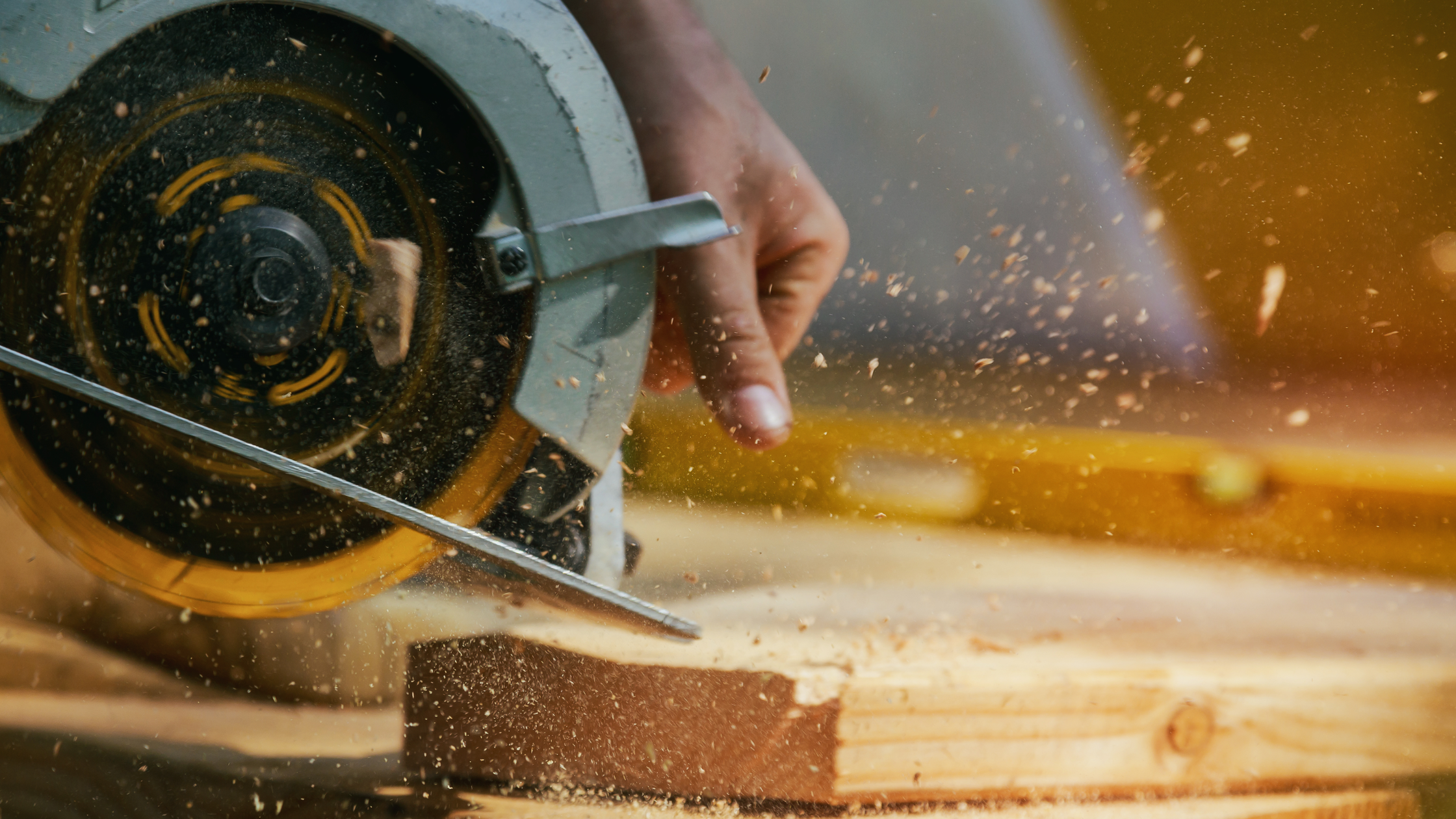
Corded circular saws remain the go-to for many job sites because they deliver smooth, steady power without interruption. For framers, remodelers, carpenters, and shop users who need precision cuts time and time again, you can’t go wrong with a good old-fashioned corded circular saw. This list features some of the top-rated, widely used, professional-grade corded circular saws. Some are standouts for comfort, while others pack an absolute punch in raw cutting power. The Makita 5007MGA and the Skilsaw SPT77WML-01 stand out on our list, but we’ve rounded up a complete list of the best corded circular saw to add to your toolbox.
Top 12 corded circular saws
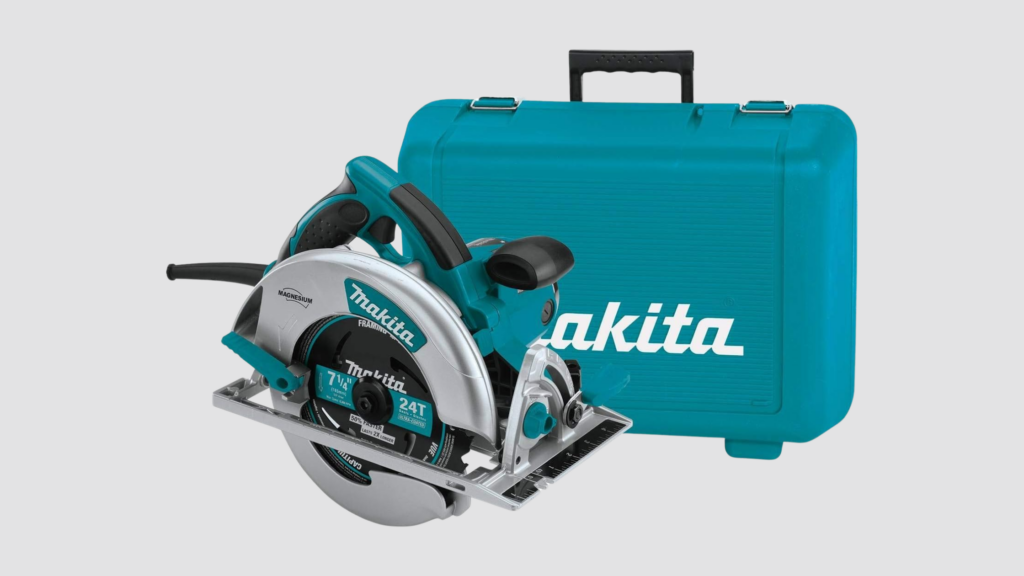
1. Makita 5007MGA magnesium circular saw—best for everyday framing work
| What we love | Things to consider |
| – Cuts clean through framing lumber – Lighter than many full-size corded saws – Good balance in the hand – Holds up well to daily use | – Factory blade is fairly basic – No electric brake |
Product specs
- Blade diameter: 7-1/4 inches
- Arbor size: 5/8 inch
- Amperage: 15.0 A
- No-load speed: 5,800 RPM
- Bevel capacity: 0–56°
- Max cutting depth (90°): 2-1/2 inches
- Weight: 10.6 lbs
- Drive type: Sidewinder
- Price: $352
The Makita 5007MGA is a real favourite on many job sites, and it’s not hard to see why. It has all the power you need to rip through framing lumber and plywood with ease, and it never feels like you’re struggling to get the cut done. What sets it apart is how natural it feels to use, especially when you’re switching between cuts throughout the day. It never feels awkward or front-heavy, and that makes all the difference after a few hours on site.
A user on Reddit summed it up by saying it just feels normal in your hand, even after a full day of using it, and that’s exactly what most users have been saying. It’s not packed with extras, and you’ll likely swap out the stock blade first. There is also no electric brake to speak of, which can be a bit of a pain for users accustomed to newer saws on the market. But for those who want a dependable saw that gets the job done, the Makita 5007MGA is an excellent choice.
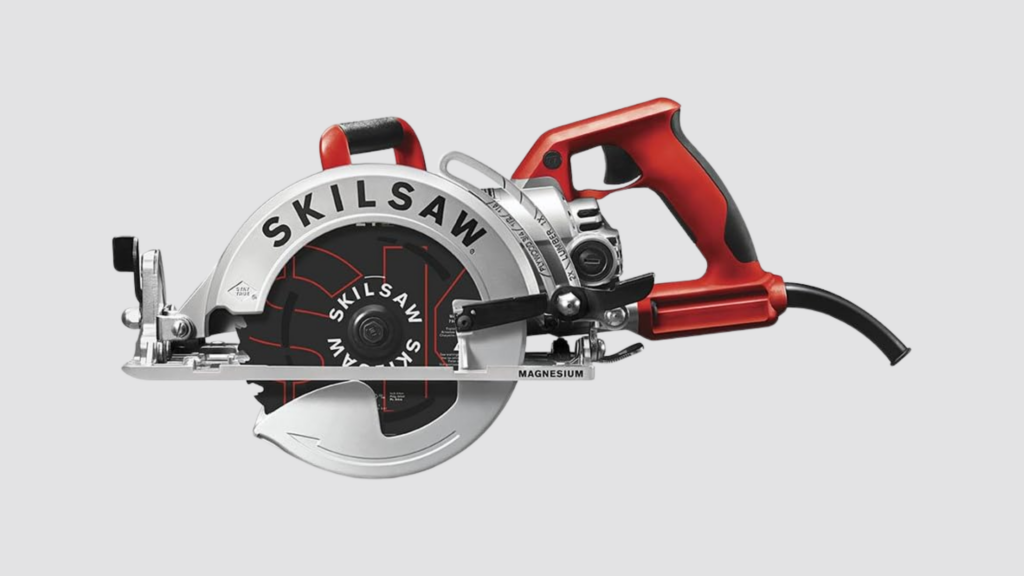
2. Skilsaw SPT77WML-01 worm drive saw—best for heavy framing
| What we love | Things to consider |
| – Strong pull through thick material – Tracks straight on long cuts – Lighter than older worm drives – Built for rough conditions | – Louder than sidewinder saws – Takes time to get used to |
Product specs
- Blade diameter: 7-1/4 inches
- Arbor size: 0.812 inch
- Amperage: 15 A
- No-load speed: 5,000 RPM
- Bevel capacity: 0–51°
- Max cutting depth (90°): 2-1/2 inches
- Weight: 11.3 lbs
- Drive type: Worm drive
- Price: $290
This Skilsaw is built for straight cuts and consistent pull, which shows when you’re ripping long boards or working through 2x material, even if comfort isn’t its main strength. Once you get it up to speed, it’s steady as a rock and doesn’t wander even if the lumber is a little wonky. That’s why many framers tend to stick with this saw style; it’s just as reliable every time.
A framer on Reddit said it “doesn’t care if the wood is wet or twisted,” which is why people often reach for it. It’s louder than most sidewinders and takes some getting used to if you haven’t run a worm drive before. Overhead work isn’t where this saw shines, and most people won’t want to carry it around all day indoors. It’s best suited for framing crews, deck builders, and anyone who regularly cuts structural materials.
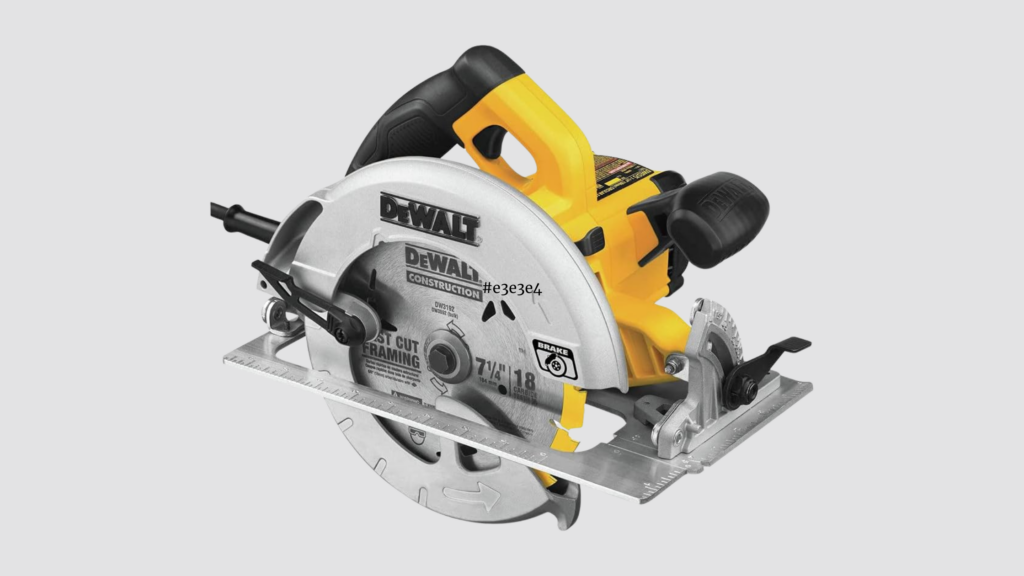
3. DeWalt DWE575SB lightweight circular saw—best for all-day comfort
| What we love | Things to consider |
| – Easy to carry and control – Strong motor for its size – Electric brake stops the blade fast – Comfortable grip | – Less power than worm drives – Blade guard can feel stiff |
Product specs
- Blade diameter: 7-1/4 inches
- Arbor size: 5/8 inch
- Amperage: 15 A
- No-load speed: 5,200 RPM
- Bevel capacity: 0–57°
- Max cutting depth (90°): 2-1/2 inches
- Weight: 8.8 lbs
- Drive type: Sidewinder
- Price: $345
The DeWalt DWE575SB receives significant attention for being relatively gentle on the hands. Compared to many corded saws, it’s pretty light, which is a real plus when you’re working in finished spaces or carrying it from room to room. But its motor still packs enough punch to handle standard framing and remodel cuts with ease. Controls are also pretty easy on the hands, especially if you’re not one for wrestling a heavy saw.
It isn’t quite as strong as a worm drive in pulling power, and it isn’t designed for cutting through large stacks of lumber all day. But that’s okay—one user sums it up by saying, “it’s the saw you grab when your shoulders are killing you.” One thing to note is that the blade guard can feel stiff when new, though this usually eases off with a bit of use. Overall, this saw is suitable for remodelers, finish carpenters, and general construction work where comfort is key.
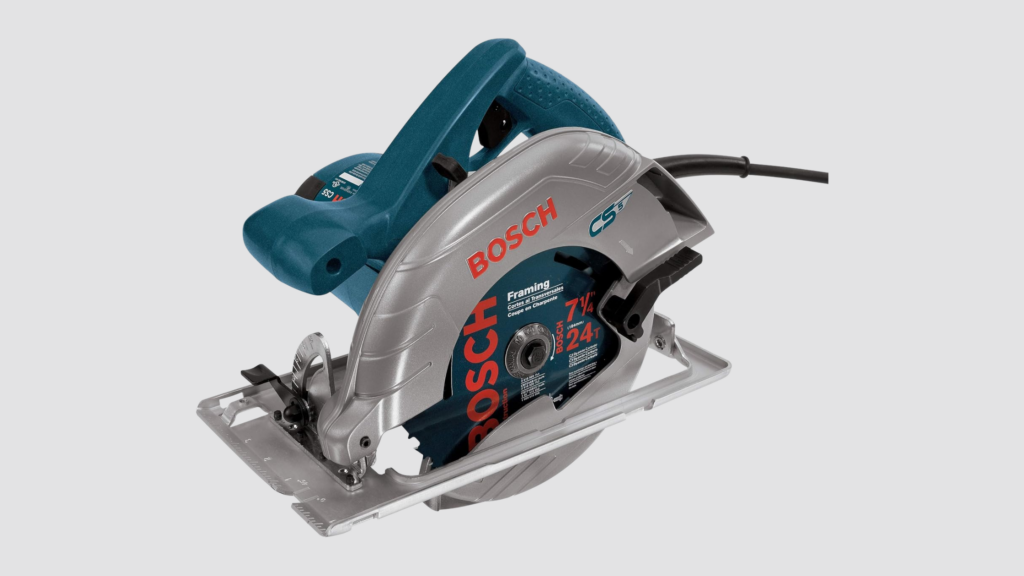
4. Bosch CS5 sidewinder circular saw—best for control and accuracy
| What we love | Things to consider |
| – Smooth, steady cuts – Solid feel on angled work – Good balance – Reliable bevel adjustments | – Heavier than some models – No brake or light |
Product specs
- Blade diameter: 7-1/4 inches
- Arbor size: 5/8 inch
- Amperage: 15 A
- No-load speed: 5,200 RPM
- Bevel capacity: 0–56°
- Max cutting depth (90°): 2-1/2 inches
- Weight: 10.2 lbs
- Drive type: Sidewinder (left blade)
- Price: $230
The Bosch CS5 feels rock-solid the moment you put it to work. It doesn’t cause jumping or chattering, which makes a big difference when you’re trying to keep a straight line. The base stays flat on the work surface, and the bevel adjustments are smooth and become more accurate with repeated use, even after days of use. It’s one of those saws that really benefits from being worked slowly and carefully rather than just churning through cuts as fast as you can.
One customer described it as being ‘boring in a good way’—basically, it just does exactly what you want it to do without any of the surprises that can come with other tools. It lacks advanced features such as electric brakes or LED lights, and its weight is noticeable compared to some other models. But if you’re just looking for a clean cut every time, this saw’s the one to go for.
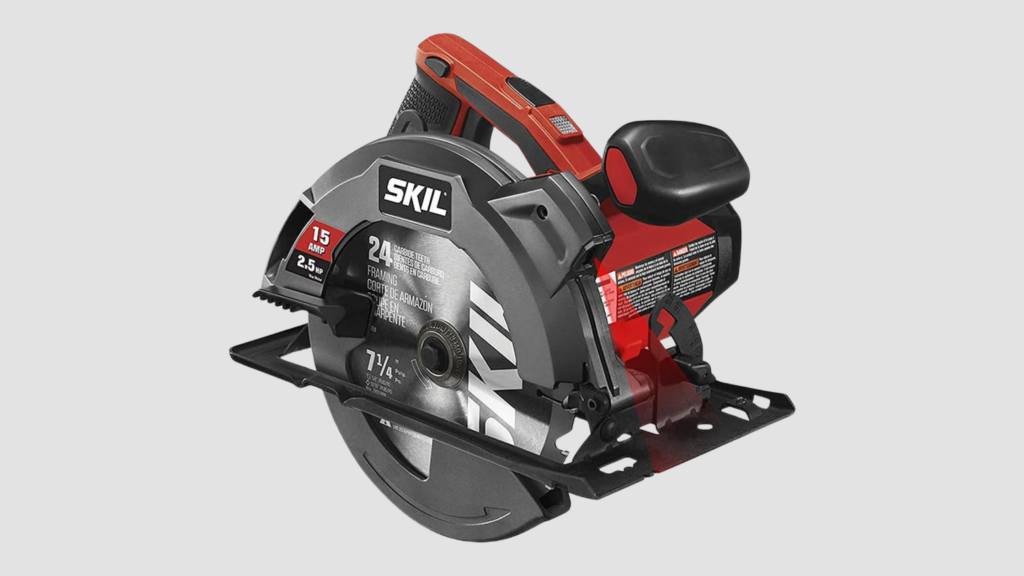
5. Skil 5280-01 corded circular saw—best low-cost option
| What we love | Things to consider |
| – Low price – Enough power for basic work – Laser guide helps beginners – Easy to find parts | – Heavier than premium saws – Feels basic |
Product specs
- Blade diameter: 7-1/4 inches
- Arbor size: 5/8 inch
- Amperage: 15 A
- No-load speed: 4,800 RPM
- Bevel capacity: 0–51°
- Max cutting depth (90°): 2-1/2 inches
- Weight: 12.1 lbs
- Drive type: Sidewinder
- Price: $80
The Skil 5280-01 is often used as a starter because it’s very affordable and widely available. It has enough power to handle the basics like framing lumber, plywood, and sheet goods without slowing down or stalling. If you’re new to this, the laser guide can help keep you on track, especially when you’re just starting out. It’s not exactly the most refined saw out there, but it gets the job done without a fuss.
A DIYer on Reddit said: “It may not be fancy, but it keeps cutting,” and that’s essentially what most people will say. It’s a clunker compared to some of the high-end saws on the market and can be tiring to use over time, compounded by its weight. Still, it’s perfect for homeowners, apprentices, or people doing light renovation work.
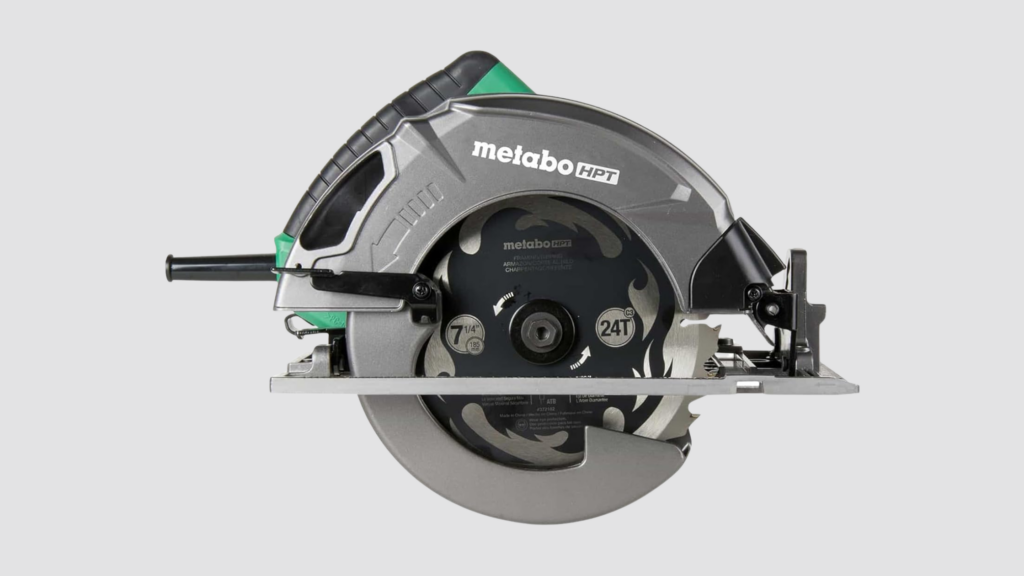
6. Metabo HPT C7SB3 circular saw—best simple jobsite saw
| What we love | Things to consider |
| – Strong cutting power – Simple design – Comfortable grip – Fair price | – No brake – No extra features |
Product specs
- Blade diameter: 7-1/4 inches
- Arbor size: 5/8 inch
- Amperage: 15 A
- No-load speed: 5,200 RPM
- Bevel capacity: 0–45°
- Max cutting depth (90°): 2-1/2 inches
- Weight: 9.5 lbs
- Drive type: Sidewinder
- Price: $176
The Metabo HPT C7SB3 keeps things straightforward. It has solid power and doesn’t feel fragile, even with heavy use. The handle feels comfortable, and the saw stays stable during straight cuts. There’s nothing complicated about how it works, which some users prefer.
One user described it as “plain, but it hasn’t let me down”, which is usually what people want from a jobsite tool. It lacks advanced features, such as a brake or a light, and it won’t impress anyone looking for modern extras. It works best for contractors who want a basic, corded saw that they don’t have to worry about.
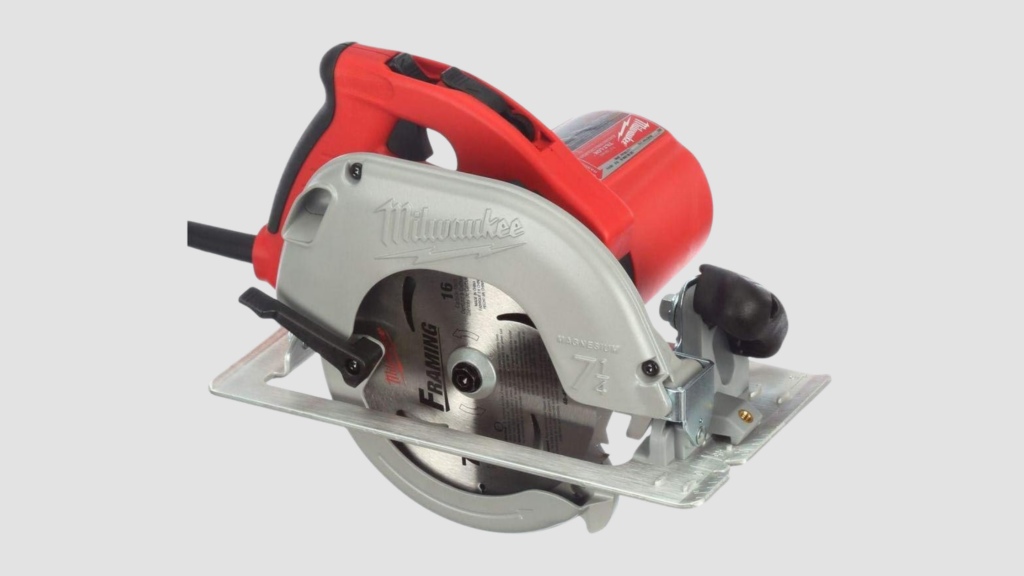
7. Milwaukee 6390-21 corded circular saw—best for rough jobsite use
| What we love | Things to consider |
| – Plenty of cutting power – Handles frequent everyday use without feeling fragile – Feels solid in the hand – Parts are easy to find at most tool stores | – Heavier than many newer saws – No electric brake to stop the blade fast |
Product specs
- Blade diameter: 7-1/4 inches
- Arbor size: 5/8 inch
- Amperage: 15 A
- No-load speed: 5,800 RPM
- Bevel capacity: up to 50°
- Max cutting depth (90°): 2-3/8 inches
- Weight: 10.4 lbs
- Drive type: Tilt-Lok sidewinder
- Price: $274
The Milwaukee 6390-21 is one of those saws you see in places where tools are worked hard and take a pounding. It has all the power you need to cut through framing lumber and even tough materials like treated wood. You won’t have to worry about it feeling fragile when you toss it into the back of the truck at the end of the day. It appears to be a tool designed for rough jobsite use, not for sitting untouched in a toolbox.
A Reddit user mentioned that it keeps running even when everything else on the site is looking worn out—that’s probably why so many people swear by Milwaukee’s corded tools. Now, it’s true that this saw is slightly heavier than some newer models, and it doesn’t have all the bells and whistles, such as electric brakes, but that’s not a priority for many general contractors and framing crews. What they care about is that the tool can run all day without breaking down.
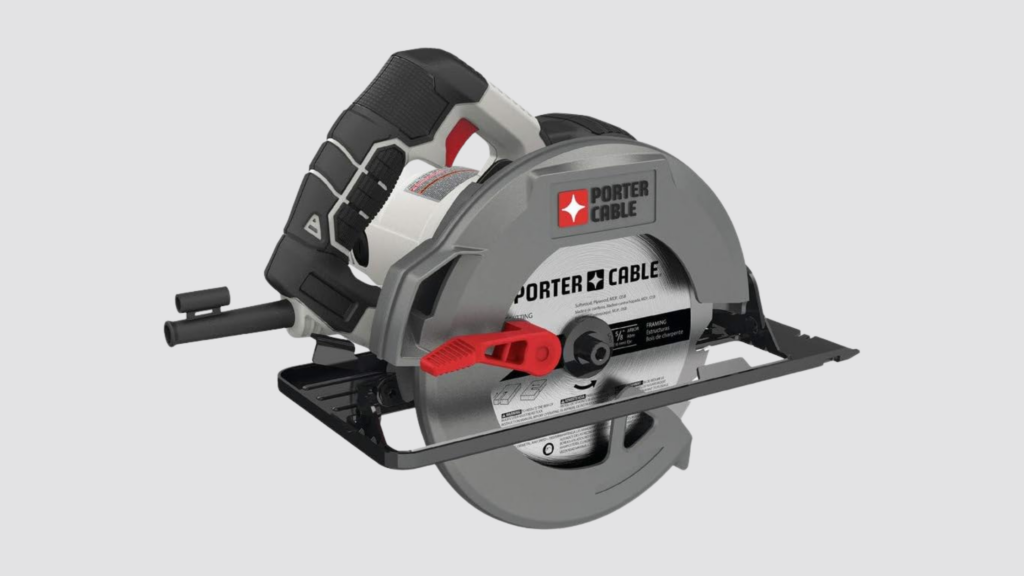
8. Porter-Cable PCE300 corded circular saw—best for straightforward carpentry
| What we love | Things to consider |
| – Easy to pick up and start using – Cuts through lumber and plywood easily – Familiar to many carpenters who have used older Porter-Cable saws – Simple controls | – Not as refined as premium saws – Slightly heavier than some competitors |
Product specs
- Blade diameter: 7-1/4 inches
- Arbor size: 5/8 inch
- Amperage: 15 A
- No-load speed: up to 5,500 RPM
- Bevel capacity: up to 45°
- Max cutting depth (90°): 2-1/2 inches
- Weight: 9.5 lbs
- Drive type: Sidewinder
- Price: $90
The Porter Cable PCE300 feels like an old friend, and that’s one of the reasons so many people take to it right from the start. It has more than enough grunt to handle plywood, framing lumber, and the sort of basic remodeling work most people throw at it without needing to be fussed with it every five minutes. Because the saw is so predictable, it helps when you’re working quickly—you can be sure you’ll still get clean cuts.
Because it works the same way every time you use it, you can really start to rely on it, which fits with how it’s commonly described—a no-frills tool that never lets you down. As it happens, though, it doesn’t exactly blow the competition away with features, plus it’s a bit heavier than some of its rivals. This saw is a good fit for carpenters and similar professionals looking for a reliable, corded tool that gets the job done.
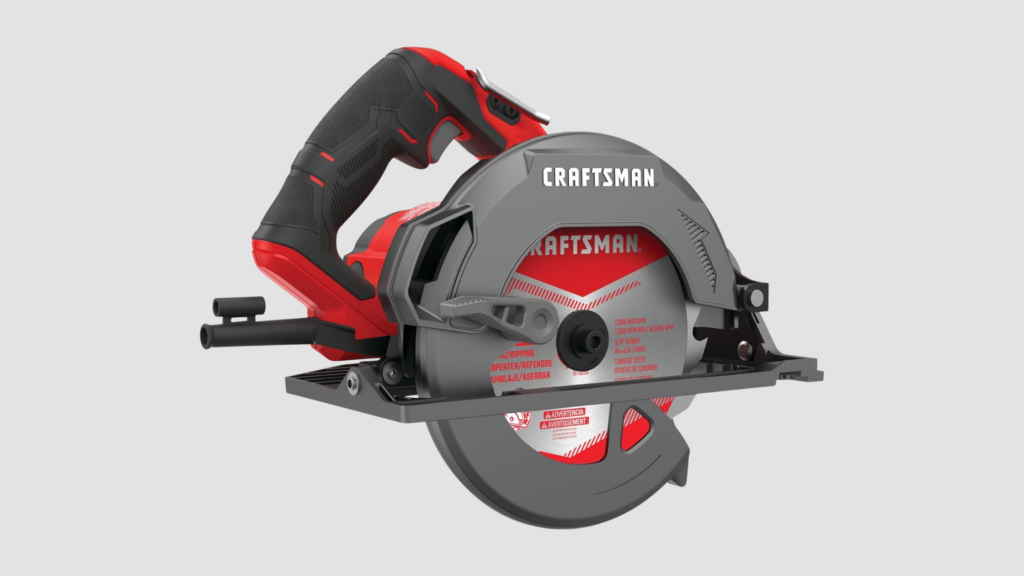
9. Craftsman CMES510 corded circular saw—best for homeowners and light remodels
| What we love | Things to consider |
| – Simple controls – Cuts framing boards and plywood cleanly – Affordable compared with pro saws – Comfortable grip for short to medium jobs | – Feels bulkier on long cutting sessions – Not built for heavy daily site use |
Product specs
- Blade diameter: 7-1/4 inches
- Arbor size: 5/8 inch
- Amperage: 15 A
- No-load speed: 5,500 RPM
- Bevel capacity: up to 55°
- Max cutting depth (90°): 2-1/2 inches
- Weight: 9 lbs
- Drive type: Sidewinder (standard electric)
- Price: $135 CAD
The Craftsman CMES510 is designed so you don’t have to pay for features you never use. It’s got the steady power you need to take on sheet goods and big pieces of framing lumber. The controls are pretty simple to figure out, even if you’re not a power saw expert.
You can find reviewers on Reddit describing it as a solid option for homeowners tackling house projects who don’t want to spend an arm and a leg. It is slightly heavier than some fancier saws, and it doesn’t handle extended cutting sessions as easily. That said, it’s perfect for a homeowner taking on small renovations now and then.
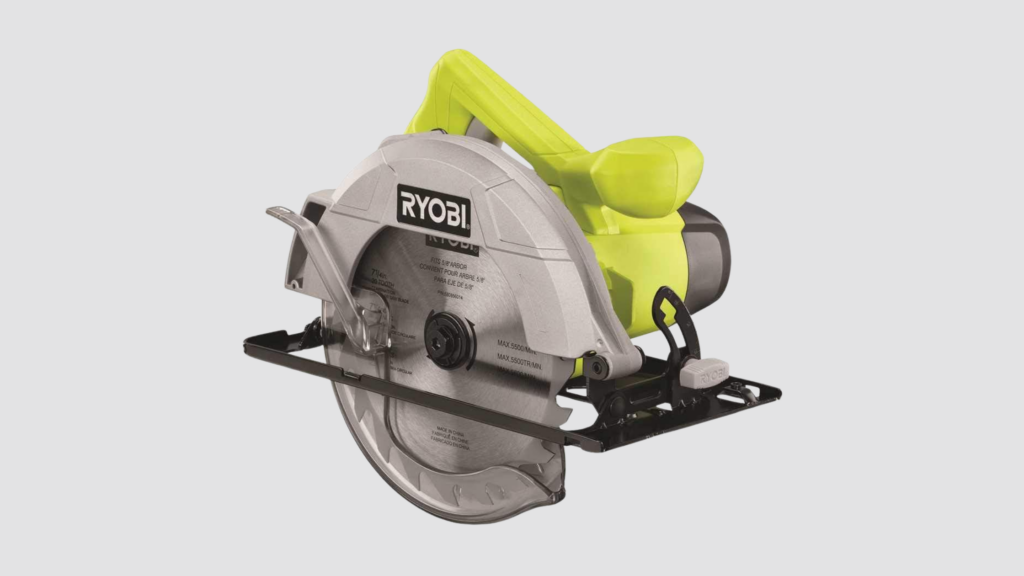
10. Ryobi CSB125 corded circular saw—best for occasional use
| What we love | Things to consider |
| – Good power for light to moderate tasks – Easy to handle for beginners – Fair price point for casual use – Cuts sheet goods without binding | – Build quality feels cheaper than pro models – Not comfortable for extended use |
Product specs
- Blade diameter: 7-1/4 inches
- Arbor size: 5/8 inch
- Amperage: 13 A
- No-load speed: 5,000 RPM
- Bevel capacity: up to 51.5°
- Max cutting depth (90°): 2-7/16 inches
- Weight: 7 lbs
- Drive type: Sidewinder
- Price: $79
The Ryobi CSB125 is a saw people often pick up for small projects rather than daily work. It has enough power to cut plywood and framing lumber when needed. The saw is easy to handle and not intimidating for new users, especially if they haven’t spent much time with power tools. It does what it needs to do with minimal setup, making it approachable for quick tasks around the house.
One Reddit user described it as fine for household projects but not suitable for a jobsite every day. The build quality reflects its price, and it’s not meant for heavy use or long cutting sessions. This saw is a good fit for DIYers who want a corded option for occasional projects without spending much.
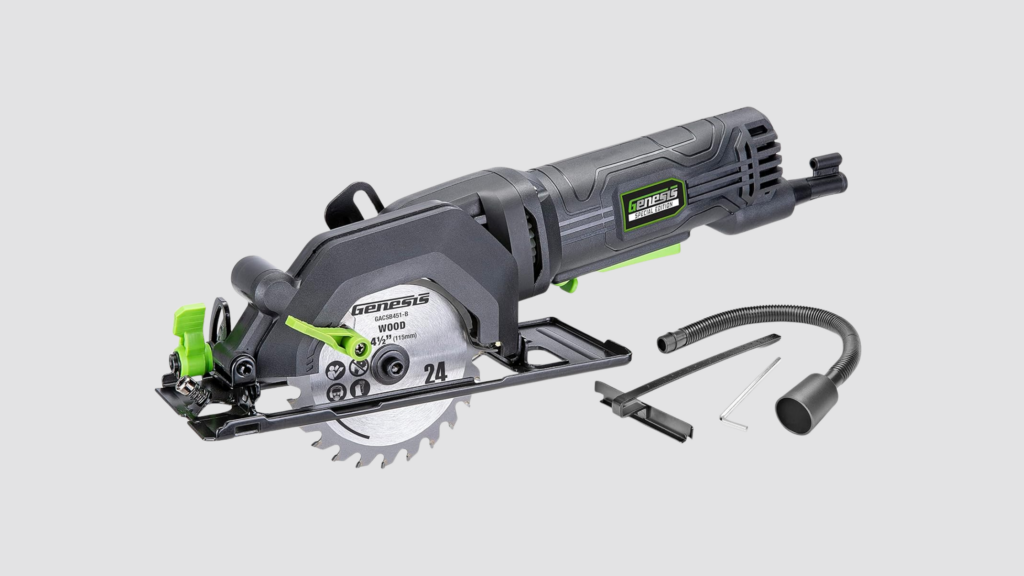
11. Genesis GCS445SE corded circular saw—best entry-level saw
| What we love | Things to consider |
| – Very affordable for first-time users – Laser guide helps keep cuts straight – Light enough for short jobs – Easy to understand and operate | – Not heavy-duty enough for daily use – Accuracy is only as good as the user’s skill |
Product specs
- Blade diameter: 7-1/4 inches
- Arbor size: 5/8 inch
- Amperage: 13 A
- No-load speed: 3,500 RPM
- Bevel capacity: 45°
- Max cutting depth (90°): 2-7/16 inches
- Weight: 8.2 lbs
- Drive type: Sidewinder
- Price: $75
People new to power tools often choose the Genesis GCS445SE because it’s affordable and easy to use. It handles cutting basic lumber and paneling without issue. Plus, the laser guide is a big help for making straight cuts, especially if you’re still learning the ropes. One downside is that it can be tiring to work with it for long periods.
Some budget tool enthusiasts on Reddit have said that even though Genesis saws may not be the most refined tools on the market, they still get the job done. Just don’t plan on using it for extended cutting sessions or hammering through tough tasks. It’s better suited for small home projects and beginners taking the plunge with power tools.
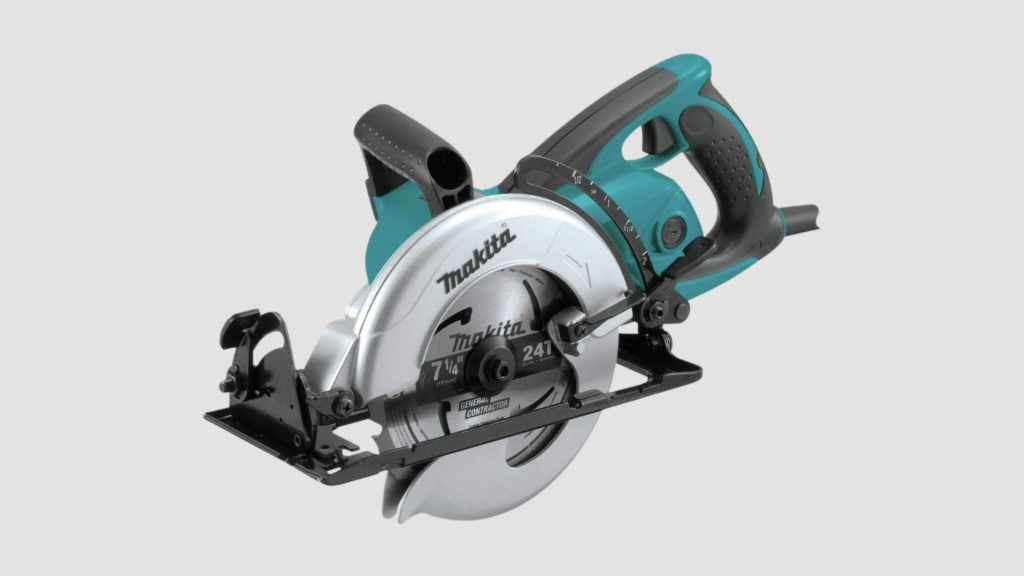
12. Makita 5477NB hypoid circular saw—best for power with a smoother feel
| What we love | Things to consider |
| – Strong pull through thick or tough lumber – Hypoid drive feels smoother than worm drives – Cuts clean with minimal effort – Balanced feel in hand | – Heavier than sidewinders – More expensive than simple corded saws |
Product specs
- Blade diameter: 7-1/4 inches
- Arbor size: 5/8 inch
- Amperage: 15 A
- No-load speed: 4,500 RPM
- Bevel capacity: 51.5°
- Max cutting depth (90°): 2-3/8 inches
- Weight: 14.3 lbs
- Drive type: Hypoid gear drive
- Price: $258 CAD
The Makita 5477NB uses a hypoid drive instead of the more common worm drive, which changes the feel of the tool when it’s under heavy load. The result is a saw that delivers significant cutting power, yet surprisingly runs smoother and quieter than many worm-drive saws. On long cuts, it tracks well, in a way that feels controlled and deliberate rather than just powerful and noisy. When you’re doing framing work, many users have said it feels rock-solid.
A Redditor said it pulls hard without the noise and shake, and that’s a big part of why people choose this saw over other options. It’s a bit heavier than those sidewinders, and it’s more expensive than the standard models, but for framers who are looking for that combination of power and a smoother cut feel, this is the saw that fits the bill.
What to think about before buying a corded circular saw
Determine your primary use for the tool
Think about what you’ll be cutting most of the time. It’s either framing lumber, sheet goods, or finish work—and each has its own set of requirements. You need a heavy-duty saw for structural cuts, but for your average remodel job, a lighter model will do. No need to buy more saw than you need, just extra weight without any additional benefit.
Look at the power and cutting style
Most corded circular saws come with a 15-amp motor, but that’s not the whole story. The way power is delivered is where the real difference lies. Worm drives, hypoid saws, and sidewinders all do things a bit differently, so you need to find the one that feels right for you. More than the numbers themselves, it’s about your comfort level and how you prefer to work.
Think about weight and balance
Weight adds up over time. A saw that feels fine for ten cuts might become tiring after a few hours. And then there’s balance—how the saw feels when you are cutting overhead or at an angle. A saw doesn’t need to be as light as possible, but poor balance becomes a problem fast.
Have a look at durability and build quality
These saws tend to stay on a jobsite rather than sit on a shelf. That’s where materials like magnesium and aluminium come into their own—they are much more durable than the flimsy steel or plastic some makers use. A simple design usually lasts longer as well. And all those fancy extra features won’t matter if the saw can’t handle a day’s work.
Consider what it means to be working with a corded saw
Corded saws mean working with extension leads and making sure you have access to a power outlet. Not a problem for everyone, but something to plan around. On the other hand, you get the benefit of steady power and no battery downtime, which is a fair trade for many people, especially when running a long cutting session in the shop.
Final thoughts
Corded circular saws still have their place on the jobsite and in the workshop because they deliver reliable power without the hassle and upkeep of batteries. What makes the right saw for you is less about the brand and more about how and where you work. Some people prioritize raw power, no matter the cost, while others value comfort and control.
If you want more straight-talk reviews on tools used in construction, carpentry, and engineering work, check out these other gear guides on Under the Hard Hat:
- Check out the best tools Milwaukee has to offer
- Who makes the best reciprocating saw?
- Makita Track Saw vs Festool Track Saw: Which one is better?
- Bosch vs Dewalt Table Saw: Which one is better?
Want more like this? Subscribe to our newsletter to stay up to date on tools, projects, and work happening across the trades.