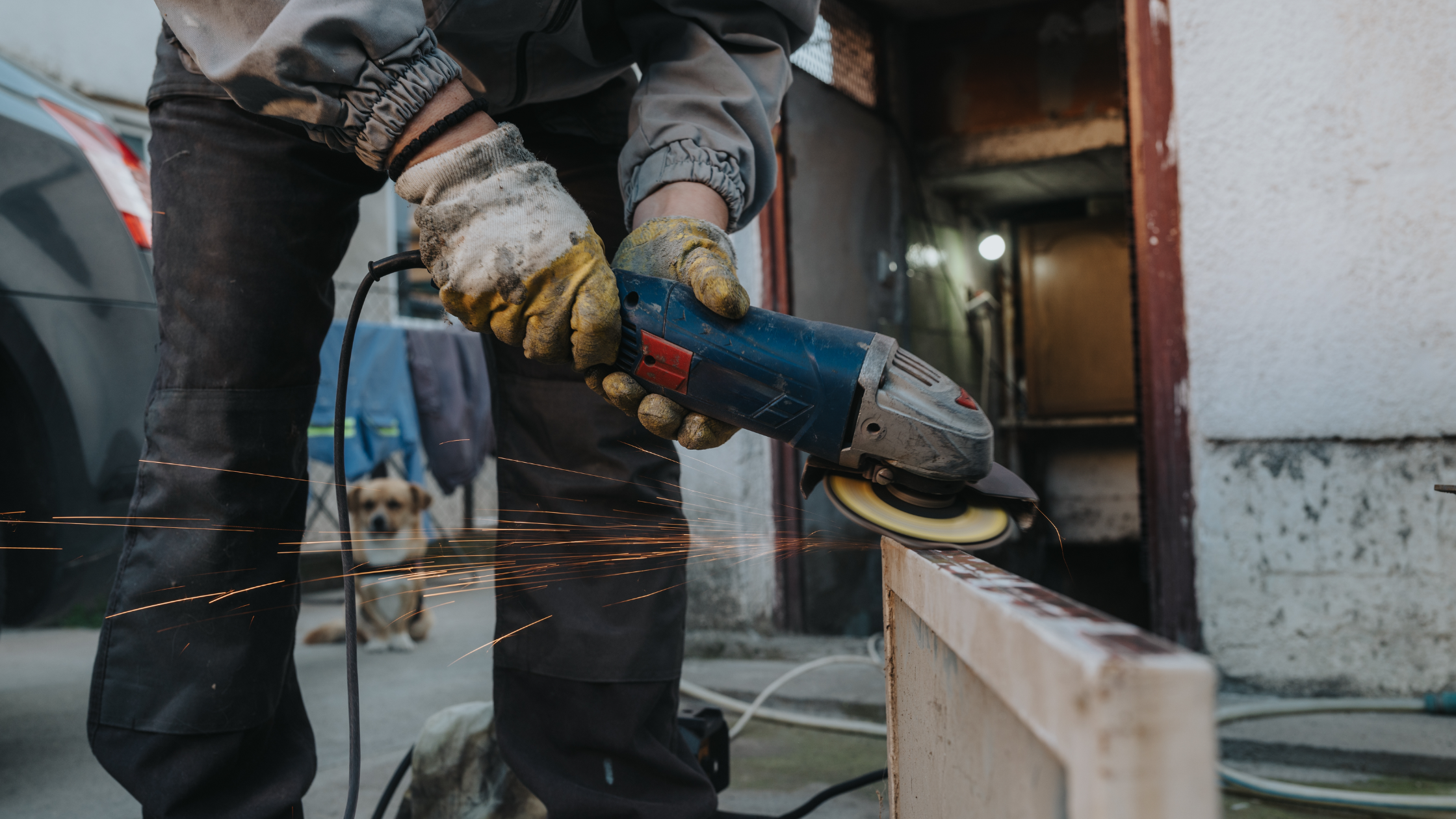
Choosing the best corded angle grinder means finding the sweet spot between power, comfort, and durability—the combination that keeps the tool working even when the going gets tough. People in the trades who regularly weld, grind, and chop metal at work know that cordless tools sometimes can’t get the job done. In this rundown, we’re featuring 9 of the best corded angle grinders, including the Milwaukee 4 ½” angle grinder for its balance of control and torque, and the Certified 5.5A angle grinder, which offers low-cost, dependable performance for when you don’t really need all that horsepower. We selected the best corded angle grinders based on customer reviews and overall performance across a range of conditions.
Top 9 corded angle grinders
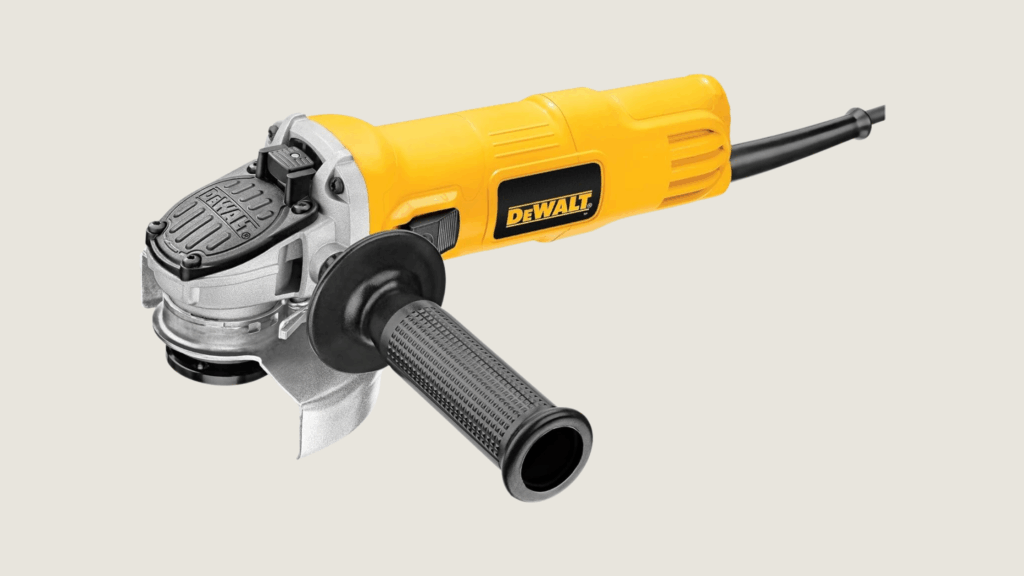
1. DEWALT DWE402 4-1/2-inch angle grinder — best for heavy metal cutting
| Pros | Cons |
| – High-power 11-amp motor stands up to thick stock – Speed sustains under pressure – Dust ejection system protects internals – Paddle switch is reliable – Adjustable guard is quick to reposition | – Heavier than smaller grinders – No variable speed for finesse work – Overkill for simple cleanup |
Key features
- 11-amp motor
- 11,000 RPM no-load speed
- Dust ejection system
- Paddle switch with lock-off
- 360° adjustable guard
- Spindle lock
DEWALT’s DWE402 earns its place as one of the best corded angle grinders because it brings a consistent combo of torque and speed to the table on tough jobs. When you’re dealing with angle iron, heavy pipe, or thick rebar, the 11-amp motor stays on top of things and never gets bogged down, which is a real timesaver on big jobs. The dust ejection system also helps keep the motor from wearing out too quickly, which is handy if you’re grinding off rusty or shot-blasted surfaces. Regular users will often comment on how stable the motor feels, even when you put it through its paces, letting you get on with the job without worrying about the tool.
This grinder isn’t exactly subtle. It is a high-power machine that’s built for serious business. The downside is that it’s a fixed-speed job, so when you need to do any delicate surface prep or polishing, you’ve got to be a bit more careful not to gouge anything. Plus, it’s a bit on the heavy side, which can strain your shoulders if you’re doing overhead work all day. If you primarily use it for ripping metal and structural cutting, it’s a star.
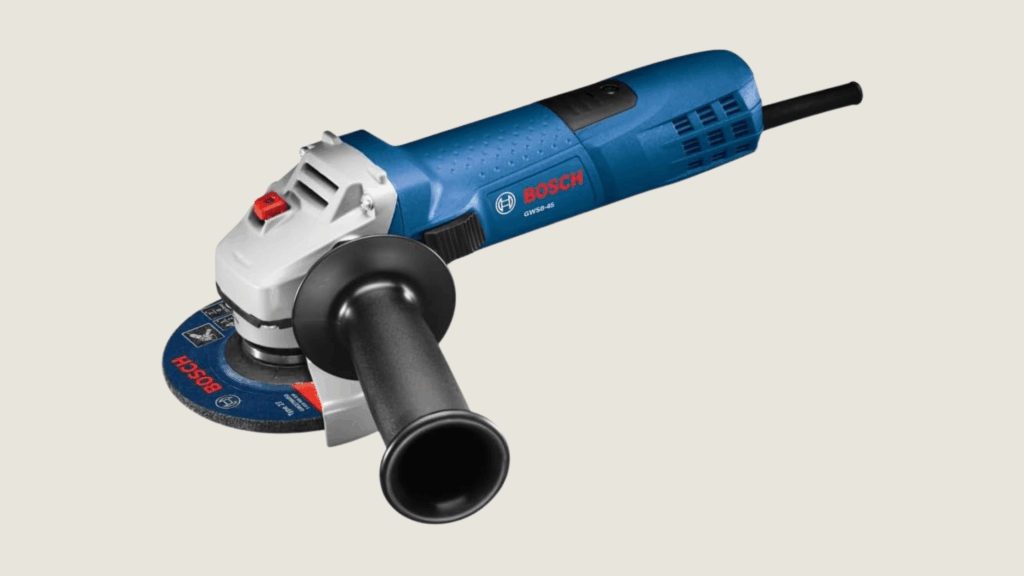
2. Bosch GWS8-45 4-1/2-inch angle grinder — best for control and comfort
| Pros | Cons |
| – Lightweight and easy to hold – Slim grip reduces fatigue – Directed airflow protects switches – Two-position handle adapts to jobs – Smooth startup | – Less power for thick stock – Slower cutting – Not ideal for continuous heavy abuse |
Key features
- 7.5-amp motor
- 11,000 RPM
- Slim ergonomic body
- Directed airflow system
- Burst-protection guard
- Two-position side handle
The Bosch GWS8-45 is a good choice when you need a tool that balances performance with user comfort. Being lightweight and having a slim body really helps when you’re trying to get into tight spaces around welds. The airflow system keeps dust out of the internal bits, which is a big plus when you’re in an environment that’s constantly getting clogged with debris. Fabricators and maintenance professionals appreciate how this tool maintains balance even after long sessions, making it easy to guide it along seams or edges. The smooth startup and predictable speed are also a big help, as they build confidence among new users.
Where it falters, though, is when you need serious brute force. Deep cuts or extensive grinding on thick plates demonstrate the limits of that 7.5-amp motor. This model shines when you’re doing a lot of cleanup, finishing welds, or light cutting, but not when you need to punch through steel for an extended period. For maintenance techs, auto body shops, and the like, who value comfort without sacrificing basic power, this Bosch unit is a solid choice.
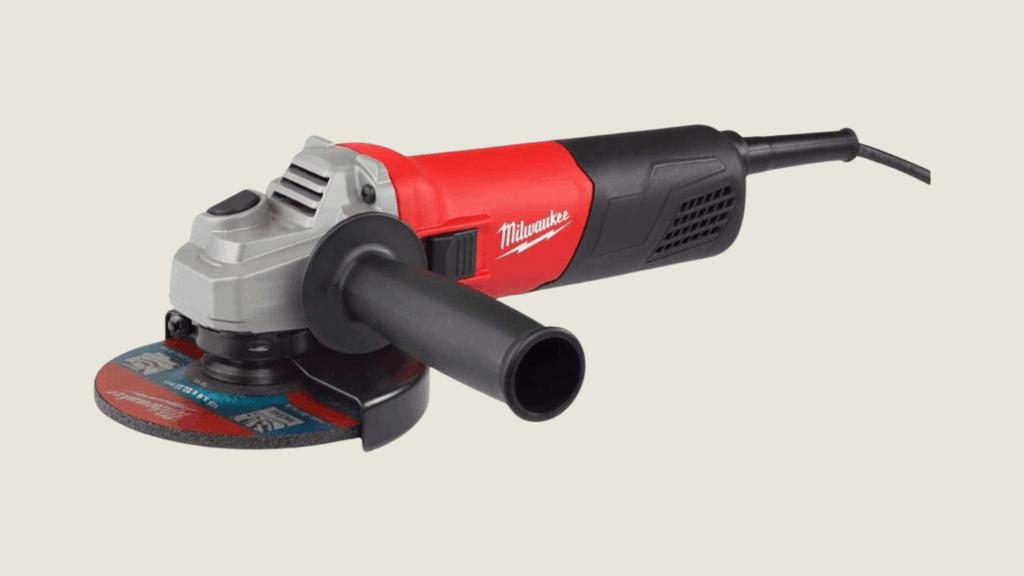
3. Milwaukee 6130‑33 4-1/2-inch angle grinder — balanced performance for everyday jobs
| Pros | Cons |
| – 800 W motor offers solid cutting and grinding torque – Compact and slim body – Soft start and line lock functions – Protected air inlets assist cooling – Steel gear construction for durability | – Smaller wheel size isn’t ideal for heavy structural cutting – No variable speed – Fewer aftermarket accessories than name-brand pro models |
Key features
- 800 W corded motor
- Up to 11,500 RPM
- 4-1/2 to 5-inch wheel (125 mm) compatibility
- Slim grip design promotes comfort
- Line-lock-out to prevent accidental restart
- Soft start for smoother handling and control
Milwaukee’s AG800-125E packs more than you might expect from a compact corded unit. The 800 W motor has enough torque to cut through common steel framing and grind weld seams with confidence. People who get hands-on with it often say the slim body and balanced feel make it a dream to work in tight spots—the kind of places bigger grinders can’t fit, like around HVAC ducting or inside cabinets. The soft-start feature reduces the initial jolt at startup, which is especially useful when you’re switching between tasks or mounting discs. And with line-lock-out safety, you won’t have to worry about unintentional restarts after a power interruption—a practical detail for busy job sites.
It’s not the best tool if your work regularly demands deep cuts in thick structural steel or large masonry tasks. It’s still smaller than a 7- to 9-inch grinder, so you won’t be able to cut as deeply. There’s also no variable-speed option, so polishing or cleaning delicate metal finishes isn’t as refined. That said, it holds its own against everyday metal grinding and cutting tasks that general contractors, maintenance teams, or workshop fabricators typically encounter.
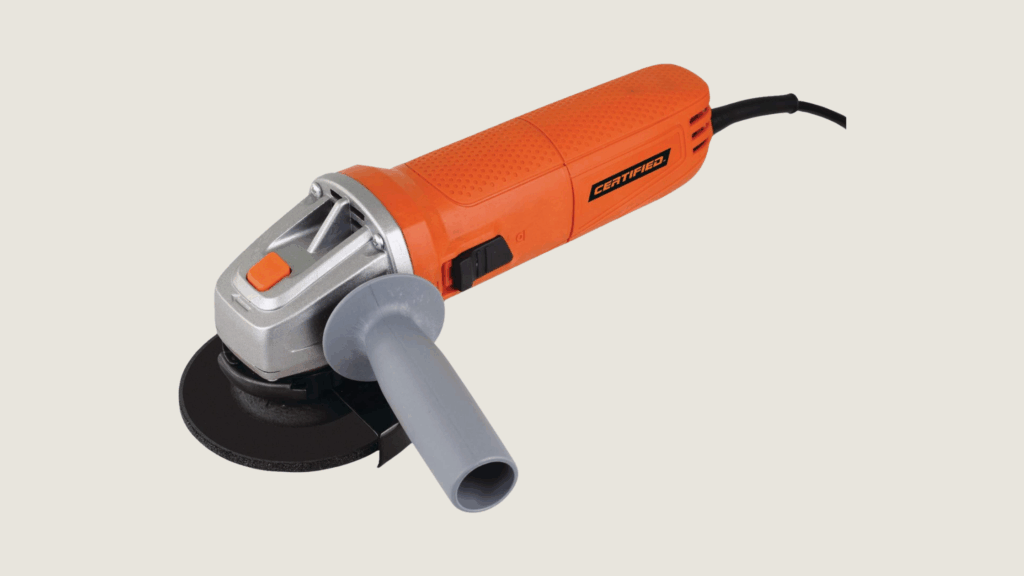
4. Certified 5.5A corded angle grinder — best budget option
| Pros | Cons |
| – Very affordable – Easy to operate – Lightweight – Good for basic cutting/grinding – Auxiliary handle included | – Lower power than pro tools – Not built for heavy use – Shorter warranty |
Key features
- 5.5-amp motor
- 4-1/2-inch wheel
- Auxiliary handle
- Standard guard
- Wrench included
- Budget-friendly design
The Certified 5.5A grinder is a good fit for entry-level tradespeople or average homeowners who aren’t grinding extremely hard steel every day. It’s a nice weight to hold, and the low amp rating means you can get a decent feel for the tool when doing some easy cuts or surface prep. Those new to the trades appreciate that it’s easy to swap accessories and get up and running without having to climb a steep learning curve. For light metalwork and workshop tasks, this thing does the trick. Steady speed, basic controls, and it’s approachable for people who just dabble or as a secondary grinder in your tool bag.
Because it’s a budget model, its power and durability aren’t as good as some pricier models. You don’t want to use it to grind through thick material all day or to make high-pressure cuts. Treat this thing as a backup, say for general repair or home DIY projects, rather than your go-to heavy hitter.
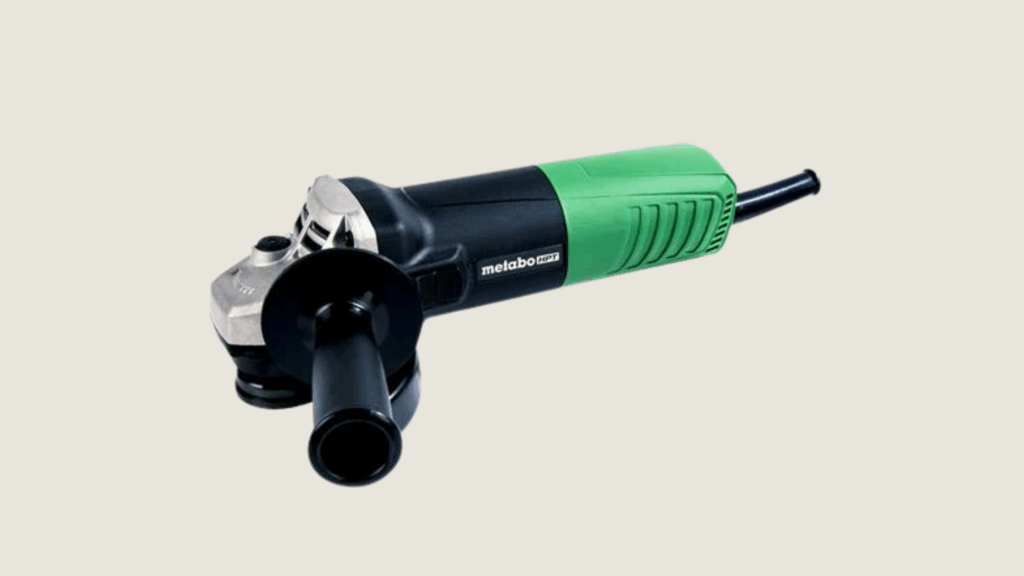
5. Metabo HPT G12SR4 4-1/2-inch angle grinder — best versatile shop option
| Pros | Cons |
| – Includes grinding wheels and case – Lightweight yet controlled – Spindle lock for quick wheel changes – Comfortable slide switch – Good for general tasks | – Lower amp for heavy cutting – Warranty is shorter than pro brands – Limited speed range |
Key features
- 6.2-amp motor
- 4-1/2-inch wheel
- Slide switch
- Spindle lock
- Auxiliary handle
- Case and discs included
The Metabo HPT G12SR4 is one of those grinders that consistently gets the job done, and people really like it. Its 6.2-amp motor is just right—not too much, not too little—and it handles tasks like cleaning welds, prep work, and medium cuts just fine. The included wheels and case are a nice touch, so you don’t have to go out and buy a million extras. People prefer the slide switch, and it feels secure even when used for extended periods. Plus, the lightweight design is a big help when you’re working overhead or in tight spaces, as it reduces fatigue.
On heavy steel, this tool can get sluggish, but it’s perfect for general shop and site work. Fabricators, mechanics, and HVAC types will find it a pretty well-rounded choice for day-to-day use.
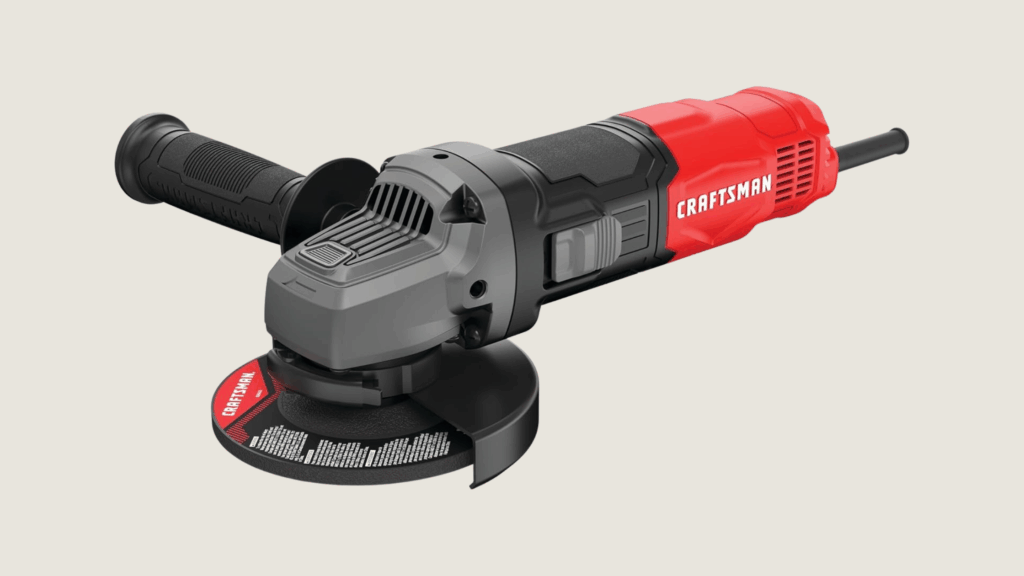
6. Craftsman Small Angle Grinder Tool CMEG100 — best user-friendly, everyday grinder
| Pros | Cons |
| – Solid mid-range power – Comfortable grip – Good for weld prep and bolt cutting – Includes side handle – Easy to control | – Basic guard – Not for heavy industrial use – No variable speed |
Key features
- 4-1/2-inch wheel
- Side handle
- Lock-on switch
- Balanced weight
- Standard guard
- Everyday performance
Craftsman’s CMEG100 gives you dependable performance for a range of common grinding and cutting tasks. It feels balanced in hand, which helps maintain control while trimming welds or cutting pipe. Its power level suits frequent shop work without feeling overly aggressive when changing disc types. Users often view this tool as a go-to option for general tasks, and its laid-back nature is part of the reason it’s preferred. It cuts and grinds just fine, but it doesn’t scare you when you’re using it for everyday tasks.
The guard and attachments that come with it are basic, so you should consider swapping out the discs for more specialized tasks sooner rather than later. Because it doesn’t have variable speed control, it’s probably best suited for general work rather than super-precise finish work. But for the average metal and construction project, it delivers just what you need and does so reliably.
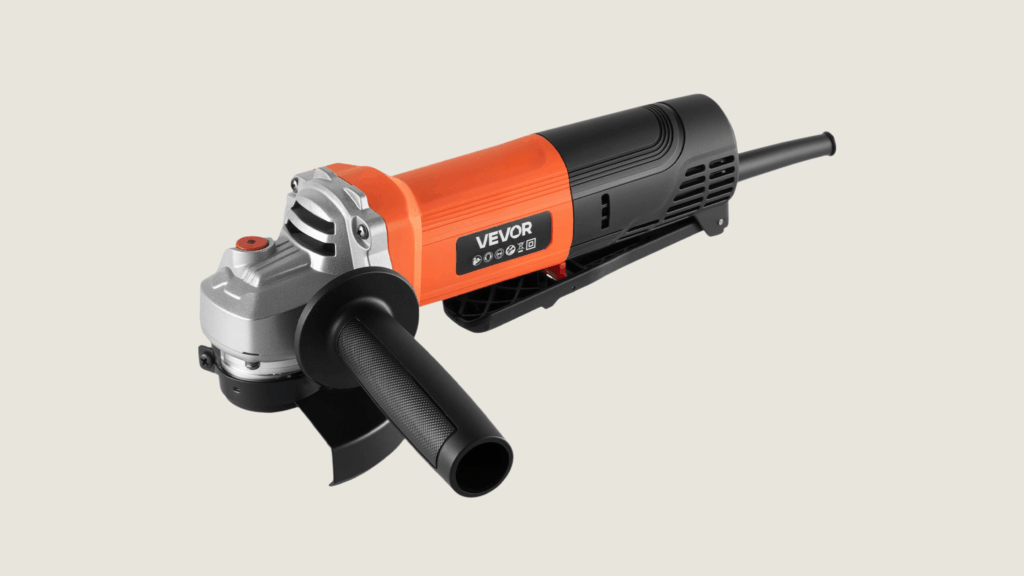
7. VEVOR Angle Grinder 4-1/2″ 8A — best value mid-range pick
| Pros | Cons |
| – Affordable mid-power option – 8-amp motor provides solid torque – Includes cutting and grinding wheels – Auxiliary handle included – Quick acceleration | – Build quality is basic – Not premium durability – Limited advanced features |
Key features
- 8-amp motor
- 12,000 RPM
- Auxiliary handle
- Cutting and grinding wheels
- Standard guard
- Value-oriented design
The VEVOR 8-amp angle grinder steps up from basic budget models, with a motor that delivers enough torque for medium-duty cutting and grinding. Its 12,000 RPM speed enables faster passes through thinner stock and weld cleanup. People who work with a variety of materials appreciate that the box includes both grinding and cutting wheels. That’s a real time-saver when you need to switch between jobs. The auxiliary handle provides extra leverage for angled cuts, especially when the setup is challenging. Overall, it’s a good pick if you’re looking for a tool that offers everyday capabilities without breaking the bank.
It’s not as tough as some of the higher-end brands on the market, and the housing feels lighter than you might like, which can definitely make itself known after a few bumps. This grinder is best suited for general contractors who need something reliable without a high price tag, or for DIYers stepping up to larger, more heavy-duty projects. It’s also a good option for tradespeople looking for a utility tool that won’t break the bank and still gets the job done without overcommitting.
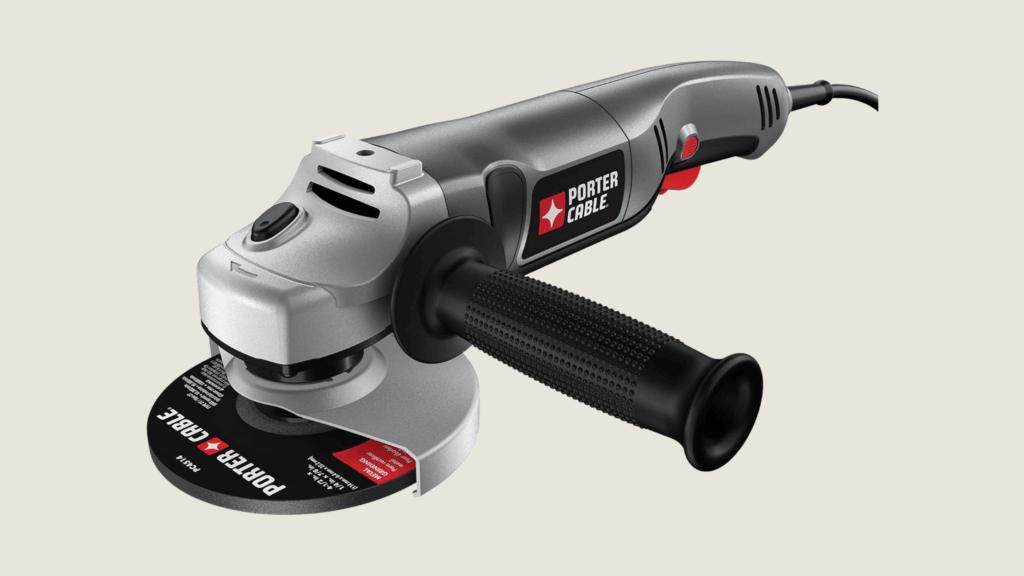
8. Porter-Cable PC750AG 4-1/2-inch angle grinder — best everyday workhorse
| Pros | Cons |
| – Solid 7.5-amp motor for general trades use – Comfortable grip and weight distribution – Durable build with metal housing – Easy to control for surface prep and cutting – Reliable, consistent speed | – Lacks variable speed control – Not ideal for thick structural steel – Accessories must be purchased separately |
Key features
- 7.5-amp corded motor
- 4-1/2-inch wheel capacity
- Metal gear housing
- Lock-on switch for continuous operation
- Auxiliary side handle
- Spindle lock for quick wheel changes
The Porter-Cable PC750AG sits in that perfect sweet spot between your basic hobby grinders and full-on pro tools, making it a real winner for construction crews, maintenance techs, and fabricators who want solid performance without the added expense. Its 7.5-amp motor has plenty of power to handle standard cutting and grinding tasks in the shop or on the jobsite, and the speed remains steady even when grinding over welds, trimming bolt heads, or prepping edges for paint. Amazon reviewers who use this grinder have said it feels well-balanced in the hand, which matters when you’re spending hours cleaning up a mess of brackets or prepping channel iron for fit-up.
This model’s limitations become apparent when you work with thicker materials or subject it to heavy use. The lack of variable speed means you’re always running at top speed, which can be excessive for lighter tasks if you’re used to an adjustable speed. Still, for most general trades applications, the PC750AG proves itself to be a reliable, no-nonsense grinder that handles everyday tasks without surprises or fuss. It’s a good fit for tradespeople who want a durable, reliable corded grinder that just works.
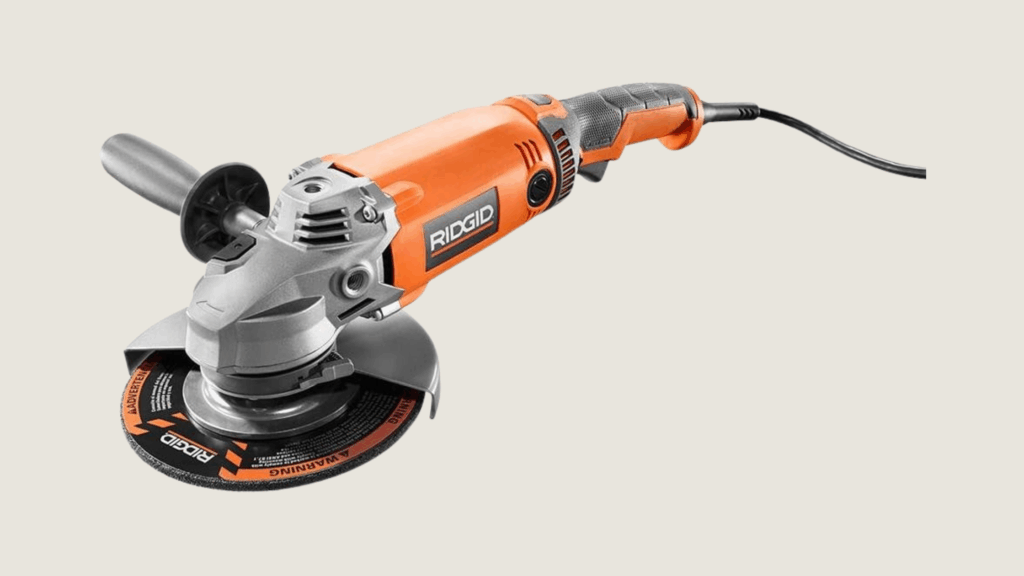
9. RIDGID R10202 7″ angle grinder — best large-wheel option for heavy work
| Pros | Cons |
| – Big 15-amp motor with torque to spare – Larger 7″ wheel cuts deep – Twist handle offers grip options – Great for demolition and large materials – Solid construction | – Heavier and bulkier – Not ideal for fine work – Premium price |
Key features
- 15-amp motor
- 7-inch wheel
- Twist handle
- Metal gear housing
- Lock-on switch
- Heavy-duty design
RIDGID’s 7-inch grinder steps into a territory where smaller grinders often fall short—making deep cuts and taking down big stuff on large materials without breaking a sweat. That 15-amp motor delivers significant torque and the holding power that really matters when you’re cutting through large pipe racks or massive steel beams. And that twist handle lets you get a handle on it (no pun intended) in a way that makes it feel really manageable, even in situations where you’re making a prolonged cut. All of which adds up to a grinder that’s great to use when it comes to the big stuff, like demolition and extensive conduit work, and heavy concrete finishing that some tradespeople have to deal with. If you’re in that line of work, you’ll be glad to have this tool’s size and power on your side.
It’s a big one, though, so you won’t want to be swinging it overhead for long periods of time if you value your back. If precision work is what you need, smaller, lighter grinders are likely a better choice. But when size and strength matter—especially in industrial sites—this is one of the most capable corded grinders you’ll find.
What to consider before buying a corded angle grinder
Define your primary use case
Knowing whether you’ll cut thick structural steel or just clean welds determines which grinder is best for you. Large motors are helpful for deep cuts, but aren’t required for basic cleanup.
Assess power and performance requirements
When it comes to power and performance, look at amperage and RPM, as they are key to completing the job without bogging down. You want to align it with the task at hand to avoid taking too long and overloading the motor.
Review warranty and support options
If you’re using your tool a lot, then you want one with a good warranty and support behind it—it could end up saving you a pretty penny.
Check for safety features you need
Features such as paddle switches, lock-off, and adjustable guards can make a world of difference in keeping you in control and preventing kickback.
Consider ergonomics and weight
Lighter grinders are a godsend when you’ve got a long job ahead of you, and you don’t want to be exhausted by the end of the day. Heavier ones, on the other hand, have their place too when you’re making a cut that really needs to be stable.
Look at accessory and disc compatibility
Some grinders accommodate a wider range of discs, giving you greater versatility for metal, masonry, or bolt work.
Want more gear reviews?
Check out some of our other helpful gear reviews here:
- The 12 best corded circular saws
- The top corded tools from Makita
- Ryobi vs DeWalt: Who makes the best hammer drill?
- 7 Metabo tools that are totally worth the splurge
For weekly gear breakdowns, construction news, and trade tips, subscribe to the Under the Hard Hat newsletter for the best up-to-date info delivered straight to your inbox.