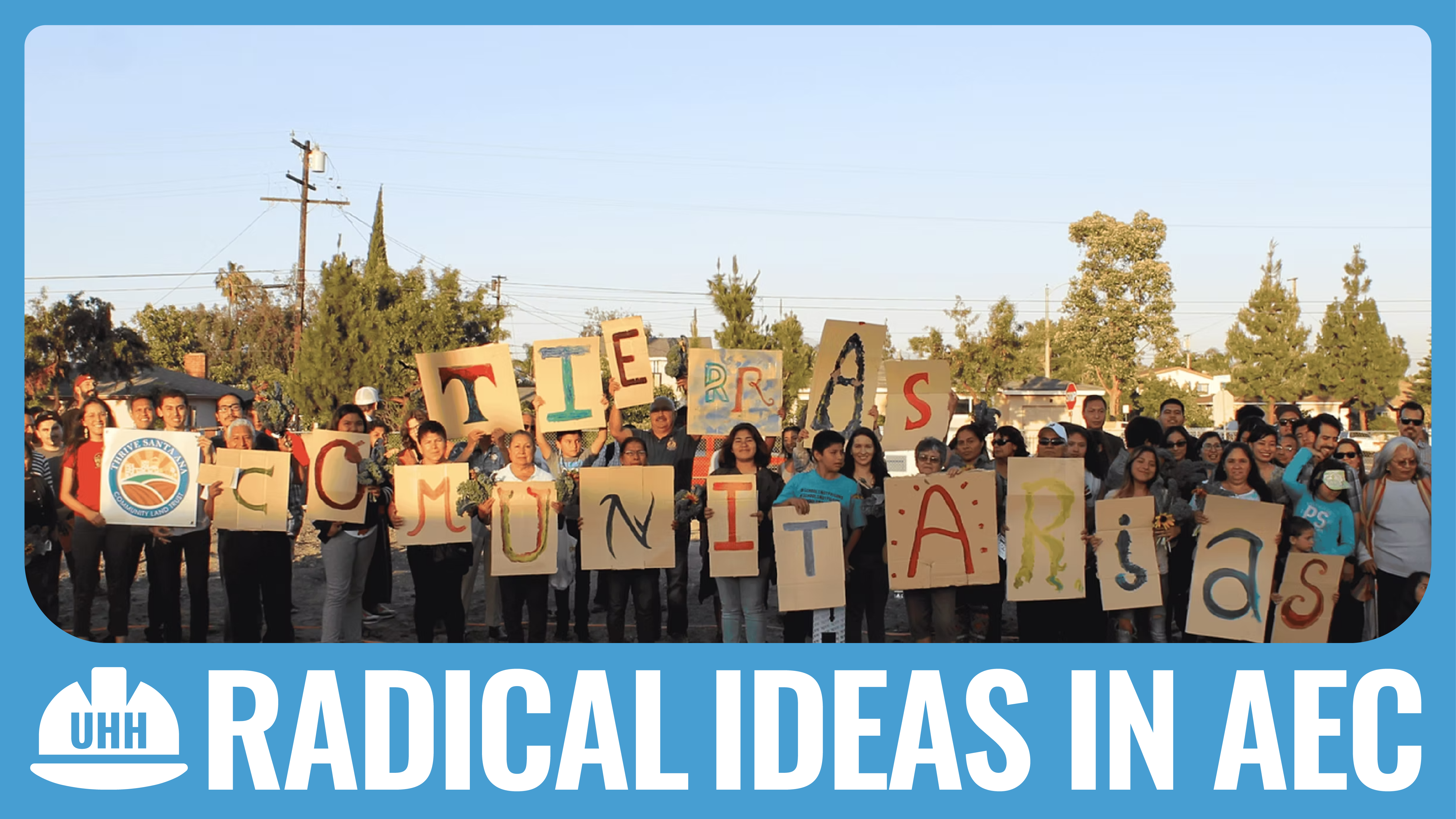
Contractors, developers, and city leaders are facing a hard question: how do you build the housing and infrastructure communities need without extracting the wealth those projects create? This story looks at community ownership models, including community land trusts and cooperatives, that aim to keep land and opportunity anchored locally. Under the Hard Hat met with Nestor Castillo of Eden Community Land Trust in California’s East Bay to show what this shift looks like, before the first shovel even hits the ground.
Construction is good at the visible part of the story. The slab cures, the walls rise, the building appears. The invisible part is harder to track. Who stays once the work is done? Who benefits when property values climb? Who holds the power when the neighborhood changes?
Community ownership treats those questions as part of the build, not a footnote.
As Castillo puts it, community land trusts can sound “really technical and wonky,” but the core is simple. “Essentially, it’s a model for preserving affordable housing permanently,” he says. A land trust “looks after the land and whatever’s on top of it,” whether that is housing, small business space, or something else the community needs. “It’s an organization that looks after the land in perpetuity,” says Castillo.
What community ownership looks like in construction
In practical terms, community ownership in the built environment means residents are not just impacted by development. They share control, and in some models, they share in long-term benefits.
That can take different forms. A community land trust can hold land in trust and lease it under long-term terms that protect affordability and local priorities. Cooperative real estate models can give residents shared ownership and governance. Worker-owned construction firms and cooperative development structures can redistribute risk and reward within the building process itself.
The roles shift too:
- Residents become decision-makers, not just “stakeholders.”
- Builders and designers work inside a longer arc of stewardship, not just delivery.
- Financiers are asked to underwrite stability and permanence, not only maximum returns.
- Municipalities and county governments can enable the model through land policy, procurement, and supportive funding for stewardship.
The hard part is building the structure that can carry it.
Community land trusts (CLTs): Separating land from speculation
The CLT can be described as a stewardship model that separates land from the churn of speculation. The land trust holds the land, and the community benefits from the long-term rules that come with that stewardship.
That permanence is what distinguishes CLTs from many “one-time” affordability fixes. Castillo points to first-time homebuyer programs and similar tools as helpful, but fragile. “It’s a one-time use,” he says, and once the home is sold at market rate, “all that sort of affordability is lost.”
CLTs disrupt that cycle by design, even if it makes some people uncomfortable. “The CLT sort of caps it,” Castillo says. “But for someone who’s low income… there’s opportunity for generational wealth.”
The role of construction teams in CLT-led projects
For builders, the biggest shift is cultural as much as contractual. “The community engagement piece is real,” Castillo says. “We take it very seriously, and we want community input.”
That input takes time. It’s often complex, sometimes contradictory, and occasionally inflamed by the familiar friction of “not in my backyard” politics. A CLT asks construction teams to treat engagement as a genuine project input rather than a performative step.
It also creates an opportunity: developers and builders can help communities understand feasibility without dismissing community values. Castillo imagines a process where professionals can say, “This is what’s possible. This is what’s realistic, and then residents can recalibrate with real constraints in view.”
Where CLTs are gaining traction
CLTs increasingly collaborate rather than compete. Castillo points to examples in Los Angeles where multiple CLTs operate in proximity and share resources. “There’s a part in LA where there’s four or five, if not more, community land trusts that are all neighboring each other,” he says. “Rather than seeing each other as competition, they’re super aligned, saying ‘how can we find ways to work with each other to educate our community members and find sources of funding?’”
Cooperative ownership in real estate and construction firms
Cooperative ownership is the sibling model to CLTs, and it shows up in two places that matter in the AEC multiverse:
- Cooperative real estate, where residents share ownership and governance of a building or portfolio.
- Worker-owned construction and development firms, where the people delivering the work also share in profit and decision-making.
In both, shared ownership changes incentives. It can shift accountability from short-term extraction to long-term care. It can also introduce complexity, because democratic governance is not designed for speed.
“Democracy is messy,” Castillo says, and the mess isn’t a flaw; it’s part of the value. “The messier it is, the more it’s worth it.”
Cooperative ownership models in real estate and construction aim to keep control, risk, and long-term benefit closer to the people who live with the outcomes. By redistributing ownership and governance, these models challenge the assumption that efficiency and scale must come at the expense of accountability. In the East Bay, groups like the East Bay Permanent Real Estate Cooperative offer one example of how shared ownership can reshape who ultimately benefits from development.
Financing development without extracting the neighborhood
Traditional capital often rewards the fastest path to the highest return. Community ownership asks for something else: patience, permanence, and shared benefit.
Castillo is candid about what that runs into. Cities may like the idea of affordability, but balk at paying for stewardship. If a city is running a deficit, it is harder to justify selling land for nominal cost, even if the long-term community benefit is substantial. “For-profit developers are the power players in the region,” he says, which can leave CLTs as “the odd cousin” that is “rarely… at the table.”
This is where alternative financing models come in, including community investment funds and mission-aligned lenders. Examples like the Boston Ujima Project are often referenced for community-driven capital allocation, although models vary widely by region and regulatory context. The key is the principle: finance that does not require a neighborhood to lose itself to be “viable.”
Profit-sharing, local hiring, and closing wealth gaps
Community ownership goes far beyond holding the deed; it’s also about who gets paid, who gets hired, and who gets to build a future in the place they live.
Profit-sharing changes the story beyond wages by linking long-term project success to the people who often only see the short-term labor. Local hiring can serve as a wealth-building tool when paired with career pathways, training, and durable opportunities, rather than just a temporary quota.
Castillo’s public health lens brings another dimension. Stability is not a soft benefit. “If we can provide stable housing with resources, people can start thinking bigger,” he says. “How do I grow in my field, for example, or how do I go back to school?”
What this means for contractors, developers, and AEC leaders
Community ownership changes risk and reward. It can add time and coordination up front and reduce conflict and volatility later. It asks construction leaders to expand their skill set:
- Partnership-building with community entities
- Comfort with governance processes
- Long-term thinking about asset performance and resident outcomes
The competitive advantage can be both moral and strategic. There are opportunities where market-rate development sees little value, including neglected parcels and long-stalled sites. “Neglected properties and land where they don’t see much value may be exactly where a CLT partnership can unlock new possibilities,” says Castillo.
He describes a local vacant lot that has sat for decades, only coming alive through informal uses like street vendors. He imagines what could happen if land were treated as a community resource rather than something to hold until “the biggest boom” arrives. For builders, there is meaningful work beyond delivery, especially in places the conventional market leaves behind.
Barriers and hard truths
Community ownership is not a shortcut around the hard parts of development. It is a structural shift that asks projects to move more slowly up front in exchange for durability later.
Castillo learned this early. What began as optimism quickly ran into institutional reality. When Eden Community Land Trust attempted its first project, the city’s response was not ideological. It was procedural. Officials wanted proof. “What’s your portfolio like? What’s your track record for a successful development?” Castillo recalls. “We kind of looked at each other and said, well… we don’t have one.”
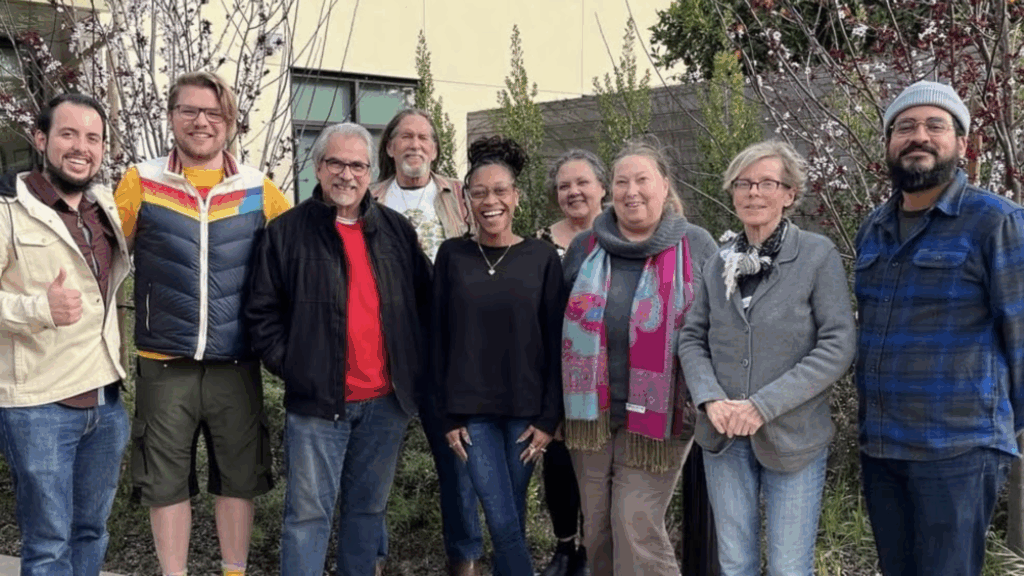
That credibility gap is one of the most persistent barriers facing newer CLTs. Traditional underwriting systems are built to reward precedent. Without a completed project, land trusts are often treated as aspirational rather than viable, even when the need they are responding to is urgent.
Financing friction compounds the problem. While cities may be receptive to the idea of affordability, they are often reluctant to fund the less visible work of stewardship. When municipalities face budget shortfalls, land transfers or long-term investments in community governance become harder to justify, even when the long-term benefits are clear.
Time is another constraint that rarely shows up in glossy renderings. “Build the CLT first,” says Castillo. Community ownership requires coordination across residents, agencies, developers, and funders, and that coordination takes longer than conventional top-down decision-making. Good intentions can’t outrun capacity, because when a real opportunity appears, delays can collapse the window.
The role of institutions and industry leadership
For community ownership to scale, it needs institutional backing that treats stewardship as infrastructure, not charity.
Much of the work still involves education, Castillo notes. “I think that’s what CLTs are often doing, educating potential lenders, educating city officials, city planners, educating other developers of how this would work,” he says. Without that shared understanding, CLTs remain peripheral, admired in theory but excluded in practice.
Industry leadership can change that dynamic by normalizing community ownership models in mainstream development conversations, publishing playbooks that reduce the technical barrier, and supporting procurement and policy frameworks that recognize stewardship as legitimate work.
Castillo also emphasizes the power of networks. He points to California as a place where CLTs increasingly operate in coordination rather than competition. In Los Angeles, he describes areas where several community land trusts operate side by side, sharing resources and aligning strategies instead of undercutting one another. The California CLT Network, for example, provides shared technical assistance and legal services. That shared backbone can be the difference between momentum and burnout for emerging CLTs.
Is community ownership the future of development or a niche solution?
Community ownership isn’t a universal answer, and it’s unlikely to move at the pace of speculative capital. It works best where the goal is long-term stability, affordability, and shared governance, rather than rapid turnover or maximum short-term return.
Yet the pressures reshaping cities suggest these models may become more relevant, not less. Housing shortages are forcing municipalities to rethink what “successful” development means. Labor gaps are making local pathways and retention more valuable. Climate resilience is rewarding long-term stewardship over short-term extraction.
Castillo’s optimism is grounded in persistence, not theory. After a long period when Eden Community Land Trust felt stuck, when progress was slow and uncertain, momentum returned quietly. “A funder basically cut us a check,” he says. “No strings attached.” That moment, he said, confirmed that the model had listeners.
Redefining success in AEC
Community ownership asks a question that can feel almost impolite in an industry built on delivery and deadlines: who benefits from the built environment after the ribbon is cut?
Castillo’s answer is meetings and translation, and disagreement. It is patience and process. It is an insistence that people who have been left out of land-use decisions should not only be consulted, but brought into governance.
“A single resident can become a champion and change what a CLT becomes,” he says. “It feels expansive, it gives you optimism… the possibilities, not the limitations.”
And so the question remains, hovering beneath every foundation pour and every groundbreaking speech: when the next building goes up, who is it building wealth for?
Check out these links for more information about the Eden Community Land Trust:
- Eden Community Land Trust: https://www.edenclt.org/
- Statewide network: https://www.cacltnetwork.org/
- ECLT fiscal sponsor: https://oakclt.org/
Subscribe to our newsletter for more stories exploring where construction, community, and long-term value intersect.