Wellness Workdays is introducing BRAVE, a mental health and safety training program designed specifically for construction sites. The focus here is on foremen, supervisors, and front-line staff working in the heat of the moment under pressure, surrounded by noise, tight deadlines, and relentless physical demands. BRAVE wants mental health to be treated the same as fall protection or lockout procedures, something that needs to be part of every jobsite visit, not just discussed at the end of the day.
Why BRAVE focuses on early warning signs
The construction industry has, for far too long, had a “push through it” culture in which long hours, unpredictable schedules, job insecurity, and the physical toll of the work are piled on top of one another. Many supervisors recognize when something is off with one of their employees, but aren’t always sure how to respond without saying the wrong thing or making things worse. BRAVE was created to fill that gap. It provides crews with a shared language, flags to watch for, and practical ways to intervene before a situation escalates.
The core idea behind BRAVE is that catching warning signs early can be a lifesaver—preventing accidents and saving projects from going off the rails. The program focuses on teaching frontline leaders to identify the signs that typically precede an accident, conflict, or someone walking out, and to treat them the same as any other safety issue. Withdrawal, sudden flashes of anger, cutting corners, or a sudden lack of focus don’t just appear out of thin air—BRAVE helps individuals piece together the puzzle and respond accordingly.
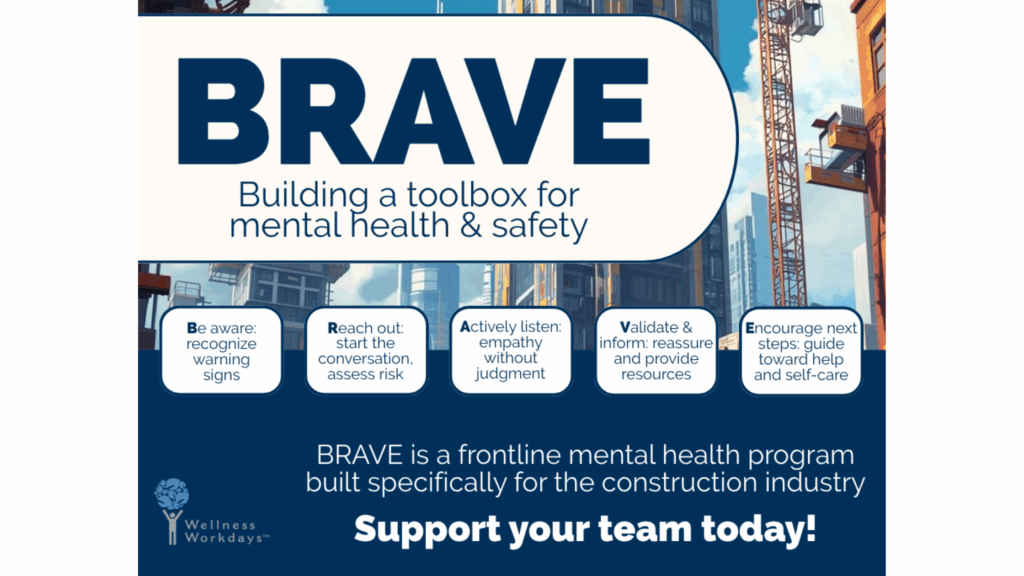
BRAVE is designed for the real-world construction site, not a theoretical classroom scenario. It’s about quick wins that supervisors can easily implement every day, during toolbox talks, walk-arounds, or daily check-ins. It gives workers the confidence to speak up when something’s not right, teaches them how to have a conversation with a colleague without feeling awkward, and how to raise a concern with someone in charge when needed.
BRAVE gets crews to pick up on warning signs like:
- A worker suddenly changes how they’re acting on site
- Taking more risks or just ignoring the safety procedures
- Pulling away from the rest of the crew or getting into conflict
- They begin to lose focus, perform worse at their job, or miss shifts
By giving these warning signs a name early, crews can intervene before they escalate.
Making mental health part of your jobsite safety
One of the best things about BRAVE is how it reduces mental health stigma by making it part of the routine. When mental health is talked about alongside all the other safety controls and planning, it stops feeling like something personal and private, and just becomes one of the things you do on the site. Crews don’t have to wonder whether it’s okay to raise an issue; the expectation is already there. That shifting mindset alone can prevent people from being left out or silenced, two major factors linked to injuries and workers walking off the job.
BRAVE also does a lot to address retention, a significant issue for many contractors, especially in keeping their top talent from burning out or becoming stressed. By giving supervisors practical tools to support their teams early on, companies can reduce avoidable losses. And when workers feel like they’re being taken care of, they’re more likely to stick around, even on tough projects. That stability shows up in productivity, safety records, and crew morale across the board.
This program isn’t about replacing professional help, nor is it about asking supervisors to act as therapists. What it does is help set clear boundaries, so leaders know when to listen, when to put things on hold, and when to provide proper support. That clarity is what will get people into action and stop them from putting their heads in the sand.
Mental health incidents don’t just affect that one person; they have a ripple effect on the entire crew. A worker who’s off their game because they’re distracted or stressed is much more likely to get hurt, and that almost guarantees they’ll put their coworkers at risk too. A stressed-out foreman might miss something crucial or push his whole crew too hard because he can’t seem to keep up. And that’s exactly how BRAVE can help—it sheds light on how our mental well-being is a huge part of doing our job right.
In an industry built on planning, safety checks, and looking out for one another, BRAVE aligns well with how construction sites already operate. Its approach respects how things really are in construction, without glossing over the reality. By treating mental health as just another element of site safety that requires proper training and protocols, Wellness Workdays is helping bring the conversation into the open.
If topics like this matter to you and your crew, subscribe to the Under the Hard Hat newsletter. We cover safety, wellness, and the people shaping construction—because strong sites depend on people who are supported, alert, and able to speak up.