
Construction site workers face hazards all day long—from heavy equipment to poorly laid out terrain—but one hidden danger that often flies under the radar is how easily we get sidetracked. A major contributor to accidents on job sites is distraction—the countless ways our attention is pulled away from the task at hand, leaving us vulnerable to costly mistakes. A single misplaced glance can be the difference between life and death, whether it’s missing a speeding vehicle or failing to spot a hole in the ground. By getting a handle on distraction risks on a jobsite and how they’re affecting our work, we can make the site safer and prevent disasters.
Quick look
- Distraction risks are rife on most construction sites—phones beeping, music blasting, and people trying to juggle too many things at once.
- When we’re struggling to keep all our plates spinning, our reflexes slow, our accuracy drops, and we become much more likely to miss a signal, a moving vehicle, or a change in site conditions.
- A construction site is by its very nature a chaotic place, and one split second of distraction is all it takes for a major accident to occur.
- Setting clear boundaries around things like phone use, music volume, and how often people switch between tasks can go a long way toward keeping crews on track without sacrificing productivity.
- By cutting out distractions, we’re not just reducing the risk of accidents; we’re also helping people make better decisions and enabling them to work steadily and accurately.
Why distractions are a serious safety issue on jobsites
Split attention increases error rates
When workers have to juggle their focus, their brains basically can’t keep up. Studies using brain imaging technology have shown that multitasking makes tasks take longer and increases errors because the brain’s processing power must be split among tasks rather than fully devoted to a single task. Additional construction research supports this finding: people who watched videos of real jobsites with visual distractions identified nearly as many potential hazards as those without distractions, indicating that distraction reduces the ability to spot problems.
The difference between getting a warning and not noticing the heavy equipment barreling down on you can be a matter of just a few seconds—and in those seconds, having someone else’s attention can be all that stands between disaster and a smooth operation.
Construction sites change constantly
Construction zones are never static. Crew members move, tools shift, vehicles arrive and depart, and work zones are reconfigured throughout the day. That kind of constant change means workers must pay close attention to what’s happening around them. Even a worker who knows a site well can miss a sudden change in conditions if their focus is interrupted by a trivial distraction.
If someone is listening to music too loudly or glancing at messages on a phone, they might not notice a co-worker stepping into their path or a backup alarm sounding. The cost of missing those cues can be severe injury or an expensive incident that halts production. Awareness isn’t optional on a site; it’s an ongoing requirement.
Common sources of distraction risks on a jobsite
Mobile phones and smart devices
Smartphones have become such a big part of our lives now that it’s hard to imagine working without them. You see them all over the place on jobsites—people taking calls, scrolling through their texts, and sharing their every move on social media—all of which takes your eye off the ball and away from what’s right in front of you. And even just a quick phone call can break someone’s concentration when they need to stay focused on what’s going on around them. The Infrastructure Health and Safety Association has noted that using your phone near vehicles or equipment poses a significant hazard because it takes your eyes off the road, increasing the risk of being struck by equipment. And phone use isn’t just slowing you down, it’s also slowing down your reaction time when something unexpected comes up right in front of you.
Music and earbuds
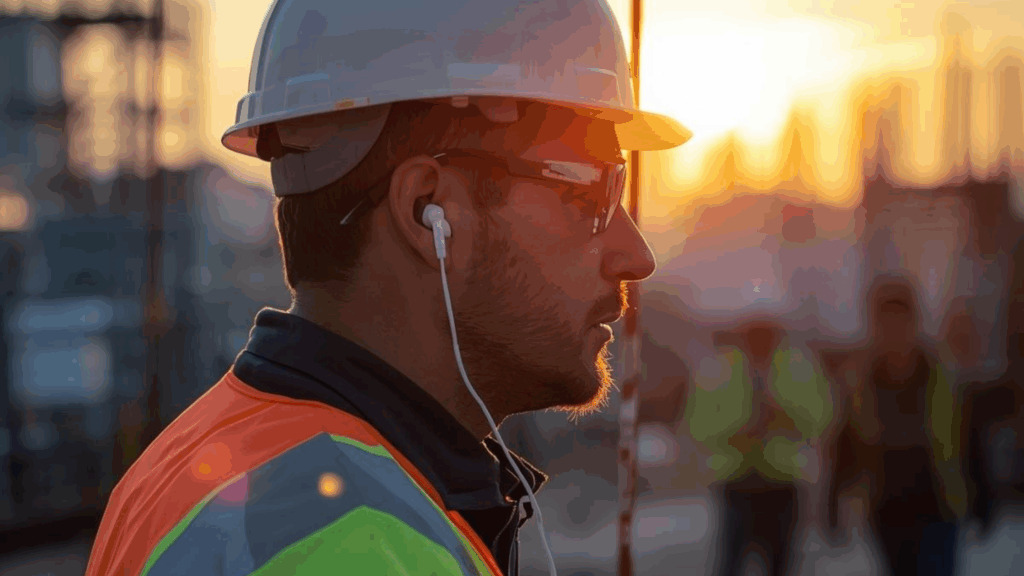
Many workers find ways to make long hours more bearable by using earbuds or just listening to music on a speaker. But loud music can be deadly, as it drowns out the warning sounds you need to stay safe. You can’t hear the alarm going off on your equipment, or the truck backing up behind you, or even your coworker yelling across the yard—all that gets lost when you have earphones in your ears. And that makes it impossible to respond quickly to changing conditions. There’s also the fact that music can make you tune out all the little risks you might not have noticed otherwise.
Multitasking and rushing
Trying to juggle multiple tasks at once can drain your focus and increase the likelihood of mistakes. When a worker is trying to organize their tools while also planning their next move, both tasks suffer. Studies on how the brain works suggest that constantly switching between tasks slows you down and increases the likelihood of mistakes compared with focusing on a single task. In the field, that might look like a worker trying to trim boards while monitoring their coworkers—a situation where neither task gets the attention it needs. And it gets even worse when you have to rush through a task because of a tight deadline; you might end up taking shortcuts and skipping important checks. Trying to work fast when you’re already struggling to focus is a bad combo, and the result is all too often near misses or worse.
How distractions lead to incidents and near-misses
Reduced situational awareness
Situational awareness is all about knowing what’s going on around you. If you let your focus slip even for a second, you’re a lot more likely to walk into a hazard. And when we get sidetracked by our phones or try to juggle a million different things in our heads, the part of our brains that keeps an eye out for potential problems goes right back to sleep. If workers miss a change, such as a crane swinging into view or a load falling off the back of a truck, they lose their ability to stay safe altogether. Even a split second of inattention can lead to serious injury.
Missed communication and signals
Construction sites run on good communication—hand signals, spotters yelling out, verbal warnings—to keep the crew on the same page. But when someone’s too distracted by checking their messages or has their earplugs in, chances are they’ll miss a critical warning meant to keep them safe. Spotter’s warnings can get lost in the noise until it’s too late, and that drastically increases the chances of an accident.
Delayed reaction time
When a hazard comes up, even a split-second delay can turn a close call into a nightmare. If you’re not entirely focused on the task at hand, you’ll take longer to react. And it’s not just spotting a reversing truck or a falling object—any delay lets the hazard catch up with you, and that ups the risk of a serious incident.
Practical ways to reduce distraction risks on a jobsite
Set clear rules for phone use
Limiting phone use to breaks or designated areas and actually enforcing it helps workers stay on track. Having to store their phones in a locker or the vehicle during work hours makes a big difference—people are less likely to sneak a peek at messages and get distracted. Supervisors should also remind people that one quick glance at a phone can mean looking away from potential hazards for too long. Giving your crew clear guidelines on when and where they can use their phones takes away the guesswork.
Control music volume and rules
OSHA refers to the importance of hearing cues from equipment and co-workers, which loud music can drown out. There are ways for workers to listen to music while they’re on site without putting themselves at risk. It’s all about finding a balance that keeps people alert and aware of their surroundings without going overboard.
Here are practical, jobsite-tested options that many crews already use successfully:
Using shared speakers in controlled zones
Having a single speaker at a relatively low volume helps prevent the music from becoming a problem that shuts people off from the rest of the place. Everyone hears the same message, and supervisors can turn it off immediately if the situation changes. If someone can’t make out what you’re saying when you’re only a few feet away, then the volume is too loud.
Limit music to lower-risk jobs and areas
Music may be acceptable during routine, low-risk activities such as working on a bench, assembling prefabricated pieces, or hanging out in the shop. But at the same time, you don’t want it blasting when you’re on a lift, moving gear around, or trying to coordinate with other trades. By linking music restrictions to job hazard levels, it’s much easier to keep track of what’s permissible and what isn’t.
Allowing single-ear listening where permitted
When you can use headphones, using just one ear helps maintain situational awareness. Just bear in mind that you still need to be able to hear the alarm go off, a reversing vehicle, or a coworker’s shouted warning.
Use bone-conduction headphones cautiously
Bone-conduction devices keep the ear canal open, which helps you stay aware of your surroundings. They’re probably not suitable for every site or every task, but some teams find them safer than traditional earbuds. Just make sure to run them by the company and site rules first.
Build music breaks into the day
Some teams save the music for scheduled breaks, lunchtime, or at the end of the shift when you’re cleaning up. It gives everyone a mental break without conflicting with the high-risk activities. Having clear start and stop times also reduces arguments over when music is allowed.
Make volume limits non-negotiable
Whatever method you’re using, volume is the most important thing. Workers should be able to:
- Hear normal conversation without having to shout
- Hear backup alarms and horns
- Hear spotters and equipment warnings
If those can’t be heard, the setup just isn’t safe, no matter what device you’re using.
Music can improve morale and help pass long hours, but it should remain secondary to awareness. Sites that set clear, realistic rules tend to get better compliance than those that rely on blanket bans or vague expectations.
Focus on one task at a time
Pausing halfway through a task to switch gears can help you avoid missing something entirely. You can’t just jump into a new task without giving your brain a chance to wrap up what you were doing and refocus. We should encourage workers to take a good, hard look around before starting something new, rather than assuming everything is safe just because it was a minute ago. Slowing your pace to avoid rushing also reduces sloppy work that happens when you’re in a hurry.
Final thoughts
Distraction risks on a jobsite aren’t just a minor nuisance. They can genuinely reduce your alertness, slow you down, and make it harder to stay on the lookout for hazards that could really hurt someone. Having simple rules in place for things like phones, music, and maintaining attention on the job at hand can help your crew stay safe. But reducing distractions can also help teams operate more like a well-oiled machine and build trust that the other person is paying attention to what they’re doing.
If you want more safety insights and tips on construction-related topics, subscribe to the Under the Hard Hat newsletter to stay informed and keep your crew safe.