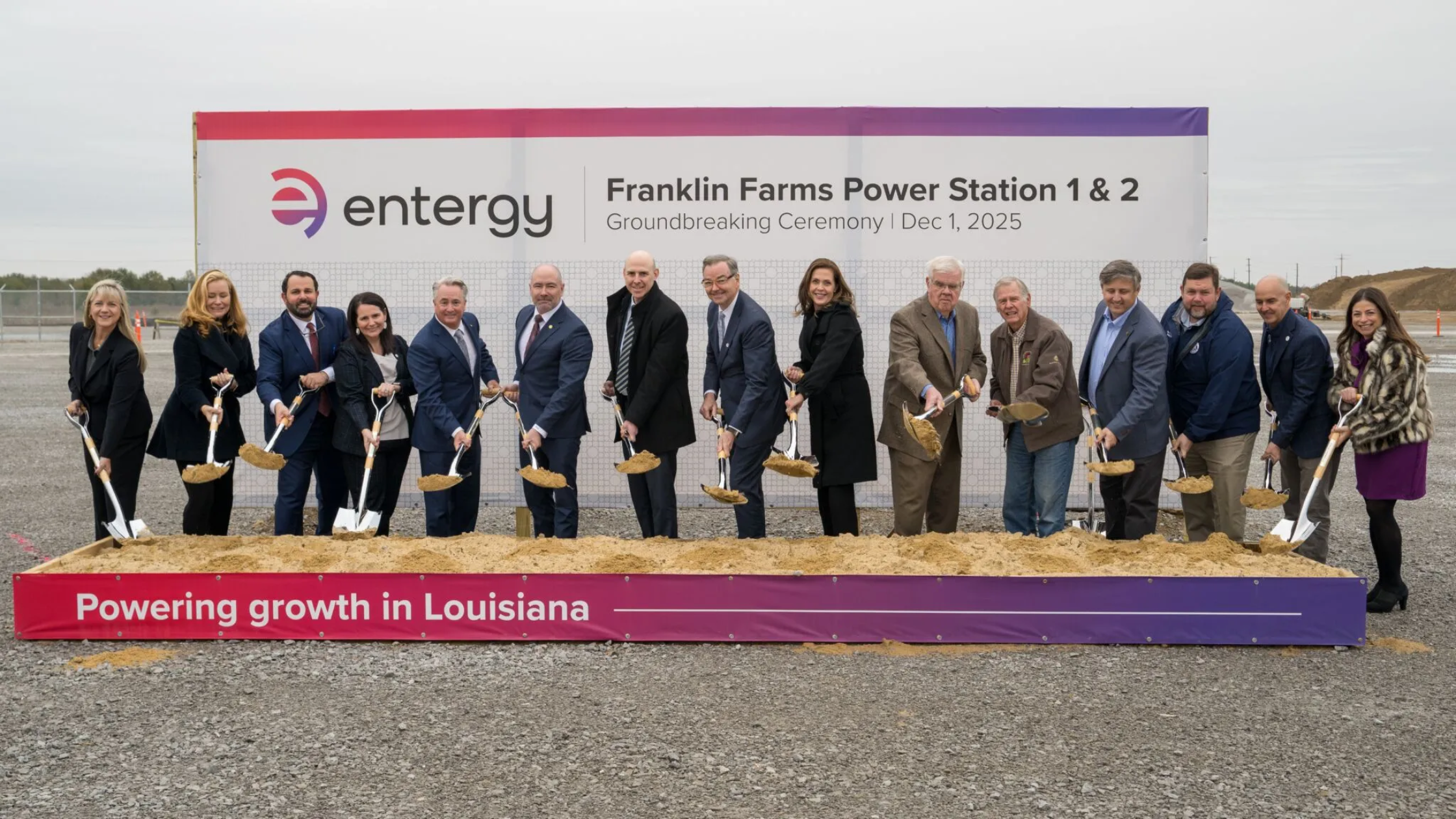
Entergy breaks ground on two massive new natural gas power plants to power Meta’s massive new AI data centre in Richland Parish, Louisiana. This project is part of a planned 4-million-square-foot campus that will be one of the largest data centre developments in the area. It’s no secret that the power demands caused by AI computing have been a major talking point; Entergy is taking real action to meet that challenge. It’s a clear example of how utilities are planning their power grids differently: data centres are putting much more strain on local energy supplies. For anyone involved in the construction, engineering, and energy industries, this project is a prime example of the intersection of infrastructure growth and digital expansion.
Grid reliability meets economic development
The two gas-fired plants are being built specifically to serve Meta’s campus, which will require steady power around the clock. AI training and inference systems draw far more electricity than traditional cloud workloads, creating demand profiles that fluctuate less and stress grids in different ways. By constructing dedicated generation capacity, Entergy aims to avoid pulling that load from existing customers while maintaining stable voltage and frequency across the system. That model reduces the chance of service disruptions in surrounding communities while meeting the needs of an always-on facility.
From a grid planning standpoint, the project represents a targeted approach to reliability. Rather than relying solely on upgrades to long-distance transmission, Entergy is placing generation closer to the point of use. That shortens supply paths and lowers the risk of congestion, which matters in rural parishes where grid redundancy can be limited. Natural gas was chosen for its ability to deliver dispatchable power with predictable output, a feature that remains necessary for facilities that cannot tolerate downtime.
Local officials also see the development as a long-term economic lift. Construction of the power plants and the data center brings skilled trade work, engineering roles, and supply-chain activity into Richland Parish. Once operational, the campus is expected to support permanent jobs tied to facility operations, maintenance, and security. Property tax revenue from infrastructure of this scale can fund schools, road improvements, and public services in areas that rarely see investment at this magnitude.
AI infrastructure is reshaping energy demand
Projects like Meta’s data center show how fast AI is changing the energy equation. Training large models requires dense computing hardware that runs continuously, creating load profiles closer to those of heavy industry than of office buildings. Utilities are being asked to plan for gigawatt-level demand clusters that arrive much faster than traditional industrial growth. That pressure is pushing decisions around fuel mix, plant siting, and transmission earlier than utilities are used to.
For contractors and engineers, this trend points to more specialized power projects tied directly to a single user. It also means tighter coordination between utility construction schedules and private development timelines. As AI infrastructure expands, similar utility-backed generation projects are likely to appear near data centers in other regions as well.
If you want to follow how large-scale tech projects are reshaping construction, energy, and infrastructure planning, you can subscribe to the Under the Hard Hat newsletter to stay informed on what’s being built next.