
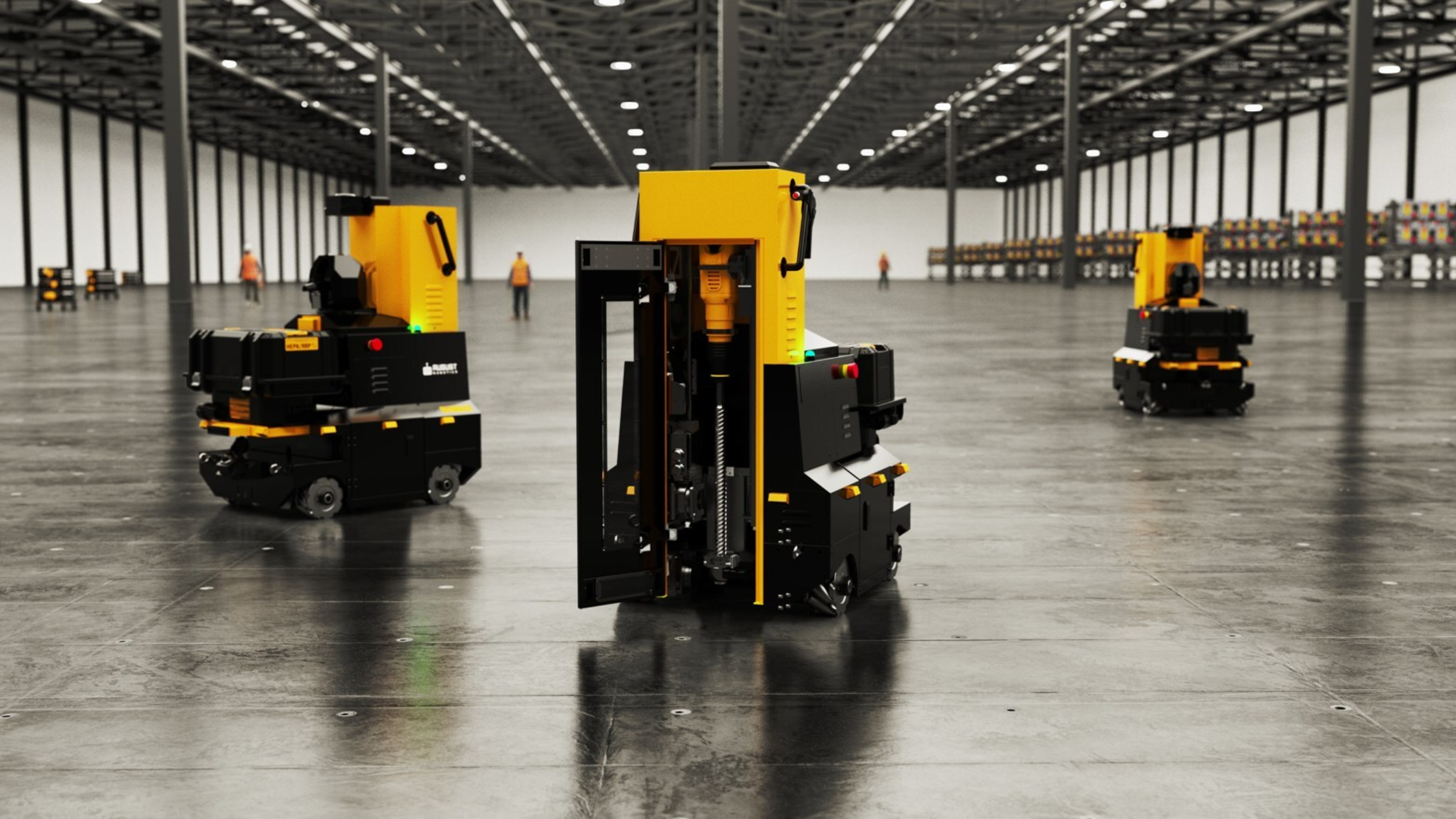
Data center builders are in a race to build enough space for the new AI boom. DEWALT Robotics is helping solve a major delay in construction by using robots to drill concrete. These robots work 10 times faster than manual crews and are much more accurate. This partnership between DEWALT and August Robotics has created the first fleet of robots capable of drilling thousands of precise holes independently. Using this technology allows companies to finish huge projects on time, even when they cannot find enough workers. In this article, we look at how this new technology is changing the way we build data centers.
The bottleneck: Why data centers are a construction logistics nightmare
Building a modern data center is a massive job that requires extreme precision. Unlike a typical office building, these facilities are filled with rows of heavy server racks that must be bolted down perfectly. If the layout is even slightly off, it can cause issues with power lines and cooling systems later.
Volume and precision
Every huge data center needs tens of thousands of holes drilled into the concrete floor. These holes are used to secure server racks and support the heavy pipes and wires that run through the building. For a large project, crews might have to drill over 50,000 holes with perfect accuracy. Doing this by hand is very difficult because even a small mistake can lead to expensive repairs.
The human cost
For workers, manual drilling is often described as a “dirty, dangerous, and dull” task. It requires people to spend all day hunched over, pushing heavy drills into hard concrete. This leads to several serious problems:
- Physical injury: Constant vibration and bending over cause painful back and shoulder injuries.
- Silica dust: Drilling concrete creates a fine dust called silica. Breathing this in can cause permanent lung damage or cancer.
- Fatigue: After a few hours of hard labor, workers get tired and start making more mistakes.
The demand crisis
The race for AI has made speed more important than ever. Companies are spending trillions of dollars to get new data centers online as fast as possible. In the past, owners might wait eight or nine weeks for a crew to finish drilling the floors. Today, that delay is too long. In 2026, each day a facility is offline can cost millions in lost revenue. This pressure is forcing builders to find faster ways to work.
“Our customers consistently emphasize that speed of construction is critical,” says Bill Beck, President, Tools & Outdoor, Stanley Black & Decker. “The robotic drilling solution meets this need head-on through schedule acceleration, cost savings, near-perfect accuracy, and enhanced job site safety.”
A deeper look at the DEWALT x August Robotics platform
The partnership between DEWALT and August Robotics has created a tool that is much more than just a “self-driving drill.” It is a complete system designed to meet the heavy-duty requirements of a large-scale construction site. While other robots have been used to mark floors with ink, this is the first one that can actually perform the drilling work itself.
World-first design
In the past, construction robots were mostly used for “layout.” This means they would move around a room and use a laser or ink to mark where things should go. Workers still had to follow behind them to do the hard work of drilling. The DEWALT robot is unique because it handles both steps simultaneously. It uses digital building plans to locate the right spot, then uses a powerful downward-drilling tool to make the hole. This “all-in-one” design enables it to operate much faster than traditional methods.
Fleet orchestration
One of the most impressive features of this technology is that it is “fleet-capable.” This means a contractor can put four or five robots on a single floor and have them all work together. They use a fleet orchestration system to prevent collisions and ensure full floor coverage. Using a fleet can turn an eight-week drilling schedule into just nine days. This allows teams to cover a large area without requiring dozens of additional workers.
Technical specs
The robot combines advanced software with rugged hardware. It is built on the August Robotics autonomous platform, which handles the navigation and “brain” of the machine. Drilling is performed using a professional-grade DEWALT industrial rig. This ensures that every hole is drilled with the same power and quality you would expect from a manual DEWALT tool. The system is designed to be tough enough for real construction sites while maintaining near-perfect accuracy on every single hole.
Proven performance: 80 weeks saved in live pilots
The DEWALT drilling robot has already been tested on real job sites with incredible results. By using this technology, construction teams are proving that robots can handle the most difficult parts of a project with ease.
The hyperscaler trial
To see how well the robot works, DEWALT ran a massive trial with a “hyperscaler,” one of the world’s largest technology companies. The robot was used during 10 different phases of data center construction. These live tests showed that the robotic system could handle the high-pressure environment of a multi-billion-dollar build while working alongside human crews.
By the numbers
The data from these trials is impressive and shows exactly why builders are excited about this technology:
- 90,000+ holes drilled: The robots successfully completed a massive amount of work across several projects.
- 99.97% accuracy: Every single hole was drilled in almost the exact right spot and at the perfect depth. This is much more accurate than what a human crew can do over long shifts.
- 10x speed increase: The robots completed their tasks 10x faster than crews using traditional manual drills.
The timeline impact
The biggest win for data center owners is the amount of time saved. This robotic system can compress a nine-week floor prep schedule into just nine days. During the pilot program, the robots saved a total of 80 weeks across 10 different projects. This speed is a game-changer for the industry, helping to drive record data center spending in 2025 and 2026 as companies rush to get their AI systems online.
Productivity, safety, and the “human factor”
While the DEWALT robot’s speed is impressive, its real value lies in how it improves the job site. By taking over the most difficult tasks, this technology helps both the company’s bottom line and the well-being of the workers.
Labor economics
In traditional construction, drilling thousands of holes by hand is very expensive. When you factor in labor, equipment, and the time required to correct mistakes, the cost per hole can easily exceed $60. Using an autonomous robot drops that cost significantly. Current data shows that robotic drilling can lower the price to approximately $20 per hole. This massive saving allows contractors to be more competitive when bidding on large data center projects.
Workforce development
There is currently a major shortage of skilled tradespeople in the construction industry. When a company uses a robot to handle repetitive drilling, it frees human workers to focus on more important tasks. Instead of spending all day doing basic labor, apprentices and skilled tradespeople can focus on technical work. This allows them to learn the complex aspects of their trade, leading to better career growth and a more talented workforce.
Safety first
Safety is the most important reason to use robotics on a job site. Manual drilling creates two major health risks that are removed by the DEWALT platform:
- Vibration injuries: Holding a heavy drill for hours can cause permanent nerve damage in the hands and arms. A robot never gets tired and cannot be injured by vibrations.
- Silica dust: The DEWALT robot has a built-in vacuum system that captures dust as it is created. Because the robot operates autonomously, human workers can stay far from the drilling area, keeping their lungs safe from harmful concrete dust.
Robotics as a global competitive advantage
The companies that win the biggest contracts are those that can build the fastest without sacrificing quality. As demand in the AI space continues to grow, robotics is becoming a key strategic asset for top builders.
Context of demand
Experts predict that spending on data center infrastructure will hit trillions of dollars by 2029. Because technology changes so fast, companies need their facilities finished almost immediately. In this environment, speed is the primary way a construction company stands out. Using robots to cut weeks off a schedule allows contractors to take on more projects and finish them sooner than competitors.
Commercial rollout
The industry is already getting ready for this technology to go mainstream. DEWALT plans to make these robots available for wider use by mid-2026. For those who want to see it in person, the robotic platform will be a major highlight at the World of Concrete show. This gives contractors a chance to see the system’s speed and accuracy before it arrives at their job sites.
Industry trend
The DEWALT robot is part of a larger move toward “digital job sites.” Instead of just using standalone tools, builders are moving toward connected ecosystems. This includes systems like DEWALT POWERSHIFT™, which manages power for heavy-duty tools, and total station-guided automation. These systems communicate with each other to ensure that every part of the project, from layout to drilling, is perfectly coordinated.
Redefining the future of the back-end workflow
The arrival of autonomous drilling marks a major turning point for the construction industry. What started as an experiment is quickly becoming the new standard for handling the most repetitive and difficult parts of building.
The new standard
Autonomous drillers are moving away from being “experimental prototypes” and are becoming essential equipment. For data center projects, they are as necessary as a crane or a concrete mixer. As more builders see results, the pressure to adopt this technology will only grow.
Reshaping labor
This shift does not mean that workers are going away. Instead, the job site of the future needs a new kind of team. We will always need laborers, but we also need technicians who can manage and maintain robotic fleets. This creates a more professional environment where workers use both their hands and their minds to build the world’s most advanced buildings.
DEWALT’s move into robotics is one step toward ensuring our infrastructure keeps up with our imagination. As AI changes how we live and work, these robots can build quickly enough to keep pace with the physical buildings we need to power that innovation.
Want more insights on the people, processes, and technology driving the construction industry? Subscribe to our newsletter today!