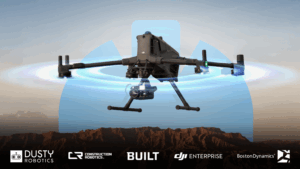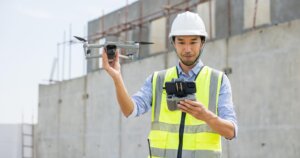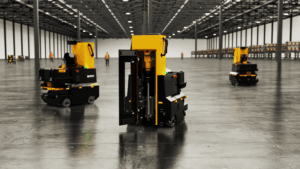
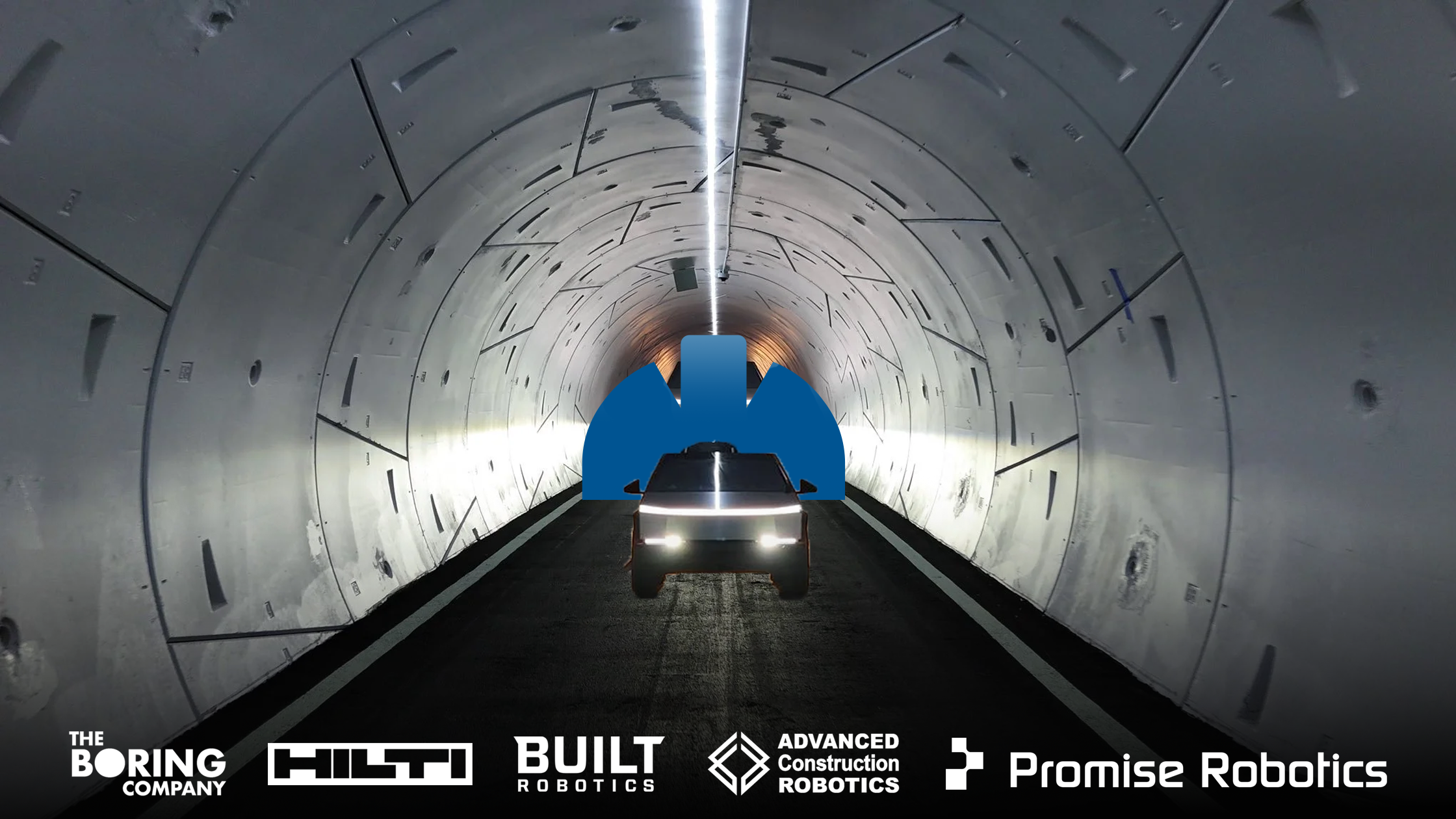
Construction leaders are increasingly turning to automation to address the growing labor shortage and rising safety concerns on the job site. This guide identifies the top 16 construction robotics companies that are providing real-world solutions to help contractors work faster and keep their crews out of harm’s way. Whether you are looking for autonomous heavy machinery or precision layout robots, this article explains how these tech innovators are changing the way we build.
The construction industry is currently undergoing a massive automation boom. For years, robots were mostly found in research labs or controlled factory settings, but in 2026, they are officially moving onto active job sites. This shift is driven by a need for better sustainability and the pressure to complete complex projects with fewer people. From self-driving excavators to robotic bricklayers, these machines are helping firms reduce waste and finish projects on time.
16 global companies in the construction industry building autonomous robots
16. Caterpillar (CAT)
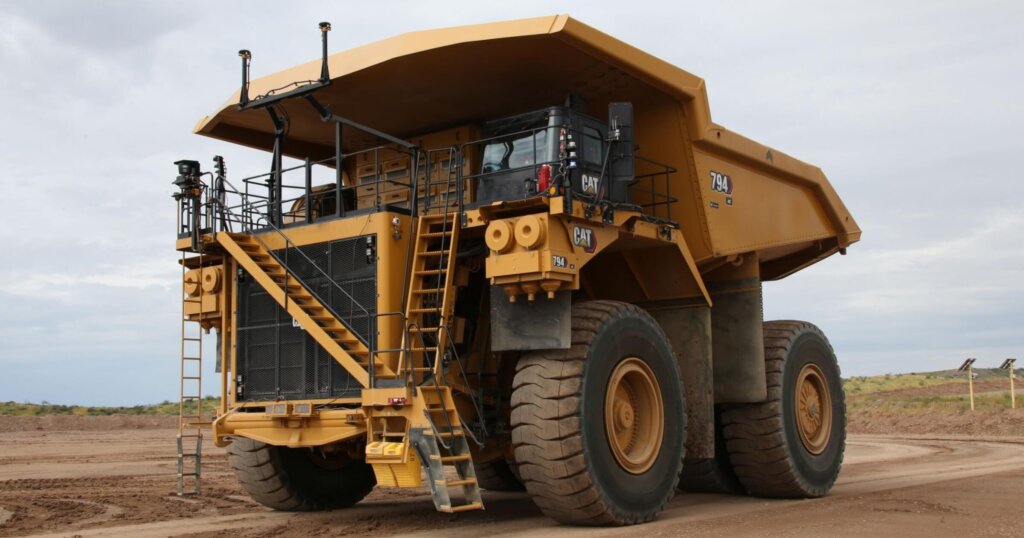
Cat 794 AC electric autonomous drive truck. Photo courtesy of Caterpillar.
- CEO: Jim Umpleby
- Founded: 1925
Caterpillar is a legendary name in heavy machinery, but it is now a leader in high-tech automation. They have successfully deployed massive autonomous mining fleets for years, and they are now bringing that same technology to the broader construction industry. One of their most impressive developments is the Cat Command system. This technology allows operators to control heavy equipment like bulldozers, excavators, and wheel loaders from a remote station, sometimes thousands of miles away.
Caterpillar is also rolling out its new line of autonomous construction site haulers. These trucks can navigate a busy site on their own, moving dirt and materials without a human driver in the cab. The practical advantage here is huge for safety and efficiency. These robots can work in dangerous environments or extreme weather that would be hard on a person. Plus, they move with a level of precision that reduces fuel consumption and tire wear. These systems are commercially available today through their Cat Command for Hauling and Command for Dozing programs.
15. Volvo Construction Equipment
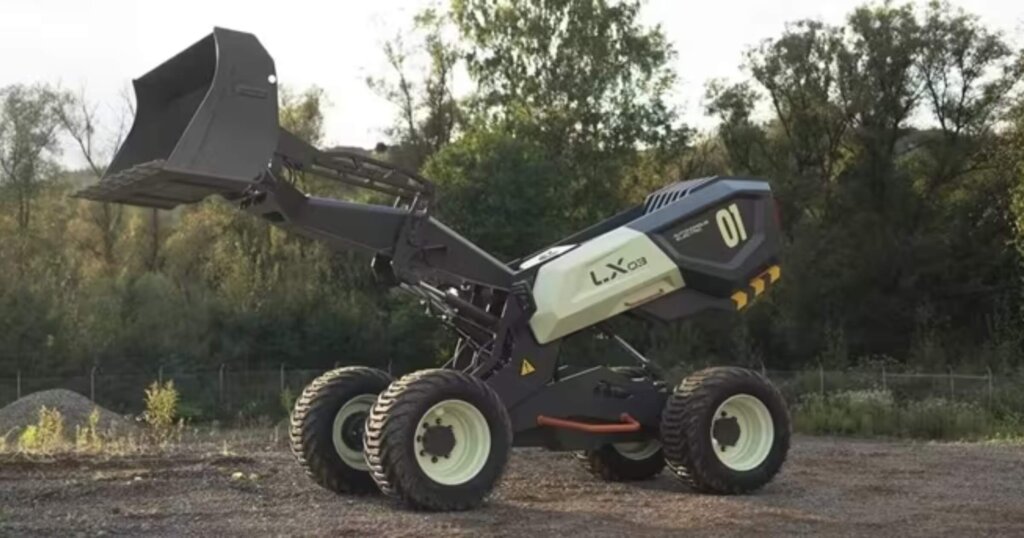
Volvo LX03 autonomous wheel loader concept. Photo courtesy of Volvo.
- CEO: Melker Jernberg
- Founded: 1832
Volvo is pushing the industry toward a more sustainable future by combining automation with electric power. They are famous for their TA15 autonomous electric hauler. This machine is part of their “TARA” autonomous transport solution. Unlike a traditional truck, the TA15 does not even have a driver’s cabin. It is a small, battery-powered robot designed to work in a “swarm” to move materials around a site or a quarry.
By using many small autonomous haulers instead of one giant truck, a site can keep moving even if one machine needs a charge. This system greatly reduces carbon emissions and noise on the job site. Volvo also offers the Active Control system on its excavators, which automates specific movements to help even a beginner operator achieve perfect grades. Their electric autonomous haulers are currently being used in commercial pilot programs and are becoming more widely available as the industry shifts toward green technology.
Volvo is also coming out with a variety of pilot construction vehicles that could end up going to mass production, including the Volvo LX03–a fully autonomous wheel loader.
14. Hilti
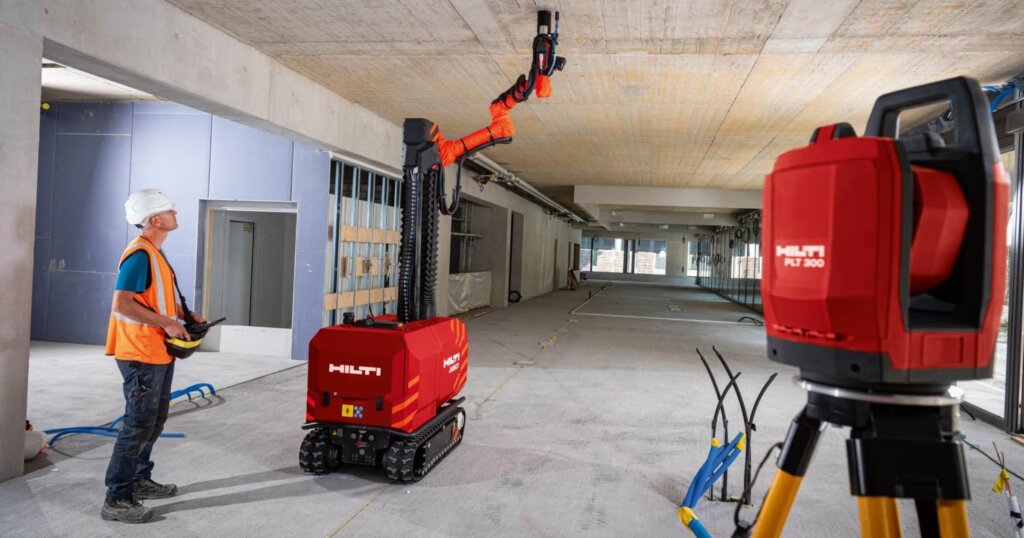
Hilti Jailbot at a construction site drilling. Photo courtesy of Hilti.
- CEO: Jahangir Doongaji
- Founded: 1941
Hilti is a powerhouse in the world of professional tools, but they have stepped into the future with the Jaibot. This is a semi-autonomous drilling robot designed specifically to handle one of the most physically demanding jobs on a site: overhead drilling for MEP (mechanical, electrical, and plumbing) installations. The Jaibot uses digital plans from a building’s BIM (Building Information Modeling) data to locate exactly where holes need to be drilled for pipes or cables. It then executes those drills with perfect accuracy.
The practical advantages of the Jaibot are safety and speed. Drilling into concrete ceilings for hours is hard on the body and can lead to long-term injuries for workers. By letting the robot do the heavy lifting, crews can stay safe and focus on the actual installation work. The Jaibot also tracks its progress in real time and uploads it to the project management software. This machine is fully commercially available and is currently being used on large-scale commercial projects worldwide.
13. The Boring Company
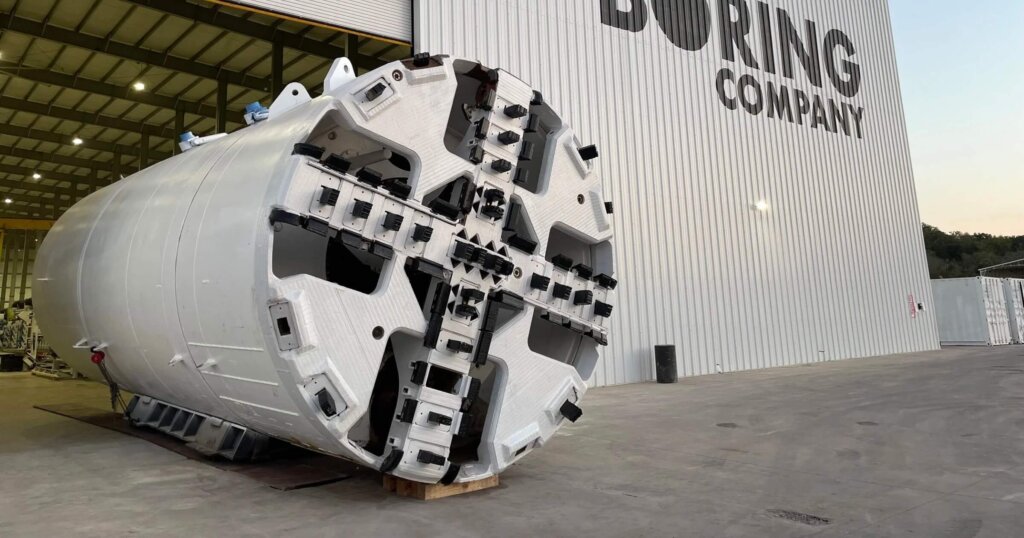
The Boring Company Prufrock machine. Photo courtesy of The Boring Company.
- CEO: Steve Davis
- Founded: 2016
The Boring Company was founded to solve traffic and utility congestion by making tunneling faster and cheaper. Their main innovation is the Prufrock series of autonomous tunnel-boring machines. Unlike traditional machines that require a huge team and weeks of setup, Prufrock is designed to “porpoise.” This means it can launch directly from the surface and dig its way down, saving a massive amount of time on site preparation.
The company is working toward making these machines fully autonomous so they can operate with minimal human intervention. The goal is to increase tunneling speed until it exceeds a snail’s pace. This could revolutionize how cities build utility corridors, water mains, and high-speed transit loops. While the company primarily uses these machines for its own “Loop” projects right now, the technology represents a major leap forward in how the construction industry handles underground infrastructure.
12. Built Robotics
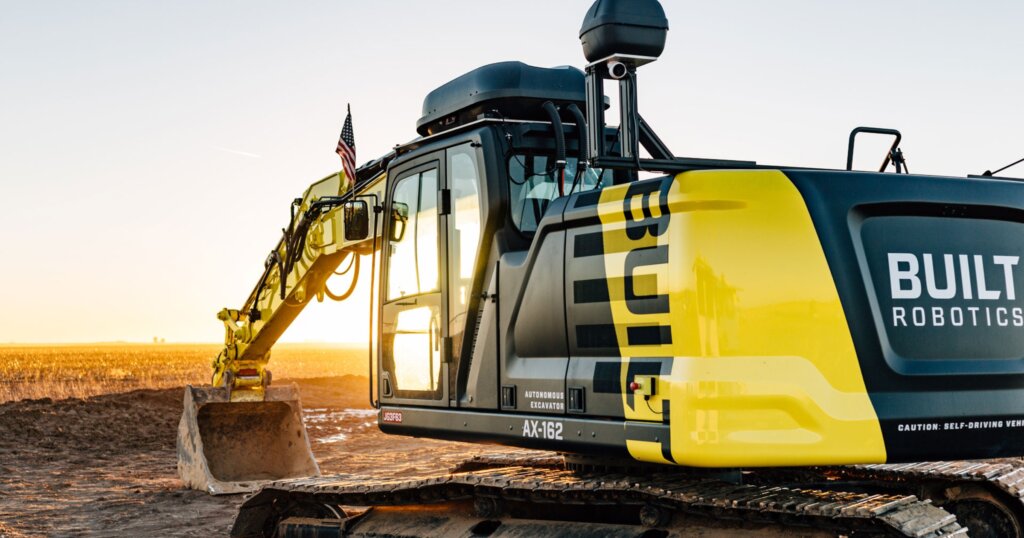
Built robotics excavator on site with the Exosystem attached. Photo courtesy of Built Robotics.
- CEO: Noah Ready-Campbell and Andrew Liang
- Founded: 2016
Built Robotics is unique because they do not build their own excavators from scratch. Instead, they created the Exosystem, a rugged AI “brain” that can be installed on standard heavy equipment from brands like CAT or John Deere. This system uses GPS, cameras, and LIDAR to turn a normal excavator into a fully autonomous trenching machine. Once the operator sets the parameters on a tablet, the machine can dig deep, precise trenches for hours without any human intervention.
The practical advantage for the industry is the ability to perform repetitive, dangerous tasks with extreme precision. The Exosystem is particularly popular in the renewable energy sector for digging miles of trenches for solar and wind farms. By automating the digging process, firms can keep their most skilled operators focused on more complex parts of the project. The Exosystem is commercially available and is designed to be installed on-site in just a few hours.
11. Advanced Construction Robotics (ACR)
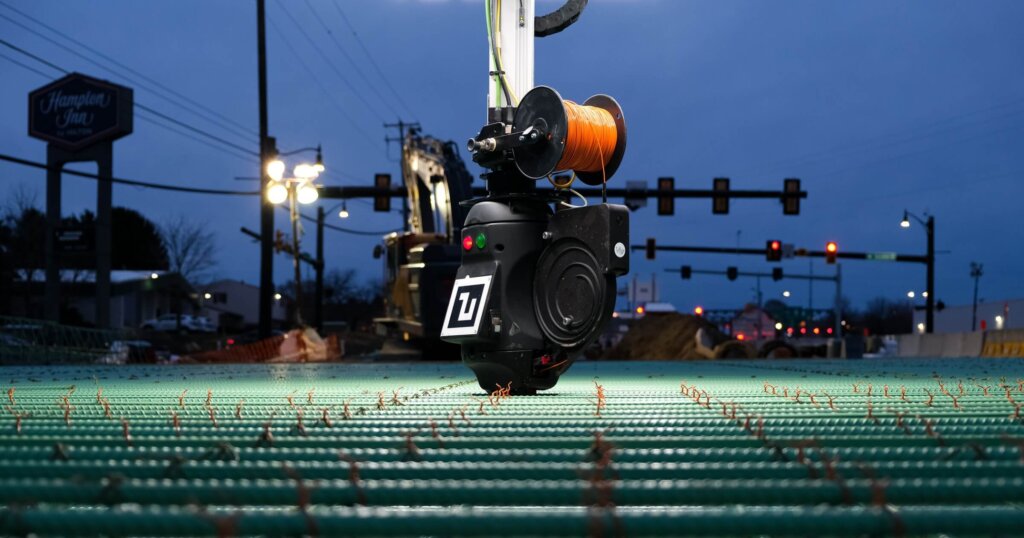
ACR Tybot trying rebar on a construction site. Photo courtesy of ACR.
- CEO: Danielle Proctor
- Founded: 2016
Advanced Construction Robotics focuses on one of the most back-breaking jobs in construction: rebar installation. Their flagship robot, TyBOT, is an autonomous rebar-tying machine that rolls along a gantry over a bridge deck or large slab. It uses computer vision to identify rebar intersections and ties them together at a rate of over 1,000 ties per hour. Their second model, IronBOT, is designed to lift and place heavy rebar bundles into position, further reducing the physical load on human crews.
The benefits to the industry are clear in terms of safety and schedule. Tying rebar manually requires workers to spend all day bent over, which leads to frequent injuries and fatigue. TyBOT doesn’t get tired and can even work through the night or in light rain. Using these robots can reduce rebar installation schedules by up to 50%. Both TyBOT and IronBOT are commercially available through a Robot-as-a-Service (RaaS) model, making it easier for contractors to bring this tech to their job sites.
10. Dusty Robotics
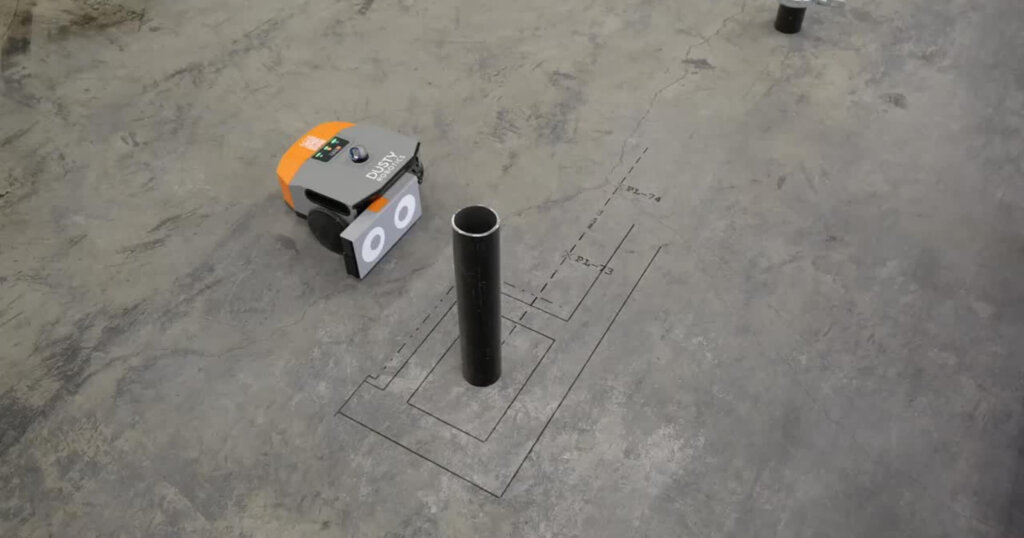
Dusty robotics fieldprinter on site. Photo courtesy of Dusty Robotics.
- CEO: Dr. Tessa Lau
- Founded: 2018
Dusty Robotics is solving one of the most common causes of rework on a job site: incorrect floor layouts. Traditionally, crews spend days using chalk lines and tape measures to mark where walls and utilities go. Dusty Robotics has automated this with the FieldPrinter. This autonomous robot drives across a concrete subfloor and prints full-scale CAD or BIM designs directly onto the surface with sub-millimeter accuracy.
The practical advantages are massive for project schedules. The FieldPrinter can complete a layout up to ten times faster than a manual crew, often covering 10,000 square feet in a single day. Because it prints the exact data from the digital model, it eliminates human error and ensures that every trade, from framers to plumbers, knows exactly where their work belongs. The system is commercially available and is a common sight on large data center and hospital projects.
9. Canvas (now JLG Canvas)
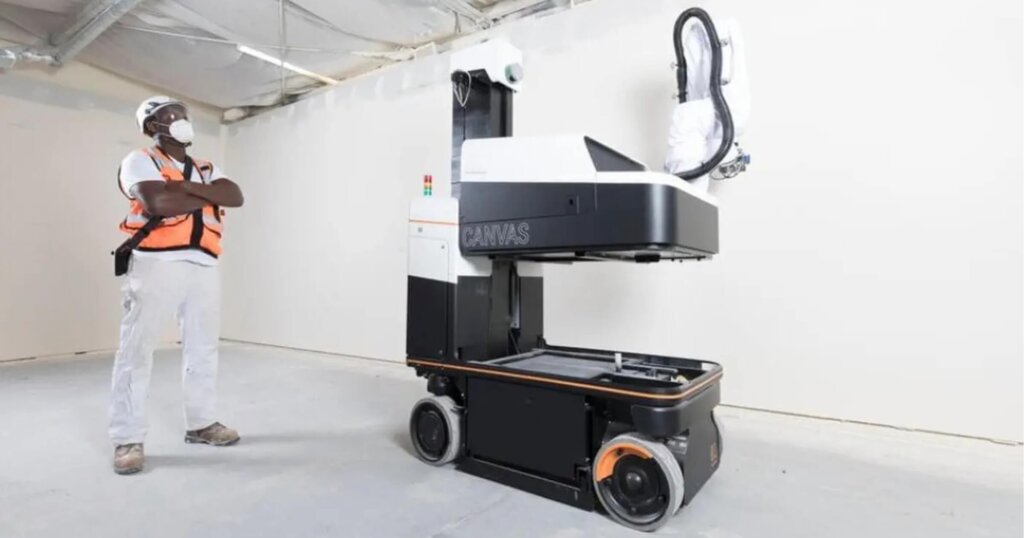
JLG canvas robot on site sanding. Photo courtesy of JLG.
- CEO: Kevin Albert
- Founded: 2017
Finishing drywall is a messy, repetitive, and physically exhausting task that often leads to worker injuries. JLG Canvas created a robotic solution to handle the “mudding and sanding” phase of interior construction. Their flagship model, the 1200CX, is a mobile robotic platform equipped with a high-precision arm that applies joint compound and sands it down to a perfect Level 5 finish.
The company recently reached a major milestone when it was acquired by JLG Industries in early 2026. This partnership allows Canvas to scale its technology using JLG’s global manufacturing and reach. The primary benefit to the industry is the reduction of musculoskeletal injuries and the near-total elimination of drywall dust, which is captured by the robot’s integrated vacuum system. This technology is commercially available and helps contractors finish interiors much faster with a smaller, safer crew.
8. Promise Robotics
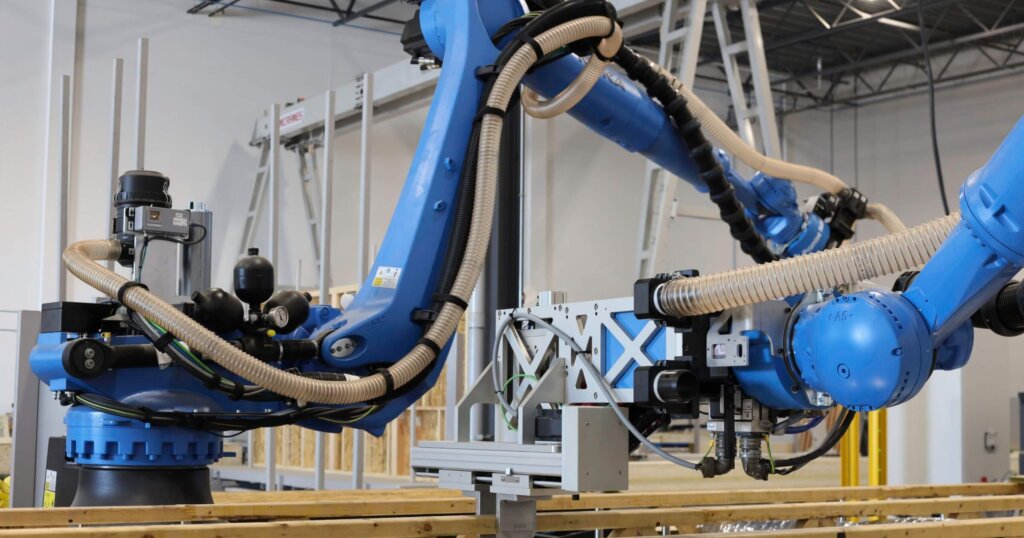
Promise robotics homebuilding robot in a factory. Photo courtesy of Promise Robotics.
- CEO: Ramtin Attar
- Founded: 2021
Promise Robotics is an AI company on a mission to solve the housing crisis by making homebuilding faster and more affordable. They have developed a proprietary platform called Factory-as-a-Service™ (FaaS). Instead of building one specific robot, they create an AI “brain” that can turn standard industrial robotic arms into a fully automated production line for house components.
Their system can take a builder’s digital drawings and instantly turn them into instructions for robots to frame walls and floor panels. The practical advantage for the industry is a massive boost in productivity. A single-family home that might take weeks to frame by hand can be produced in just a few hours in one of their facilities. The company opened a 60,000-square-foot facility in Calgary in 2025 and is currently partnering with large developers such as Mattamy Homes. This technology is commercially available to homebuilders who want to scale their production without the high cost of building their own factories.
7. FBR (Formerly Fastbrick Robotics)
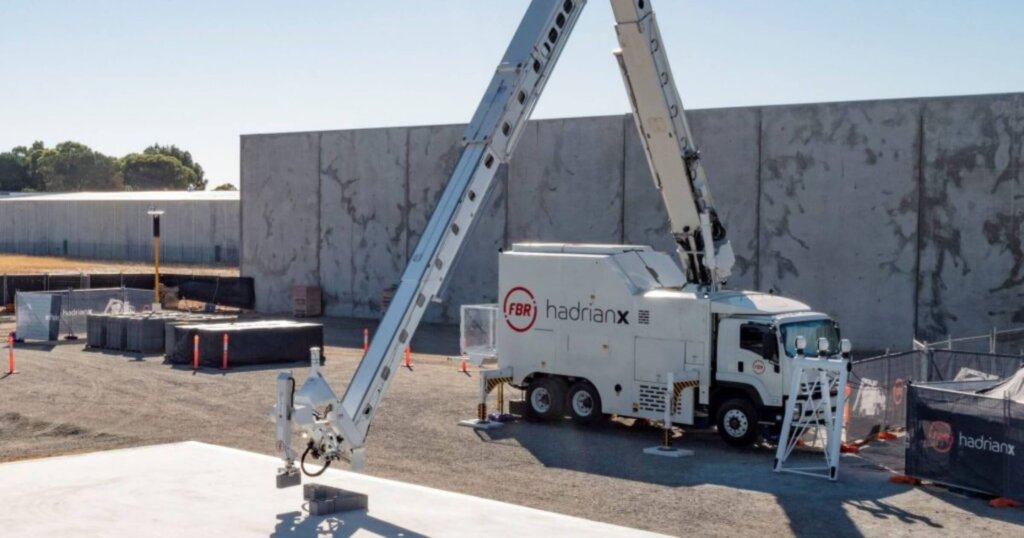
Hadrian X bricklaying robot laying bricks on a construction site. Photo courtesy of FBR.
- CEO: Mark Pivac
- Founded: 1994 (Concept), 2015 (Company listed)
FBR is the Australian tech firm behind the world-famous Hadrian X, the first fully automated robotic bricklayer. The Hadrian X is a truck-mounted robot that uses a long, telescopic boom to lay bricks and blocks with incredible precision. It doesn’t use traditional mortar; instead, it applies a special high-strength adhesive that bonds in minutes.
The latest version of the Hadrian X can lay up to 360 large-format blocks per hour, which is fast enough to finish the walls of an entire house in a single day. The practical advantages include a significant reduction in waste and a safer environment for workers, as the robot handles all heavy lifting and repetitive tasks. FBR recently completed pilot programs in the United States and Mexico, demonstrating that the machine can comply with different building codes. As of mid-2026, the Hadrian X is moving into full commercial availability for select global partners.
6. PaintJet (Foreman Technologies)
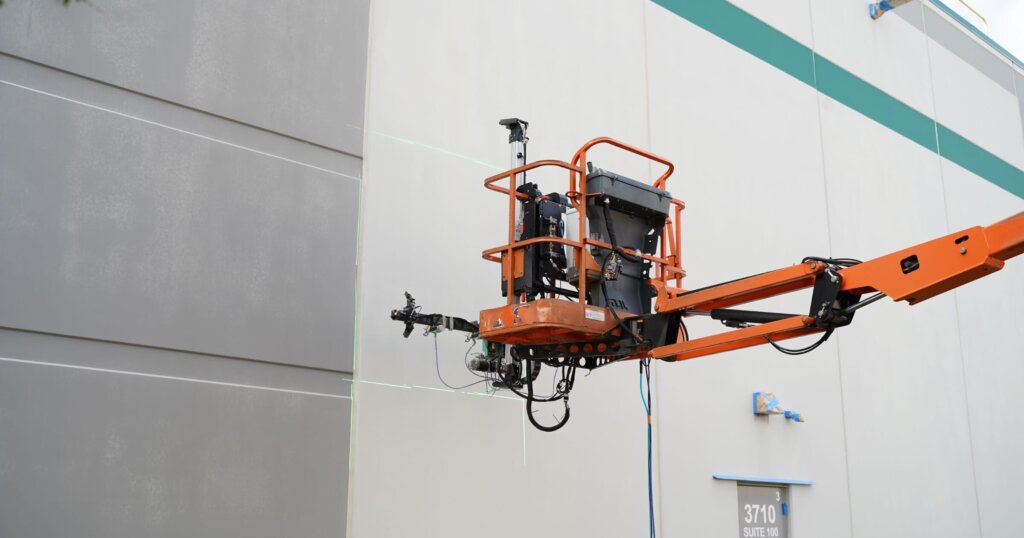
PaintJet Bravo painting robot painting a wall. Photo courtesy of PaintJet.
- CEO: Nick Hegeman
- Founded: 2019
PaintJet is revolutionizing the industrial coating industry by automating large-scale painting projects that were previously slow and dangerous for human crews. Their primary model is the Bravo robotic painter, a mobile unit designed to attach to industry-standard lifts and equipment already found on most job sites. The Bravo robot uses advanced sensors to apply a consistent, high-quality coat of paint across massive surfaces such as ship hulls, industrial warehouses, and large commercial buildings.
The practical advantages for the industry are significant. PaintJet’s system allows projects to be finished in half the time with half the crew size, while using about 25% less material, thanks to its precision application. This saves money and improves safety by keeping human painters off high-reach equipment. Along with their hardware, they developed Alpha Shield, a specialized paint that lasts twice as long as standard coatings. PaintJet operates as a vertically integrated service provider, meaning their technology is commercially available as a complete painting solution for large-scale infrastructure and commercial real estate.
5. Civ Robotics
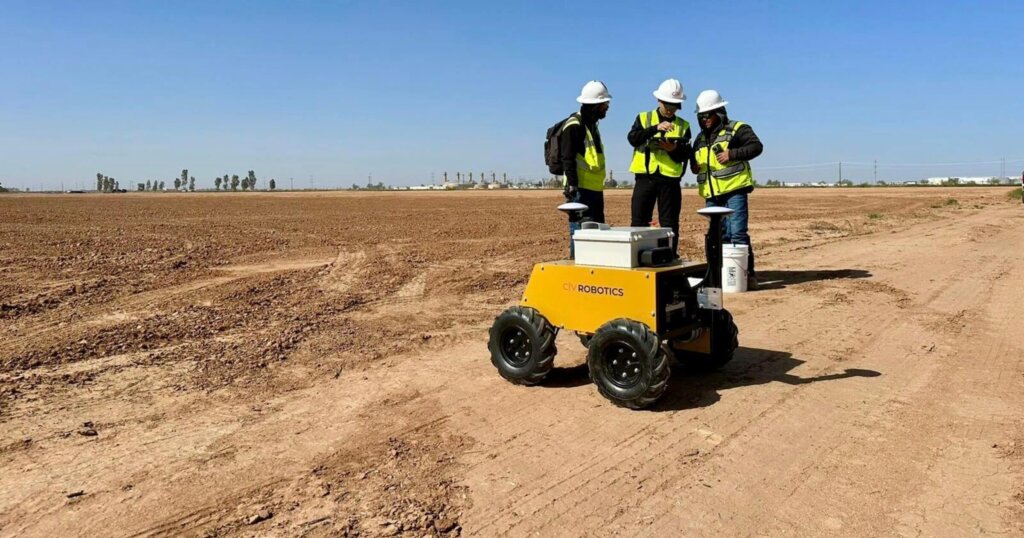
Civ Robotics CivDot robot on site ready to mark. Photo courtesy of Civ Robotics.
- CEO: Tom Yeshurun
- Founded: 2018
Civ Robotics is focused on “pre-construction” robotics that automate the tedious tasks of land surveying and site layout. Their flagship product is the CivDot, a rugged, four-wheel-drive autonomous rover. The CivDot is designed to roll across a construction site and mark thousands of precise GPS coordinates using spray paint or high-accuracy lasers. It is commonly used for large projects such as utility-scale solar farms and heavy civil infrastructure.
The benefit to the construction industry is a massive leap in speed and accuracy. A traditional surveying crew might mark around 300 points in a day, but one operator with a CivDot can mark up to 3,000 points per day. The robot is accurate down to 1/10th of a foot (30 mm), and the upgraded CivDot+ model can achieve precision as fine as 8 mm for critical tasks like drilling or piling. This automation allows general labor to handle complex layouts after only a few hours of training, freeing up professional surveyors for more high-level data analysis. CivDot is fully commercially available and compatible with industry-standard GNSS receivers like Trimble and Leica.
4. Okibo
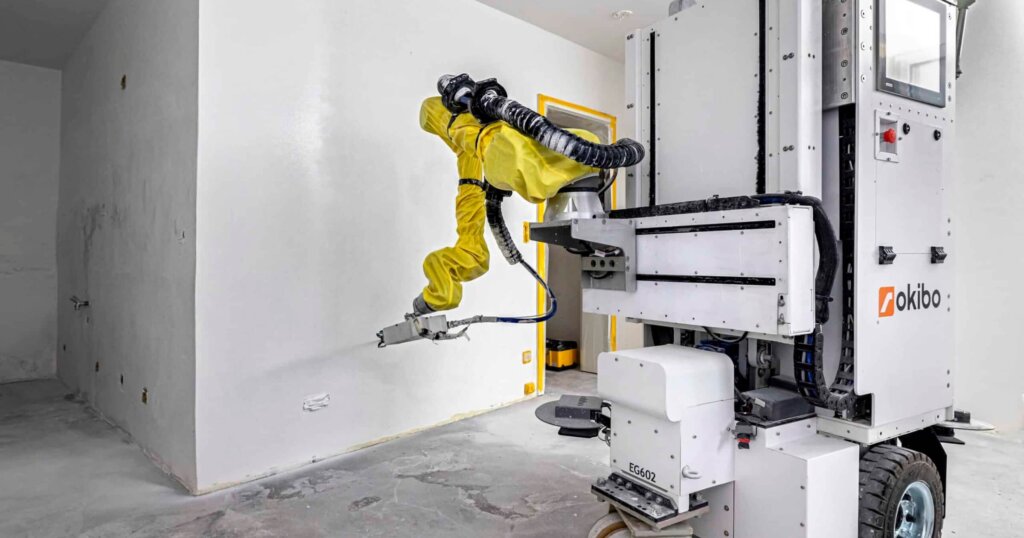
Okibo flagship robot on a construction site painting. Photo courtesy of Okibo.
- CEO: Guy German
- Founded: 2018
Okibo is an Israeli-based robotics company that has developed a fully autonomous robot for interior wall finishing. Their flagship robot is designed to handle plastering, rendering, and painting with high precision. It uses advanced AI, 3D laser scanners, and motion sensors to map a room in real-time and navigate around obstacles. The robot features a robotic arm mounted on a mobile platform that can move vertically on a track to reach the full height of a wall.
The practical advantage of Okibo’s technology is its ability to operate 24/7 without fatigue. Finishing walls is a repetitive, physically draining task that often results in inconsistent quality when done manually over long shifts. Okibo ensures a uniform finish every time while reducing material waste by up to 20%. The robot is currently used by large real estate developers and finishing contractors. As of 2026, it is commercially available and is a key tool for firms looking to speed up the “final touch” phase of construction.
3. Bedrock Robotics
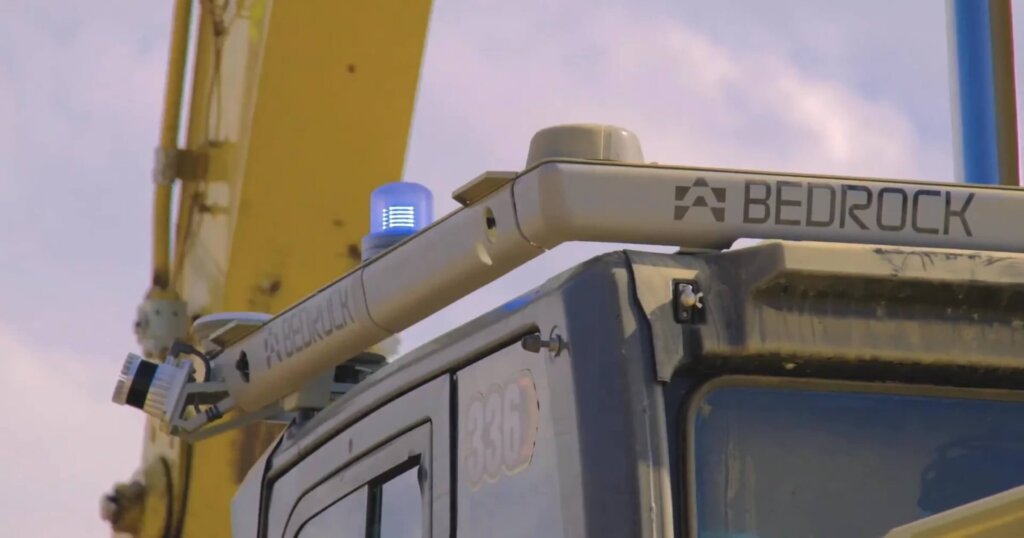
Bedrocks Robotics operator installed on an excavator. Photo courtesy of Bedrock Robotics.
- CEO: Boris Sofman
- Founded: 2024
Founded by veterans from Waymo’s autonomous driving team, Bedrock Robotics is not building new machines. Instead, they’ve create the Bedrock Operator, a hardware-and-software kit that retrofits existing heavy equipment. Their technology can turn a standard excavator or bulldozer into a fully autonomous machine in less than four hours. Using a mix of eight cameras, LIDAR, and GPS, the system allows machines to “sculpt” terrain with centimeter-level precision.
The biggest benefit to the industry is that contractors don’t have to buy a whole new fleet to get the benefits of automation. Bedrock’s AI models are trained like a large language model for dirt, learning how soil and rocks behave to avoid breaking underground pipes or fibers. This technology is commercially available through a subscription or retrofit model. By automating the bulk of earthmoving tasks, companies can solve labor shortages while significantly improving site safety and productivity.
2. DeWalt
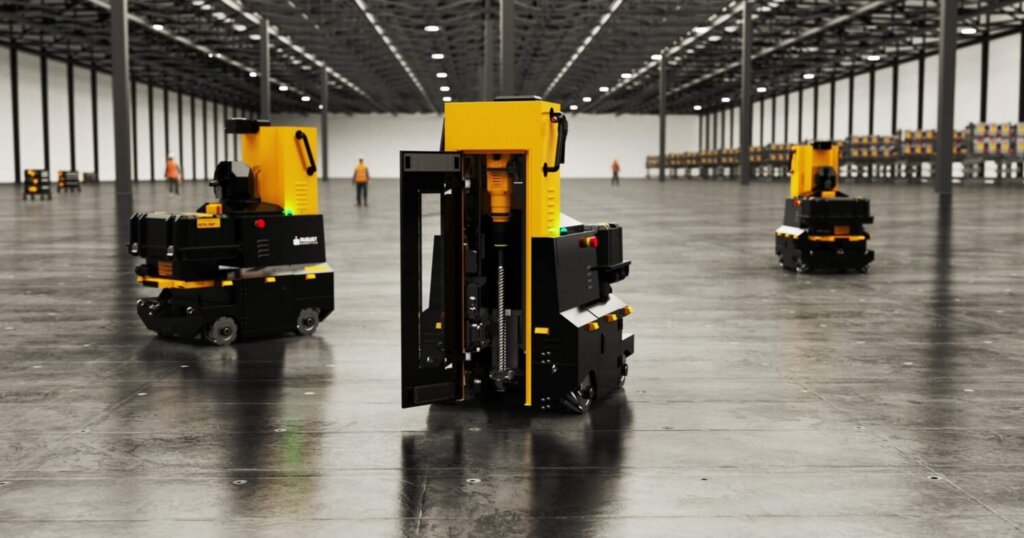
Debut of DeWalt downward drilling robot. Photo courtesy of DeWalt.
- CEO: Christopher J. Nelson
- Founded: 1924
DeWalt has stepped into the world of high-volume automation with the launch of the world’s first Downward Drilling Robot. Developed in partnership with August Robotics, this autonomous mobile robot (AMR) is designed specifically for massive data center projects. It automates drilling thousands of holes into concrete floors for server rack stops and structural supports.
The speed of this robot is its biggest advantage. In recent pilots, it drilled up to 10 times faster than traditional manual methods. On a single project with 90,000 holes, it achieved 99.97% accuracy, cutting nearly 80 weeks off the construction timeline for a major tech company. This reduces the physical strain on workers who would otherwise have to spend weeks on their knees drilling into concrete. DeWalt expects this robotic system to be fully commercially available by mid-2026.
1. Luminous Robotics (Lumi)
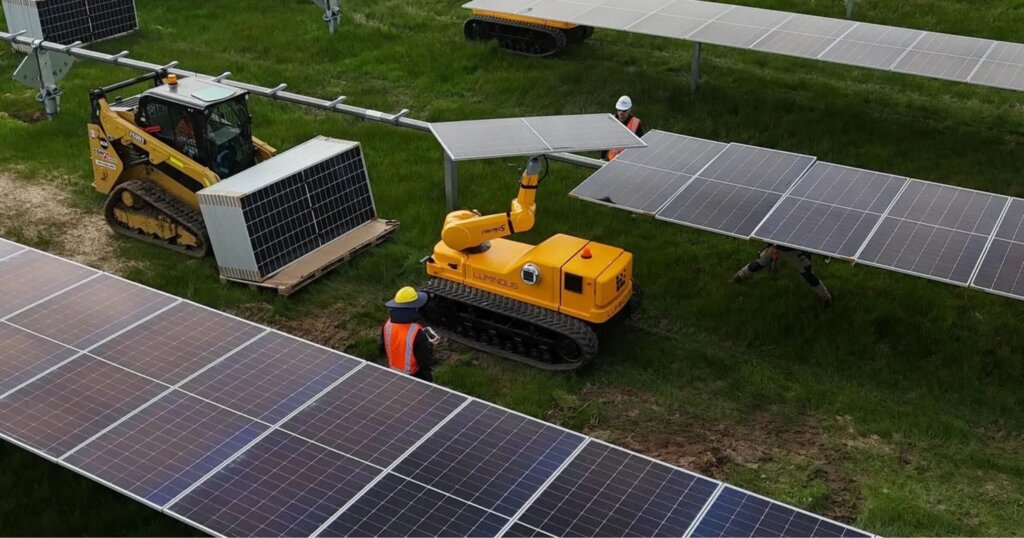
Luminous robotics solar installation robot installing solar panels. Photo courtesy of Luminous Robotics.
- CEO: Jay M. Wong
- Founded: 2023
Luminous Robotics takes our top spot because it tackles the most significant labor bottleneck in the global energy transition. To meet net-zero targets by 2050, the solar industry needs a 10x boost in installation speed, a pace that manual labor alone simply cannot sustain. The company is solving this by leveraging its LUMI S4 fleet, which specializes in heavy lifting and precise placement of bifacial solar panels onto racking systems. These autonomous robots are built to navigate rough terrain and have already proven their power at projects like the Goorambat East Solar Farm in Australia, where they helped install nearly 500,000 panels ahead of schedule.
What truly sets Lumi apart is its “empathy-first” design philosophy. Unlike many startups that require sites to be completely redesigned to accommodate machines, Luminous technology integrates seamlessly into existing workflows. This allows human crews to adopt the tools without changing their core processes. By handling dangerous, repetitive lifting, these robots act as a force multiplier for the renewable energy workforce. They free up human installers to focus on high-level technical electrical connections, helping major energy developers in the USA and Australia build the future of clean energy faster than ever before.
Want to stay on the cutting edge of construction technology? Subscribe to our newsletter today to get the latest robotic reviews, tech deep-dives, and AEC insights delivered straight to your inbox.
Related Posts