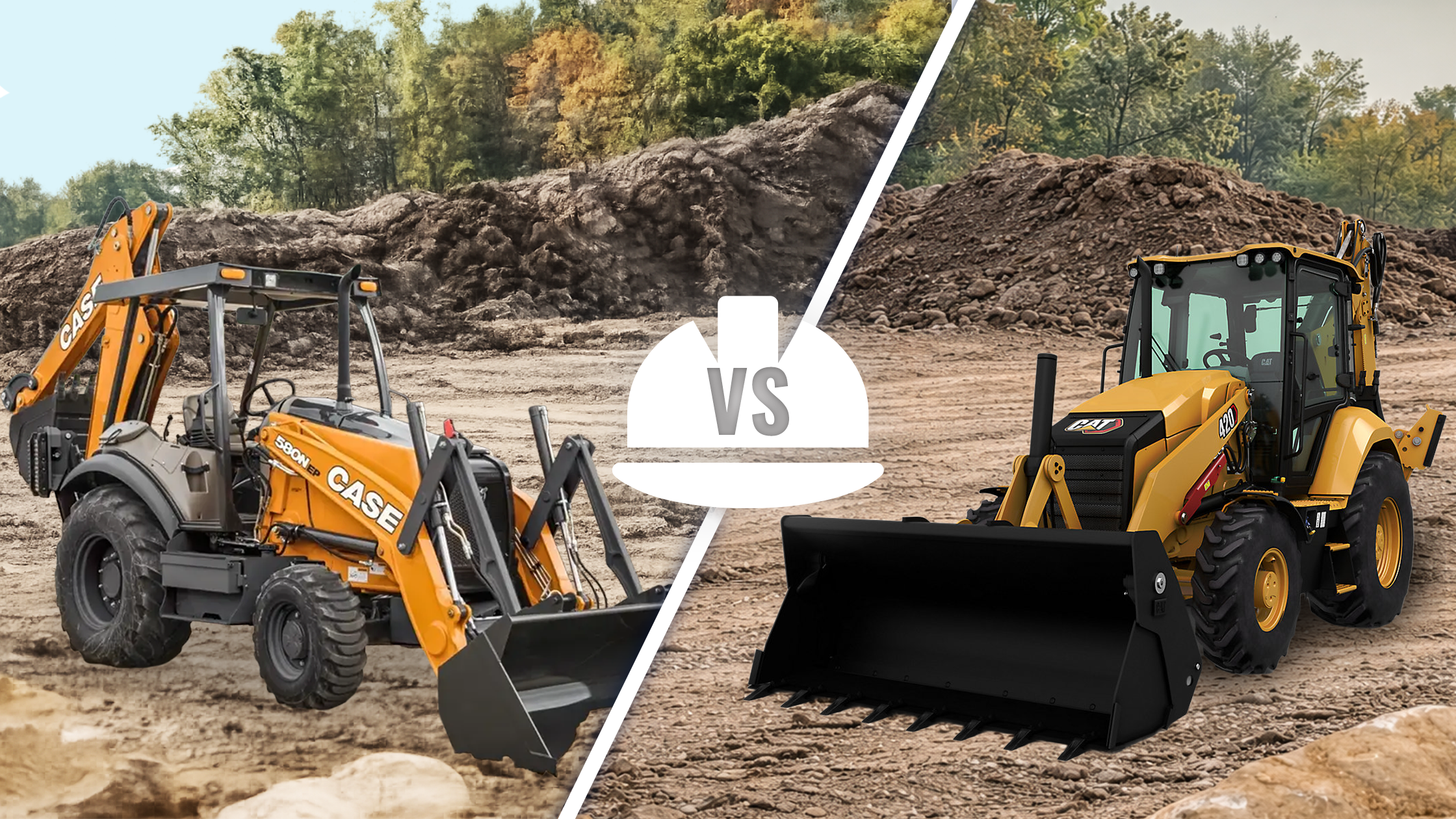
Choosing the right backhoe loader is a major decision for any construction business. This article compares the Case vs Caterpillar backhoe to see which one delivers the most power and value for your money. Whether you are an owner-operator or managing a large fleet, we will look at everything from digging specs to resale value to help you find the best machine for your specific job site needs.
Specifications comparison: How do the Case vs Caterpillar backhoe compare on paper?
When comparing flagship models like the Case 580N EP and the Caterpillar 420, the differences begin with weight and reach. While they are designed for similar jobs, the way they distribute their power and weight can change how they feel on the job site.
The following table shows the official technical data for these two machines:
| Specification | Case 580N EP | Caterpillar 420 |
| Net Engine Power | 72 HP | 92 HP |
| Operating Weight | 15,810 lbs | 17,271 lbs |
| Max Dig Depth (Standard) | 14′ 5″ | 14′ 4″ |
| Bucket Breakout Force | 11,517 lbf | 14,431 lbf |
| Lift Capacity (Full Height) | 6,503 lbs | 7,230 lbs |
On paper, the Caterpillar 420 offers a significant advantage in breakout force. This is the amount of power the backhoe can use to snap through tough soil or roots. However, the Case 580N EP provides a deeper standard digging depth, which can be a major plus for utility workers trying to reach deeper pipes without switching to a larger machine.
Performance and power: Which equipment packs more punch?
While the spec sheet tells one story, the real-world performance of these machines is what determines how much work you get done in a day. Both machines are incredibly capable, but they are tuned for different types of jobs.
Horsepower and lifting
Caterpillar generally leads in raw horsepower and heavy-duty lifting capacity. The Cat 420 is a heavier, more stable machine with a net power rating of 92 HP. This extra weight and power make it a top choice for large-scale loading and heavy material handling. If your job involves moving heavy concrete barriers or loading tall trucks all day, the Cat provides the stability and lift height you need.
Case machines are built with a different philosophy. While the Case 580N EP has a lower net power of 72 HP, it is designed to be lighter and more aggressive for its size. Case backhoes are famous for their digging power and “breakout force,” the strength needed to break through tough roots or frozen ground. While the Caterpillar 420 has the higher overall breakout force at 14,431 lbf, the Case 580N EP still delivers a punchy 11,517 lbf. This allows the Case to remain highly competitive in focused trenching tasks while using a much simpler, more fuel-efficient engine.
Real-world speed
In the field, Case backhoes are highly regarded for their roading speed. Because the boom sits further forward in the transport position, the machine is more balanced, leading to less bucking when driving between sites. Cat machines are often seen as the powerhouses of the trench, but Case is often favored for utility work where mobility is key.
Ease of use and handling: Which is more beginner-friendly?
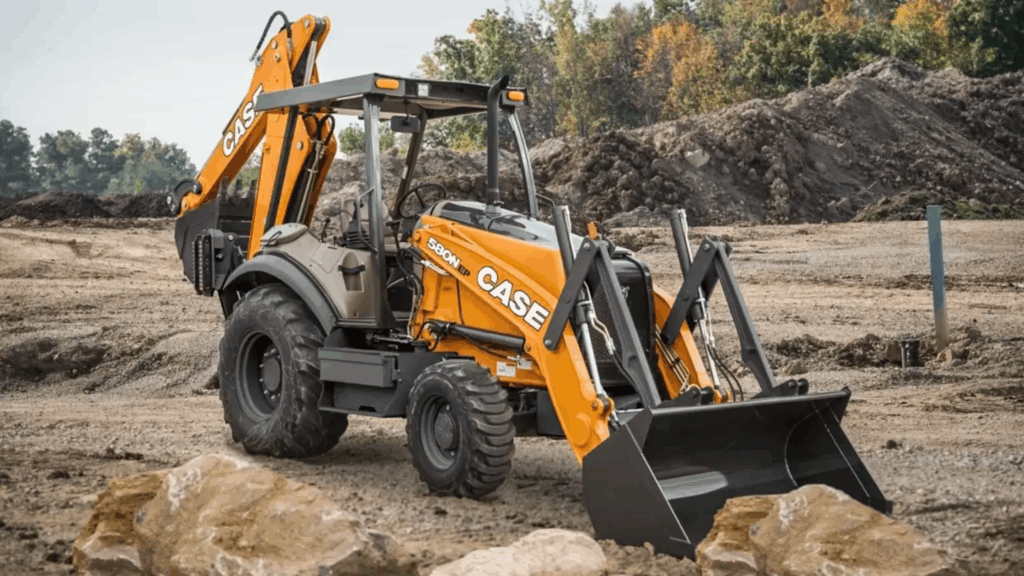
When you’re spending ten hours a day in the cab, the way a machine handles can be just as important as how much it can lift. Both Case and Caterpillar have designed their backhoes for maximum comfort, but they use different technology to help the operator stay in control.
Handling and balance
The Caterpillar backhoe uses a center-pivot design that creates a very stable platform for heavy digging. Because the machine is heavier, it feels more planted when you are using the backhoe to pull through tough clay or rocks.
Case backhoes are generally lighter and more compact. This makes them much easier to maneuver in tight residential spaces or on crowded job sites. If you are working in someone’s backyard or on a narrow city street, the agility of the Case 580N EP is a major advantage.
Grip and controls
- Case: Known for its intuitive mechanical controls, which provide a direct feel for the hydraulics. A standout feature is the ProControl system, an available option on the EP model (standard on the 580N and Super N). This swing-dampening technology stops the boom precisely where you want it without wiggle or rebound, making it much easier for beginners to be accurate.
- Caterpillar: Often comes with advanced pilot controls that feel more like a video game joystick. Cat also offers Cat GRADE technology, which provides in-cab guidance that shows the operator exactly how deep they are digging in real-time. This “digital eyes” approach helps less-experienced operators hit their target depth without needing a second person to check the grade with a stick.
Vibration and noise
Caterpillar is considered the leader in cab luxury. Their cabs feature heavy sound dampening and advanced climate control to keep the interior quiet and comfortable. This focus on ergonomics helps reduce operator fatigue, which is the tiredness that sets in after a long day of feeling the machine’s vibrations. Case has also improved its cabs with a spacious design and excellent visibility, but Caterpillar’s premium feel often sets it apart for long-term comfort.
Price and value: Which one gives more bang for your buck?
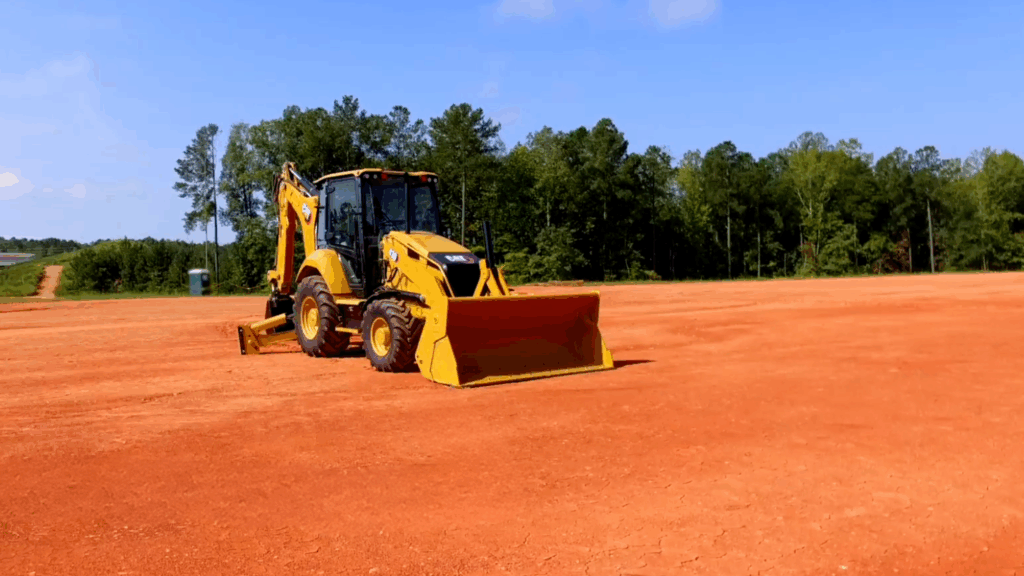
When looking at the bottom line, the choice between Case vs Caterpillar often comes down to your budget and how long you plan to keep the machine.
Case for the budget-conscious
Case almost always wins on the initial purchase price. For a new Case 580N EP, small business owners and independent contractors can expect a more affordable entry point compared to the premium pricing of a Caterpillar. This lower upfront cost makes it easier to get a brand-new machine into your fleet without a massive loan, which is why Case is often the first choice for startups and growing utility companies.
Caterpillar for resale
Caterpillar, on the other hand, is known for its resale value. In the used market, a well-maintained Cat 420 often commands a significant premium over other brands. Because of their reputation for durability and the massive global dealer network, Cat machines hold their value exceptionally well. Even after five or six years of hard work, you can often sell a used Cat for a much higher percentage of its original price.
This means that while you pay more on day one for a Caterpillar, you might actually end up spending less over the life of the equipment if you plan to trade it in later. Conversely, if you plan to run your backhoe until it stops moving, the lower initial cost and simple maintenance of the Case 580N EP, which requires no DEF or DPF, could provide the best long-term value.
Features and accessories: What extra features do they offer?
Beyond the engine and bucket, specific technology can make a big difference in how much work you get done. Case and Caterpillar both offer unique tools that address different job-site problems.
One major differentiator is Case’s Extendahoe®. While many backhoes have telescoping sticks, the Case design is famous for its integrated gripper teeth on the dipper’s underside. This allows you to clamp down on rocks or debris without damaging the hydraulic cylinder. Additionally, Case has led the way in sustainability with the 580EV, the industry’s first fully electric backhoe. It delivers the same power as a diesel machine but with zero emissions and much lower noise, making it perfect for night work or indoor utility projects.
On the other hand, Caterpillar offers the E-stick (extendable stick) and their powerful VisionLink® telematics system. VisionLink provides deep data insights for large fleets, tracking everything from fuel burn and idle time to fault codes that tell you a part is about to fail before it actually breaks. For precision work, Cat’s E-Ticket system even allows for digital payload tracking, so you know exactly how many tons of dirt you’ve moved without needing paper receipts.
Pros and cons summary
To help you quickly recap, here are the main pros and cons of each machine based on our comparison:
Case pros:
- Affordability: More affordable initial purchase price for smaller businesses.
- Maintenance: Simple no-DEF engine design (74 HP Gross) reduces daily upkeep and fluid costs.
- Roading balance: Superior balance and travel speed thanks to the over-center boom design.
- Serviceability: Ground-level access to all major service points for faster daily checks.
Case cons:
- Value retention: Slightly lower resale value compared to the Caterpillar brand.
- Stability: Lighter operating weight can feel less stable when working in heavy rock.
- Standard tech: Fewer high-end digital precision features are standard on the EP model.
Caterpillar pros:
- Resale value: Exceptional resale value and brand recognition worldwide.
- Durability: Heavy-duty build quality designed for high-intensity, 24/7 work.
- Operator tech: Advanced in-cab technology like Cat GRADE for precision trenching.
- Global support: An unmatched dealer network that makes finding parts easy anywhere.
Caterpillar cons:
- Cost: Higher upfront purchase price and more expensive replacement parts.
- Complexity: Advanced electronics and SCR (DEF) systems require more detailed maintenance.
- Efficiency: A heavier weight can lead to higher fuel consumption during travel.
Which backhoe should you buy?
The right choice between Case and Caterpillar really depends on the scale and type of work you do every day. Neither brand is a bad investment, but they serve different needs in the construction world.
If you are an owner-operator or run a small-to-medium business, the Case 580N EP often provides the best overall value. These machines are versatile, easier to maintain, and perfect for utility work or residential projects where you need to move quickly between sites. The lower upfront cost and the simple no-DEF engine design make Case a smart financial move for those who want a reliable workhorse without the added complexity.
However, if your business handles large-scale infrastructure projects or high-production environments, Caterpillar is the safer long-term investment. While you will pay more on day one, the Cat’s heavy-duty build quality is designed for machines that never stop moving. When you combine that durability with the industry’s best resale value and a massive support network, the higher cost often pays for itself over time through less downtime and a bigger check when it’s time to trade in.
Further reading:
- Craftsman vs Ryobi: Full table saw comparison
- Ryobi vs Milwaukee shop vac: Which cordless model is the better pick?
- Greenworks vs Ryobi: Who makes the better lawnmower?
Want more heavy equipment comparisons? Subscribe to our newsletter today to get the latest equipment reviews and AEC tech updates delivered straight to your inbox.