
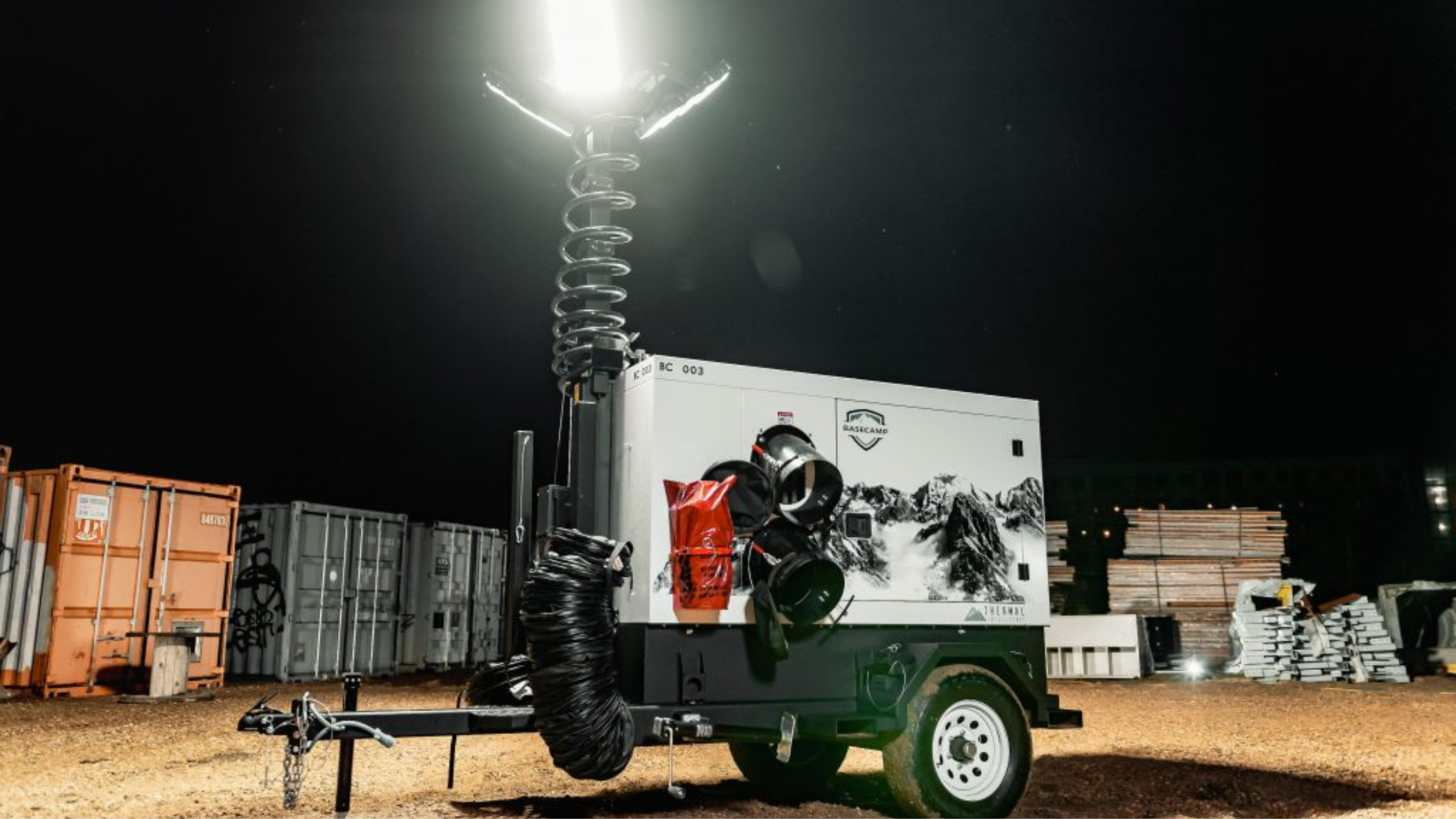
Keeping a jobsite warm in the middle of winter is no easy task. Crews working in cold regions rely on portable heaters to keep materials usable and protect workers from extreme temperatures. Yet many heating systems used on construction and mining sites have remained relatively unchanged for decades. The Basecamp heater from Thermal Intelligence aims to change that with a new approach to industrial heating. Built in Canada and designed for extreme conditions, the system delivers high-output heat while improving fuel efficiency and reducing emissions.
An industry ready for change
Heating technology on construction and industrial sites has changed little over the past three decades. Portable diesel heaters remain the most common solution for winter operations, especially in mining, infrastructure, and remote construction projects. These systems have been widely used since the late twentieth century, largely because they are simple to operate and can deliver large volumes of heat.
The downside is efficiency.
Traditional diesel heaters often burn large amounts of fuel while releasing a significant portion of that energy as waste heat into the air. Many systems operate with much lower fuel efficiency than modern heating technology. Industry guidance from organizations like the Occupational Safety and Health Administration notes that portable heaters used on job sites require careful fuel management and ventilation due to emissions and operating costs.
In cold climates such as Canada and the northern United States, those costs add up quickly. Large construction projects may run heaters continuously for months during winter.
Thermal Intelligence, a Canadian company focused on industrial heating solutions, developed the Basecamp heater to address these long-standing challenges. The system focuses on fuel efficiency, adaptable heat output, and reduced emissions while still delivering the high heat levels required for remote job sites.
Why jobsite heating matters
Cold weather creates a long list of problems on construction projects. Concrete can freeze before it cures. Hydraulic equipment struggles to operate. Materials become brittle or difficult to work with. Workers also face serious health risks when exposed to extreme cold for extended periods.
Proper heating helps crews keep projects moving through the winter months. It keeps materials usable and provides workers with a safer working environment.
Conventional heaters often create new challenges. Diesel systems burn large volumes of fuel, which increases operating costs. Emissions from those systems also raise environmental concerns, particularly on long-term projects.
For contractors running winter operations, the cost of heating equipment can become one of the largest seasonal expenses.
Thermal Intelligence’s solution to inefficient heaters: Basecamp
Thermal Intelligence designed the Basecamp heater for harsh environments common on mining sites and winter construction operations. The system delivers 910,000 BTU of heating capacity, allowing it to warm large work zones or enclosed structures even in extreme cold.
What sets the Basecamp system apart from many traditional heaters is its fuel efficiency. The unit converts 97% of fuel into usable heat, significantly reducing energy loss during operation. That efficiency directly impacts operating costs: according to the company, the system can reduce fuel consumption by up to 60% compared with conventional diesel heaters.
Over the course of a long winter project, the savings add up quickly. Operating costs average around $9,000 per month, though that figure varies with usage and weather conditions.
The system also delivers environmental benefits. Thermal Intelligence says the heater can reduce carbon dioxide emissions by as much as 242 tons during a heating season, lowering the environmental footprint of large projects.
The heaters are manufactured in Edmonton and southern Manitoba, positioning them close to the regions where extreme winter conditions are most common.
Adjustable heat control: a unique feature of Basecamp
Another feature that separates the Basecamp system from older heaters is its adjustable output. Traditional heaters often run at a fixed output, regardless of the required heat. That approach can waste fuel when temperatures fluctuate.
The Basecamp heater allows operators to adjust heat output to match specific jobsite needs. Crews can increase output during extreme cold and reduce heating levels when conditions moderate. This flexibility helps contractors control fuel consumption while maintaining stable working conditions.
It also allows heating to be tailored to specific areas of a project, such as enclosed work zones, curing areas, or temporary shelters.
A growing demand for efficient heating
Demand for improved heating solutions is growing across several industries. Thermal Intelligence reports that many Basecamp units are currently in use on construction projects, with the remainder deployed in mining and industrial operations.
Many of these heaters are distributed through Caterpillar dealer networks, often as rental equipment. Rental availability allows contractors to access the technology during winter projects without purchasing units outright.
Production capacity currently sits at about 150 units per year, and roughly 90% of that output has already been sold, reflecting strong demand from contractors working in cold environments. The high adoption rate highlights how many companies are looking for alternatives to traditional diesel heaters.
Rethinking jobsite heating for winter construction and mining
Heating may not be the first piece of equipment people think about when planning a construction project. Yet winter operations depend heavily on reliable heat to keep materials usable and crews safe. The Basecamp heater from Thermal Intelligence offers a new solution for contractors working in harsh conditions. High output, improved fuel efficiency, and lower emissions give project teams a way to manage heating without the heavy fuel costs tied to older systems.
If you want more insights into construction technology, equipment innovations, and tools shaping modern job sites, subscribe to the Under the Hard Hat newsletter to stay up to date on developments affecting the industry.