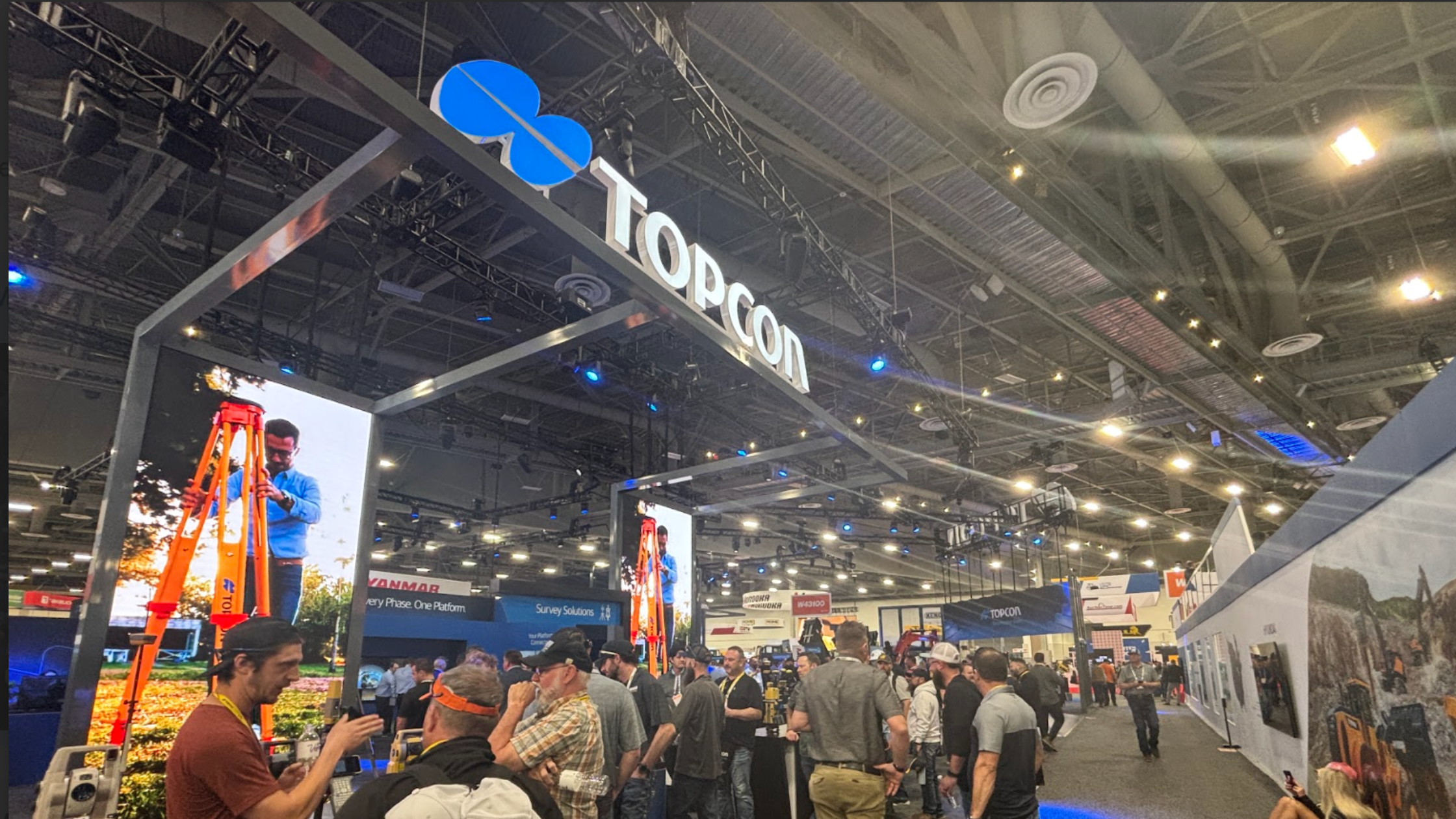
Tighter specs, thinner margins, and a growing focus on sustainability and accuracy—that was the landscape Topcon Positioning Systems found themselves walking into at CONEXPO-CON/AGG 2026. They took that challenge head-on, unveiling new 3D machine control features, safety systems, and geomatics tools designed specifically for earthmoving, paving, and layout pros. The key idea is to build a connected platform that ties together equipment, operators, and project data in one place.
3D machine control updates for grading and earthwork
Topcon’s heavy construction platform centers on its 3D-MC machine control software. The system provides real-time guidance for excavation, grading, milling, and paving by tying equipment to digital project models.
One of the headline updates is 3D-MC Edge, which focuses on directly tracking the cutting edge of a blade or scraper, rather than relying on indirect position markers. The result is a machine that responds faster and more precisely for contractors running push dozers, wheeled tractor scrapers, tow-behind scrapers, or box blades. With this system, operators can consistently hit their target grade with high accuracy, avoiding over- or undercutting.
It also opens the door for municipalities and contractors who may not have previously equipped machines with machine control. The configuration is designed as an economical path toward automated grading. In practical terms, fewer passes mean less fuel burned and less wear on equipment.
Another addition worth noting is Topcon’s MC Mobile solution, a flexible machine control system that brings 3D guidance to equipment that may not normally run full machine control hardware. We had the chance to talk with Mark Jones, Business Development Manager at Topcon, who reviewed some of MC Mobile’s key features with us.
MC Mobile uses GNSS positioning combined with a tablet-based interface to display digital site models directly to the operator. That allows crews to check grade, measure distances, and track progress from the cab without relying on stakes or repeated manual measurements.
As Mark explained, “MC Mobile is not only a machine control product, it’s also a workflow. It’s got measure, design, and build all rolled into one workflow. With this package, it’s all together.” The system can move between machines as needed, making it useful for smaller contractors or mixed fleets where installing permanent control systems on every machine may not be practical. Mark also confirmed that, while this technology was originally designed for smaller excavators and compact track loaders, Topcon has “expanded the portfolio to put it on any size of excavator.”
Regarding the incorporation of MC Mobile into work fleets, Mark shared that many operators are brand new to this technology, having moved away from using tape to map their projects. Instead, “now it can be a one-man show where they can be doing the layout themselves, get 3D accuracy, and have it in there. We see people using it outside of measure, design, and build because now they’re using it as an estimating tool where they can take the product out and measure something.”
Excavator upgrades focused on precision and uptime
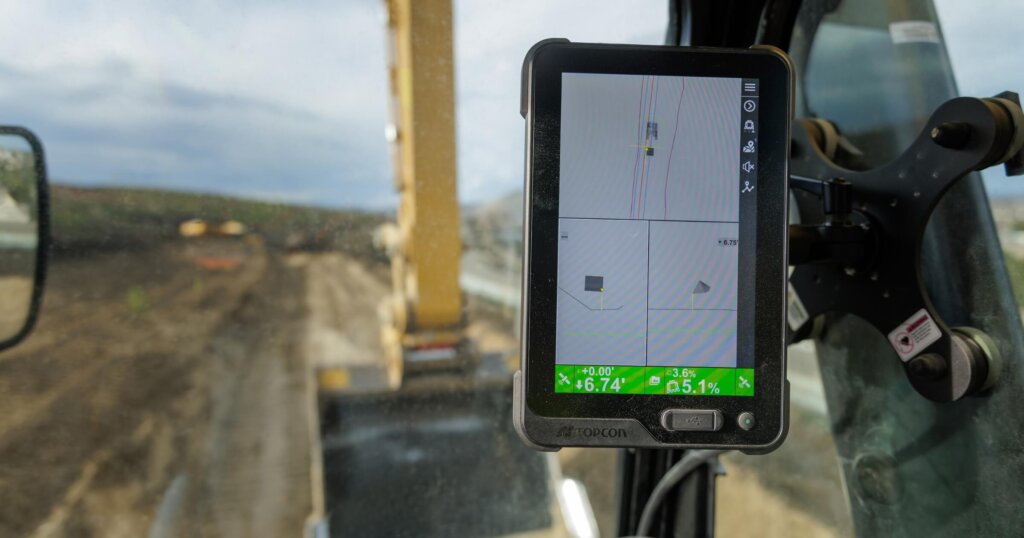
Topcon excavator machine control system display.
Excavators received several updates aimed at making complex work easier to execute. Slope Control automatically adjusts bucket tilt and rotation based on the digital design surface. The system gives the attachment a nudge in the right direction as the operator goes to work, which means less need to constantly adjust bucket angles, especially for things like shaping slopes and cutting in trench walls. That makes for a cleaner finish on utility trenches and foundation digs, and frees the operator to focus on moving the machine around rather than fiddling with the bucket.
Another helpful addition is Hybrid Lock, which addresses a common problem on active sites—robotic total stations need a clear line of sight to track, and that line of sight is often blocked by trucks or people. Hybrid Lock switches over from GNSS satellite positioning to local robotic total station tracking on the fly. If one of those signals drops, it switches to the other one, so you don’t have to stop and wait for the tracking to come back.
Load weighing systems reduce guesswork
Topcon has rolled out an update to its load-weighing technology, including the LM-1000 system, designed for loaders and aggregate handlers. The onboard scale provides real-time monitoring of material as it’s loaded into trucks, helping operators avoid overloading—which can lead to fines, premature tire wear, and increased fuel consumption—as well as underload, which reduces hauling efficiency. With instant weighing data, operators can hit their targets accurately and keep operations running smoothly.
Another benefit is that the system tracks stockpile loads and movement, sending the data directly to Topcon Site Manager. For fleet managers, this simplifies oversight by providing clear production records tied directly to project quantities. Onboard weighing for excavators was also highlighted. By measuring loads in real time during loading, operators can evenly distribute material and reduce the risk of overloading trucks on public roads.
Geomatics tools for high-accuracy applications
Topcon Origo
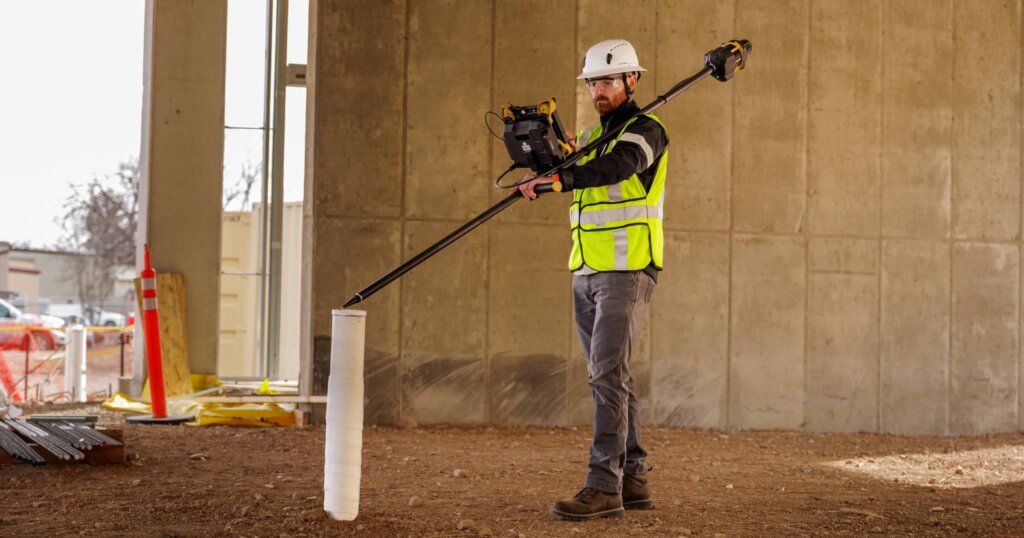
Topcon Origo being used on a jobsite for interior building layout.
Topcon introduced various geomatics tools to improve accuracy on the jobsite. One of these includes the Topcon Origo—a spatial positioning system designed for interior building layout. The handheld unit combines a scanner and controller on a rover pole and uses reusable spatial reference maps for positioning.
Unlike traditional optical layout tools, Origo does not rely on a continuous line of sight between instruments. Crews can move through complex interior environments while maintaining a consistent reference point. That simplifies layout in tight or obstructed spaces.
GTS-M1 robotic total station
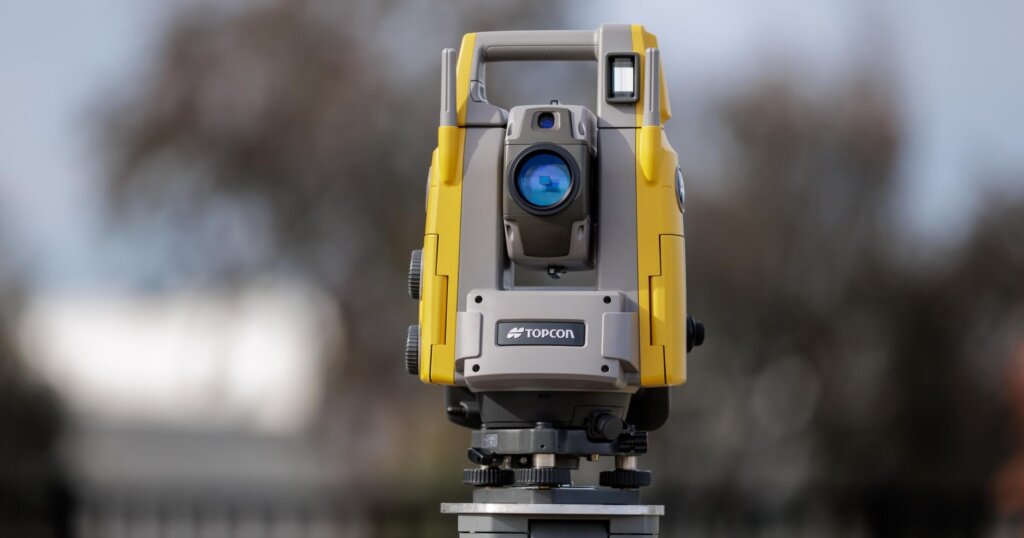
Topcon GTS-M1 robotic total station out in the field.
The GTS-M1 robotic total station supports machine control and high-precision measurement tasks. It tracks a 360-degree prism mounted on heavy equipment and feeds positioning data into machine guidance systems. This approach is especially useful in areas with limited satellite coverage. Dense tree cover, tunnels, and urban corridors often interfere with GNSS signals. A robotic total station maintains positioning accuracy in those environments. For fine grading, milling, and paving operations, that precision helps crews maintain tight tolerances across long stretches of roadway.
Jobsite awareness and safety systems
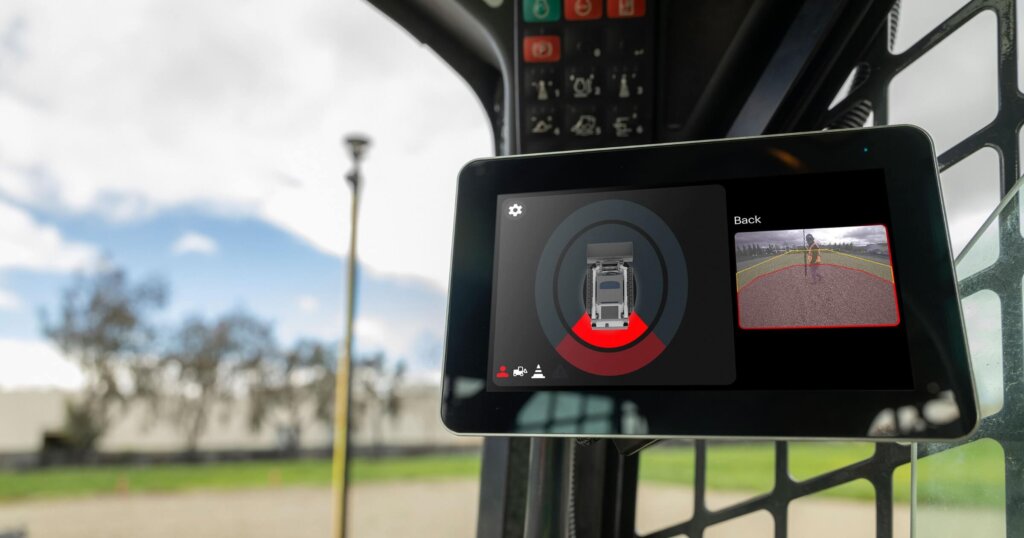
Topcon Awareness System designed to alert machine operators.
Safety technology was another part of the CONEXPO 2026 announcement. The Topcon Awareness System uses digital cameras mounted on construction equipment to detect movement and obstacles around the machine. Operators receive alerts when a person or object enters a predefined zone.
The system functions like blind-spot monitoring for heavy equipment. On active earthmoving and paving sites, multiple machines often work in close quarters. Extra visibility can reduce the risk of collisions. Alerts and activity records are stored in a cloud portal. That allows companies to review incidents and adjust safety procedures where needed.
A connected platform approach: Topcon Site Manager
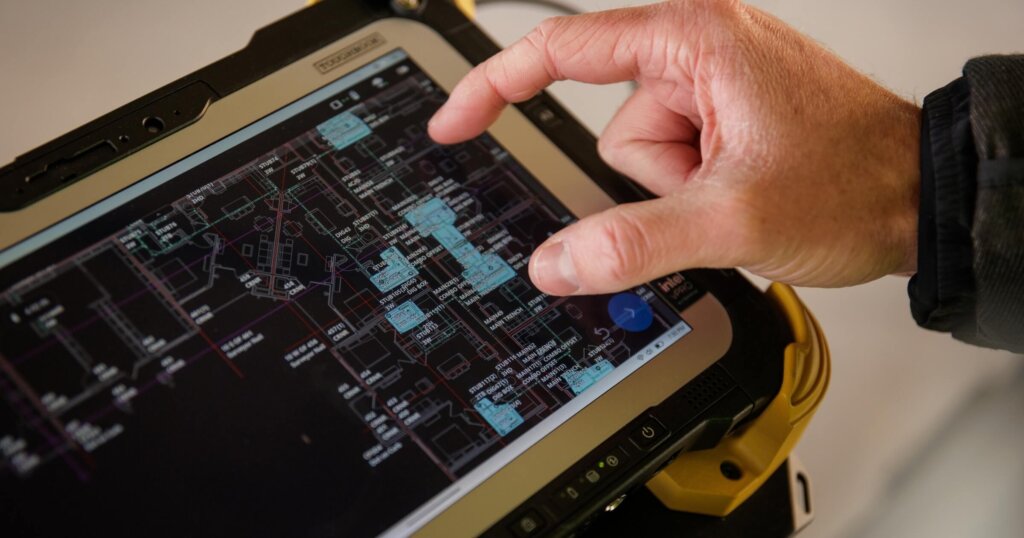
Topcon Site Manager being used by a project manager.
Underlying all these releases is Topcon’s connected platform strategy. Topcon Site Manager acts as the cloud hub for connected machine control solutions. Project managers can send design data to machines, retrieve productivity metrics, and create work orders tied to specific job areas.
The system supports the ISO 15143-4 telematics standard, allowing contractors to connect mixed fleets in the same environment. Load weighing data, grading progress, and machine activity can be tracked from a single portal.
For contractors balancing tighter specifications and cost pressures, this level of visibility can reduce rework and improve coordination between field and office teams. The updates introduced at CONEXPO 2026 show how positioning technology continues to expand beyond basic grade control. Machine guidance, load tracking, safety monitoring, and cloud-based data management are now linked together.
If you want more coverage on construction technology, equipment reviews, and jobsite innovations shaping earthmoving and paving work, subscribe to the Under the Hard Hat newsletter and stay up to date on what’s changing in the field.