Construction companies run complex operations, with field crews, project managers, subcontractors, and suppliers all working across different locations. Yet many still rely on separate software tools for accounting, project tracking, and jobsite reporting, making it difficult to get accurate information from the field to the office. That disconnect can lead to delays, unexpected budget overruns, or missed data. Acumatica Construction Edition aims to solve those problems by bringing construction financials, project management, job costing, and field collaboration together inside a single cloud-based system built for contractors.
At CONEXPO-CON/AGG 2026, Under the Hard Hat spoke with Joel Hoffman, Director of Product Management (Construction, Field Service and Property Management) at Acumatica, about how the platform is built to support construction companies throughout the full project lifecycle. “Where Acumatica is focused is that complete lifecycle from the project start, bringing things in, then you start the day-to-day operations,” Hoffman explained. The platform is designed to connect early project planning, field execution, and financial tracking, helping contractors manage each phase of a project within a single system.
Why construction companies are moving toward cloud ERP platforms
Construction has traditionally relied on a patchwork of software tools, with each area working on its own platform—accounting may run on one system; project schedules live in another program; and field reporting is usually done via email, spreadsheets, or mobile phone apps that lack integration with other systems. This creates a common problem for contractors: data disconnect. Using separate software platforms across various teams often makes it difficult to get accurate, up-to-date information from the field to the office without interruptions.
Contractors are increasingly seeking real-time visibility into costs, project schedules, and overall project performance without having to piece together information from multiple platforms.
Cloud-based ERP (enterprise resource planning) platforms are the solution for companies that seek to consolidate these processes. Instead of multiple databases running separately, all project data lives in a single environment.
For contractors working on tight margins, faster access to information makes a real difference. Project managers can catch cost issues earlier. Accounting teams spend less time reconciling spreadsheets. Field teams can report progress without duplicating work.
What Acumatica Construction Edition is designed to do
Acumatica Construction Edition is a cloud-based ERP platform built specifically for general contractors, subcontractors, developers, and home builders. Its goal is to connect major construction workflows—financial management, project management, and customer relationship management (CRM)—into a single connected platform.
Rather than using separate systems and working with disconnected information, contractors can use Acumatica to manage projects, review costs, and communicate across teams in a single environment.
The platform also offers dashboards and reporting tools that allow contractors to monitor project performance in real time, track budgets, and project timelines. This type of visibility helps companies spot problems early and adjust before small issues grow into major financial losses.
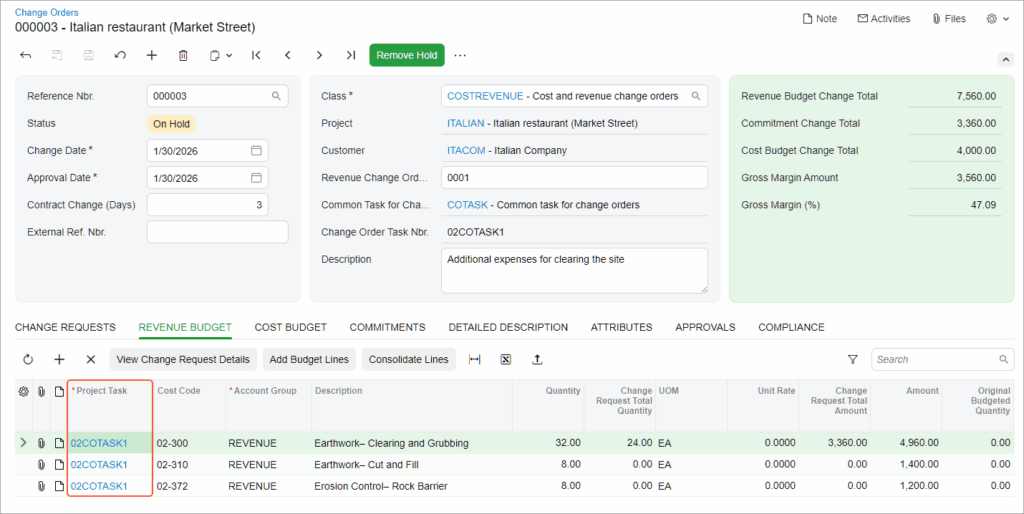
By centralizing this data, Acumatica aims to provide contractors with a “single source of truth for project and financial data.” When data lives within a single system, teams spend less time debating numbers and more time solving problems.
Acumatica’s approach also focuses on what happens after construction work is complete. Hoffman noted that many contractors continue supporting projects through maintenance contracts or service agreements. “From a lifecycle, you have the operations, but then as the project closes out, we also have a field service component,” he said. “If they need any kind of maintenance or contracts after the fact, then you can roll that into the service management section of Acumatica.” This allows contractors to manage post-construction service work using the same system that handled the original build.
Key capabilities that contractors rely on
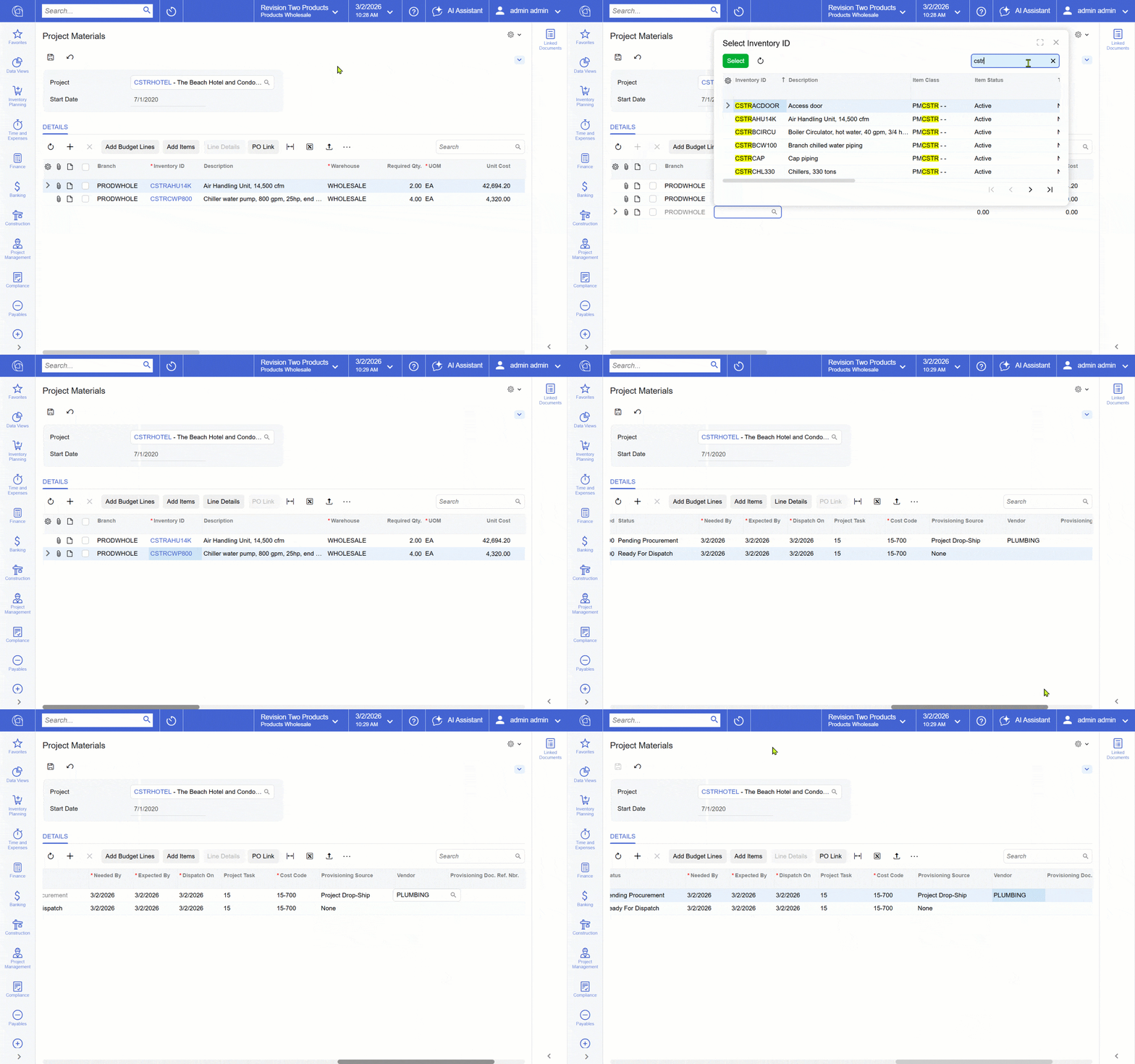
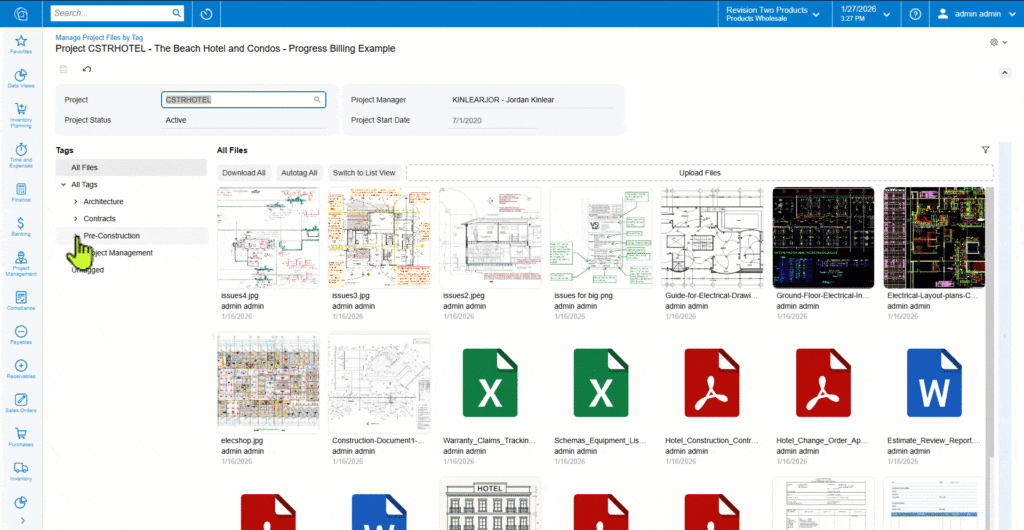
Construction companies rely on a range of tools inside Acumatica Construction Edition to manage both financial operations and day-to-day project execution. The platform combines several functions that contractors typically handle across separate systems.
Key capabilities include:
- AI Studio and automation tools: Acumatica is investing heavily in artificial intelligence features designed to help contractors interpret project data more effectively. Joel Hoffman explained that the company’s AI Studio brings several capabilities together inside the platform. “We have the AI Studio, which we think of it as a couple of facets; whether it’s an AI assistant, think of it like a chatbot, where you can ask it questions.”
- Predictive insights based on project data: Joel also discussed the predictive nature of their AI platform and “the anomaly detection side of it, where it can take the data, and then based on what it sees…it’ll flag any problems and notify users.” This helps teams catch problems earlier, rather than discovering them after a project has already gone off track.
- Reporting and project analytics: Contractors can generate detailed reports covering job costs, financial performance, and project progress without building manual spreadsheets. Dashboards allow executives to review company-wide performance while project managers focus on the numbers tied to individual jobs. This level of visibility helps teams track costs and identify performance trends earlier.
- Construction-specific project workflows: The platform includes tools built specifically for construction management. Change order tracking, subcontract management, commitment tracking, and equipment costing are integrated into the system. When financial transactions occur—such as subcontractor invoices—the costs automatically update the project budget.
- Mobile access for field teams: Field staff can submit reports, capture project updates, and access project information directly from mobile devices. This reduces the lag between jobsite activity and office reporting.
These capabilities help contractors manage complex projects involving multiple subcontractors, shifting schedules, and ongoing cost tracking.
What the future of construction project management looks like
Construction is moving toward fully connected digital workflows. Projects involve many participants and large amounts of data. Scheduling, financial tracking, and field reporting increasingly depend on software that can connect these pieces in real time.
Cloud platforms are becoming the backbone of that process. Instead of running isolated programs, companies are bringing operations into integrated systems that bring planning, financial management, and field operations together in real time.
Platforms like Acumatica Construction Edition represent a step toward this type of connected environment. By combining project management, accounting, and field collaboration in a single platform, contractors gain more visibility into their projects and business performance.
Construction will always rely on skilled people and strong planning. Digital systems simply help those teams work with better information. As more contractors adopt integrated platforms, project management is likely to become more data-driven and coordinated across the entire job lifecycle.
For more coverage of construction technology, project management tools, and the software shaping modern job sites, subscribe to the Under the Hard Hat newsletter to stay informed about the systems that help contractors manage projects more effectively.