Construction technology is moving away from isolated software tools toward unified platforms that manage projects from early planning through construction and eventual handover. For years, architects, engineers, and contractors have relied on separate systems for design, coordination, budgeting, and field management—often forcing teams to rebuild information as projects move between phases. That fragmented workflow slows projects and increases the risk of costly mistakes. Autodesk is working to change that model. At CONEXPO-CON/AGG 2026, the company showed how Autodesk Construction Cloud (ACC) and Autodesk Forma are coming together to create a more connected ecosystem that links planning, design, and construction teams through shared project data.
Why construction teams are moving toward unified cloud platforms
Construction projects have traditionally relied on a patchwork of disconnected software. As Cesar Escalante, Technical Marketing Manager at Autodesk, points out, there is a “strong disconnection between the tools that do conceptual design and traditional BIM, which is used in Revit.” Architects, engineers, and contractors all work in separate systems—and those systems rarely communicate well.
As projects move from design to construction, information is often lost or needs to be rebuilt to fit new construction workflows. Project teams end up recreating models or documents, converting files, and duplicating work that’s already been done.
This disconnect wastes time, raises costs, and increases the risk of mistakes—from misinterpretation of plans and inaccurate estimates to changes during construction that were not anticipated during design. As a result, many companies are turning to connected cloud environments that keep project information accessible to everyone involved. As Cesar explains, this is the problem that Autodesk is working to solve.
The unification of ACC to Autodesk Forma
Autodesk’s response to these problems centers on its industry cloud strategy. The company has been building a connected ecosystem that links project phases through shared data. At CONEXPO 2026, we had the opportunity to speak with Mark King, Autodesk’s Customer Success Manager, who shared some of Autodesk’s plans for ACC.
Beginning March 24, Autodesk Construction Cloud will become part of the Autodesk Forma industry cloud, creating a connected environment for planning, design, construction, and operations. This move reflects a broader strategy: Autodesk is positioning Forma as the central cloud platform for the architecture, engineering, construction, and operations (AECO) industry. As Mark explained, “as soon as designers start working, they can be working within ACC, and then pass that off to your pre-construction, to your bidding teams, and all the data and information is going to flow.”
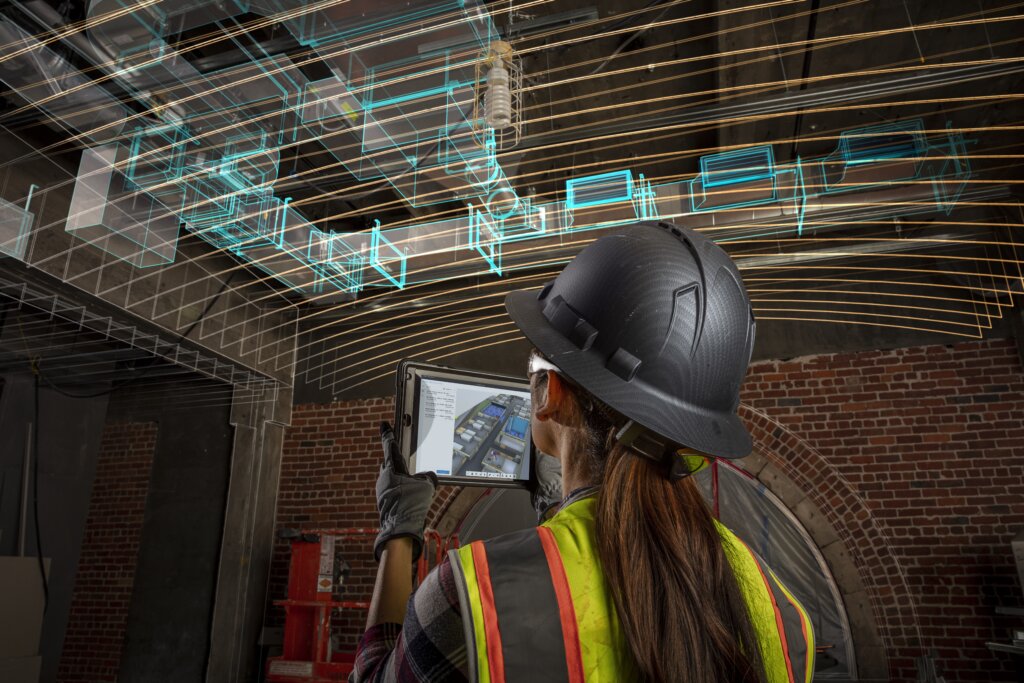
This approach helps reduce design-to-construction gaps that often appear when teams move between software environments. It also helps reduce project rework. When data remains consistent across systems, contractors spend less time recreating information.
Another benefit is the reduction of information silos. Designers, engineers, and contractors can work from the same shared data rather than maintaining separate files. The result is a data-centric environment where information flows between phases instead of being recreated at each step.
Forma Site Design: latest features introduced at CONEXPO
One of the tools Autodesk highlighted during its demonstrations was Forma Site Design, a planning and analysis environment built to support early-stage project development. At the Autodesk demonstration booth at CONEXPO, we spoke with Cesar Escalante, who explained how Forma also allows designers to “bring in contextual data from anywhere in the world and use it as a reference for your conceptual design.”
The software focuses on outcome-based planning. Designers can test multiple site scenarios and evaluate how design decisions affect factors such as density, environmental impact, and buildability. Rather than drawing a single concept and refining it repeatedly, teams can generate multiple design options and compare results. Cesar explains that “it has 3D modeling capabilities that allow you to very quickly create conceptual representations of design solutions that are backed by environmental analyses.” Some of the analyses are AI-driven, including insulation, microclimate, and carbon footprint analyses. The idea behind that is that “by allowing designers to have access to these analyses, they can validate a design decision from day 1.”
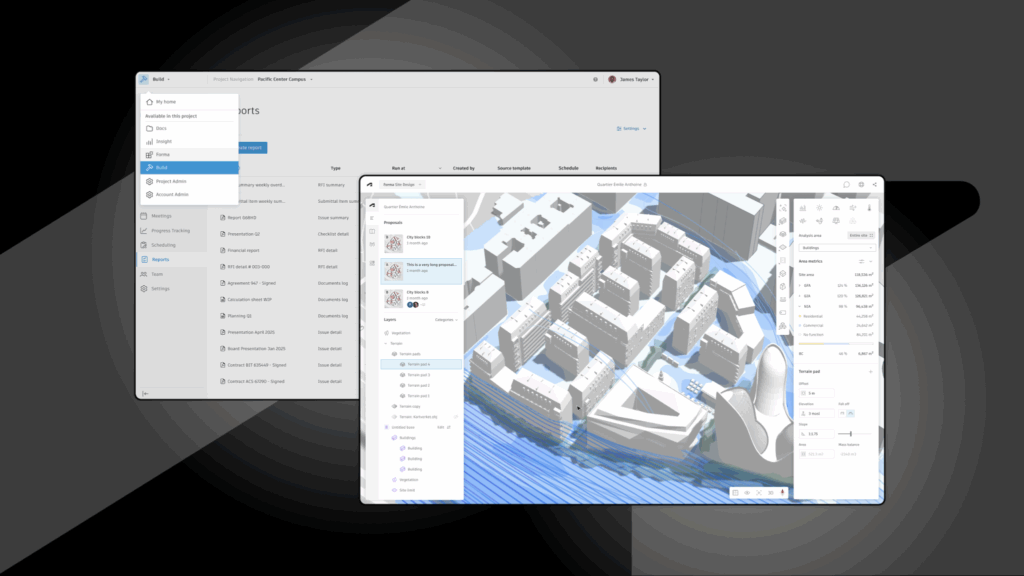
Forma Site Design also connects directly to terrain data and geographic information through partnerships with open-source repositories, enabling designers to import current terrain models into a project and see the full 3D context of a site. That context matters during early planning.
Several capabilities introduced with the platform highlight Autodesk’s efforts to connect planning and construction. Some of the benefits include:
- Integrated data flow: Forma supports a shared data structure that enables information to flow across planning, design, and construction environments. When a designer builds a site model in Forma, that model can feed into later design stages and eventually into construction workflows within Autodesk Construction Cloud. Cesar explains, “We’re making the data flow between conceptual design and detailed design, so things like area, count of elements automatically transfer, and then we make an integration of all within the same ecosystem.”
- Elimination of data gaps: Cesar shared with us that “the friction between conceptual design in other tools and Revit, there’s a big data gap there.” Forma attempts to address that problem by maintaining structured project data throughout the lifecycle. Design models, site data, and project assumptions remain connected as the project moves from planning into construction coordination tools.
- Collaborative review: Forma also allows teams to review projects together within a shared digital environment. With this collaborative space, as Cesar explains, “you can bring your stakeholders into the validation of the design, into the same review platform, and everybody connects in the same review area.”
What designers can expect in the future roadmap from Autodesk
Autodesk has indicated that the development of Forma will continue expanding beyond building design workflows. Cesar shared that “down the pipeline, we also will be targeting transportation and civil audiences by introducing Forma for infrastructure.” Autodesk plans to introduce capabilities that support infrastructure planning, including roads and transportation corridors.
These projects require different data structures and modeling tools than those used in building design. Autodesk’s roadmap includes developing formats that support these types of projects within the Forma environment.
Automation is another area receiving attention. Future updates will include automated tools for modifying site conditions. Designers may be able to adjust grading, site layouts, or infrastructure elements with fewer manual steps. Automated analysis tools may also help evaluate how site changes affect project performance. These capabilities aim to reduce the time required for early design exploration while giving project teams better information before construction begins.
Autodesk’s long-term goal is to create an environment where planners, designers, engineers, and contractors all work with the same data. Projects would begin with site analysis and concept planning in Forma. Design teams would develop models using the same underlying data. Contractors would coordinate construction through Autodesk Construction Cloud without losing the project information created earlier.
For an industry that has long struggled with fragmented software systems, that shift could change how projects are planned and delivered.
For more coverage of construction technology, digital design tools, and the platforms shaping the future of building projects, follow us on LinkedIn and subscribe to the Under the Hard Hat newsletter.