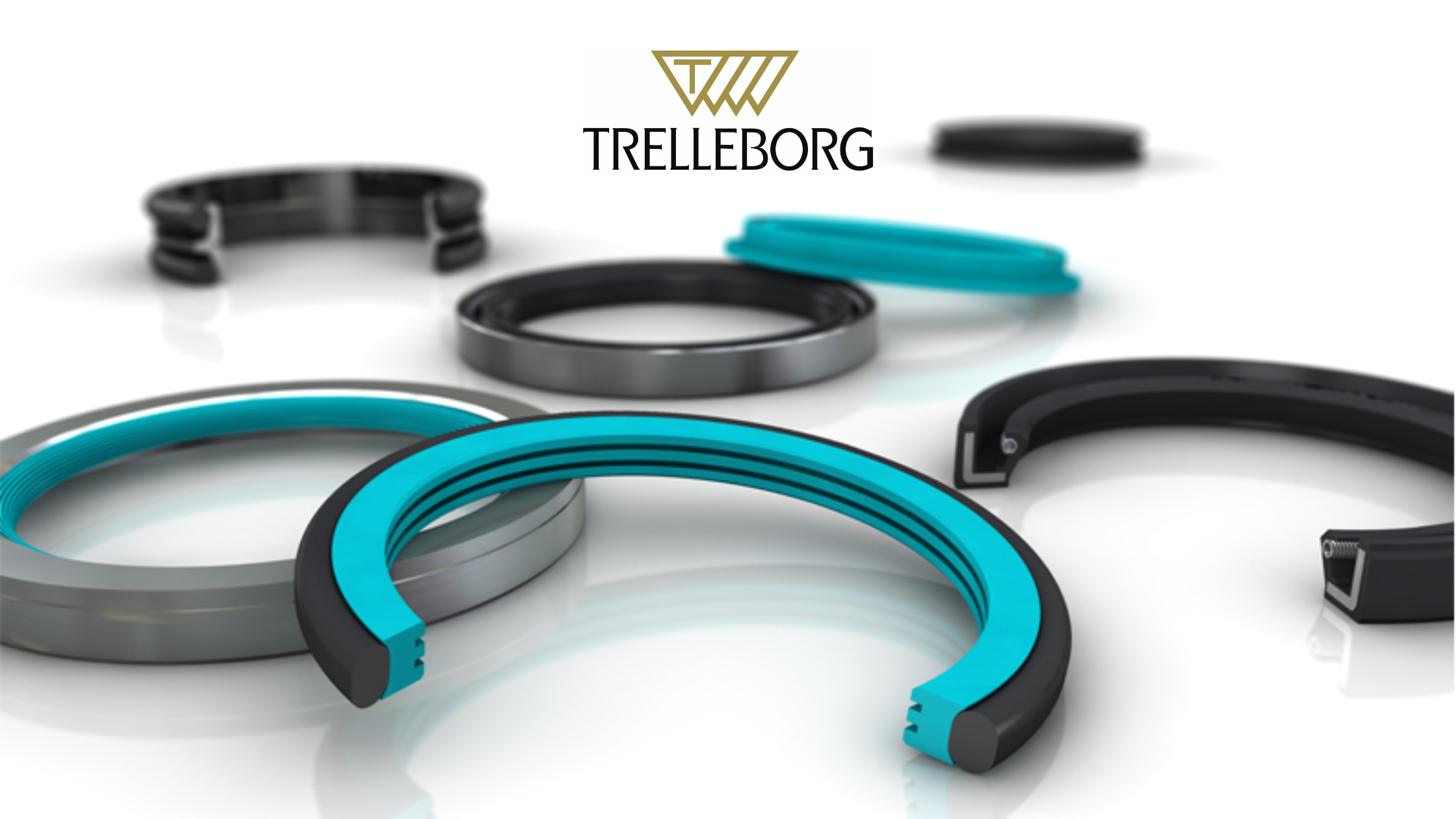
At CONEXPO-CON/AGG 2026, Trelleborg put a spotlight on a part of heavy equipment that’s often overlooked—but hard to operate without. Seals may not be the most visible part of a machine, but when they fail, operations come to a halt. As jobsites push machines to their max, Trelleborg is developing tire and wheel solutions designed to improve machine performance, reduce downtime, and keep machines working in increasingly tough conditions.
The power of high-performance seals
Originally a rubber manufacturer, Trelleborg has expanded into a global leader in engineered polymer solutions. Its latest lineup offers a range of seals specifically built to survive the dirt, pressure, and constant wear of construction sites.
Keeping a machine running smoothly starts deep inside its mechanical systems, where seal performance is critical. As Michael Cook, Global Segment Director at Trelleborg, explained, “We released this as a portfolio with the hope that we can have a sealing solution for all the different kinds of conditions that we would see. We can mix and match based [on] speed or pressure.”
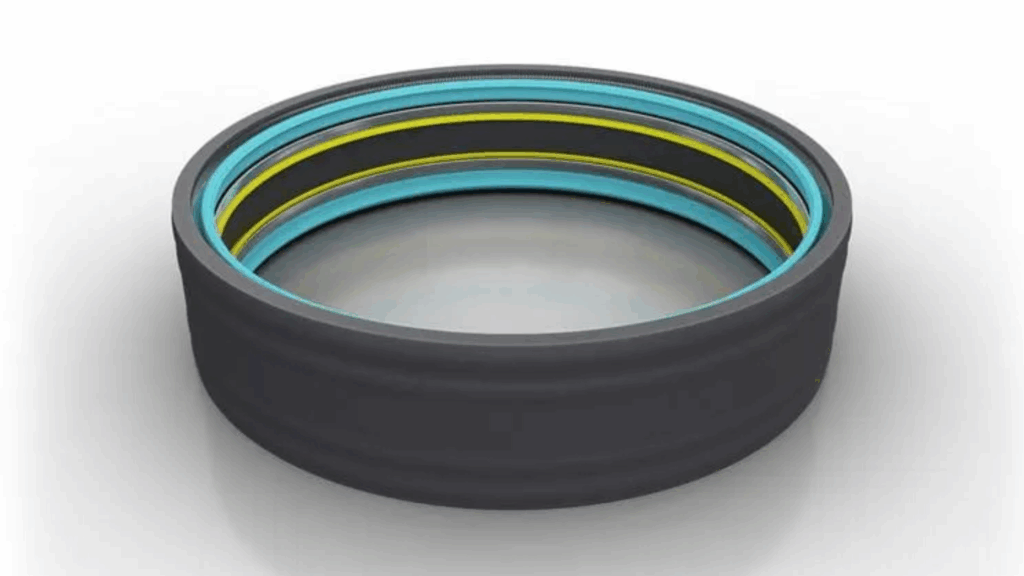
That flexibility shows up in Trelleborg’s cassette seals, which are built for high-slurry and muddy conditions. These are perfect for wheel hubs or track drive units where mud ingress is a major concern. The design uses a “labyrinth” that protects the internal components from highly aggressive environments.
Innovation for the modern jobsite
Trelleborg is also pushing boundaries with Turcon® SG, a specialized seal designed for central tire inflation systems (CTIS)—a key feature for vehicles moving between soft fields and paved surfaces. “This solution allows for the central tire inflation system to be active while the vehicle is in use,” Cook says. “You can inflate and deflate the tire while the vehicle is moving with minimal disruption to the operator.” While currently popular in agriculture, this tech has clear applications in construction, especially for dump trucks and wheel loaders that need to adjust traction on the fly.
The company is also refining manufacturing techniques like dual-layer PTFE, which combines two materials into a single component. This reduces complexity for the customer while improving performance. As Cook noted, “If you need low friction on the sealing contact surface but high extrusion resistance on the backside of the seal, you can have that in one unitized component.”
Sealing the future: EVs and hydrogen
As the industry moves toward electrification and alternative fuels, Trelleborg is staying ahead with its “high-spin” line, designed for electric drive units. The series uses hydrodynamic features to allow for high speeds and low friction.
They are also looking towards the hydrogen trend with their H2 Pro™ materials. “Hydrogen is very difficult to seal because it’s a very small molecule that comes at high pressures and wide temperature swings,” Cook says. “We want to make sure that as hydrogen engines become more [widely] used, we’ll have a suite of proven materials.” Trelleborg developed materials like the H2 Pro™ ZLT (a flexible polyurethane) and EBT 25 (a high-hardness EPDM) to address these challenges.
Proven to perform in the harshest conditions, these materials stop leaks, withstand extreme heat and cold, and remain strong under high pressure. They are also designed to stay intact even when gas pressure drops suddenly.
Solving real challenges
As equipment continues to operate in tougher, more demanding conditions, reliability at the parts level is becoming increasingly important. Trelleborg’s approach reflects that shift—focusing not just on performance but on keeping machines in the field when they’re needed most.
From advanced sealing solutions to parts and materials designed specifically for electrification and hydrogen, the company is addressing what’s needed now and what’s coming next. Their goal is simple: prevent issues before they happen, limit downtime, and keep operations moving.
Whether it is an excavator, a loader, or a combine harvester, Trelleborg’s innovations show that even the smallest components can have the biggest impact.
Want more deep dives into the latest construction tech? Subscribe to our newsletter and follow us on LinkedIn for the latest industry updates.