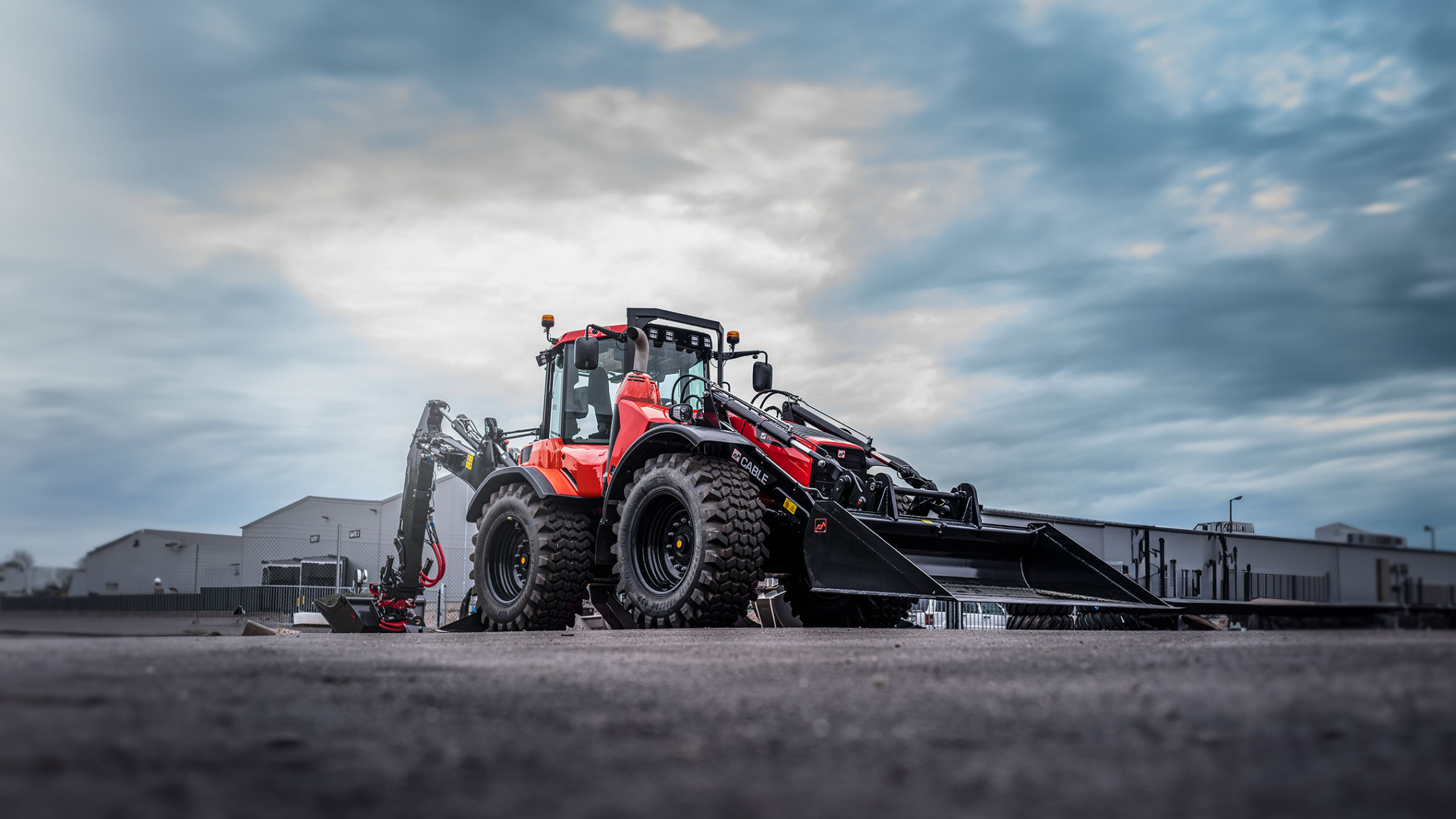
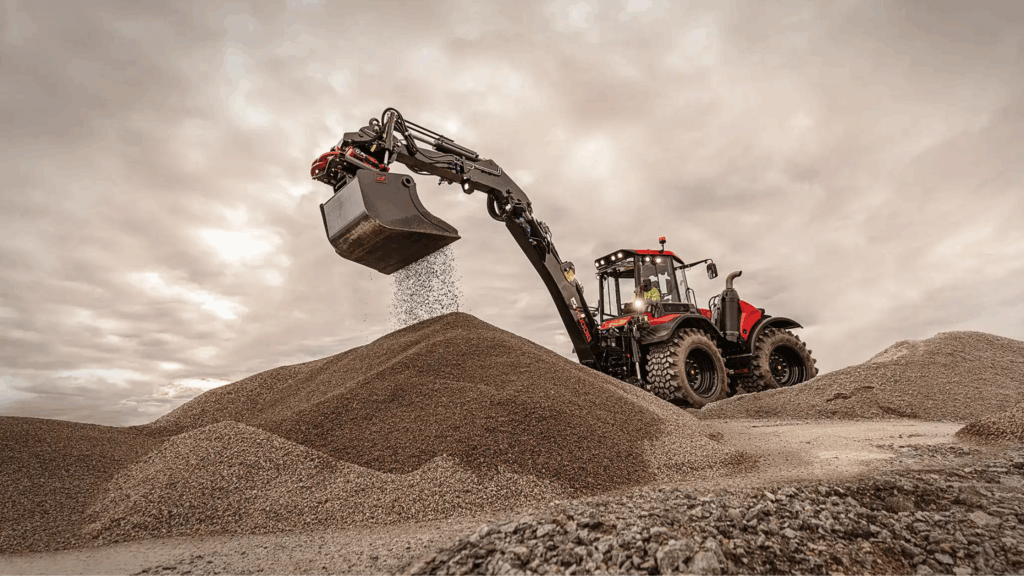
The Huddig 1370 is a machine capable of doing the work of a whole fleet. This Swedish-made powerhouse is a backhoe-loader hybrid that functions like a Swiss Army knife on wheels. It is built specifically to help contractors tackle complex jobs in rail, utility, and infrastructure while keeping costs low and efficiency high.
The biggest selling point of the Huddig 1370 is its incredible versatility. Instead of hauling an excavator, a loader, and a crane to a site, you can just bring the 1370. It can even replace up to five different machines depending on the task. This is possible thanks to the machine’s modular platform. You can switch between dozens of attachments quickly, such as:
- Snow blowers and plows for winter maintenance
- Brush cutters and mowers for roadside work
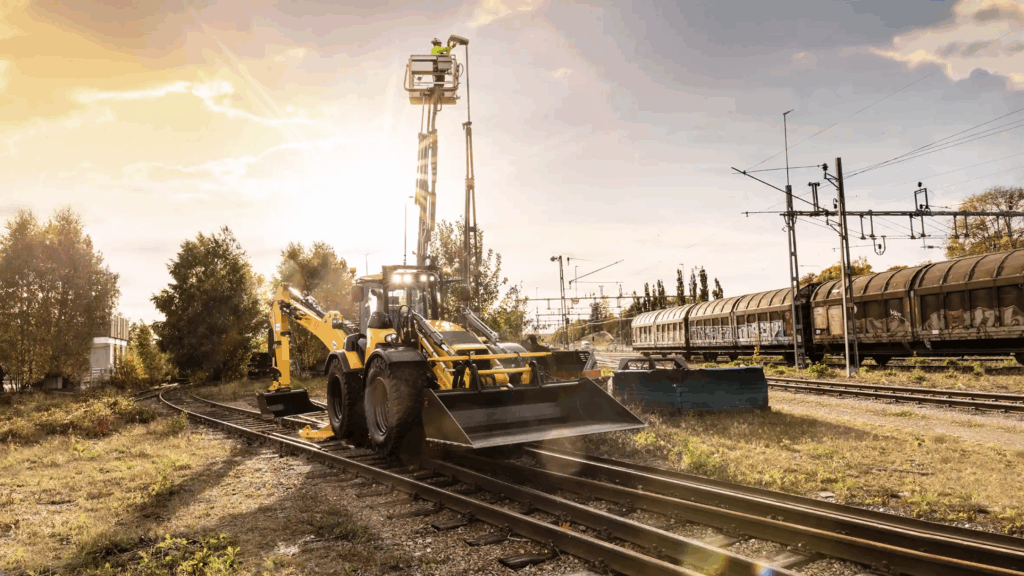
- Pole grabs and manlifts for utility work
- Rail wheels to drive directly onto train tracks
Specs that pack a punch
The Huddig 1370 has the muscle to back up its claims. Under the hood, there’s a 6.7-liter Cummins Stage V diesel engine. For crews wanting to go greener, there is also a 1370T hybrid version that can run on pure electricity for up to two hours.
Key performance specs include:
- Reach: Over 7.2 meters (about 23.6 feet)
- Lifting height: Over 4.3 meters
- Hydraulic flow: Up to 45 gallons per minute, which is enough to run almost any attachment
- Speed: It is road-legal and can travel between jobsites at up to 42 km/h (26 mph)
Where the Huddig 1370 actually makes sense
While the 1370 is a powerhouse, it is not a one-size-fits-all machine for every contractor. It really shines in specialized sectors where you usually have to juggle three or four different pieces of equipment at once. If your crew handles any of the following, this machine might be the missing piece of your fleet:
- Rail maintenance: Because it can drive directly onto tracks and run specialized rail attachments, it eliminates the need for separate hi-rail trucks and excavators.
- Utility and electrical work: If you’re setting poles or fixing lines, the integrated manlift and pole grab are essential. You can dig the hole, swap to the grab to set the pole, and then jump in the basket to finish the wiring, all with one machine.
- Municipal and winter work: For cities, this is the ultimate year-round tool. It can blow snow and salt roads in the winter, then swap to a brush cutter or backhoe for road maintenance in the summer.
- Tight urban jobsites: In crowded city centers, there’s often little room to park multiple machines. The 1370 has a small footprint and a tight turning radius, making it perfect for surgical construction where space is at a premium.
Solving the modern jobsite puzzle
The construction industry is facing major hurdles right now, such as labor shortages and the imperative to do more with less. With the Huddig 1370, you only need one operator and one machine to handle complex utility or rail projects.
Doing more with less
The skilled labor shortage isn’t just a headline; it is a daily reality on the jobsite. When you can’t find three qualified operators for three different machines, a multi-tool platform like the 1370 allows one person to do the work of a whole crew. In tight urban areas, this also solves the space problem. Instead of coordinating an entire fleet of equipment, a smaller-footprint machine can move into a crowded street, complete the job, and leave without disrupting traffic.
This all-in-one approach is also a major win for sustainability. Running one hybrid engine instead of three traditional diesel engines drastically cuts your total site emissions and fuel burn. The 1370T hybrid model is useful for indoor projects or night shifts in residential neighborhoods with strict noise restrictions or emissions requirements. For contractors, this means fewer machines to maintain and a much cleaner, quieter jobsite that meets the latest green building standards.
Slashing the bottom line
Consolidating your fleet into a single modular platform can also drop your overhead. According to technical data from Huddig, the 1370 can often replace three or more specialized machines on a single jobsite. By running fewer engines, contractors can significantly cut their daily fuel burn and maintenance costs. You are also eliminating the logistics and insurance costs of hauling a fleet of separate equipment between projects.
For example, utility crews can use the 1370 to set a new power pole single-handedly. It can dig the hole, lift the pole, and even use an integrated manlift to reach the wires without moving the base machine. On the tracks, the Rail model streamlines maintenance by easily working on and off the rails. Because it is so agile, it excels in tight urban spaces where larger equipment can’t fit.
Put simply, the Huddig 1370 helps crews spend less time transporting gear and more time doing work. Investing in one versatile machine also reduces fuel costs and billable time.
Where the Huddig 1370 hits its limits
While the 1370 is a high-performance hybrid, it’s also a specialized tool carrier, which means it may not be the right choice for high-volume, repetitive tasks where a dedicated machine is more efficient.
- Mass excavation and heavy earthmoving: If your daily goal is to move thousands of cubic yards of dirt, a dedicated 30-ton excavator will always outperform a backhoe-loader. The 1370 is built for precision and versatility, not for digging a hole as fast as possible.
- High-capacity lifting: The 1370 can handle pole setting and light crane work, but it can’t compete with the reach or weight capacity of a dedicated mobile crane or a large telehandler. For heavy structural steel or massive concrete pre-casts, you still need specialized lifting gear.
- The all-eggs-in-one-basket risk: Because the 1370 does the work of three machines, if it goes down for maintenance, you lose three functions at once. On a massive, multi-crew site, some contractors still prefer separate machines so that a single mechanical issue doesn’t halt the entire project.
- Specialized operator training: To get the most out of a machine this complex, your operator needs to be comfortable with advanced hydraulics and modular attachments. There is a steeper learning curve here than there is with a standard skid steer or a basic loader.
Key takeaways: Why operators are looking at the Huddig 1370
- Consolidates your fleet: One modular platform can replace three or four specialized machines, significantly lowering your initial investment and long-term insurance costs.
- Helps solve the labor gap: Since the 1370 handles multiple tasks, you need only one skilled operator instead of a full crew to manage multiple pieces of equipment.
- Cuts down on logistics: Save time and money by eliminating the need for multiple heavy-haul trailers to move gear between jobsites.
- Built for tight spaces: The smaller footprint and high agility make it a good fit for crowded urban streets or narrow rail corridors where larger machines can’t fit.
- Greener, quieter operation: The hybrid T-model enables zero-emission work, a major advantage for indoor projects or night shifts in residential areas with strict noise bylaws.
- Higher resale and utility: Because of its versatility, the machine stays busy year-round.
Want to keep up with the latest in heavy equipment and jobsite tech? Subscribe to our newsletter for industry news and expert reviews delivered straight to your inbox!