Digital twins aren’t just a buzzword in the AEC space—it’s changing how jobsites are managed and operate. Digital twin technology acts as a virtual mirror for buildings and equipment, helping contractors and project managers see exactly what is happening on a site in real time. That means better decisions, fewer surprises, and tighter control over projects. In this guide, we’ll break down what a digital twin actually is, how it helps teams work more accurately, and why it is a game-changer for modern jobsites.
What is a digital twin?
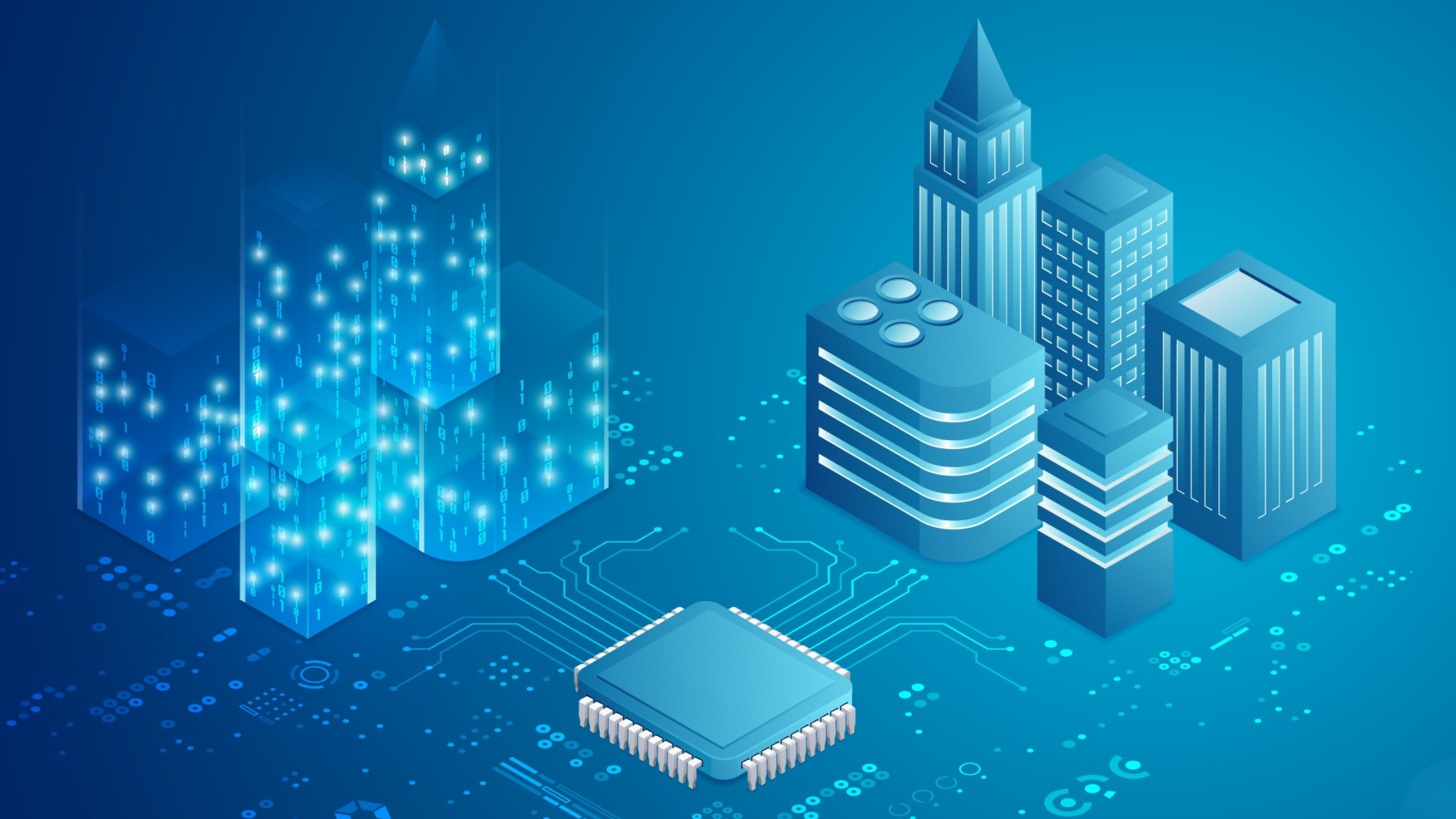
A digital twin is a virtual, living mirror of a real-world asset. It could be a replica of a single excavator, a bridge, or a 50-story skyscraper. Unlike a regular drawing or a flat blueprint, a digital twin is connected to its physical counterpart through smart sensors and Internet of Things (IoT) technology.
The most important thing to remember is that a digital twin is dynamic. It is constantly updated with real-time data from the field. If a pipe starts leaking or a room gets too hot in the real building, the digital twin shows that change immediately on your screen. It is not just a static picture, but a connected, data-driven system that lives and breathes right alongside the physical project.
How digital twins are used in construction
In construction, digital twins act as a powerful information pipeline between the office and the field. They serve several important purposes, helping projects stay on track and under budget. In construction, they’re used for:
- Tracking progress: Project managers can use a digital twin to see exactly how much work has been finished compared to the original plan. They can do this without being on-site, saving both time and travel costs.
- Monitoring performance: For building owners, the digital twin monitors things like HVAC systems and energy use, making sure every part of the building is running at peak efficiency.
- Predicting problems: Using real-time data and what-if simulations, a twin can warn of issues before they happen, preventing costly emergency repairs.
How digital twins are different from BIM or 3D modeling
Digital twins, BIM, and 3D modeling are often lumped together in construction, but they serve very different purposes on a jobsite.
- 3D modeling: This is the basic building block of digital design. It is a visual representation of an object’s shape, but it usually does not include much additional data.
- BIM (Building Information Modeling): Think of BIM as a very smart, static blueprint used for design and planning. It contains lots of data about materials and schedules, but generally represents the design intent rather than what is happening in real time.
- Digital twin: This is a live system. A digital twin pulls data from sensors, equipment, and systems to show the current state of the asset or building. While BIM helps you design and deliver a project, a digital twin helps you monitor, manage, and optimize it. The big difference is the real-world connection.
Why contractors use digital twins
Contractors are paying close attention to this technology because it offers massive benefits on every project. When people ask what a digital twin in construction is capable of, they usually find that it solves some of the industry’s oldest problems.
1. Drastic reduction in rework
By comparing the digital twin to the actual build, teams can catch mistakes early before they become expensive to fix. If a steel beam is even an inch off from the digital plan, the system flags it immediately.
- The facts: Industry research suggests that using digital twins for real-time tracking can reduce rework by up to 60%. Because the as-built data is constantly compared to the as-designed model, errors are caught in days rather than weeks.
2. Enhanced jobsite safety
Remote virtual inspections allow managers to check on hazardous areas without putting workers in danger. You can walk through a virtual version of a high-risk zone from the safety of an office trailer.
- The facts: Implementing digital twin technology for safety monitoring and virtual walkthroughs can improve site safety compliance. For example, VR simulations improve safety training by 70% and reduce workplace accidents by 45%
3. Faster and more accurate handover
At the end of a project, giving the owner a digital twin means they have a perfect as-built record. All the manuals, warranties, and maintenance schedules are already organized in one digital place.
- The facts: Traditional handovers often result in a 30% data loss from the construction to the operations phase. A digital twin eliminates this data gap, potentially reducing long-term building maintenance costs over the structure’s life.
How digital twins are used in manufacturing
In a factory setting, a digital twin acts as a precise digital mirror for an entire production line. It allows managers to test out new workflows or machine speeds in a virtual environment before moving any heavy equipment in the real world. By simulating a full shift on the digital twin, a manufacturer can identify bottlenecks and fix them without stopping production for even a second.
The most significant impact of this technology is in predictive maintenance. Instead of waiting for a part to break and halting the line, sensors on the physical machines send data to the digital twin to signal when a component is nearing the end of its life.
- Significant ROI: Research from the International Data Corporation (IDC) indicates that companies using digital twins in their manufacturing processes can achieve up to a 30% reduction in cycle time for critical processes.
- Reduced downtime: By using digital twins to predict maintenance needs, some facilities have reported a nearly 20% reduction in equipment downtime, keeping factories profitable and on schedule.
- Virtual commissioning: Engineers can now commission a new robot or conveyor belt virtually. This means they can first debug the software and the physical movements in the digital twin, reducing on-site time for the actual installation by as much as 40%.
Bottom line
Digital twins are tools that help the construction industry move from paper files to a future where data helps us build safer, more productive structures. For contractors, that changes how projects are managed, maintained, and delivered. The teams that understand this technology early won’t just keep up—they’ll set the pace.
Want to stay on top of the latest construction tech and trends? Subscribe to our newsletter to get the newest articles delivered straight to your inbox!