
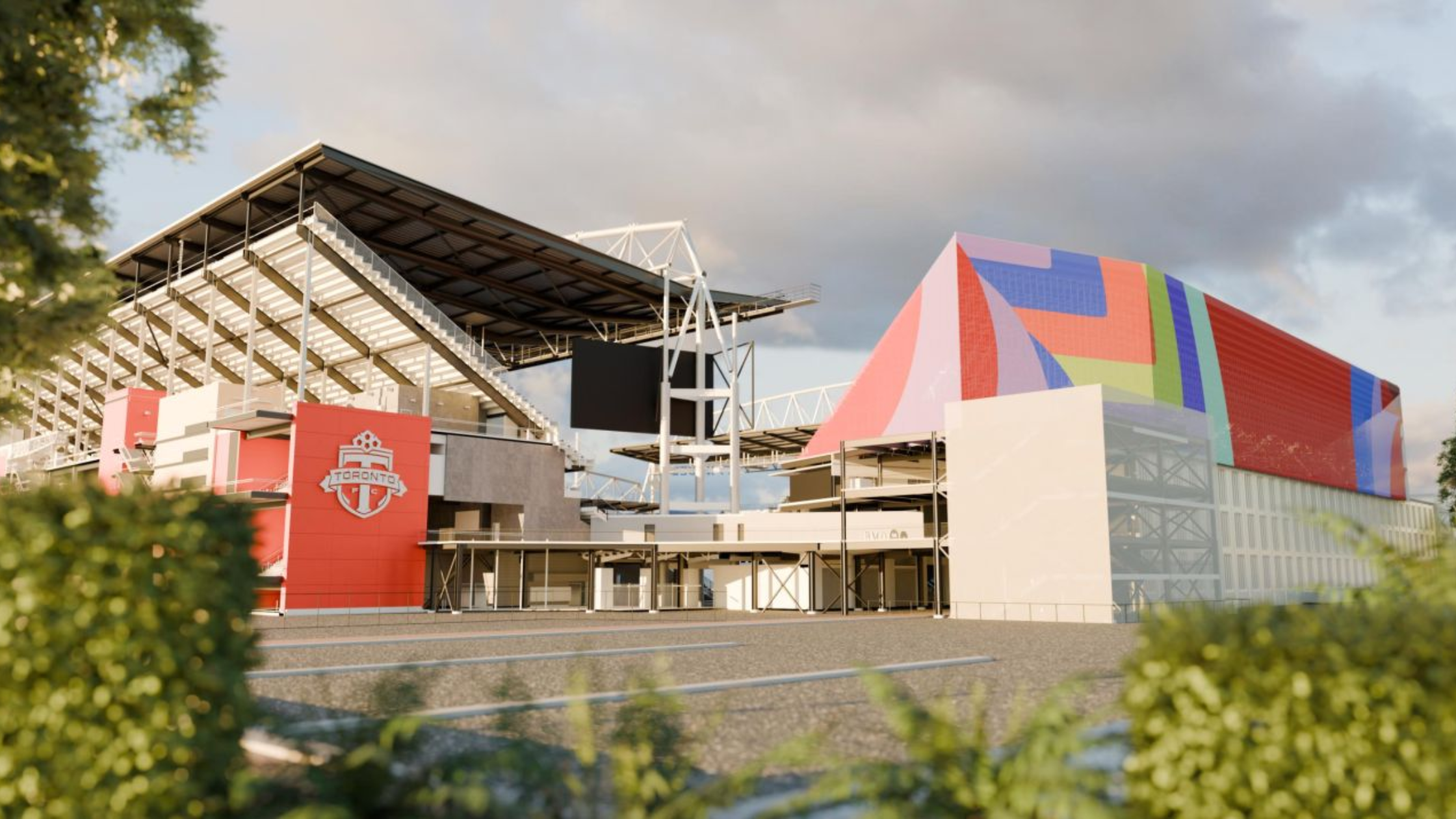
Toronto is officially ready for the world stage. The City of Toronto and Maple Leaf Sports & Entertainment (MLSE) have just finished a massive $158-million overhaul of Toronto Stadium (BMO Field) to meet strict FIFA standards for the 2026 World Cup. This project is a masterclass in how modern construction teams balance permanent legacy infrastructure with the high-stakes demands of a temporary global event.
Across North America, cities are racing to retrofit existing buildings. The 2026 World Cup will be the first to rely entirely on existing large-scale stadiums, which puts unique pressure on construction firms. In Toronto, the team had to deliver two phases of work between December 2024 and March 2026 while the stadium remained fully operational for MLS and CFL seasons.
The biggest challenge was the expansion puzzle. FIFA requires a minimum capacity of 45,000 seats, but BMO Field typically holds only about 28,000. To solve this, crews installed approximately 17,000 temporary seats on the north and south ends. These stands, designed by Arena Group, use a specialized steel scaffolding system that will be removed immediately after the tournament. It’s a massive capital spend for a short-term need, but it prevents the city from being stuck with white elephant infrastructure it doesn’t need for daily use.
The rise of fan tech
Modern stadium construction requires data as much as it does concrete. To achieve FIFA’s five-star broadcast rating, the team installed four new large-format LED videoboards with over five million pixels. They also completely rebuilt the Wi-Fi and 5G infrastructure to handle 45,000 fans simultaneously streaming and sharing.
Behind the scenes, the invisible upgrades are what make the venue world-class. This includes:
- Hybrid pitch: A new locally-grown grass field with a hybrid stitching system that reinforces the soil for better stability and recovery during back-to-back matches.
- Hospitality hubs: 32 new permanent legacy suites and a 4,000-seat hospitality area that will serve as high-end event spaces for years to come.
- Energy-efficient lighting: Upgraded LED sports presentation lighting that meets international broadcast standards while reducing energy consumption.
The temporary seating debate
While the expansion is a technical feat, there has been public pushback. When early photos of the steep, scaffolding-based stands went viral, many residents expressed fear over their structural stability and slippery steps, with one user posting, “you couldn’t pay me” to sit on them.
The City of Toronto and MLSE insist the stands are perfectly safe and meet all building codes and FIFA standards. “Arena Group, the foremost temporary seating and hospitality provider in the world, has delivered this infrastructure,” said Nick Eaves, MLSE’s chief operating officer. “They’ve done this sort of work at previous Olympics, and some of this infrastructure is going to make its way to Los Angeles for the 2028 Olympics.”
If successful, this project could serve as a blueprint for how urban centers handle the complex logistics of world-class events, blending flexible construction with high-tech integration without overextending their long-term infrastructure.
Want to stay on top of the latest AEC news and infrastructure updates? Subscribe to our newsletter to get the latest project spotlights delivered straight to your inbox!