
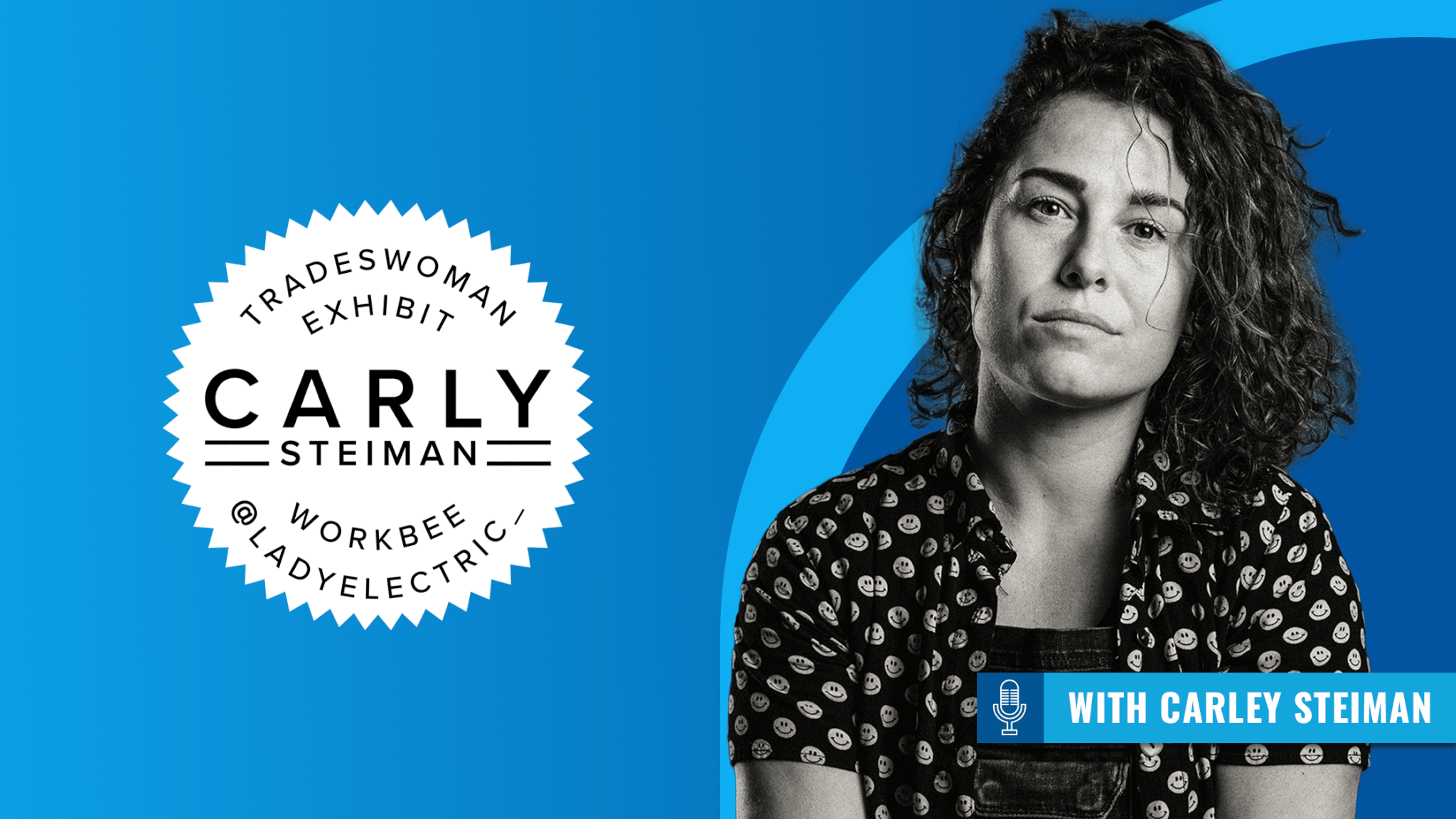
A chance encounter with a powerful photographic display at Build a Dream’s Power & Purpose Summit led us to the Tradeswoman Exhibit & National Calendar Initiative, a project that immediately dismantled everything we thought we knew about industry calendars. Carly Steiman is a licensed Red Seal electrician, but she’s also a producer, creative director, and entrepreneur using her 18 years of experience to bridge the gap between the tools and the community. We sat down with Carly to discuss the power of storytelling, the gritty reality of the trades, and her mission to protect our community’s most vulnerable through her new platform, WorkBee.
This interview has been edited for length and clarity. To see the full interview, check it out on our YouTube channel: https://youtu.be/mVzZVvfJG4U
UTHH: When I looked at your calendar, I loved how it featured real women doing real, gritty work. Why was it important to move away from polished marketing and show the actual day-to-day reality of the trades
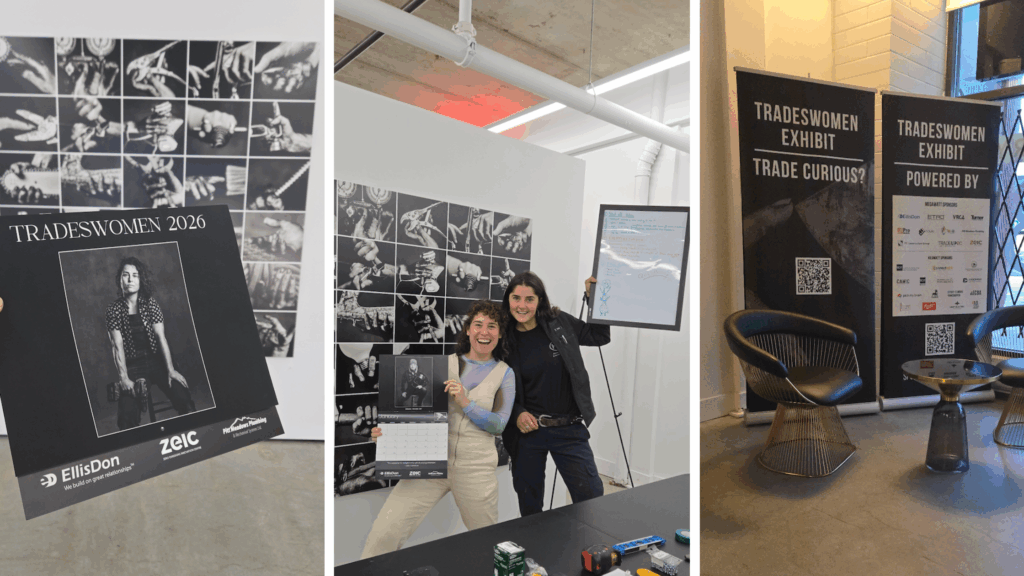
Carly Steiman: When I wanted to do the photo shoot, my initial focus was the hands. The hands of humans are so multifaceted. I had a thumb injury right before the shoot, and since so much of my livelihood comes from my hands, there was a lot of fear in that. I wanted to celebrate the hands of tradeswomen because they do so much; they nurture and hold space at home, but they also build and create.
Millissa Martin, the photographer, and I both loved the lines and the scars of our hands; they tell a story. We decided to put charcoal on our hands to make those lines more pronounced. I come from a long lineage of storytellers. I’d say the biggest fuel this last year has been spotlighting others’ stories. The calendar accentuated our stories and showed what’s possible for others.
UTHH: Have you seen a shift in how male coworkers and allies have reacted to the calendar, from a novelty perspective to becoming part of site culture?
CS: The calendar is an opportunity for seeing who actually is an ally. We need these calendars on site. Let’s get these calendars in our lunchroom. Let’s get these in our high schools. This experience has taught me that there are a lot of people who say it’s a great idea, and words matter, but actions are really the cause and effect that we need right now. We need actionable initiatives, like financial support to sponsor this project and back up the affirmations.
UTHH: You’ve become a beacon for people looking to enter the industry. Has the feedback shifted from appreciation to actual recruitment?
Carly Steiman: It’s been wild. I signed up for holiday markets thinking I’d just sell calendars, but I ended up becoming a point of contact for people to actually meet a tradeswoman. So many people came up to talk to me about their nephew or their niece who just graduated but can’t find a job and is thinking about the trades.
I realized that community members don’t always know how to access the trades. We have gateway opportunities through schools, but I tapped into a market of mid-career people at art galleries and craft markets. It showed me we need more resources to talk to the public about how to actually enter this industry.

UTHH: How does the calendar act as community infrastructure for women who might feel isolated on their jobsites?
CS: It’s been a huge community builder. I’ve had people buy the calendar for a female mechanic on an island; she reached out, and I connected her with Women On Site, which has monthly meetups. There’s also ConnectHer Hub, which is a community for apprentices. I’ve become a conduit for capturing solo female tradespeople and directing them to resources.
My experience over 18 years is that there are many funded projects for tradeswomen, but they often have a two or three-year timeline. Once the funding is gone, they ghost. We don’t need one-and-done resources; we need consistency and long-term partnerships.
UTHH: Only about 33% of women complete their full certification. As a Red Seal electrician, what was the biggest hurdle you faced in the final stretch?
CS: I’m an anomaly because I had very supportive parents, but I still had to hustle. For this exhibit and calendar, I stopped my business for six months and took a financial hit. The profit for me was in building community awareness and storytelling.
For retention, we need community building and events. Organizations often ask me to be a mentor, but none of them provide funding or incentives for my time. Most tradeswomen are working so hard just to make ends meet. We need tools that help us sustain ourselves in the long term; self-care is part of that.
UTHH: Let’s talk about Workbee. You’ve mentioned that the name actually has deep historical roots?
CS: Yes! The origin of the word “Workbee” actually comes from small farming towns where people would come together to take care of big projects, like a spelling bee or a husking bee. It’s not about the beehive; it’s about more hands coming together to make light work.
UTHH: You’re focusing heavily on the residential sector and supporting elders. What sparked that mission?
CS: I’ve done residential service for 18 years, and I’ve seen the bottlenecks in our healthcare system. I have a Bubbie in Montreal and a dad in Toronto; I know how much work it is to support them so they don’t have to go into long-term care.
In Vancouver, the waitlist for long-term care is on average four to six months, and the average single-dwelling home takes 230 hours a year to maintain. We need preventative maintenance to keep elders from tripping and to keep their homes in good shape. Workbee is starting with caring, competent individuals in the residential sector. I have a 30-minute onboarding video where they learn my values and “Home Etiquette 101.” You have the privilege of going into someone’s home, so you have to uphold respect and have training.
UTHH: If a young woman is looking at your calendar tonight and picking up tools tomorrow, what is the gritty truth she needs to know for her first week?
CS: Embrace mistakes. Failure is part of the learning process, and we should have grace when experiencing it. We need gentler rhetoric about messing up. You’re going to mess up, and it might cost a little money, but it’s not going to cost an arm and a leg as long as you stay safe. The apprenticeship experience is all about getting feedback and redoing something until it’s right.
UTHH: What’s one specific change you want to see in the apprenticeship system?
CS: Rotation. I hear about many apprentices who only focus on one specific aspect of the trade and then get their license without a broad range of expertise. In nursing, you have to work in every department in the hospital. I think every trade should have that requirement.
Also, industry leaders need to align with sampler programs and have federal financial support to onboard new apprentices. Also, don’t hire one woman, hire five. When you’re the only one, you can feel alone and unsafe. Building a community within your company is how you improve retention.
For more info on Carly’s projects:
- The Tradeswoman Exhibit: Follow the tour and grab one of the remaining 2026 calendars.
- Workbee: If you are an adult child navigating home maintenance for your parents, check out the survey and subscription tiers here.
- Connect: Follow Carly Steiman for updates on her upcoming cross-Canada art gallery tour.
Want more stories from the women building our cities? Subscribe to our newsletter for the latest AEC interviews and industry insights!