
Reducing barriers to electric off-highway adoption
The adoption of electric vehicles has been slow across the board due to several factors, including high upfront costs, uncertainty about long-term performance, and rapidly evolving technology. Volvo Penta and Volvo Financial Services (VFS) aim to address this issue by introducing a new leasing model that transforms how contractors and fleet operators invest in electric equipment—reducing upfront costs and shifting financial risk away from the buyer.
So far, electrification has struggled to gain widespread traction across the industry, largely because contractors are hesitant to make hefty investments in an uncertain, rapidly evolving market. Volvo Penta and VFS are attempting to change that by introducing a new model that relies on leasing, making electrification far more accessible and lowering the barrier to entry for those interested in electrification but haven’t been able to commit.
A shift from ownership to access
The partnership offers a bundled model that combines electric drivelines, service contracts, insurance, and long-term leasing into a single package. This reduces risk and eliminates the need for high capital investments, enabling contractors to easily adopt electrification and sign up for a more manageable, predictable model.
For many contractors, this changes the game, making electrification a real possibility. Rather than taking on a huge purchase, contractors can budget more effectively, adopt new technology with lower risk, and remain competitive as demands for sustainability increase.
“Leasing electric equipment is an attractive option for end customers while the technology evolves rapidly and the upfront investment remains higher than for traditional combustion engine equipment,” said Jeroen Overvelde, area sales manager, Volvo Penta Industrial. “Now that we have developed this financial solution, we will bring this approach to other segments, markets, OEMs, and customers, supporting the transition to sustainable transport solutions and making electrification more accessible for customers.”
Real-world application: DFDS rollout
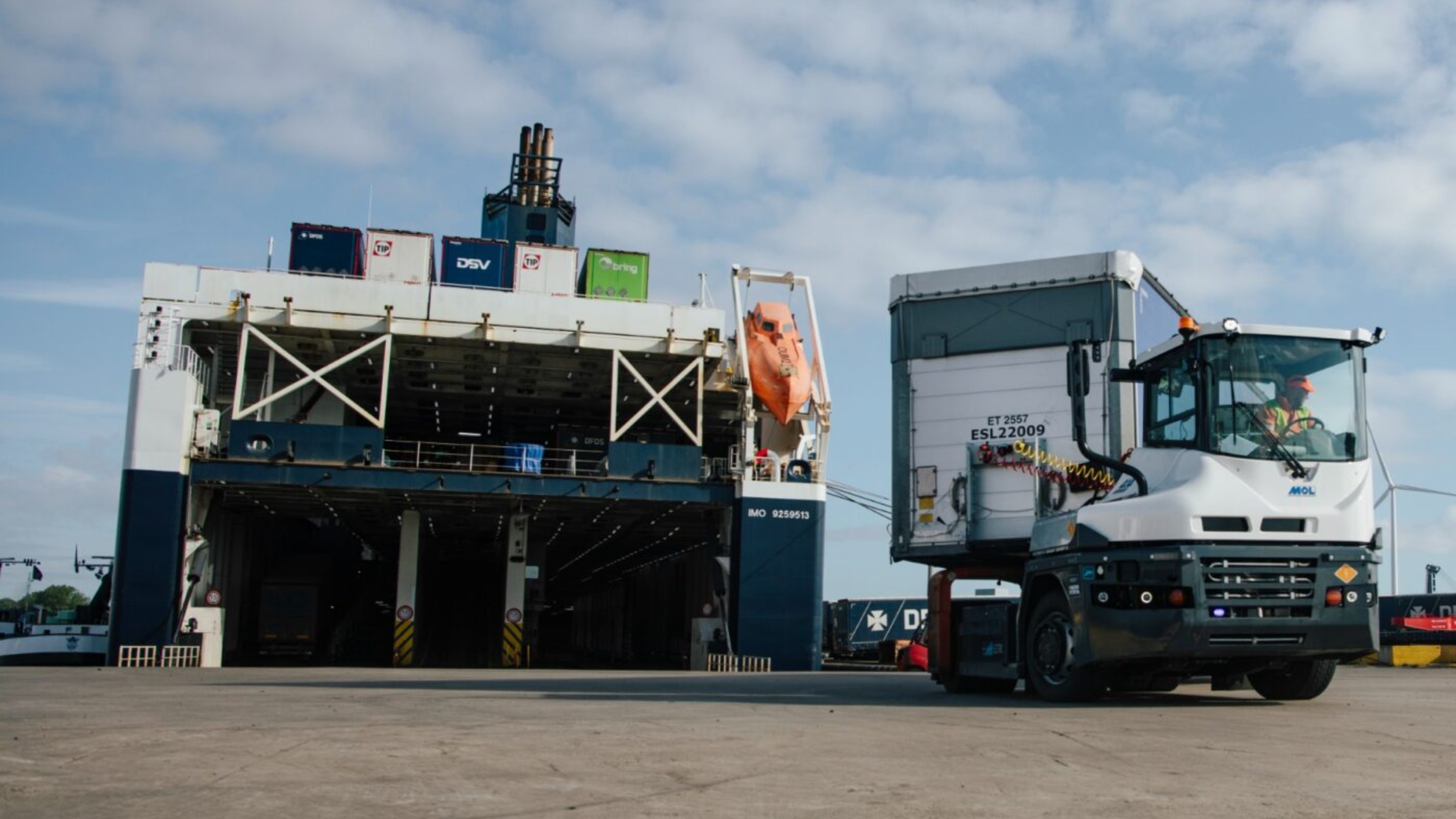
This model is already being put into practice through a partnership with DFDA, which is supporting the transition of 280 diesel-powered terminal tractors to electric off-highway vehicles.
DFDS entered into a seven-year lease agreement that includes six MOL RME225 RoRo tractors, powered by Volvo Penta electric drivelines and supported by Volvo Penta service contracts to ensure preventative maintenance and VFS insurance coverage.
This partnership builds on an existing collaboration between Volvo Penta and MOL, which began in 2021 with the development of the world’s first operational electric 4×4 RoRo tractor. The prototype then made its way to the DFDS terminal in Ghent, Belgium, where it became a vital part of daily operations and handled operational tasks for over a year.
In addition to reducing emissions, the 4×4 RoRo tractor offers less vibration and quieter operation, improving work conditions in high-traffic or confined environments.
The partnership reflects a broader trend in how equipment is being sold and adopted. Instead of offering only new machines, manufacturers are increasingly bundling technology, financing, and service into integrated solutions that provide greater flexibility for contractors. It’s a major shift that could transform how fleets are built and managed, moving away from ownership toward more flexible, service-based models.
What this means for contractors
For contractors, this introduces a new way of thinking about fleet management. It’s no longer just about owning equipment—it’s about having the ability to scale, adapt to shifting project demands, and adopt new technology without the risk associated with long-term commitments.
Electrification is going beyond new equipment to focus on new ways of operating—helping contractors adopt new business models while managing, paying for, and scaling equipment. As financing, service, and technology become increasingly integrated into total solutions, Volvo Penta and VFS are helping more companies adopt electric equipment without incurring excessive risk.
Stay connected with the latest updates on electric off-highway adoption by subscribing to our weekly newsletter and following us on LinkedIn.