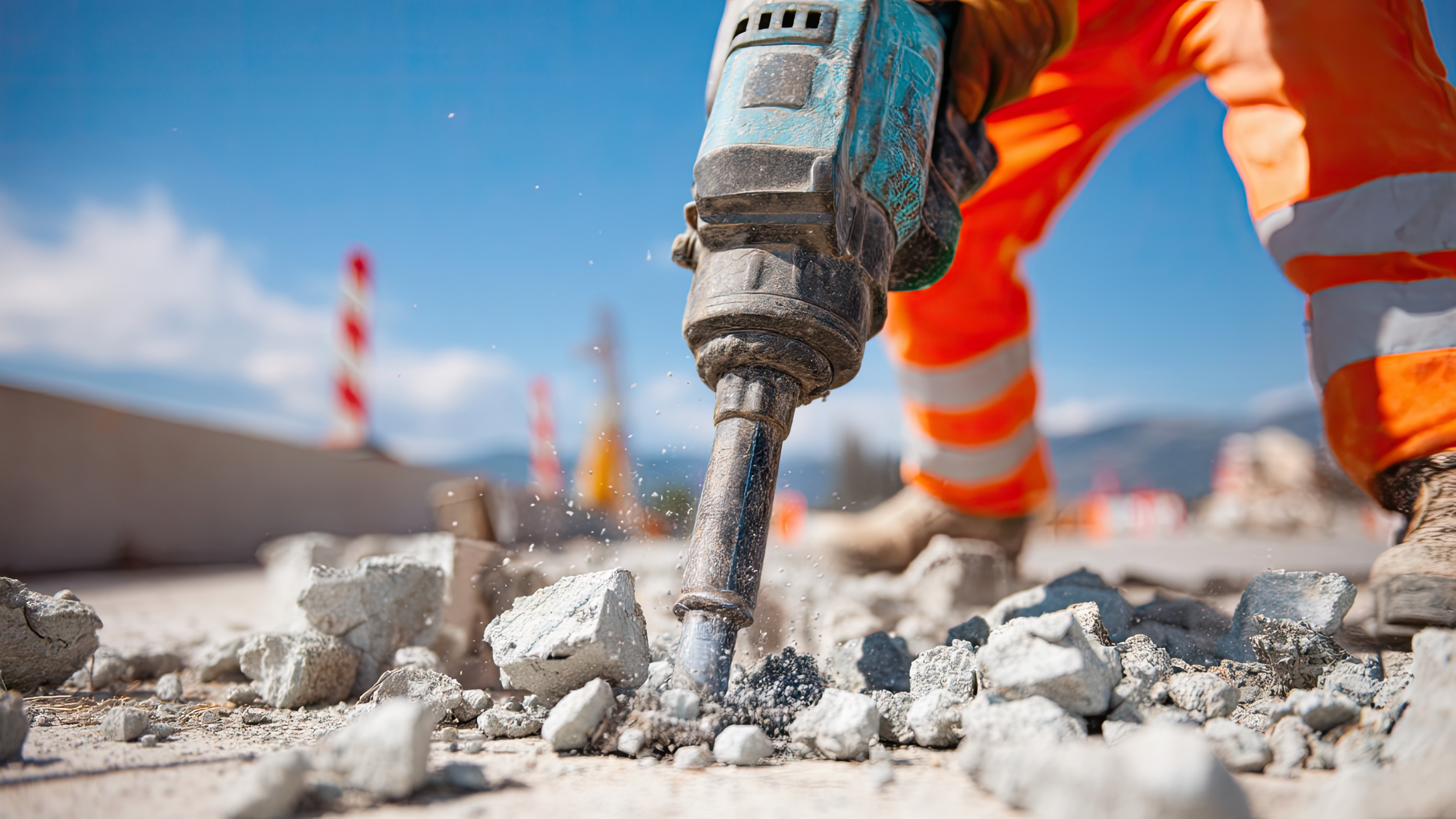
If you’ve spent any time using power tools, you know the feeling—the buzz in your hands after running a grinder or the numbness that sticks around after using a jackhammer or drill for hours. Most people shake it off and keep going. Vibration exposure is one of the most overlooked risks on a jobsite. Unlike falls or cuts, vibration doesn’t cause an immediate injury. Instead, it builds quietly—day after day, tool after tool. Over time, constant exposure wears down the body in ways that are harder to reverse. Left unmanaged, it can lead to long-term damage that affects how you work—and whether you can keep working at all.
What vibration exposure does to your body
Vibration exposure sneaks up on you—it’s not about a single marathon session on a power tool. It’s about the gradual, repeated exposure you get from using those tools. Before you know it, the damage starts showing up in a big way, often in your hands and arms first, especially when you’re working with handheld power tools. The National Institute for Occupational Safety and Health (NIOSH) classifies hand-arm vibration syndrome as an occupational illness associated with repeated exposure to vibrating tools, affecting circulation and nerve function in the hands.
Nerves
Vibration starts to affect the nerves that control how we feel things and how we move our bodies. At first, the warning signs are easy to brush off. You might occasionally catch a few moments of tingling or numbness, or that “pins and needles” sensation that comes and goes. But the longer you’re exposed to it, the more that feeling can become permanent. As time goes on, nerve damage gets worse, and people often find themselves slowly losing feeling in their fingers, eventually leading to the loss of grip strength. The National Institute for Occupational Safety and Health notes that prolonged exposure can lead to permanent nerve damage, especially when symptoms are ignored early on.
Circulation
Vibration also affects blood flow—it reduces circulation, especially in cold weather. Fingers may turn white or pale, then blue, and feel numb or painful. Over time, these episodes can become more frequent and severe.
According to the Health and Safety Executive, prolonged exposure to vibration can damage blood vessels in the hands, reduce circulation, and, over time, lead to permanent symptoms such as vibration white finger. Cold conditions make this worse. Workers handling vibrating tools in winter are at higher risk because the body is already trying to conserve heat by reducing blood flow to the hands.
Muscles and joints
Things continue to get worse from there—the strain from constant vibration isn’t limited to nerves and blood flow. It continues through your hands and up into your wrists, elbows, and even your shoulders. The constant stress takes a toll on your joints over time, leaving you with pain, stiffness, and reduced mobility. Your muscles get tired faster, take longer to recover, and it’s not uncommon for people to get repetitive strain injuries. The longer the exposure, the harder it becomes for the body to recover between shifts. What starts as soreness can turn into chronic pain that affects daily work.
Why vibration damage is overlooked
Vibration exposure rarely gets the same attention as other jobsite risks. Part of that comes down to how common it is. Using vibrating tools is seen as part of the job, which makes it easy to ignore. The effects also take time to show up. There’s no single incident to point to. No clear cause-and-effect moment. Symptoms build gradually, making them easier to dismiss.
The issue is also hidden from view. Many construction safety hazards are clear signs of trouble, such as a fall or cut. Vibration-related damage isn’t quite so obvious. You can’t spot nerve damage or reduced circulation. In fact, workers may not even start noticing symptoms until they’ve already progressed. When it comes to safety, most places focus on the immediate dangers—guardrails, fall protection, PPE—which are all easy to spot and enforce.
But vibration exposure is a bit different. that requires a more proactive approach—managing the exposure before the symptoms ever appear. That means tweaking the way work gets done rather than just reacting after the fact. This is especially important on busy sites where getting the job done on time is the top priority.
Where the risk shows up
Vibration exposure isn’t limited to a single trade or tool. It shows up across the industry. Jackhammers, grinders, impact drills, compactors, saws—any tool that vibrates can contribute. The risk increases with frequency of use, not just how long a single task lasts. Someone using a tool for short periods throughout the day may still build up significant exposure over time.
There are a few conditions that make the risk worse:
- Continuous tool use without breaks: Long stretches on vibrating equipment increase strain on nerves and circulation.
- Cold weather: Reduced blood flow intensifies the effects of vibration.
- Tight grip force: Holding tools too tightly transfers more vibration into the hands and arms.
- Poorly maintained equipment: Worn or unbalanced tools produce higher vibration levels.
It’s not always obvious who is most at risk. A worker rotating between tasks may still face high exposure if those tasks involve repeated use of tools. That’s what makes it harder to track—and easier to underestimate.

How to reduce exposure to vibration
Reducing vibration exposure doesn’t require major changes. Small adjustments can make a noticeable difference over time.
Here are practical ways to limit exposure:
- Rotate tasks throughout the day
Switching gears from one type of work to another (if possible) gives your body a break from the constant vibration. Even a short breather can make a big difference in how your body feels by the end of the day. - Limit time on high-vibration tools
Setting informal limits on how long you use certain tools can help prevent overexposure. - Use anti-vibration gloves
These gloves can help absorb some of the vibration before it reaches the hands. They won’t eliminate exposure, but they can reduce the intensity. - Maintain and replace tools regularly
Worn tools vibrate more. Keeping equipment in good condition lowers vibration levels and makes tools easier to handle. - Avoid excessive grip force
Holding tools more tightly than necessary increases the amount of vibration transmitted to the body. A controlled grip can reduce strain. - Keep your hands warm
If the job is taking place in cold conditions, a pair of insulated gloves and proper layers can help keep the blood flowing. When your hands are warm, they’re less likely to get circulation problems. - Take short, regular breaks
Short breaks can make a huge difference in how your hands and arms feel. Get up, stretch, shake out your hands—whatever you need to do to get a bit of a breather. - Choose lower-vibration tools when possible
Some tools, like those from DEWALT’s lineup of SHOCKS ACTIVE VIBRATION CONTROL®, reduce the amount of vibration felt by the user at the handles. When available, they can make a meaningful difference over time.
These steps don’t eliminate the risk, but they reduce the strain that builds up over time.
Why this matters for contractors and work crews
Vibration exposure is a health issue, but it doesn’t stop there. When workers begin to lose grip strength or develop numbness in their hands, it affects their work performance. Tasks take longer to do, precision goes out the window, and mistakes start to happen more often.
There is the safety angle to consider as well—when your hands start to go numb, it makes it much harder to spot potential hazards or control tools. Over time, that slows the whole crew down. Work needs to get re-assigned, and in some cases, you’ll see experienced workers having to step back from certain tasks, or worse, leave the trade altogether. With an industry already dealing with a shortage of skilled labor, semi-preventable long-term injuries can exacerbate the problem.
There’s also a shift happening in how health is viewed on-site. More attention is being paid to long-term conditions, not just to immediate injuries. Issues such as vibration exposure, repetitive strain, and fatigue are gaining greater recognition. For contractors, addressing these risks early can help keep crews working longer and reduce the impact of long-term injuries.
It’s not always about big changes. Often, it’s the small adjustments—task rotation, better tools, short breaks—that make the difference over time. Vibration exposure may not feel urgent in the moment. But it builds. And once the damage is done, it’s hard to reverse.
If you want more practical breakdowns like this—focused on the realities of working in construction—join the Under the Hard Hat newsletter.