A long career in the trades is a test of endurance—but the industry doesn’t often break workers in a single dramatic moment. Wear happens slowly, building through thousands of small movements that eventually wear your body down. This guide is for anyone who’s dealt with or is dealing with repetitive strain injuries and wants to fix the problem before it becomes a permanent medical issue, as well as the contractor who understands a healthy crew is a productive one. We’re moving past the old advice of just taking an aspirin and looking at how you can change your daily habits to stay strong and mobile for decades.
Most people imagine a workplace injury as a sudden fall from a ladder or a heavy object dropping on a foot. However, serious accidents are less common than the slow buildup of wear and tear. A repetitive strain injury starts as a minor annoyance; you might feel a little tightness in your shoulder after a long day of overhead drilling, or your knees might feel a bit crunchy when you stand up from the floor.
Because these symptoms don’t necessarily stop you from working right away, it’s easy to normalize them as a standard part of the grind. However, these small signals are your body’s way of telling you that the soft tissues around your joints are being overloaded. If you don’t change how you move, that tightness can turn into chronic inflammation or permanent joint damage that requires surgery later in life.
Taking care of your joints and muscles is a professional skill that keeps you on the payroll. You’d never let a million-dollar excavator run without changing the oil; you shouldn’t let your body run until it breaks down. Using proper gear, stretching, and adjusting your posture are tools just as important as your hammer or drill. When you treat your physical health as a business asset, you can keep working and earning at a high level for your entire career.
The numbers back this up. Musculoskeletal injuries are one of the most common injuries in construction, and the time off associated with these injuries runs into weeks or months, not days. For contractors managing tight schedules and even tighter budgets, it’s not just a health issue. It’s a project risk.
Where repetitive strain injuries show up
Repetitive strain doesn’t affect every worker the same way, but most injuries cluster in four specific areas. Understanding what causes the stress in these zones is the only way to change your habits before pain becomes permanent.
Knees
Your knees usually take the brunt of the work in the trades, especially if you spend a lot of time on the floor. Constantly kneeling on hard surfaces like concrete puts massive pressure on the patella and the small fluid sacs around it (bursae). Over time, this can lead to bursitis or even a total loss of cartilage. Climbing ladders also puts a heavy vertical load on the joint, which can wear down the meniscus. If you feel a sharp twinge when you squat or a dull ache after a long day of climbing, your knees are telling you that they’ve reached their limit.
Back
The lower back is the most common site for long-term disability in construction. Most back issues result from improper lifting combined with twisting positions. For example, leaning over to install a pipe or electrical equipment while your feet are stationary forces your spine to rotate under load. This twist-and-lift motion is a leading cause of herniated discs. Even if the weight you’re lifting feels light, doing it hundreds of times in an awkward position creates micro-injuries that eventually lead to a total blowout.
Shoulders
Shoulder injuries are common for anyone who has to work overhead. Holding a heavy drill or a piece of drywall above your head for long periods traps the tendons in your shoulder against the bone. This is often called impingement. Reaching into awkward gaps or stretching your arms too far to reach a fastener also strains the rotator cuff. Because the shoulder is a complex ball-and-socket joint, once it’s damaged, it can take a long time to heal correctly.
Hands and wrists
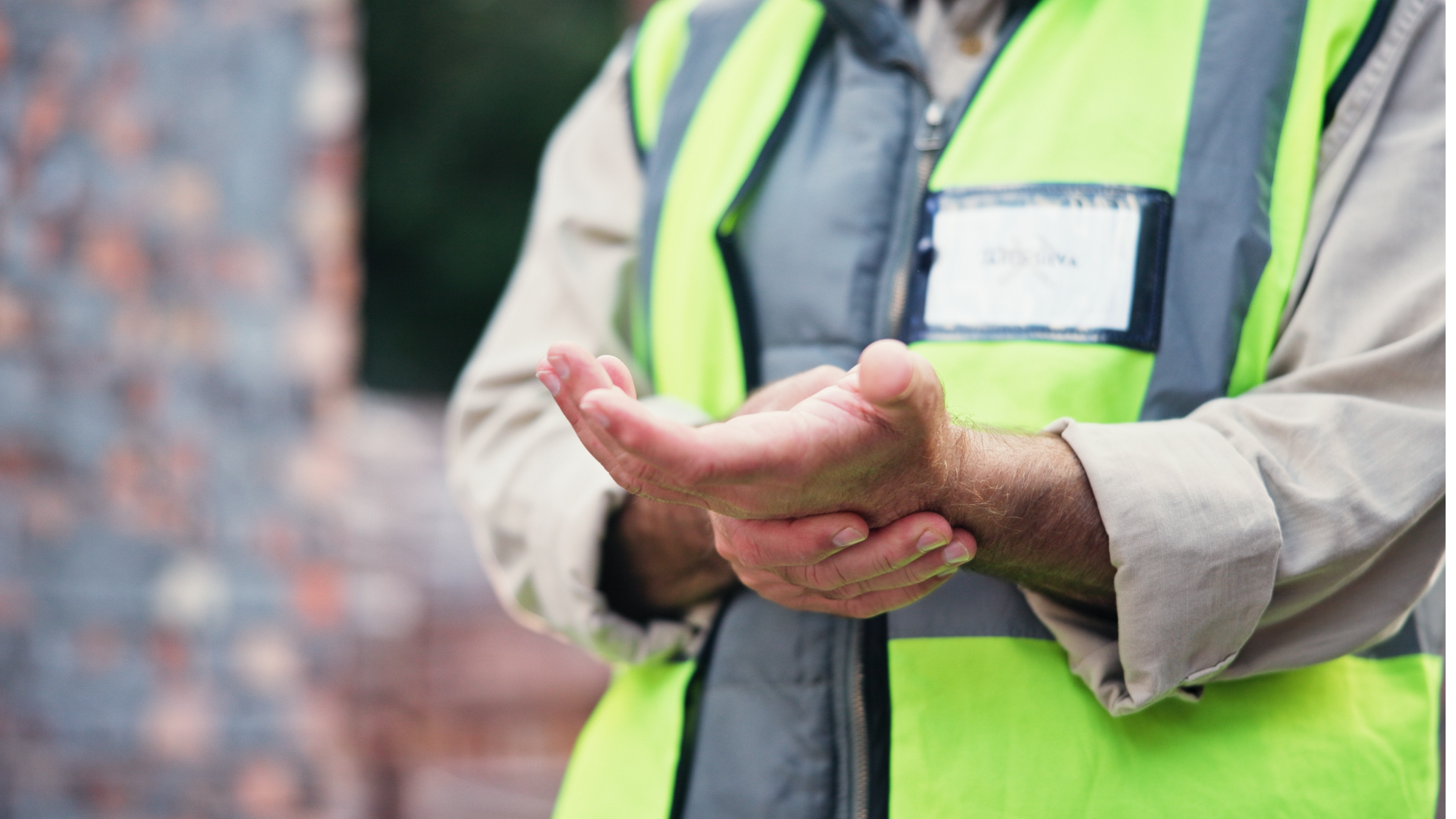
Your hands and wrists are the most valuable tools you own, but they’re also quite fragile. Repetitive strain in this area usually comes down to two main factors: vibration and constant grip force. Running power tools like grinders or jackhammers for hours can slowly damage the tiny nerves and blood vessels in your palms. On top of that, the steady pressure needed to squeeze hand tools or lug heavy materials can lead to painful carpal tunnel syndrome or tendonitis. If you start feeling a strange tingling in your fingers or notice your grip strength is fading, it’s a sign that your nerves are being compressed.
Why it gets worse
Injuries don’t usually become career-ending because of a single event. They get worse because of a cycle of poor habits and a workplace culture that often values speed over health.
Insufficient recovery
The biggest problem with repetitive strain is that the same muscles and joints are stressed every single day. When you perform the same movement for eight hours and then return to do it again the next morning, your body never gets to repair the tiny tears in your tissue. This leads to chronic inflammation. Over weeks and months, that constant swelling begins to weaken the tendons and ligaments, making a major injury much more likely.
The work through it culture
In construction, there’s a heavy pressure to man up and keep working regardless of how you feel. Many workers hide their symptoms or use pain medication to mask the ache because they don’t want to seem weak or let their crew down. This culture of silence is dangerous. By the time the pain is too great to hide, the damage is often so severe that it requires surgery or long-term physical therapy to fix.
Lack of early intervention
Waiting for a total physical breakdown is the most expensive way to handle an injury—for workers and for contractors. Many workers avoid the doctor because they fear being told to take time off, so they push through the injury until the damage is so severe that they’re forced to. Catching a repetitive strain issue early usually means small adjustments to gear or posture. Waiting until you can’t lift your arm or walk without a limp means surgery, time off the job, and in many cases, a permanent change in what you can and can’t do on site.

Long-term impact
Ignoring joint pain might help you finish a project today, but it can steal your ability to work and enjoy life in the future.
Career longevity
Your body is your most important tool; if it breaks, your earning power disappears with it. Many tradespeople are forced into early retirement or lower-paying desk jobs because their knees or backs can no longer keep up with the physical demands of the job. Protecting your joints now is the only way to ensure you can stay in the field and keep earning until you’re ready to retire on your own terms.
Quality of life
The impact of a trade injury doesn’t stop once you clock out. Chronic pain can make it difficult to play with your kids, enjoy a hobby, or even get a good night’s sleep. When you protect your body on the job, you’re making sure you have the energy and mobility to enjoy your life outside of work.
Financial reality
Chronic joint pain or a serious repetitive strain injury can threaten your ability to stay in the field. For most tradespeople, being sidelined means a total loss of income for the duration of the recovery.
- Lost wages: A bad injury can knock a professional out of commission for months. In 2024, work-related injuries across the country cost a total of $181.4 billion, and almost $55 billion of that was just from lost productivity and missed paychecks. By the time you add up the doctor visits, paperwork, and the money you didn’t make while sitting at home, a single injury often ends up costing around $48,000.
- The cost of physical therapy: Specialized rehabilitation is rarely cheap. Without insurance, a standard physical therapy session generally costs between $75 and $150. For a condition like a rotator cuff injury, which can take up to six months for full recovery, the total cost for therapy can easily reach $3,500 or more.
- The price of surgery: If conservative treatments fail, surgery may be the only option. In 2025, the average cash price for carpal tunnel surgery is approximately $6,928 per hand. Depending on your state, an outpatient hospital procedure for this surgery can range from $2,900 to over $4,200.
- Reduced career longevity: The real financial hit comes from an early retirement. Musculoskeletal disorders (MSDs) are a primary source of lost-time claims, often representing 30% of cases. If chronic pain forces you to leave the tools five or ten years earlier than planned, you’re potentially leaving hundreds of thousands of dollars in career earnings on the table.
| Injury type | Common recovery time | Estimated out-of-pocket cost (uninsured) |
| Lower back strain | 2 – 4 weeks | $400 – $800 |
| Carpal tunnel surgery | 6 – 12 weeks | $2,500 – $7,000+ |
| Rotator cuff repair | 4 – 6 months | $3,500 – $20,000+ |
How to prevent long-term injuries
You can reduce your risk of injury significantly without working less by making your task approach more body-friendly.
Task rotation
Try to avoid using the same muscle group for eight hours straight. If you have the option, rotate between different types of tasks throughout the day. For example, if you spend the morning kneeling to install floor tiles, try to spend the afternoon doing wall work or layout. This shift gives your knees a break and forces different muscles to take over the load without overload.
The right tool for the job
Using mechanical advantage is one of the smartest ways to protect your joints. This might mean using a cart to move heavy materials instead of carrying them, or using a lighter, brushless power tool to reduce the weight on your wrist. If a tool exists that can do the heavy lifting for you, use it. Your goal should be to accomplish the task with as little physical force as possible.
Better lifting habits
Most people know they should lift with their legs, but close-body lifting is just as important. Keep the object as close to your torso as possible to reduce the leverage on your lower back. Most importantly, avoid the twist-and-lift move at all costs. Always move your feet to turn your whole body rather than twisting your spine while holding a heavy load.
Support gear
Investing in the right protective gear is one of the smartest ways to keep your body from breaking down over time. Professional safety equipment is designed to absorb the shock and pressure that would otherwise go straight into your bones and nerves.
- Top-tier knee pads: Look for gel or foam inserts that actually cushion the joint when you are working on concrete.
- Supportive boots: High-quality footwear with solid arch support keeps your entire skeletal system aligned.
- Anti-vibration gloves: These are critical tools for dampening the impact of power tools and protecting the nerves in your hands.
Listening to signs
Learn the difference between muscle soreness and joint pain. Muscle soreness usually feels like a dull ache and goes away after a day or two of rest—that’s your body adapting to heightened activity. Joint pain is different. It’s often sharp, localized, and doesn’t improve with rest. Numbness, tingling, and loss of grip strength are tell-tale signals that something is being compressed or damaged. If a symptom is persistent, that’s your body telling you something specific—don’t ignore it.
Why this matters for contractors and industry workers
When a crew is healthy, the entire project runs more smoothly, and the bottom line stays strong.
Operational efficiency and reliability
A healthy crew is fast and reliable. When your team isn’t struggling with stiff joints or back pain, they can move through tasks with more energy and focus. On the other hand, a team plagued by injuries often has to deal with light-duty restrictions, which means certain people can’t lift, climb, or reach as needed. This forces the rest of the crew to pick up the slack, leading to burnout and costly mistakes.
Retention and the high cost of injury
It takes years to build the deep skill and field knowledge that a lead hand or senior tech brings to the jobsite. Replacing that person is both expensive and time-consuming for any company. When you prioritize smart body mechanics and the right gear, your most valuable assets can stay in the field much longer. High retention rates mean you spend less of your day training new hires and more of your time finishing high-quality work.
Insurance and liability
In the AEC industry, an injury can quickly become a liability event. When you or a member of your crew gets hurt due to repetitive strain or a preventable accident, it triggers a chain reaction that can affect the company’s ability to win future work.
- Workers’ compensation premiums: Your insurance rates depend heavily on your safety record, specifically your Experience Modification Rate (EMR). This number compares your claim history against the industry average. If frequent musculoskeletal injuries push your EMR above 1.0, you will get hit with a premium surcharge. In some cases, this means paying 20% to 50% more than the standard base rate just to keep your coverage active.
- Impact on bidding: Project owners and general contractors often use your EMR as a quick screening tool to see if you are a liability. Having a rating over 1.0 can get a subcontractor disqualified from bidding on commercial or government jobs before the conversation even starts. If you are looking to work in high-hazard sectors like petrochemicals, the rules are even tighter, often requiring a rate of 0.85 or lower just to get on the bid list.
- The “hidden” costs of liability: Every time you pay out a dollar for a direct medical claim, you can count on spending roughly four times that amount on indirect expenses. You have to factor in the hours lost to accident investigations, the cost of training a new person to fill the gap, and the inevitable dip in your crew’s productivity. Beyond that, ignoring ergonomic hazards is a quick way to land an OSHA fine. Since those penalties max out at $16,131 per serious violation as of 2024, it is clear that simple prevention is a lot cheaper than a citation.
- Personal liability and disability insurance: If you are self-employed, your personal disability insurance is your only safety net. For tradespeople, this coverage typically costs 1% to 3% of your annual income. For example, if you earn $100,000, you can expect to pay between $83 and $250 per month for a policy that protects your “own-occupation” income.
Staying on project timelines
Unexpected worker absences are a massive threat to any project timeline. A sudden back injury or a flare-up of carpal tunnel can pull a key person off the job for weeks without any warning. These gaps in the crew lead to missed deadlines, which can trigger late-completion penalties and seriously hurt your reputation with clients. Prioritizing prevention is the only way to cut down on the sick days caused by physical strain and keep your projects moving toward the finish line, on schedule.
Your body is the most important tool on site. For more practical tips and guides on staying healthy and productive in the field, subscribe to the Under the Hard Hat newsletter.