Trade shows like CONEXPO are going through a major change. They aren’t just places to stare at big machines anymore; they’re the spot where contractors go to see how that iron actually fits into a real-world operation. If you look at the new Merlo City experience, it is easy to see how the whole industry is shifting toward immersive, storytelling-based booths that value discovery over a list of basic specs.
Big expos make it incredibly hard for companies to stand out. With so many machines on the show floor, one excavator eventually starts to look like the next. On the flip side, some manufacturers are finding that they don’t need bigger machines; they need a better experience.
We‘re starting to see a shift away from the old-school, static booths in favor of interactive setups that encourage participation. It used to be that you would walk past a machine, pick up a brochure, and keep walking. These days, companies are trying much harder to get engagement by using walkthroughs and storytelling to show exactly how a piece of equipment handles real work, rather than just letting it sit there on a carpet.
For contractors, this shift matters beyond the trade show floor. When equipment manufacturers can actually show how their machines handle real-world conditions, it changes the purchasing game. A spec sheet can show what the machine can do; an immersive experience shows if the machine will fit with the way their crew works.
A case study in Merlo City
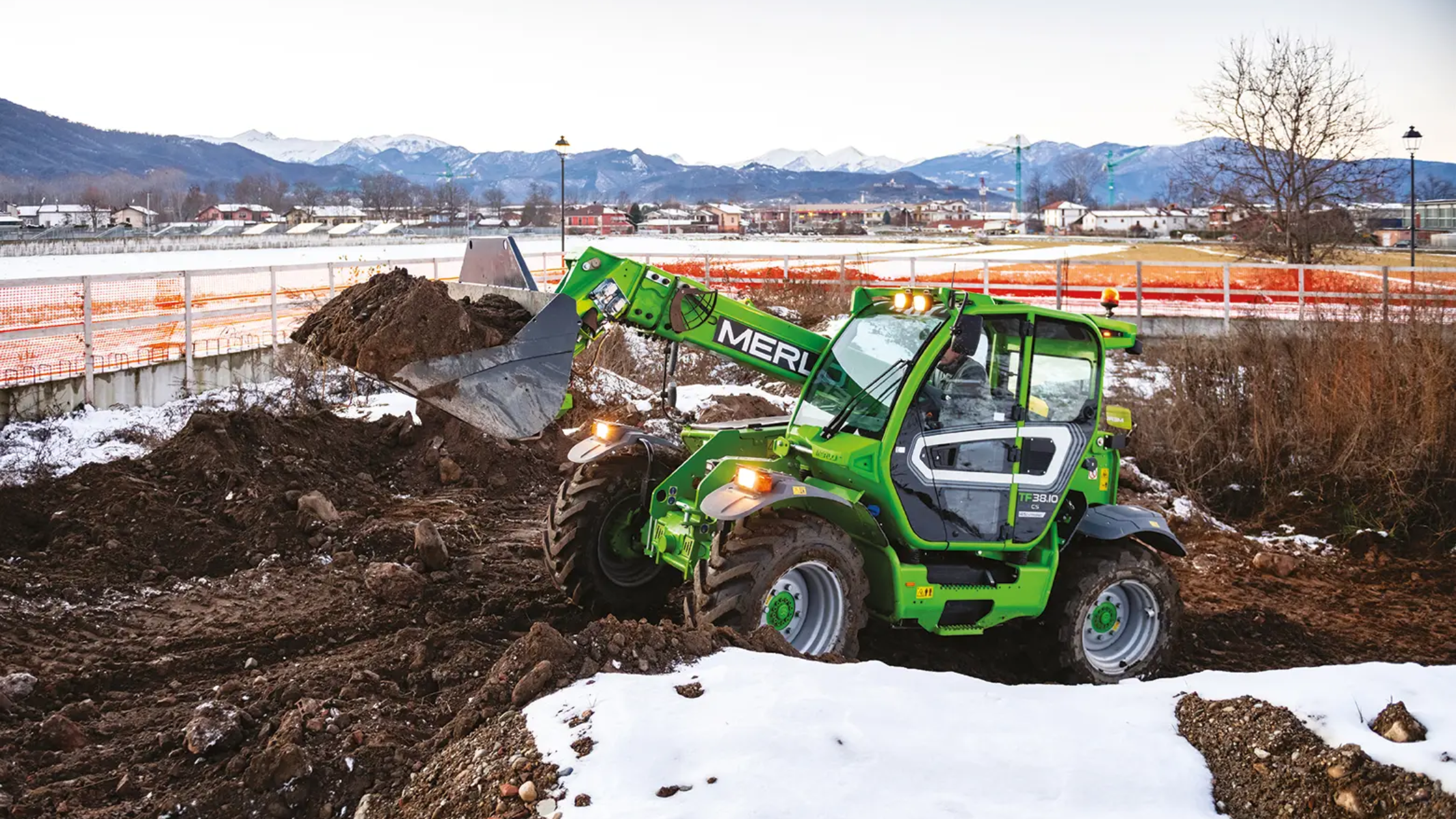
Merlo America is a perfect example of this new strategy. For CONEXPO 2026, they created Merlo City, an immersive layout that let attendees experience the brand in a totally new way.
One of the big highlights was a professional-grade racing simulator challenge. Attendees went head-to-head with INDY NXT driver James Roe to see if they had the same focus and precision required to operate a machine on a busy jobsite. While it was a high-energy game concept, it connected the feeling of precision control with the engineering of their telehandlers.
This is a smart angle for a brand competing in a saturated market. Rather than trying to out-spec competitors, Merlo used their experience to show what it feels like to operate one of their machines. It’s something that’s significantly more memorable than a piece of paper.
Why this matters for crews
Construction machines are getting more complicated than they used to be. If you are looking to buy or operate one, you need to see the big picture, not just a list of technical specs. Most contractors are looking for versatility and clear proof of how a machine handles different jobs; you want to know if one piece of equipment can actually do the work of three.
At this point, it is not just the iron being sold; it’s the capability. By building out an immersive city environment, Merlo showed exactly how a telehandler works as a multi-use platform. For example, Merlo showed off an integrated attachment recognition system that automatically updates load charts when you swap tools. This helps you understand how to slim down your fleet, cut overhead, and take on specific tasks that might have been passed up in the past.
Fleet consolidation is one of the biggest levers in the industry right now. Contractors are looking for ways to reduce costs, cut maintenance, and streamline schedules—and fewer machines is the quickest path to get there. When a manufacturer can show that a single machine can do the work of three, it moves from a trade-show conversation to a business case.
Shifting perceptions on the jobsite
People are starting to view machines as adaptable, multi-use tools rather than single-use iron. This mirrors a larger industry trend toward efficiency and fleet consolidation. When a manufacturer like Merlo uses an immersive booth to show how quickly workers can switch attachments or maneuver in tight spaces, it helps construction leaders rethink what’s possible on their next project.
Contractors are changing the way they look, evaluate, and buy equipment. For more coverage on the technology, trends, and events shaping construction, subscribe to our newsletter.