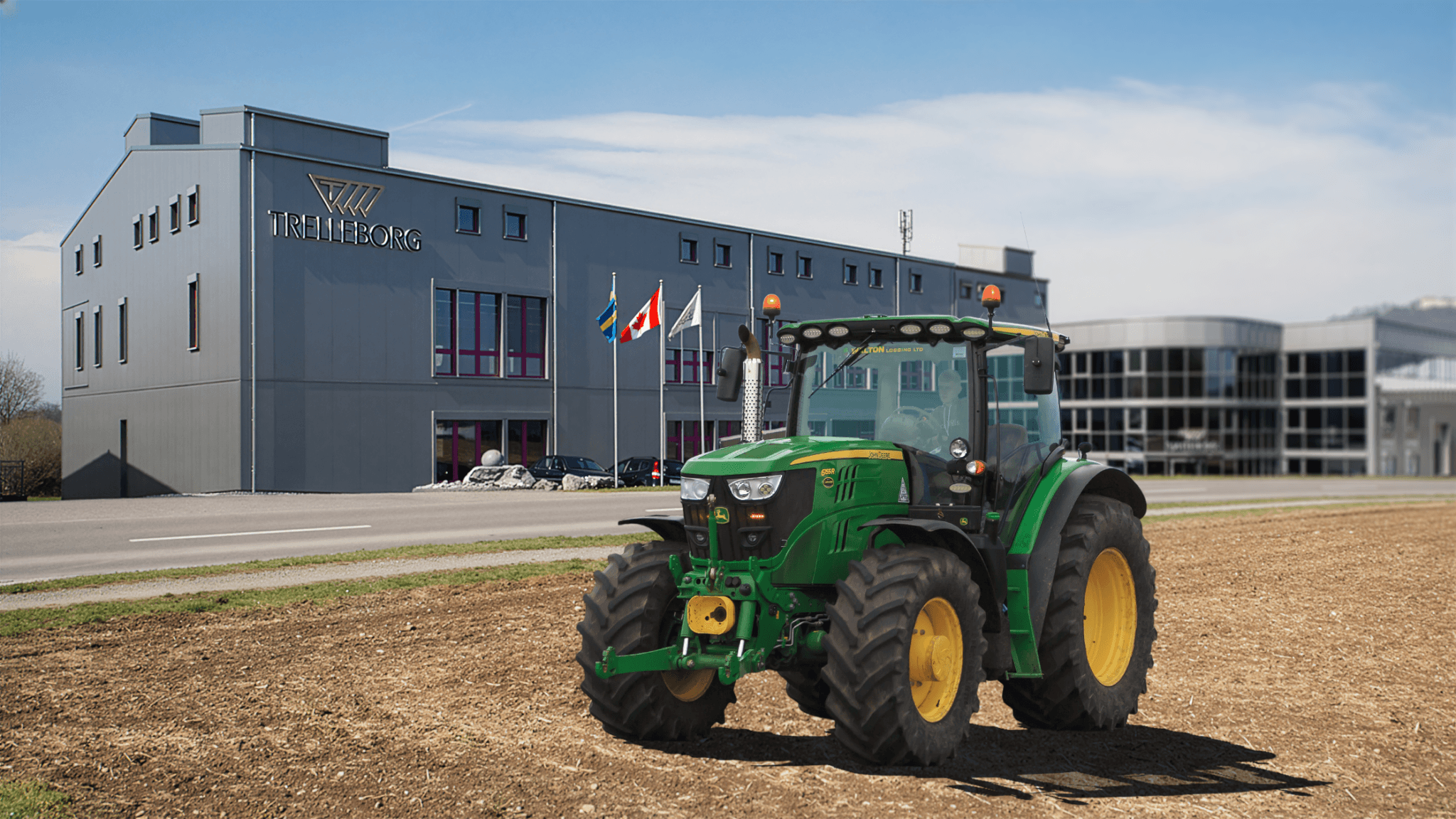
Trelleborg Sealing Solutions has been awarded partner-level supplier status for 2025 in the John Deere Achieving Excellence Program—the highest recognition John Deere awards. This might seem like a simple supplier achievement, but it’s actually quite a prestigious recognition. It’s also a testament to how closely equipment performance factors are now tied to the supply chain’s performance. Trelleborg supplies all sorts of sealing parts—components of axles, transmissions, engines, and hydraulic systems. Sealing parts may not be flashy, but without them, the machine grinds to a halt. It’s not just about how good the products are; it’s about whether they’re delivered on time, how well they’re serviced, and how they continue to improve them for the long haul.
To put this achievement into context: This title is given to a very small percentage of suppliers who consistently demonstrate “world-class” performance across quality, delivery, and continuous improvement. This isn’t given to any company that has a strong year—it’s for companies that have a demonstrated track record.
Why supplier performance is now tied to machine reliability
Heavy equipment has undergone a significant shift—systems have become more intertwined, tolerances are razor-thin, and machines are expected to go much longer between service intervals. As a result, the value of every component, even the ones you can’t see, has increased dramatically.
Take seals, for example. They’re responsible for allowing fluids to circulate in hydraulic systems, protecting engine components, and maintaining proper pressure in transmissions. If a seal gives out early or doesn’t do the job it’s supposed to do, things start to go sideways pretty quickly. A leak in the hydraulics can bring the whole operation to a halt. A dodgy transmission can put a loader out of commission. Something that starts as a minor problem with a small part can end up costing you a whole day’s work and the financial impact that comes with that.
Stats back this up. Hydraulic system failures are a leading cause of project delays and increased costs in construction and mining. With unplanned downtime costs running from thousands to tens of thousands per hour, most companies can’t afford to take a machine off the field. Put simply, a seal that costs a few hundred dollars to fix can actually end up costing ten times that in downtime.
The connection between these problems is becoming much clearer. The quality of suppliers now directly impacts how reliable the machines are, how often they need servicing, and how long it takes before they require major repairs.
Original Equipment Manufacturers (OEMs) rely heavily on their suppliers to maintain this level of consistency. One weak link can bring the whole system crashing down. That’s why programs like John Deere’s Achieving Excellence Program place such a strong emphasis on long-term results rather than one-off achievements.
Partner-level status means a supplier has proven it can deliver at a high level across multiple areas—quality, delivery, and improvement. It also means the supplier can support production without creating variability. That consistency has direct financial impacts on the people using the machines.
The cost of inconsistency in today’s equipment market
Downtime has always been a financial killer, but nowadays it’s an even bigger problem to swallow. Builders and contractors are counting on their equipment to keep running all day and night and get their jobs done on schedule. That makes it a real inconvenience when gear goes down—productivity screeches to a halt, crews sit around, and costs keep piling up.
That’s where supplier performance shows up for contractors, even if they never see it directly. A machine built with consistent components tends to run predictably. Service intervals are easier to plan. Failures are less frequent. A machine built with inconsistent inputs is harder to manage. Small variations can lead to early wear or unexpected breakdowns.
Fleet strategy is shifting as a result. Equipment is no longer treated as a short-term tool. Replacement costs are higher, and lead times are longer. Trucks and machines are being kept in service longer, which makes durability more important. Reducing wear and extending service life is now part of protecting capital. Supplier consistency plays a big role in that, as it affects how long components last and how often they need attention.
There’s also heightened scrutiny over where components come from and how they’re assembled. OEMs are getting tough with their suppliers—upping the ante on performance, closely monitoring progress, and constantly working to reduce risk—essentially tightening their grip across the entire supply chain.
Two shifts that are evident:
- There’s a growing focus on regional supply networks—a move that translates into reduced delays and improved visibility.
- Greater emphasis is placed on the manufacturing backbone—ensuring that supply chains can absorb disruption without compromising quality or consistency.
These changes aren’t theoretical. They affect how machines are built and how they perform once they reach the jobsite.
Trelleborg’s Partner-level recognition is a clear indicator of a broader shift. Supplier performance is no longer just a minor afterthought; it’s now a major part of a machine’s reliability—a guarantee of consistent quality and on-time delivery. For OEMs, this means partnering with suppliers who can deliver on time, and for contractors, it means equipment that can go the distance, stay productive, and make fewer trips to the repair shop.
As machines get more complex and expectations keep growing, so too will the connection between supplier performance and field performance.
Final thoughts
Awards like this reflect more than just strong ties with suppliers; they show how reliability doesn’t start on the jobsite. Reliability starts in the supply chain, long before the machine shows up on site. For contractors and fleet managers, the components of machines they’ll never see are the ones that have the greatest impact on uptime and productivity.
Supplier performance is shaping how machines hold up in the field—impacting uptime, maintenance, and long-term costs in ways that are easy to overlook. For more coverage on the shifts affecting equipment, fleets, and jobsite performance, subscribe to the Under the Hard Hat newsletter and follow us on LinkedIn.