For contractors across Canada, that means on-site training and support from someone who’s been running these machines longer than most operators have been on a jobsite.
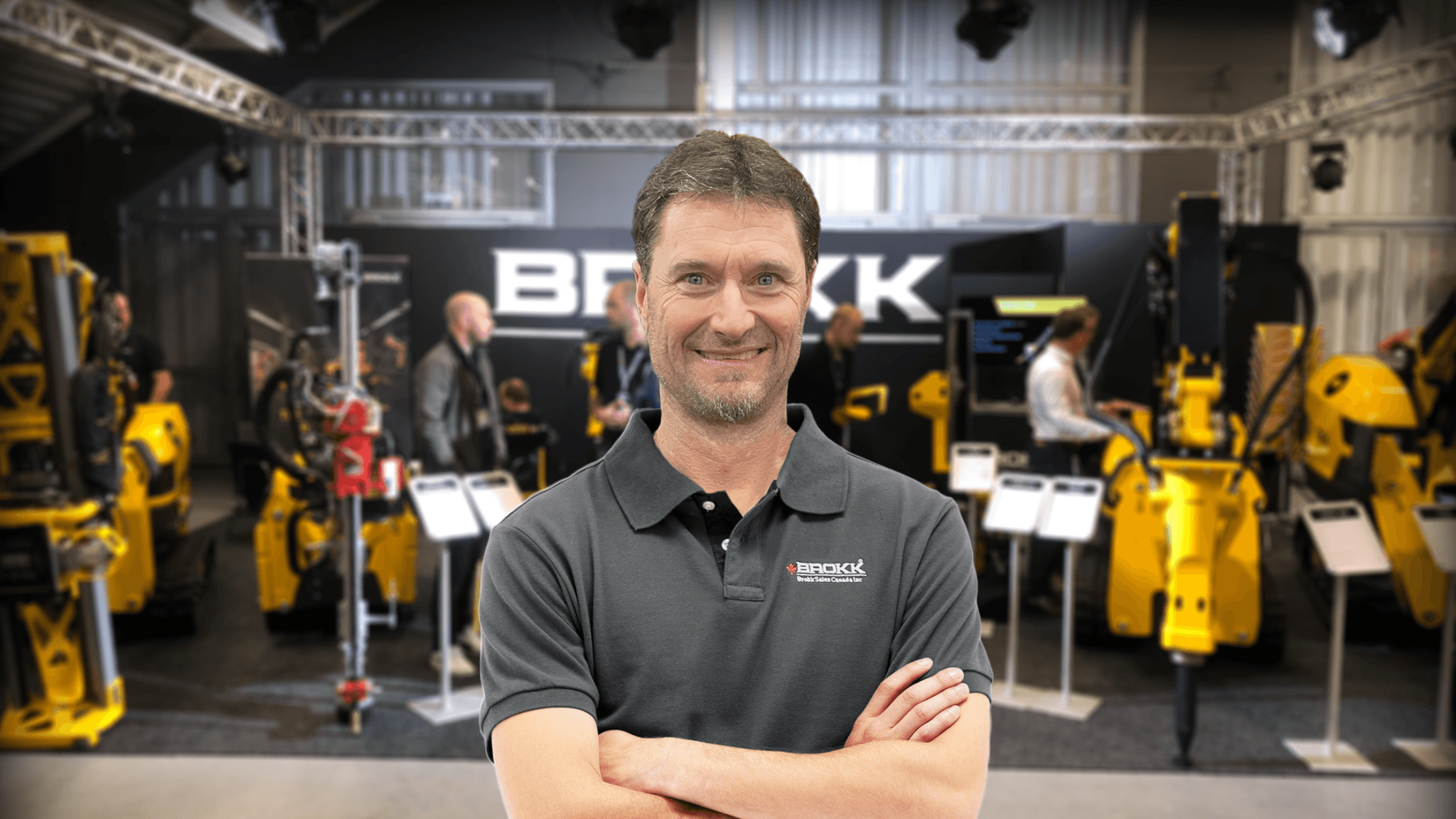
Canadian contractors are adopting remote-controlled technology in the demolition space faster than most teams can build the proficiency to use it to its full potential on the jobsite. Brokk, the Swedish manufacturer behind some of the most widely used electric and remote-controlled demolition robots on the market, is addressing this gap by appointing long-time Brokk equipment operator Aaron Wilcox as its training and application specialist in Canada.
Wilcox, based in Ontario, will focus on serving customers nationwide through on-site operator training sessions and after-sales support, including helping clients access spare parts. He will also be responsible for commissioning new machines and teaching operators to maintain and safely operate demolition robots.
Wilcox’s hire is part of a broader push into the Canadian demolition market. In 2024, Brokk opened its Hamilton, ON, distribution center to streamline order and shipment processing for Canadian customers. Wilcox is the next step in that expansion. He is the boots-on-the-ground who makes sure contractors aren’t just getting the machines faster but also making the most of them.

According to Wilcox, while Brokk machines have been around for 50 years, many teams may not have encountered them before unless they’ve already identified a specific use case, which means they’ll need support and assistance.
“Aaron has spent most of his career with a control box in his hands,” said Lars Lindgren, president of Brokk Inc. “He knows the ins and outs of the machines and how to work safely and effectively in different applications. Along with his deep knowledge, customers will appreciate his high-energy approach to ensuring they are up and running.”
His experience with Brokk demolition robots dates back to the 90s. Wilcox began his career with a contractor and early adopter of the electric, remote-controlled technology, and spent years working with the equipment for refractory demolition while also tackling long-term crane projects and other responsibilities like handling shutdown jobs.
“I started as a Brokk operator back in the late 90s, and they’ve come a long way,” Wilcox said. “Everything is extremely user-friendly now with all the new technology, wireless ability, like wireless remote capability, and in addition [to] our track and boom feature, where an operator can actually run the tracks and operate the boom at the same time. I always see a smile on every operator’s face whenever I see them master that operation.”
For Wilcox, one of the most interesting aspects of his new role is that he gets to introduce clients with different challenges to new machines, including machines of different sizes, and teach them to work with site limitations.
“There’s a whole new world of opportunity out there for our loyal Brokk users that maybe they haven’t quite opened themselves up to yet,” he said. “I’m excited.”
In terms of challenges for operators, Wilcox believes that not knowing the full capabilities of the machines is one of the biggest hurdles for teams to overcome. He says startup training is “paramount,” and he makes sure to follow up with clients even after the sale—he works with operators on topics such as specialty techniques, features, safety, and equipment maintenance.
“If somebody hires a new operator, they may only get the basic operating skills handed down to them from a fellow co-worker,” he said. “But if I can step in, I can actually show them all the bells and whistles.”
Training sessions involve a few steps: maintenance and care, electrical safety, machine operation, and an overview of the new SmartPower+ technology. Trainees operate the Brokk and perform a variety of functions to get a feel for the machine. They’re also introduced to different attachments so they can get the most out of their Brokk. A typical training session takes between 6 and 8 hours, depending on the number of trainees. “If the contractor wants training on the jobsite, I can consult on special techniques to maintain safe operation and increase production during the project,” Wilcox explained.

Before operating equipment himself, Wilcox served as a safety watch for a Brokk operator, focusing on making sure projects proceeded smoothly without a hitch. He has also worked with a variety of models, ranging from the original Brokk 250 to the newest generation, SmartPower+, which equips him to help contractors familiarize themselves with remote-controlled demolition technology.
“Brokk machines have always had a piece of my heart,” Wilcox said. “I’ve been working with them for decades, and they almost feel like an extension of myself. It’s a privilege to go out to customer jobsites and teach them what I’ve learned over the years, so they can achieve excellent safety and maximum profitability.”
For contractors already running Brokk equipment, Wilcox serves as a direct resource. The technology has been on Canadian job sites for decades, but now there’s someone whose entire job is to make sure operators know how to maximize its use.
Remote-controlled demolition is reshaping how Canadian contractors work. For more coverage on the technology, equipment, and people driving that shift, subscribe to the Under the Hard Hat newsletter and follow us on LinkedIn.