
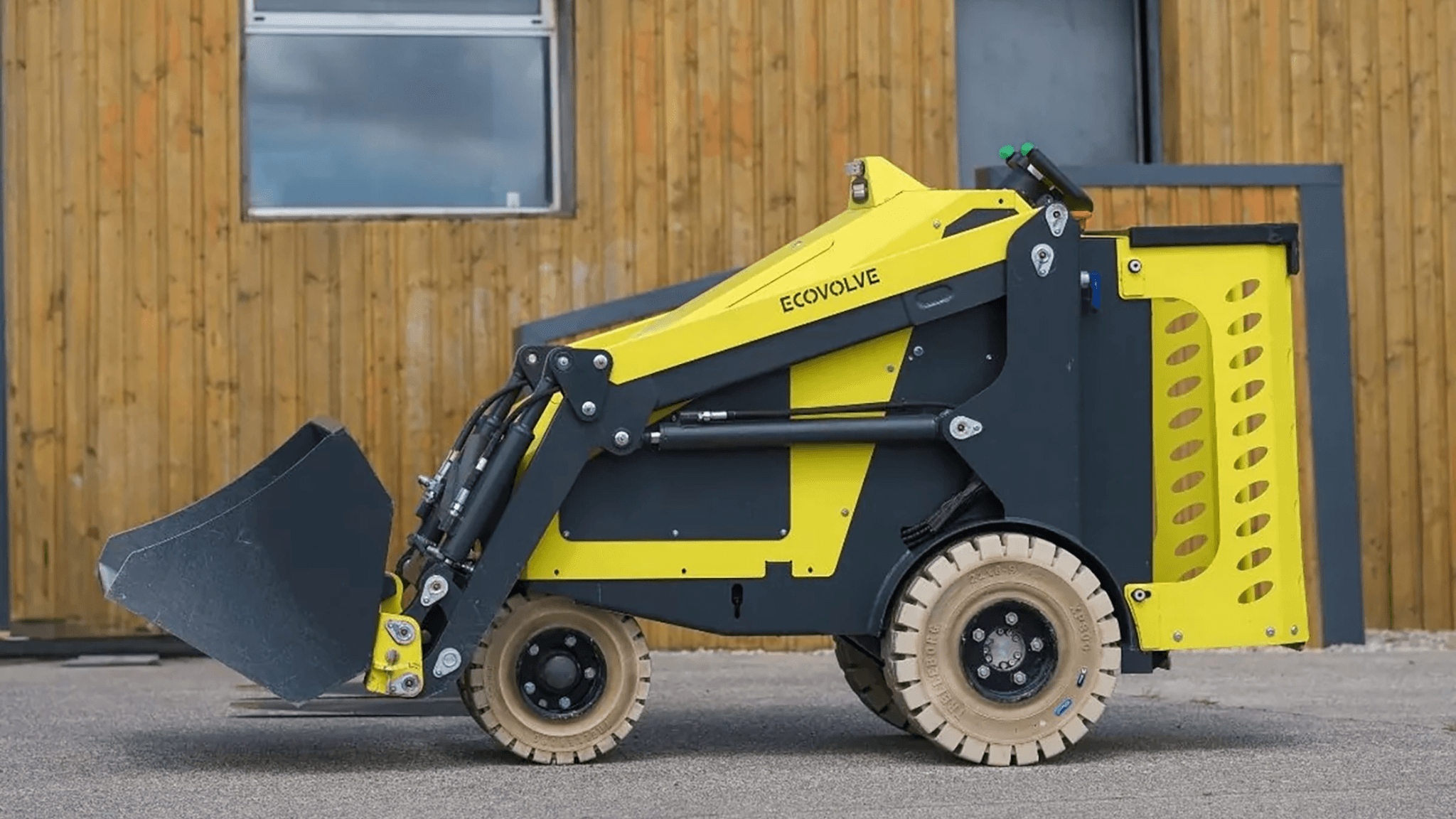
Battery-powered compact loaders are moving from niche to practical—and the Ecovolve EL500 is one of the clearest signals that electric equipment is finding its way in North American construction
Electric equipment is currently shifting from a niche pick to an accessible, practical choice across many jobsite applications. Compact loaders, in particular, have emerged as a strong fit for electrification and are a category where this shift is progressing fastest.
One example of this trend in North America is the launch of Brokk’s Ecovolve EL500 Electric Mini Loader. The mini loader, designed as an emission-free solution for construction and demolition jobsites, operates in spaces where larger machines can’t. It has been designed for contractors needing versatility across indoor and confined jobsite applications—the mini-loader’s low-noise operation allows users to comply with noise regulations while lowering overall operational and maintenance costs.
What makes the launch worth paying attention to isn’t the machine itself—it’s what it represents for on-site contractors. Brokk’s existing service and distribution center in North America gives the EL500 an advantage that many other electric equipment models don’t have: support, parts, and training already in place. For contractors who’ve experienced the growing pains of early adoption with new equipment, that’s more important than what’s on the spec sheet.
What the EL500 actually is
The EL500 uses high-torque electric drive technology to lift up to 1,110 pounds, making it ideal for daily material handling, debris removal, and demolition support work on confined job sites. It’s a compact solution—less than 32 inches—and is built to operate in areas that are harder to reach for larger machines, such as basements, narrow entry points, and interior spaces.
One of the biggest barriers to the adoption of electric compact equipment has been runtime inconsistency—a machine that cannot last a full shift creates disruption and more work. The EL500 runs on a 9.6 kWh AGM battery that delivers consistent power throughout a full shift, not peak power that decreases as the charge drains. For operators evaluating whether electric is a practical option for their site, this runtime reliability matters more than the battery capacity itself.
Low-noise operation makes the machine well-suited for work in occupied buildings and urban areas subject to strict noise regulations. It also offers reduced vibration and enhanced operator comfort, making it safer and easier for users to complete longer shifts.
The EL500 offers multifunctionality and versatility through interchangeable attachments, including a bucket, floor scraper, vacuum lift, hydraulic breaker, loading bucket, and pallet fork. Because of its wide range of attachments, this machine can serve multiple purposes, including breaking, pallet work, debris removal, and material handling. It essentially eliminates the need for multiple machines, thereby providing operational value and cost savings.
Where this machine fits: jobsite applications
The EL500 supports both indoor and outdoor applications—it is suitable for below-grade work, interior demolitions, renovation and fit-out work, urban projects, and sites with strict sustainability requirements.
Diesel compact loaders operating in confined spaces require proper ventilation, affect air quality, and generate significant noise. This machine eliminates all three factors, which gives it a major operational advantage in indoor environments.
That said, this electric compact loader isn’t a good fit for heavy outdoor earthmoving, continuous high-load work, or remote jobsites without access to charging. Diesel-powered machines still perform better in these conditions.

Operating costs and impact on fuel savings
The operating cost case for The EL500 comes down to three points: no fuel, less maintenance, and reduced downtime. Diesel equipment, in comparison, requires regular oil changes, fuel system maintenance, and more frequent servicing than its electric counterparts, which have fewer moving parts. When a machine like the EL500 does need maintenance, the quick-access panels make it faster and cheaper.
While the upfront cost of electric equipment is higher than that of diesel equipment, the total cost of ownership paints a different picture. Once you consider fuel savings, relatively fewer service requirements, and less downtime, the cost speaks for itself over two to three years of constant use. That said, for contactors running compact loaders occasionally or operating on remote sites, diesel likely makes more financial sense.
What this signals for the industry
The launch of the EL500 in North America signals a bigger shift in the industry. Electric equipment is no longer a concept in the industry; it’s here and offering clear advantages. What contractors are now grappling with is whether charging logistics, higher upfront costs, and total cost of ownership work for their operations.
While electric compact loaders offer advantages for several applications—indoor demo, renovations in occupied buildings, and urban sites with strict environmental requirements—diesel still holds a place. Applications like continuous load operations and heavy earthmoving continue to benefit from diesel-powered equipment.
Brokk’s distribution of the EL500 suggests increasing confidence in market demand for electric compact equipment. While contractors may not fully replace diesel fleets, electric machines are increasingly sought for specific applications.
Compact electric equipment is gaining momentum and changing what’s possible on the job site. For more coverage on the machines, technology, and trends shaping the industry, follow us on LinkedIn and subscribe to our weekly newsletter.