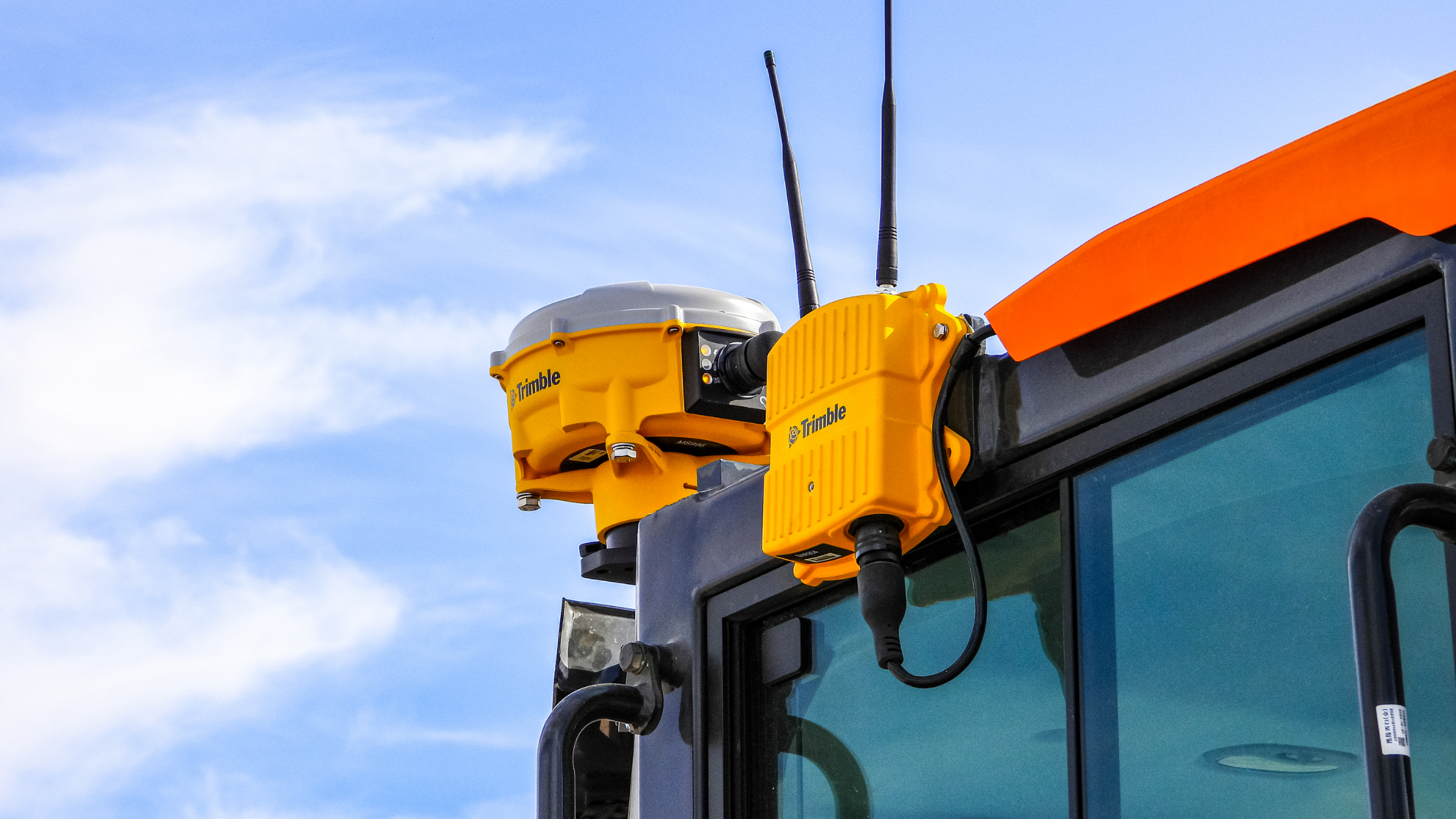
Walking through CONEXPO-CON/AGG 2026, one thing stood out at the Trimble booth. This wasn’t about one new machine or a single piece of software. It was about how everything connects. Trimble focused on tying together the full project lifecycle—from design and survey work in the office to machine operation in the field. The message was clear: construction is moving toward workflows in which data flows continuously rather than in isolated steps.
Connecting the jobsite from office to field
For years, construction projects have had to fall back on separate tools. Teams of surveyors do their thing, engineers design models, project managers try to keep track of it all, and the workers on the ground operate the equipment. The different pieces of the puzzle can all too easily get out of sync. You might see a design get tweaked in the office, only for the machine operator to still be working with the old version. Survey data may reside in one system while grading occurs elsewhere. That disconnect leads to rework, delays, and mistakes that cost time and money.
Trimble is trying to close that gap. Tools like Trimble Business Center and Trimble WorksManager are designed to connect those stages. Data moves from design to execution without being rebuilt or manually transferred. Everyone works from the same information. That shift changes how projects run. Instead of reacting to problems after they happen, teams can adjust earlier and keep work moving forward.
Trimble Business Center: A central hub for project data and decisions
Trimble Business Center is designed to bring all project data into one place, helping teams move from disconnected workflows to a more unified approach. As Elwyn McLachlan, Trimble’s Product and Strategy Lead, explains, Trimble “has a portfolio of solutions in the software space that are really about helping the contractor manage the job site.”
Enter Trimble Business Center, a central hub where survey data, design models, and construction plans converge. Survey teams can bring in field data, engineers can build and refine models, and project teams can review everything before it reaches the jobsite. Instead of passing files back and forth between disconnected systems, everything lives in one environment.
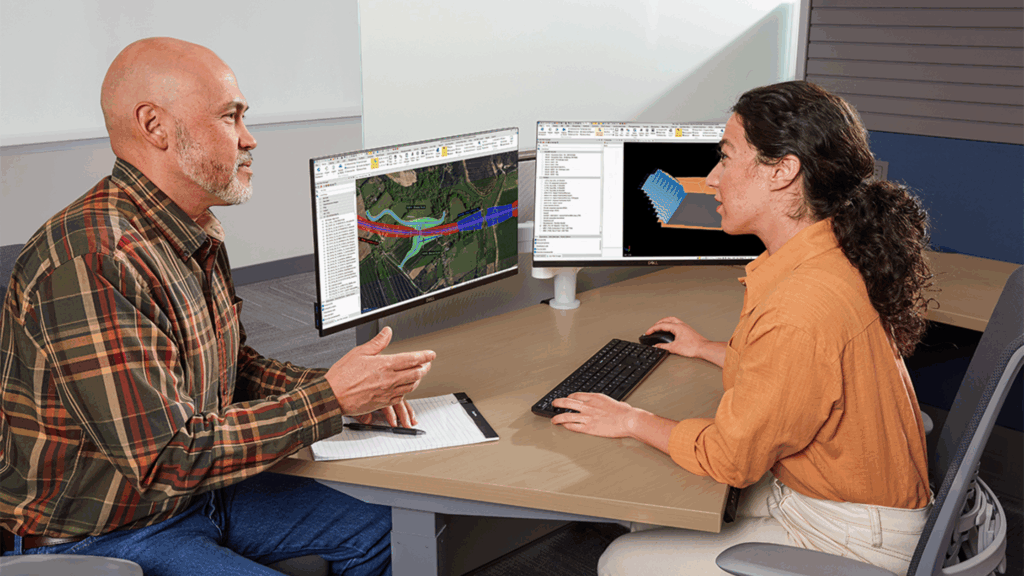
It also simplifies what operators actually see in the field. Instead of working with overly complex models, they’re given only the details needed to do the job. As Elwyn explains, it helps by “both simplifying the design, removing all the extraneous information that isn’t relevant for what the operator needs to do, but also creating clear line work for the way the operator is actually going to execute the work.”
That matters more than it might seem. When data stays connected, teams spend less time fixing errors. Models can be checked before they ever reach machines, quantities can better align with what’s actually being built, and problems get caught earlier—when they are easier to fix. Software like this turns planning into an ongoing process, not a one-time step at the start of a project.
Trimble WorksManager: Keeping machines aligned with real-time data
Once work moves to the field, Trimble WorksManager becomes the central point of connection between the field and the office. As Elwyn describes, this software is “the hub of our site management system,” focused on delivering the right data to the people who need it—operators, foremen, and site teams.
At its core, WorkManager is designed to make sure teams are working with the most up-to-date information. Models can be sent directly to machines in the field, reducing the need for manual updates when something changes. That alone cuts down on one of construction’s most common headaches: miscommunication. When updates happen, there is no lag in distribution—teams are instantly updated to ensure they’re working off the correct version.
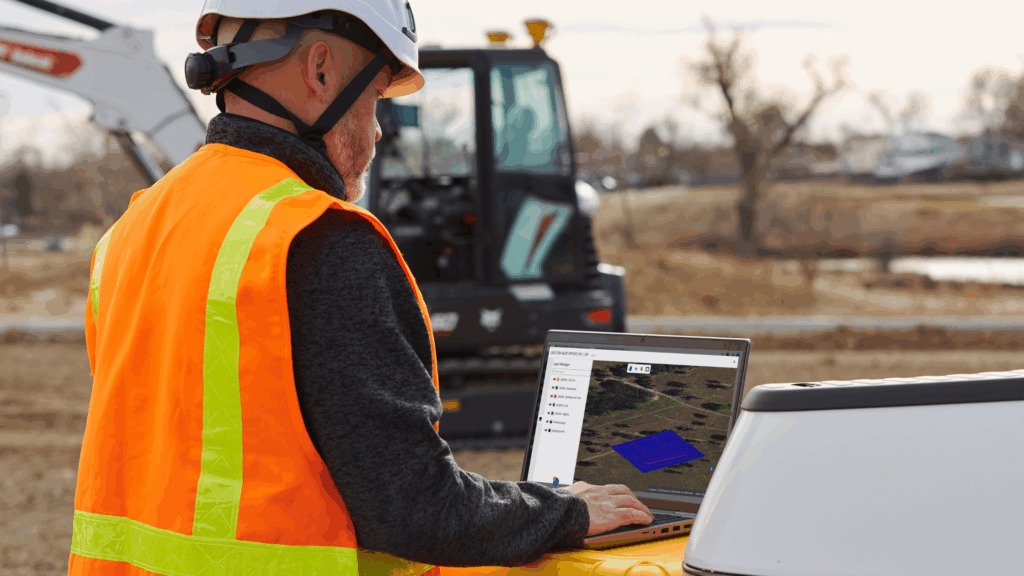
Trimble is also layering in additional support tools. McLachlan noted that the platform now includes an AI chat assistant to help new operators troubleshoot or provide quick answers to questions in real-time.
WorksManager also improves coordination across entire project teams. Surveyors, engineers, and operators are no longer working in disconnected workflows—everyone is tied into the same system. “If you’re the project manager and you want to know exactly what’s happening on the job site today and what the state of the site is, you can come into WorksManager and look at the data coming off the site”, says Elwyn.
The biggest shift is the move toward real-time jobsite management. Work doesn’t rely on delayed updates or manual reporting. It reflects what’s actually happening as the project progresses.
Introducing real-time quality control on the ground
One of the biggest challenges in road paving is that problems are often discovered too late—after the asphalt is already down. Trimble aims to change that with the introduction of the GSSI PaveScan RS, a system that uses ground-penetrating radar to measure asphalt density in real time.
As Kevin Garcia, General Manager of Civil Specialty Construction at Trimble, explains, the system allows crews to measure compaction as it happens, “detect[ing] the compaction factor of the asphalt…underneath the roller while compacting.” Instead of waiting for core samples after paving is complete, crews can see density results as they work.
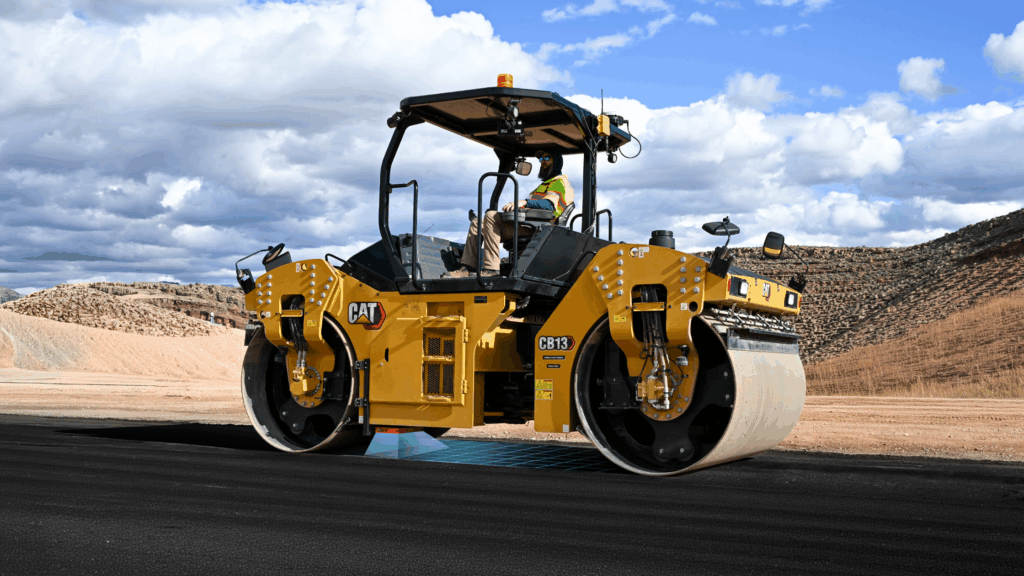
That shift is huge. In conventional workflows, weak spots were identified “post-construction, meaning if you find defects, it’s too late to do anything about them.” Now they can be identified immediately while the work is underway, reducing rework and improving long-term road performance.
More broadly, it reflects a shift in how quality control is handled in the industry. Instead of relying on post-construction inspections, teams are using live data to guide work as it happens. The integration of technology like PaveScan shows how even specialized tasks are becoming part of a more connected, data-driven jobsite.
What this means for contractors
This all points to a bigger change in how construction projects are managed. For contractors, connected tools reduce guesswork. When data flows from the office to the field without interruption, there’s less chance of working from outdated information. Errors become easier to catch, miscommunication between teams becomes less common, and work moves faster because fewer steps are required to correct mistakes.
It also affects how crews operate day to day. Operators rely more on digital models and machine guidance, while project managers rely on real-time updates instead of waiting for reports. Survey teams, meanwhile, play a more active role throughout the project, rather than just at the start.
Together, these shifts reflect larger trends across the industry:
- Connected jobsites where systems share data instead of working in silos
- Automation that reduces manual input and repetitive tasks
- Real-time information that reflects actual jobsite conditions
For contractors, it’s not just about adopting tools to improve accuracy—it’s about building more predictable workflows from start to finish.
Final thoughts
What Trimble showed at CONEXPO wasn’t about a single product—it was about how everything fits together. Tools like Trimble Business Center and Trimble WorksManager, along with systems like the GSSI PaveScan RS, are part of a larger ecosystem that integrates planning, execution, and quality control into a single continuous data flow.
Construction is moving beyond simple digitization. Jobsites are becoming more connected, giving teams greater visibility and control over how work is planned and carried out. The result is fewer surprises, more predictable outcomes, and a clearer path from plan to completion.
Keep up with the technology shaping modern construction—subscribe to the Under the Hard Hat newsletter and stay informed on what’s changing across the industry.