

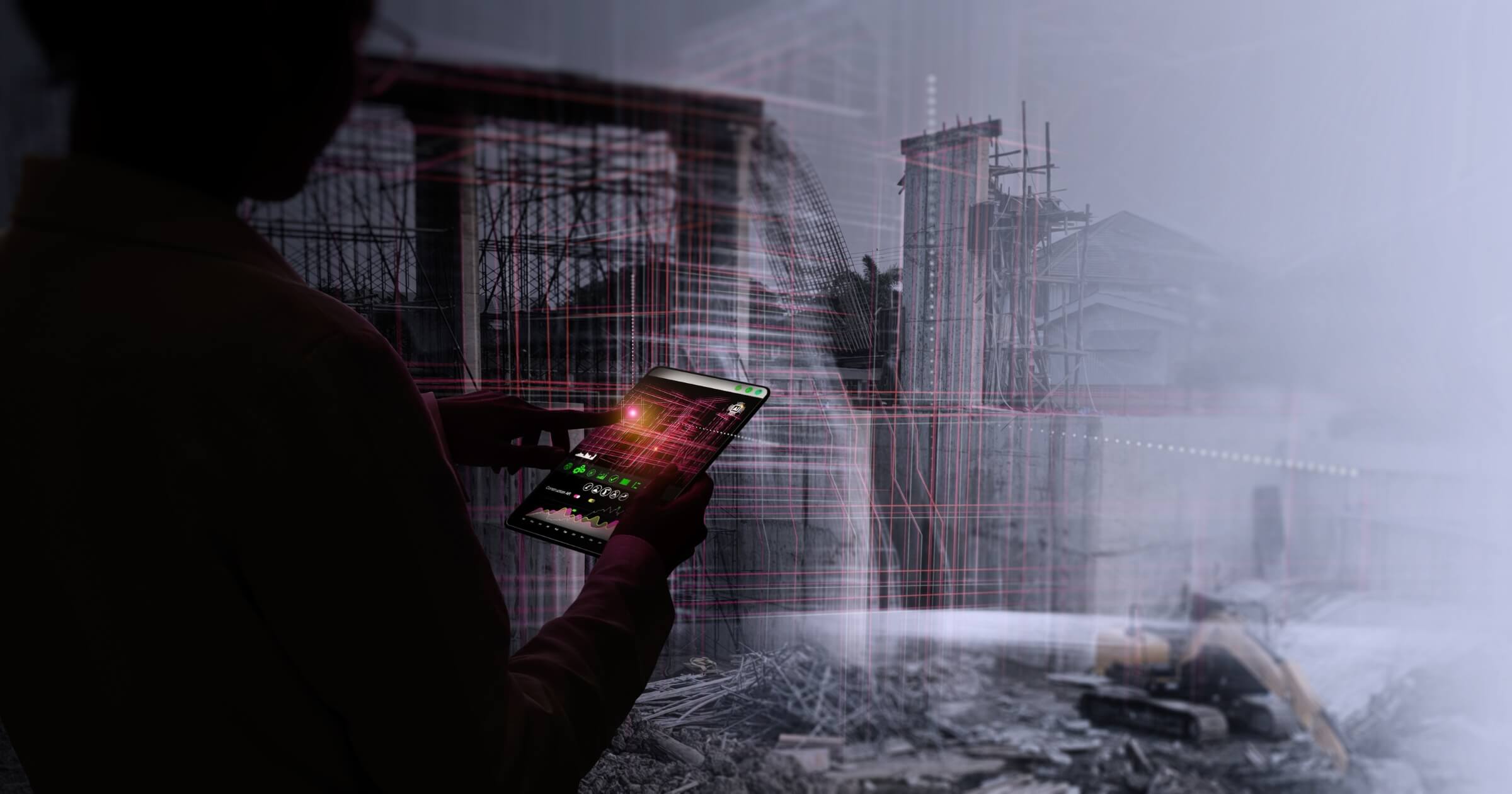
In construction, getting estimates right can make or break a project. AI tools now promise lightning-fast takeoffs and data-driven accuracy, while human estimators bring years of judgment and the ability to adapt when conditions change. This comparison of AI vs human estimators looks at accuracy, speed, cost, and risk, and explores what the future of estimating might look like.
Quick look
- AI tools like Togal.AI and Autodesk Takeoff automate manual processes, significantly reducing takeoff times and enhancing bid efficiency.
- Human judgment is critical in custom or high-stakes builds where AI may miss contextual risks or design nuances.
- Combining AI automation with human oversight yields more accurate bids, faster delivery, and improved risk management.
- Training, piloting small projects, and maintaining clean data help teams leverage AI effectively while keeping quality control strong.
What do estimators do on the daily?
Estimators play one of the most important roles in construction: determining the project’s cost. They forecast the prices of materials, labor, equipment, overhead, and even risks that might arise along the way. A strong estimate helps contractors win bids while protecting profits and keeping projects on track.
Traditionally, human estimators rely on their own experience, industry knowledge, and detailed spreadsheets to make their estimations. They draw on past projects and historical data to make sure every cost is accounted for, from lumber and concrete to permits and subcontractors. Their judgment is especially valuable when projects are unique or complicated.
AI-powered tools take a different approach. Automated takeoffs can scan digital blueprints and measure materials in minutes. Predictive models and machine learning use real-time databases to spot trends, compare costs, and flag potential risks. With the right construction estimating software for contractors, teams can handle more bids simultaneously and improve their accuracy.
Comparing AI vs. human estimators
When it comes to estimating, both AI and humans bring their own strengths and weaknesses to the table. Looking at accuracy, speed, cost, and risk shows why the debate is not one-sided.
Accuracy
When a project is straightforward and the drawings are clean, AI tools can significantly speed up the process. They’re great at counting materials and running numbers quickly, but when things become more complex, such as with custom builds or older structures, human estimators often notice details that the software misses. A seasoned estimator may catch a design issue or something unusual on-site that isn’t immediately obvious from the data.
Speed
AI can reduce estimating time from hours or even days to just minutes. This makes it easier for firms to prepare multiple bids at once. Human estimators work more slowly, but they bring context that helps avoid costly mistakes.
Cost
AI tools can reduce labor costs and open the door to more bidding opportunities, but when a project is complicated or has a lot riding on it, a skilled estimator can make a real difference. Catching issues early can help avoid expensive problems later, and in those cases, the extra cost of experience often pays for itself.
Risk
AI is only as good as the data it works with. If the information is outdated or incomplete, the results may fall short. Human estimators are usually better at adjusting when something unexpected happens, like a sudden jump in material prices or a new code requirement.
Instead of asking whether AI or humans are better, most teams are figuring out how to get the best of both. Some are already using professional takeoff services that combine automation with human review to cover all the bases.
Case studies and real applications: AI vs human estimators
AI examples: where automated takeoffs and predictive analytics made a big difference
- Coastal Construction and Togal.AI: Coastal Construction (Miami office) had a team of eight estimators who were spending about 50% of their time doing manual takeoffs (lots of tracing, clicking, and dragging in plan-sets). After implementing Togal.AI, they dropped that manual takeoff time to 10%. Each plan set took approximately 14.5 hours less, which scaled to about 13,920 hours saved per year and roughly $1 million in first-year savings, just from the time saved.
- Windover Construction with Autodesk Takeoff: Windover used Autodesk Takeoff to automate quantity takeoffs in both 2D and 3D, including from existing structures via laser scans. On one project, they reduced estimating time by approximately 30% by automating quantities and achieved an additional 50% savings in time when integrating BIM data to replace more manual measurement methods.
- Beam AI and Building Preservation Material Technologies (BPMT): For special repair work, takeoffs were extremely labor-intensive (over 40 hours in some cases). With Beam AI, BPMT saved 40-plus man-hours per takeoff. That freed their team to produce more bids, reduce downtime, and improve cash flow.
These examples demonstrate how AI tools significantly reduce time and enhance workflows on projects involving repetitive or data-intensive estimating work.
Human examples: where human intuition caught what AI missed

Human estimator on site. Photo courtesy of Shutterstock.
Real case studies of human estimators catching mistakes that AI tools missed are less frequently documented in public case studies. Still, several examples from engineering/design research illustrate this gap:
- Engineering.com–AI tool catching design errors but needing human review: An article reported about an AI tool that flags design issues and “help engineers learn from them.” It shows that AI can identify many low-hanging flaws, inconsistencies, or optimizations, but human engineers still need to review the results to catch deeper or more context-sensitive errors.
- Architectural flaw detection using GPT-4 turbo vision: In this civil engineering research, the model was applied to detect architectural flaws (missing doors/windows, material issues, load-bearing concerns, compliance with codes). While the AI performed well in terms of precision and recall, the human-verified data showed gaps: some design elements that required deeper contextual awareness or judgment (e.g., usability, code context, site constraints) were only caught when humans reviewed the output.
- Responsible use of AI in building surveying (RICS case study): In building surveying, AI tools are used to assist with identifying defects during construction or after. But human surveyors still play a crucial role in assessing which defects matter most, verifying unusual or ambiguous issues, and interpreting results in light of site-specific conditions.
These human examples show that while AI use in construction can help surface many issues, human oversight still adds value, especially in complex, ambiguous, or safety-critical contexts.
AI vs human estimators: Performance chart
| Situation | AI tends to win | Humans tend to win |
| Project type | Repetitive, standardized construction (warehouses, subdivisions, standardized product builds) where design variation is low, and data is plentiful. AI does well when input drawings are clean and repetitive. | Unique, custom, or high-stakes projects (such as complex renovations, unique architecture, or historic restorations) that involve site constraints, unusual materials, or unexpected risks. |
| Tasks | Manual takeoffs, counting standard components, quantity extraction, routine material cost forecasting, and predictive analytics on past data. | Flagging design errors, interpreting non-standard site conditions, adjusting for human factors (usability, aesthetic, regulatory ambiguities), and adapting when data is missing or inconsistent. |
| Risk level | Projects with low risk for unexpected cost overruns; the margin is known. AI helps reduce labor costs and speed. | Projects with a high cost of error, where oversight, safety, regulatory compliance, or reputation are critical. Human judgment reduces risk. |
The hybrid approach
In many cases, the best results are achieved when AI and human estimators collaborate. The software handles repetitive tasks quickly, like scanning plans or pulling quantities, giving teams more time to focus on areas that require judgment, such as spotting risks, reviewing unusual details, or adjusting for site conditions.
Companies that combine both approaches often see stronger outcomes. Estimates are usually more accurate, bids move faster, and teams spend less time on manual work. This can make it easier to take on more projects without lowering the quality of the work.
Modern tools, such as digital procurement software, make it even easier to integrate AI with human workflows, connecting cost data, suppliers, and teams in real time.
Preparing for the future
AI is transforming the face of construction delays and the way estimating is done, but success depends on how teams prepare. Contractors who plan ahead can make the transition smoother and more effective.
- Train estimators to use AI tools. Providing teams with proper training ensures they know how to maximize the benefits of automation while identifying errors that still require a human eye.
- Pilot AI on small projects before scaling. Testing new tools on smaller jobs helps firms learn what works and avoid major risks on larger bids.
- Build strong data practices to improve accuracy. AI is only as good as the data it uses. Keeping cost databases updated and organized is key to reliable results.
- Keep human oversight as AI adoption grows. Human judgment remains critical, especially for projects with high stakes or unusual conditions.
Firms that take these steps will be ready to balance speed with accuracy, while reducing the risk of costly mistakes.
Bottom line
AI brings speed, scale, and the ability to process massive amounts of data in minutes. Human estimators bring judgment, adaptability, and the experience needed to spot issues that machines might miss. On their own, each has its limits, but together they create a stronger and more reliable estimating process.
The winning model is a hybrid approach that blends AI’s efficiency with human oversight. This balance gives firms more accurate bids, faster turnarounds, and reduced risk, while keeping quality high.
Stay ahead of the curve and sign up for our newsletter to get the latest trends delivered straight to your inbox.

