
Bedrock Robotics, a San Francisco-based company making a serious push into autonomy for heavy construction equipment, has just closed a $270 million Series B round, bringing its valuation to an impressive $1.75 billion. The financing came courtesy of an impressive-looking syndicate co-led by CapitalG and the Valor Atreides AI Fund, with several strategic investors, major real estate, and infrastructure players all throwing their hats into the ring.
For an industry that tends to lag behind the curve in scaling up new technology, this is a pretty big deal. You don’t put a quarter billion dollars on the line on the off chance the technology is ‘nice to have’. Investors are betting that autonomy will quickly become the new norm, given the industry’s significant labour shortages and tight timeframes.
Bedrock’s mission is pretty clear: automate heavy-duty equipment like excavators and then take it a step further to get entire fleets working in harmony. Their platform integrates sensing, planning, and machine control, enabling equipment to complete the job with significantly less operator input. The ultimate goal is to reach a point where on-site machines can handle all routine work safely and reliably, while human crews focus on higher-level tasks such as supervising, coordinating, and keeping the operation running smoothly.
What Bedrock Robotics is building (and why contractors should care)
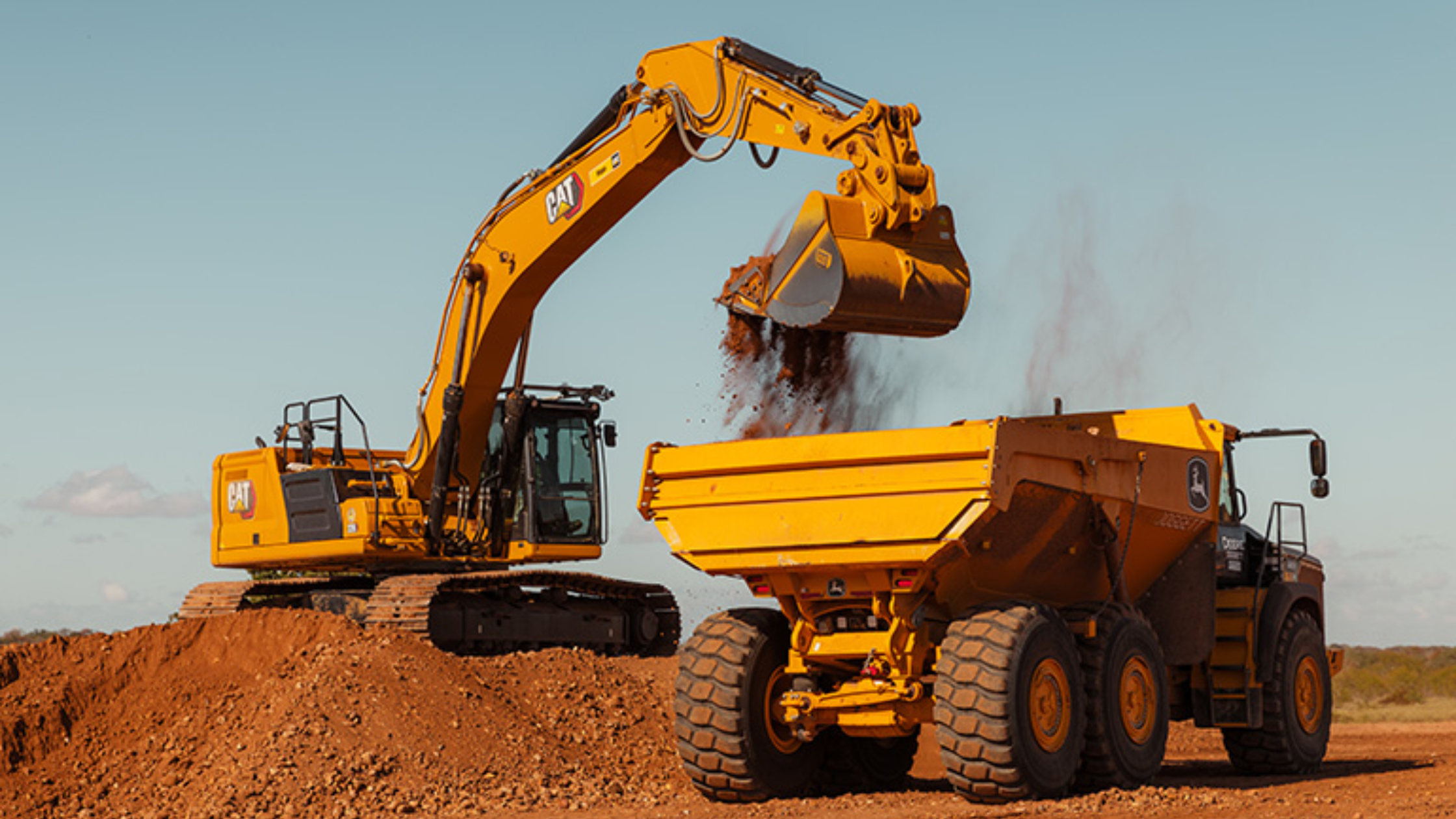
Bedrock’s technology focuses on the machines contractors rely on every day, especially for earthmoving. That matters because excavators and loaders are often the heartbeat of a jobsite. When those machines sit idle, due to staffing shortages, machinery burnout, or inconsistent production, the whole process grinds to a halt.
One thing contractors seem to appreciate about Bedrock’s approach is that it doesn’t require a new fleet of equipment to enable autonomy. They’re building autonomy in a way that aligns with the equipment contractors already have on-site. That’s a big deal, since most contractors don’t replace their machines very often, so if an autonomous system needs new gear to work, it’s unlikely to get picked up anytime soon. But if it can work with the machines they already own, contractors can start piloting it, scaling it up, and rolling it out.
Bedrock also wants everyone to know that they’re not just about making a single excavator operate independently. What they’re after is true coordinated autonomy—multiple machines communicating with each other and working together on-site. That’s a game-changer; it could make a big difference to how big projects get planned, staffed, and executed, especially when we’re talking about things like industrial sites, road building, big distribution hubs, and data center construction.
Why investors are betting big on autonomy right now
Construction has been dealing with labour pressure for years, and it’s not easing up. Experienced operators are retiring, apprenticeship pipelines vary by region, and many contractors are struggling to maintain sufficient qualified personnel on the roster to run equipment at full capacity. At the same time, demand for large-scale building and infrastructure work remains strong.
That’s the gap autonomy is trying to fill.
Investors see Bedrock as a company building a really useful tool to tackle the notoriously hard part of scaling construction: making machines productive and consistent. If autonomy can reduce downtime and keep equipment running longer, that will give them a clear edge in project scheduling.
Of course, getting autonomy to work in construction is a whole different ball game. Job sites can be an unpredictable mess—frequent terrain changes, unpredictable weather, and a never-ending stream of people, trucks, and other machines charging through the work zone. That said, the size of the round signals that investors believe Bedrock’s technology is nearing deployment on real jobsites.
For contractors keeping an eye on where construction equipment is headed, this Series B round is a clear sign that autonomy is no longer some research project being kicked around in a lab; it’s actually starting to become a serious reality in how the next generation of heavy equipment is going to be built, sold, and used on real-world jobsites.
If you want more updates on construction tech, equipment, and the future of jobsite work, subscribe to the Under the Hard Hat newsletter.