
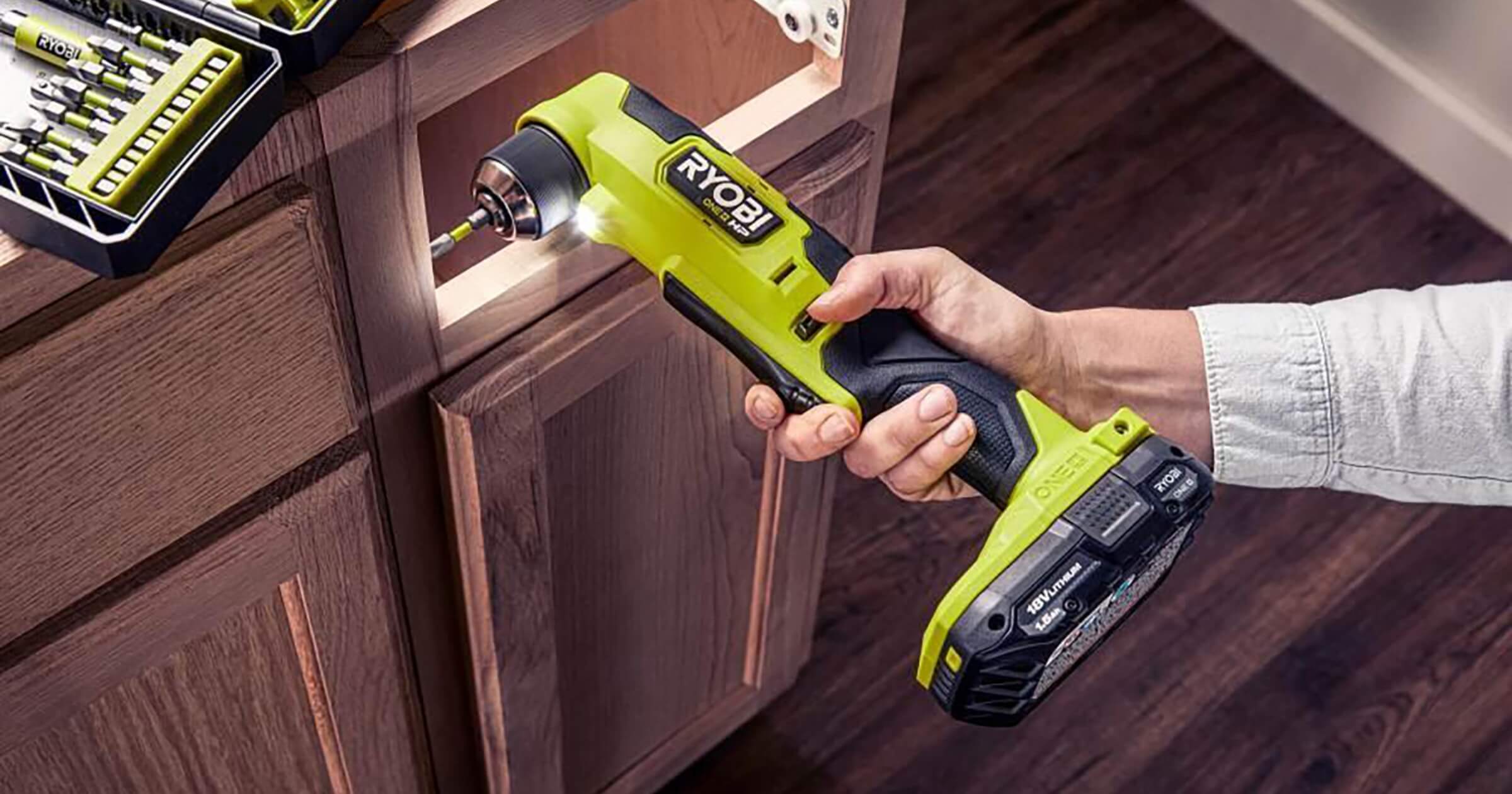
Working in confined areas is part of the job for plumbers, electricians, and HVAC installers, and that’s where the best right-angle drills shine. These compact tools fit in places a full-size drill won’t: between studs, under sinks, or inside cabinets. Models like the Milwaukee M18 Fuel Hole Hawg and the DeWalt 20V MAX XR Right-Angle Drill are the leaders in torque and ergonomics. Whether you’re running conduit, drilling joists, or driving fasteners, the right drill can make the difference between a quick install and a headache. Here’s a breakdown of the top eight right-angle drills trusted by pros in tight spaces.
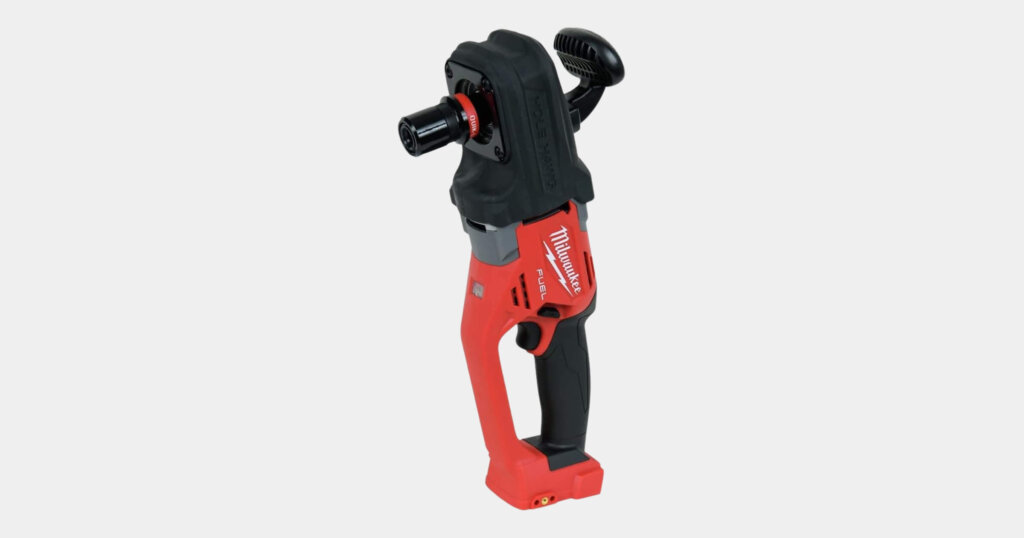
1. Milwaukee M18 Fuel Hole Hawg – Best overall
| Pros | Cons |
| – Excellent torque for auger and self-feed bits – Long-lasting brushless motor – Comfortable grip for extended use – Reliable battery performance | – Slightly heavier than competitors – Premium price point |
Key features
- 1,200 RPM brushless motor
- Compatible with all M18 batteries
- Electronic clutch for consistent control
- Reinforced gear housing for longer tool life
- 16-inch compact body
The Milwaukee M18 Fuel Hole Hawg was designed to tackle heavy-duty electrical and framing work. It features a brushless motor that provides consistent torque, even under load, which is important when running large auger bits through studs and joists. The reinforced gearbox keeps it running smoothly over thousands of holes, while the electronic clutch prevents over-torquing.
The main downside is its weight—roughly 7.7 lbs with the battery—which can make extended overhead use tiring. This drill is overkill for light carpentry or small-scale work. It’s best suited for electricians, framers, and contractors who need power and durability for large holes or continuous daily use.
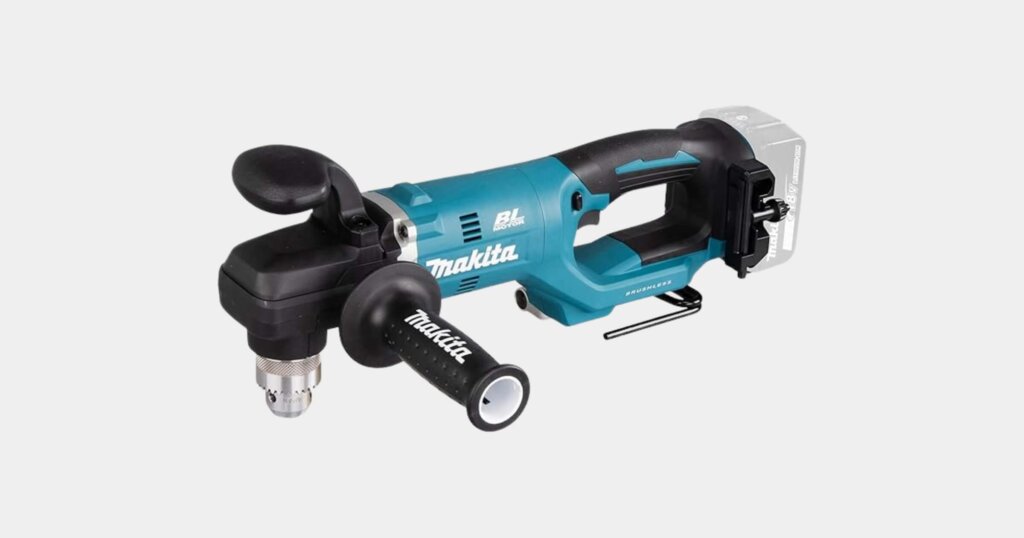
2. Makita 18V LXT Right-Angle Drill – Runner up
| Pros | Cons |
| – Lots of torque – Smooth clutch engagement – Dual handle for control – Fast battery recharge | – Larger footprint than others – Pricier kit |
Key features
- 10-amp brushless motor
- 2 x 5.0Ah batteries included
- Auto torque drive technology
- Metal gear housing
- Built-in LED with afterglow
Makita’s right-angle drill delivers serious performance for plumbers and trade professionals tackling tough rough-ins. The dual-handle design gives better control when drilling through joists or thick studs, and the brushless motor maintains power for repeated holes without overheating. One Reddit reviewer wrote, “I used this for drilling 2-inch holes in joists—no bogging down, smooth every time.” The fast-charging batteries minimize downtime on busy jobs, making it practical for trades that move from site to site.
Its bulkier design can be a challenge in very tight corners, and it may feel heavy when used overhead for long periods. It’s ideal for tradespeople who need torque and durability for heavy-duty drilling, especially when working with multiple layers of framing or metal studs.
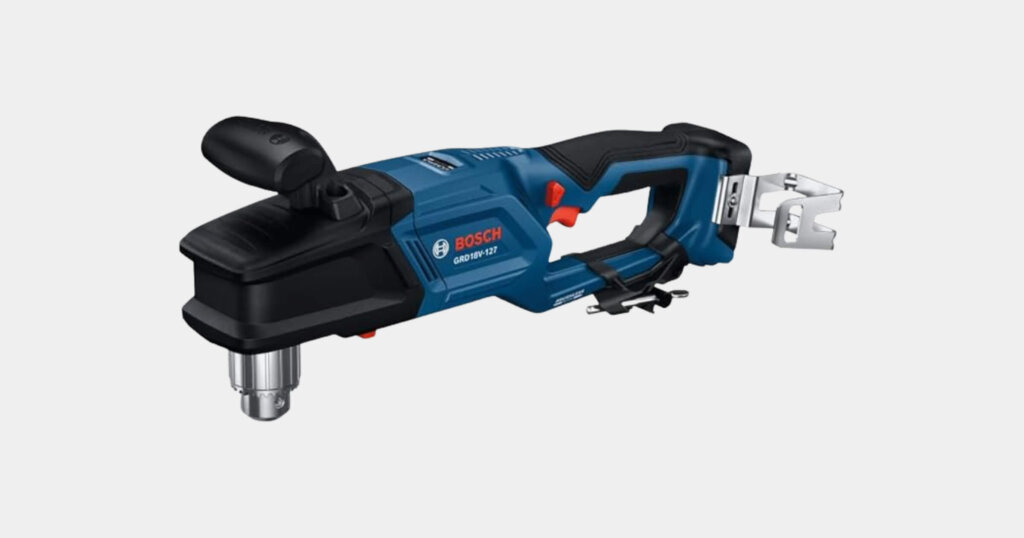
3. Bosch GRD18V-127N Right-Angle Drill
| Pros | Cons |
| – Very light – Easy to use in tight spaces – Quiet motor – Long battery life | – Not ideal for heavy drilling – Chuck can loosen under high torque |
Key features
- 5.5-inch head length
- ⅜-inch auto-lock chuck
- 2-speed gearbox
- Compatible with Bosch 18V batteries
- Soft-grip handle for better balance
Bosch’s right-angle drill GRD18V-127 is designed for tight spots where control and balance are critical. Its short head length lets you reach between studs and under cabinetry without struggle. The quiet motor keeps noise low—a bonus when working in occupied buildings—and reviewers note that it fits between studs and in other tight spaces.
That said, it’s not for drilling large holes or heavy-duty use. Finish carpenters, electricians, and HVAC techs will love the small size and light weight.
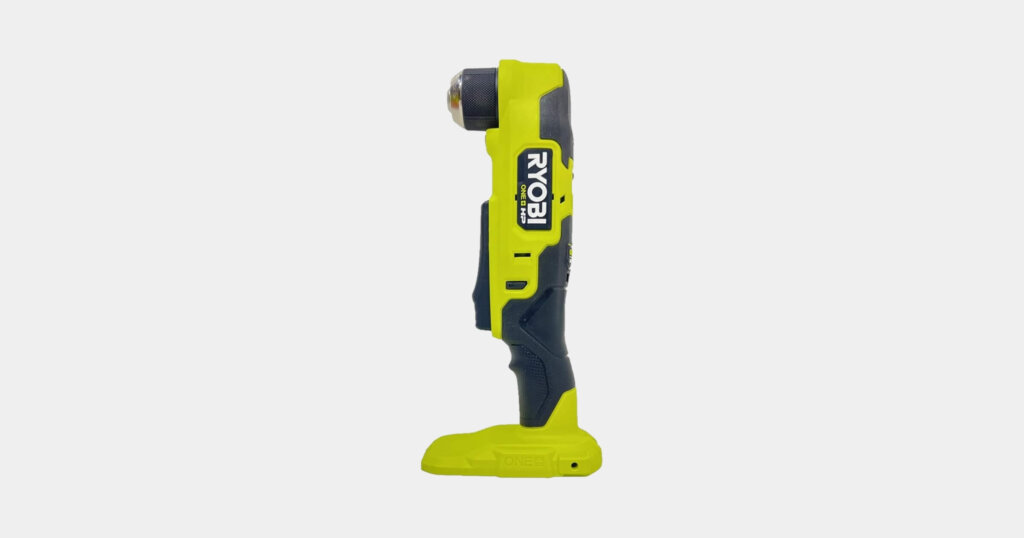
4. Ryobi One+ 18V Right-Angle Drill
| Pros | Cons |
| – Affordable and widely available – LED light for visibility – Comfortable overmold grip – Long trigger for variable speed control | – Limited torque – Plastic construction feels less durable |
Key features
- 1,100 RPM motor
- One+ batteries compatible
- On board LED light
- Extended trigger for more reach
- 4-inch head
The Ryobi’s right-angle drill has been a go-to choice for homeowners, apprentices, and tradespeople who need a light-duty drill. Its compact design fits behind cabinets and inside tight wall cavities. According to Home Depot customer reviews, it is “the perfect budget drill for tight corners” and handles small screws and pilot holes with ease. The LED light will enhance your accuracy in dimly lit areas, while the overmold grip keeps it steady during delicate tasks.
The Ryobi P241 doesn’t have the torque for larger bits or dense wood, making it unsuitable for professional daily use. This tool is better for DIYers, apprentices, or light trade work where portability and affordability are more important than raw power.
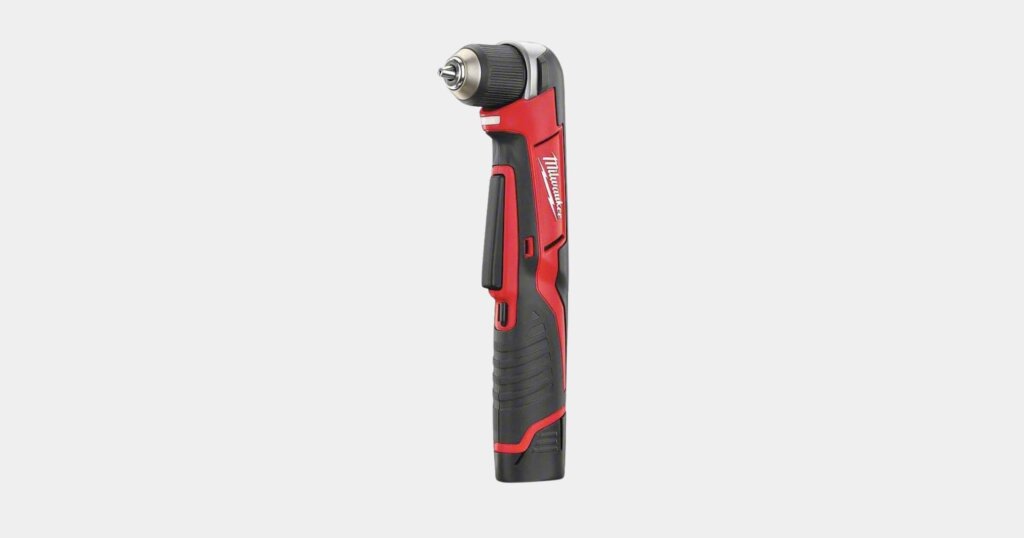
5. Milwaukee M12 Fuel Right-Angle Drill
| Pros | Cons |
| – Compact and lightweight – High precision at low speeds – Brushless motor – Excellent balance in one hand | – Smaller chuck size (⅜-inch) – Shorter battery runtime under heavy use |
Key features
- 12V brushless motor
- Variable speed trigger
- ⅜-inch all-metal chuck
- LED work light
- Part of the M12 battery system
The Milwaukee M12 Fuel excels in tight work areas, such as cabinetry or HVAC enclosures. Its compact 12V design allows one-handed operation without sacrificing accuracy. Reviewers describe the M12 as compact and easy to maneuver in tight spaces, with comfortable handling that belies its size. Its brushless technology gives consistent performance while reducing heat buildup.
Not for heavy framing or large auger bits, and batteries will die quickly if used under constant load. This drill is designed for cabinetmakers, HVAC technicians, or electricians performing precision work in tight spaces.
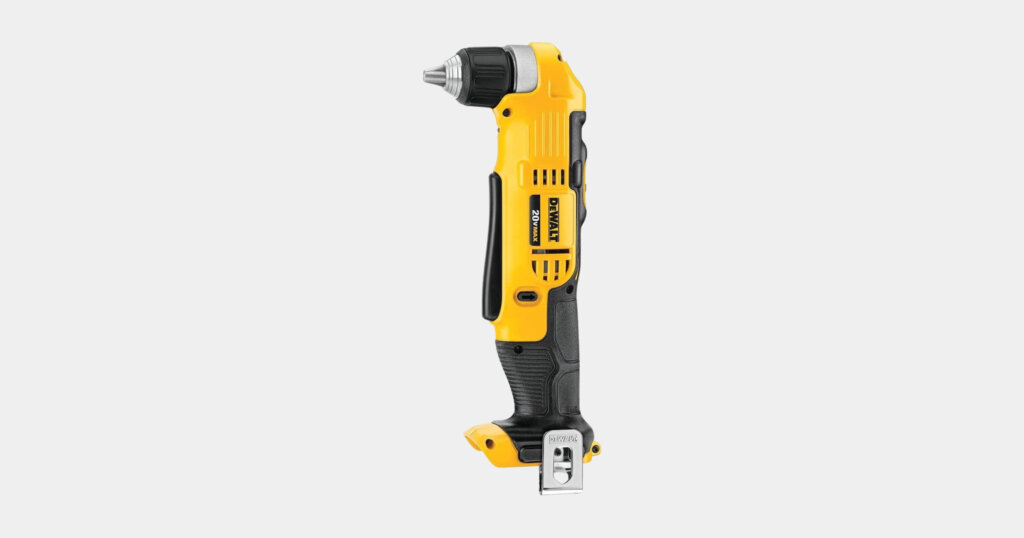
6. DeWalt 20V MAX right angle-drill
| Pros | Cons |
| – Great reach in narrow framing spaces – Sturdy construction – Responsive trigger – Reliable motor performance | – Heavier than it looks – No built-in battery indicator |
Key features
- ⅜-inch right-angle chuck
- Dual speed (0–650 / 0–2,000 RPM)
- Compact 4-inch head
- LED work light
- Ergonomic handle design
The DeWalt DCD740B balances strength and comfort well. The head fits between studs, and the motor doesn’t overheat in most wood drilling. Carpenters say it “holds up to daily use and rough conditions,” so it’s suitable for remodelers and framers.
The slightly front-heavy balance will fatigue the wrist when drilling overhead, but it’s good for general construction and renovation work with good reach and control.
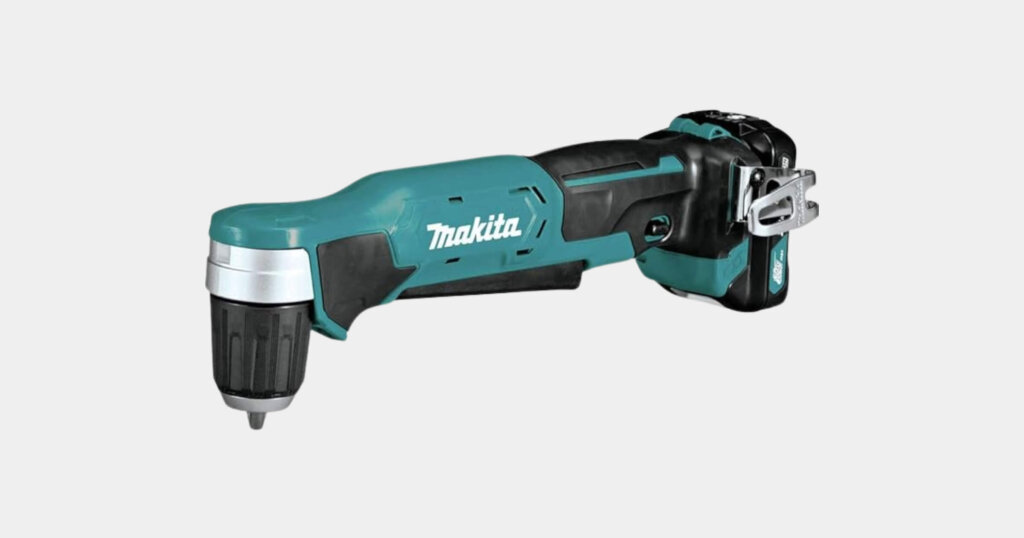
7. Makita AD03Z 12V Max CXT Right-Angle Drill
| Pros | Cons |
| – Weighs under 3 lbs – Great control for precision drilling – LED light near the chuck – Quiet motor | – Limited torque for framing – Battery sold separately |
Key features
- 800 RPM variable speed motor
- ⅜-inch keyless chuck
- 2.5-inch head
- Built-in LED with afterglow
- Part of the CXT 12V battery system
The Makita DA333DZ prioritizes balance and comfort, making it ideal for finish carpenters, maintenance technicians, and installers. Its extremely compact 2.5-inch head allows access to crawlspaces, ductwork, and behind cabinetry. Users note that it’s great for drilling pilot holes or small screws in tight spots. Quiet operation makes it a good choice for occupied environments.
It’s not suited for larger holes or heavy-duty framing. Best for light drilling, overhead tasks, or situations where tool weight and control are critical.
What to consider before buying a right-angle drill
What will you be using it for?
Before you buy, think about what you’ll be using it for most. Drilling through joists or studs for wiring or plumbing requires more torque and longer battery life, whereas cabinet installation or light maintenance work is all about compactness and lightweight design. Get the right match and you won’t pay for features you don’t need or end up with a drill that struggles on your jobs.
Power and performance requirements
Power ratings can vary significantly among right-angle drills, so focus on the voltage and torque for your trade. Most 18V to 20V models have plenty of torque for working with dense wood and metal; 12V drills are better for confined or overhead work where weight is more important than raw strength. Look at speed settings as variable control is helpful when switching between materials. If you frequently work with heavy fasteners or hole saws, opt for higher voltage systems for consistent performance.
Check ergonomics and weight
A drill’s feel in your hand can make or break a day. Lighter models are easier to handle overhead or in crawl spaces, and they reduce fatigue during lengthy installs. Look for a grip that feels natural and a balanced body that won’t twist your wrist when torque kicks in. The best right-angle drills distribute weight evenly between the head and handle, allowing for better control in tight spaces.
Review warranty and support
Right-angle drills take abuse on job sites, so warranty coverage matters. Brands with accessible repair centers and clear replacement policies can save you downtime and frustration. Check how long the warranty lasts and whether it covers wear parts, such as chucks or motors. Reading user experiences on service claims can also reveal whether a brand actually supports professionals or leaves them waiting for parts.
Consider battery compatibility
Sticking with one battery system across your tools keeps costs down and simplifies your setup. If you already own other cordless tools, purchasing from the same brand lets you swap batteries and chargers freely. Cross-compatibility also makes it easier to carry backup batteries to long jobs without juggling multiple chargers. For tradespeople using various brands, dual-charging stations can help streamline your workflow.
Look at chuck size and speed range
Chuck size determines the bits you can use, so match it to the work you do most often. A ⅜-inch chuck handles typical bits for carpentry and finishing work, while a ½-inch chuck is better for large augers or self-feed bits in framing and rough-ins. Multi-speed drills allow you to switch between slow, high-torque drilling and fast driving as needed. Choosing the right balance between chuck size and speed range gives you flexibility without sacrificing control.
For more tool comparisons, check out our Makita vs. Bosch compact drill review, our list of the 10 best gifts for a handyman, and our selection of the best trade tool sets.
To stay updated on tools trusted by electricians, carpenters, and construction professionals, subscribe to Under the Hard Hat’s newsletter for trade-tested reviews and expert picks.