
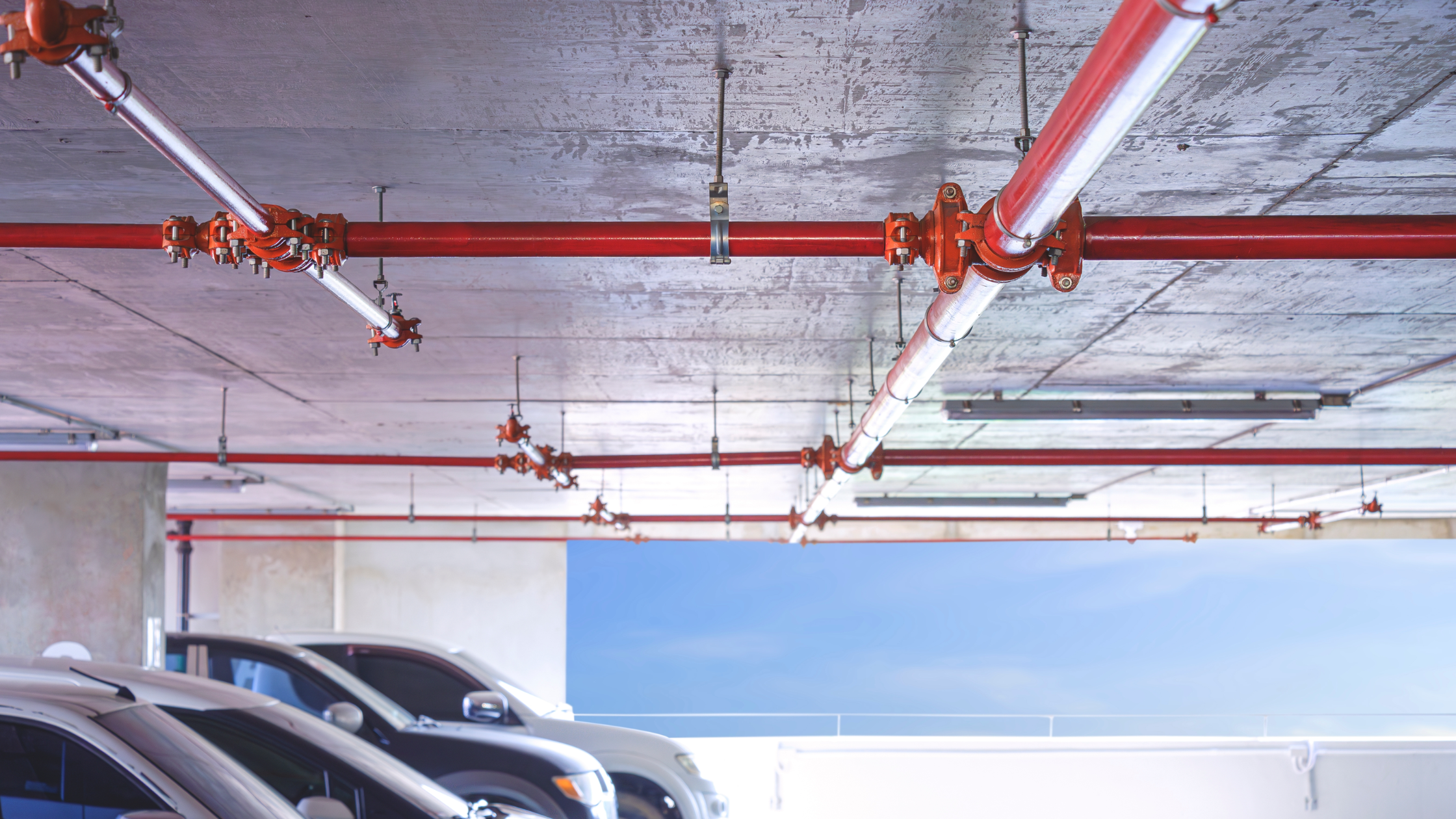
If you’re a high school graduate, career changer, or someone eyeing a skilled trades path, a career as a sprinkler fitter offers a solid opportunity. A sprinkler fitter installs, maintains, and repairs the fire-protection piping systems you’ll find in schools, hospitals, offices, and industrial facilities. The job matters: fire-protection systems are required by building codes, infrastructure is aging, and a wave of the current workforce is nearing retirement. According to the Bureau of Labor Statistics, plumbers, pipefitters, and steamfitters (which includes sprinkler fitters) had a median annual wage of $62,970 in May 2024.
Because the trade requires hands-on skills, technical knowledge, and on-site experience, apprenticeship is the main entry path. This article explains what a sprinkler fitter apprenticeship is, how long it typically lasts, presents ten strong apprenticeship programs across the U.S., covers entry requirements, types of apprenticeships, what the daily life is like, salary expectations, and helps you decide if this path fits you.
Quick look
- A sprinkler fitter apprenticeship combines on-the-job training (OJT) with related classroom instruction, culminating in attaining journeyman status.
- Typical programs last 4-5 years and include thousands of hours of fieldwork and hundreds of hours of classroom time.
- Many top apprenticeship programs are run by unions (for example, the United Association) and are registered with the U.S. Department of Labor.
- Entry requirements commonly include a high school diploma or GED, being at least 18 years old, passing physical and safety tests, and sometimes a driver’s license.
- Journeyman sprinkler fitters in the U.S. can earn a median wage of around $28 per hour (approximately $58,600/year), with higher pay in union or high-cost-of-living areas.
What is a sprinkler fitter apprenticeship?

A sprinkler fitter apprenticeship is a structured training arrangement that combines on-the-job training (OJT) with classroom-based instruction, often referred to as “related technical instruction” (RTI). As an apprentice, you’ll work under experienced journeymen installing, testing, maintaining, and repairing fire sprinkler systems, while attending classes on topics like piping systems, fire codes, blueprint reading, and safety practices. The program is registered with either state or federal apprenticeship authorities, meaning you earn while you learn and, upon completion, receive a credential granting journeyman status.
Over the course of the apprenticeship, you progress from basic helper tasks—cutting pipe, loading materials, assisting journeymen—to more advanced installation, system testing, layout, interpreting architectural drawings, and performing maintenance or inspections independently. As you acquire skills, your wage rate typically increases. By the end, you will be fully competent to handle fire-protection piping systems in commercial, industrial, or institutional settings, often as a journeyman sprinkler fitter. For many programs, apprenticeship is the only (or at least the most direct) entry route into the trade.
How long is a sprinkler fitter apprenticeship?
Most sprinkler fitter apprenticeships span four to five years. According to standards from the piping trades, programs typically require approximately 1,700 to 2,000 hours of on-the-job training per year, in addition to roughly 150-250 hours of classroom instruction annually.
For example, through the United Association apprenticeships, each year of a five-year program includes approximately 1,700–2,000 hours of OJT and a minimum of about 246 hours of related classroom instruction. During the early years, you might earn 30-40% of the journeyman wage; as you reach years four or five, you approach full journeyman rates.
Because you are paid while you learn, you’re earning income from day one. Classroom instruction often occurs one night a week or every other week, or in blocks, while the bulk of your time is spent on the job installing, maintaining, or repairing sprinkler systems under supervision.
Top 10 sprinkler fitter apprenticeship programs across the U.S.
Here are ten strong apprenticeship pathways for aspiring sprinkler fitters to apply to. Each includes program name, location(s), length (if publicly available), and application link. The list is ordered from least to most widely recognized programs.
1. Delaware Department of Labor Sprinkler Fitter Program
- Location(s): Wilmington/Newark area, Delaware.
- Length: 4-year curriculum (approx. 600 total hours classroom, plus OJT)
- Application link: Here
2. UA Local 370 Apprenticeship – Plumbing/Pipe/Pipefitter/Sprinkler Fitter
- Location(s): Michigan (Genesee, Shiawassee, Lapeer counties)
- Length: 5 years (approx. 1,700-2,000 hours OJT/year + classroom)
- Application link: Here
3. UA Local 597 Apprenticeship Program (Piping trades, including Sprinkler Fitter)
- Location(s): Region of Local 597 (varies by state)
- Length: 5 years (1,700-2,000 hours OJT/year + 216+ hours RTI)
- Application link: Here
4. UA national Joint Apprenticeship Program (JAP) – Sprinkler Fitter track
- Location(s): Nationwide through local UA JATCs.
- Length: 5 years (per national guideline standards)
- Application link: Here
5. American Fire Sprinkler Association (AFSA) – Apprentice Sprinkler Fitting Training
- Location(s): National; curriculum used by companies/employers.
- Length: Self-paced or employer-sponsored levels (each ~2000 OJT + ~150 RTI hours per level)
- Application link: Here
6. UA Local 669 Sprinkler Fitter Apprentice (Union Local 669)
- Location(s): Maryland area (Columbia, MD)
- Length: ~5 years (as per UA standards)
- Application link: Here
7. Viking Automatic Sprinkler Company – Job/Apprentice Program (via UA Local 669)
- Location(s): Bismarck, ND & region
- Length: Apprenticeship per union standards
- Application link: Here
8. Ryan Fireprotection, Inc. Sprinkler Fitter Apprentice – Union 669
- Location(s): Mount Vernon, IN
- Length: Apprenticeship terms with 19 courses + OJT
- Application link: Here
9. Symons Fire Protection, Inc. Fire Sprinkler Fitter Apprentice
- Location(s): San Diego, CA
- Length: Entry-level apprentice to installer; OJT + classroom
- Application link: Here
10. Total Fire Protection – Apprentice Sprinkler Fitter – South Dakota
- Location(s): Brandon, SD
- Length: Apprenticeship with progression to fitter
- Application link: Here
General entry requirements
Here’s a checklist of the standard requirements imposed by most apprenticeship programs. Always check the specific program for any additional or state-specific criteria.
- Age: Applicants must be at least 18 years old at the time of application or before dispatch to the jobsite.
- Education: A high school diploma or GED is almost always required.
- Driver’s license: Many programs require a valid driver’s license, especially when job-site travel or company vehicle use is involved.
- Physical fitness and manual dexterity: Ability to lift heavy materials, climb ladders, bend, work at heights, and in varying conditions.
- Drug testing/safety screening: Many apprenticeships include drug/alcohol screening and safety orientation.
- Background check: Some programs require a clean driving record, a clear criminal background, and good work attendance history.
Types of sprinkler fitter apprenticeship programs
Depending on the employer, region, and sponsoring organization, you’ll find several forms of apprenticeship opportunities.
Union vs non-union programs:
- Union apprenticeships (such as those run by the UA) are highly structured, include wage-scale increments, benefits, and pension prospects, and are registered to national standards.
- Non-union or contractor-sponsored programs may be more flexible in meeting local staffing needs, possibly offering fewer benefits initially, but still provide on-the-job training and classroom instruction.
Public utility/large employer vs private contractor:
- Some large fire-protection or mechanical companies run their own apprenticeship programs, often linked to multiple job sites, larger building projects, or institutional contracts.
- Smaller contractors may offer apprenticeship-oriented entry roles, but with fewer opportunities for advancement, less geographic mobility, and lower initial compensation.
Subspecialties within sprinkler fitter apprenticeships:
- Installation vs. maintenance/inspection: Some fitters specialize in new-building sprinkler systems, while others focus on retrofitting, testing, service, and maintenance.
- Commercial vs. industrial vs. residential: Working conditions, system complexity, and scale differ significantly.
- Integration with other disciplines: Some apprenticeships offer overlap with plumbing, pipefitting, fire-alarm systems, or HVAC, enabling cross-training.
What daily life looks like during a sprinkler fitter apprenticeship
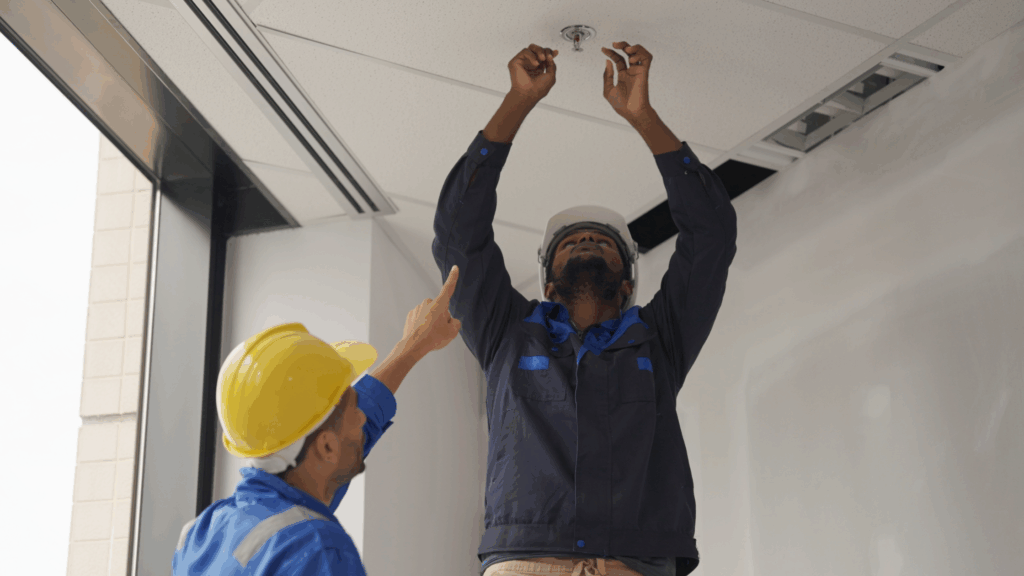
As a new apprentice, you’ll split time between the classroom and the jobsite. A sample day might begin at the construction site at 7 a.m., meeting the journeyman sprinkler fitter and helper crew. You start by unloading materials, measuring and cutting pipe, threading or welding connectors, hanging sprinkler lines, testing sections, and cleaning up. In mid-afternoon, you may leave the jobsite and head to a training centre or night class to learn blueprint reading, NFPA 13 codes, piping-related math, and safety protocols.
You may work outdoors or indoors, sometimes at heights (on scaffolding), in tight spaces, or on ladder runs. In some phases, you’ll travel between job locations. On-call or overtime work may be required when systems need to be tested outside of regular hours. By year three or four, you’ll move into more advanced tasks: reading system design drawings, assisting in the layout of risers, supervising helpers, and troubleshooting system faults.
Classroom instruction might occur once a week in the evening, or every other week, or during “block weeks” where you spend one week straight in classes. While on the job, you’ll earn a wage plus benefits typical of apprentices. As you progress, you’ll gain more responsibilities, higher pay increments, and work more independently.
Average sprinkler fitter salary in the U.S.
- Entry-level apprentice pay: Apprentices usually start at about 30-40% of journeyman pay and step up every 6-12 months. For example, the UA’s chart shows hourly increases aligned with each year of training.
- Journeyman pay: According to ZipRecruiter, the average salary for a journeyman sprinkler fitter is $58,607 per year (about $28.18 per hour) and ranges from $21/hour in the 25th percentile to $35/hour in the 75th percentile.
- Broader market data: The Bureau of Labor Statistics LS lists plumbers, pipefitters, and steamfitters (including sprinkler fitters) with a mean hourly wage of $32.62 ($67,840 annually) as of May 2023.
- Regional/union vs non-union: Pay can vary significantly. For example, union wage data shows journeyman sprinkler fitters in San Francisco earning $78.94/hour ($157,880/year) according to the UA union pay scale.
Given these numbers, for someone entering via apprenticeship, the financial reward becomes significant once you reach journeyman status—and earlier, owing to paid training, benefits, and career stability.
Is a sprinkler fitter apprenticeship right for you?
The role requires physical strength, stamina, a willingness to work in various environments (including outdoors, at heights, and occasionally on-call), and a hands-on mindset. You’ll climb ladders, hoist pipe, work on scaffolding, and deal with weekly tasks that change site to site. The training, although paid, is serious—your classroom time and job performance are taken seriously. If you dislike change, physical work, or variable schedules, the fit may be tougher.
On the rewards side: you’ll earn a skilled trade credential, earn while you learn, avoid the major debt of college, and, after five years, reach journeyman level with solid wages, benefits, and job security. The work has purpose—fire-protection systems save lives and property—and a first-class fitter is valued in construction, engineering, industrial, and institutional settings. If you like problem-solving, working with tools and systems, and want a career where you can rise through the ranks (foreman, superintendent, estimator), then an apprenticeship could be a strong path.
If this sounds like you—ready to roll up your sleeves and build a career rather than just a job—this trade offers a powerful opening.
Learn more about trade apprenticeships
Check out our guides on other in-demand trades, training resources, and what to expect in apprenticeships across construction and engineering.
- The best trade apprenticeships in construction
- How apprenticeships give students a one-up in the trades
- Your guide to apprenticeships
- The top welding apprenticeship programs in the U.S.
- How to get an electrician apprenticeship
If you’re ready for updates on apprenticeship programs across the U.S., sign up for our newsletter at Under the Hard Hat for alerts and tips about trade careers.