Concrete paving equipment is getting more attention as governments increase spending on roads, highways, and public infrastructure, but the story is not just about higher budgets. The 2025 Concrete Paving Equipment Industry Report looks at how funding pressures, tighter timelines, and rising quality expectations are changing the machines contractors rely on and how paving work is actually carried out on job sites.
While overall market growth remains steady, the most noticeable shifts are happening in urban road projects, where agencies are rebuilding aging concrete surfaces instead of relying on repeated short-term repairs.
The global concrete paving equipment market reached about $1.5 billion in 2024 and is projected to grow to $1.8 billion by 2030. On its own, that growth may appear modest. Its significance becomes clearer in cities, where heavier traffic volumes and deteriorating infrastructure are pushing transportation agencies toward full roadway reconstruction rather than patchwork maintenance.
Concrete remains a preferred material for large paving projects due to its durability and long service life. While initial costs are often higher than asphalt, concrete typically requires fewer repairs over time. As the report notes, increasing investment in infrastructure worldwide has driven rising demand for high-performance concrete paving equipment. For contractors, this trend points to more work on long-term public projects rather than short-cycle repairs.
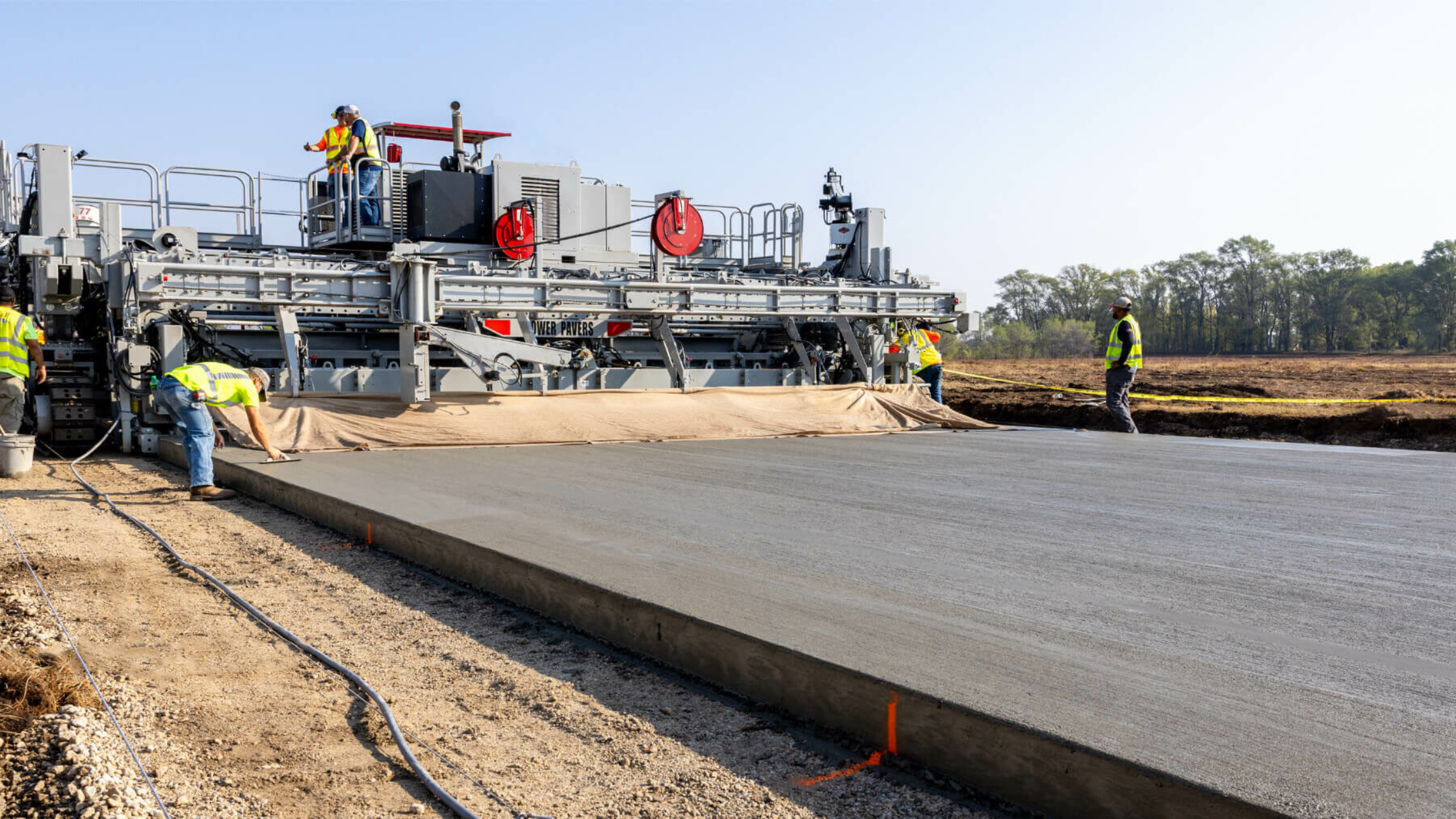
Contractor needs are also shifting as crews face pressure to complete jobs faster while meeting stricter quality standards. Modern paving machines help address both challenges by placing concrete more evenly and reducing the need for manual adjustments during pours. Methods such as slipform paving allow crews to maintain continuous movement without stopping to reset forms, which can make a measurable difference on long roadway projects.
Technology is no longer a bonus feature in paving equipment. It is becoming an expectation.
Many newer machines now include GPS guidance, sensors, and onboard controls that help operators maintain proper depth and slope with greater consistency. The report links this trend to the growth of smart infrastructure projects, which have increased demand for high-precision paving machines. On active job sites, that precision often shows up later through fewer surface issues, smoother inspections, and less rework before project closeout.
Environmental requirements are also shaping purchasing decisions. Public agencies are increasingly prioritizing projects that reduce waste and lower emissions. In response, equipment manufacturers are improving fuel efficiency and designing machines that manage materials more carefully. These updates help contractors meet sustainability requirements without slowing production or adding labor.
Taken together, the report points to a market that is evolving for practical, job-driven reasons. Infrastructure funding remains strong, technology continues to influence workflows, and expectations for finished quality are not easing. What remains less clear is how quickly smaller contractors will be able to adopt newer equipment as these expectations continue to rise.
To stay up to date on industry reports, equipment trends, and what they mean for job sites, subscribe to our newsletter and get the latest updates delivered to your inbox.