

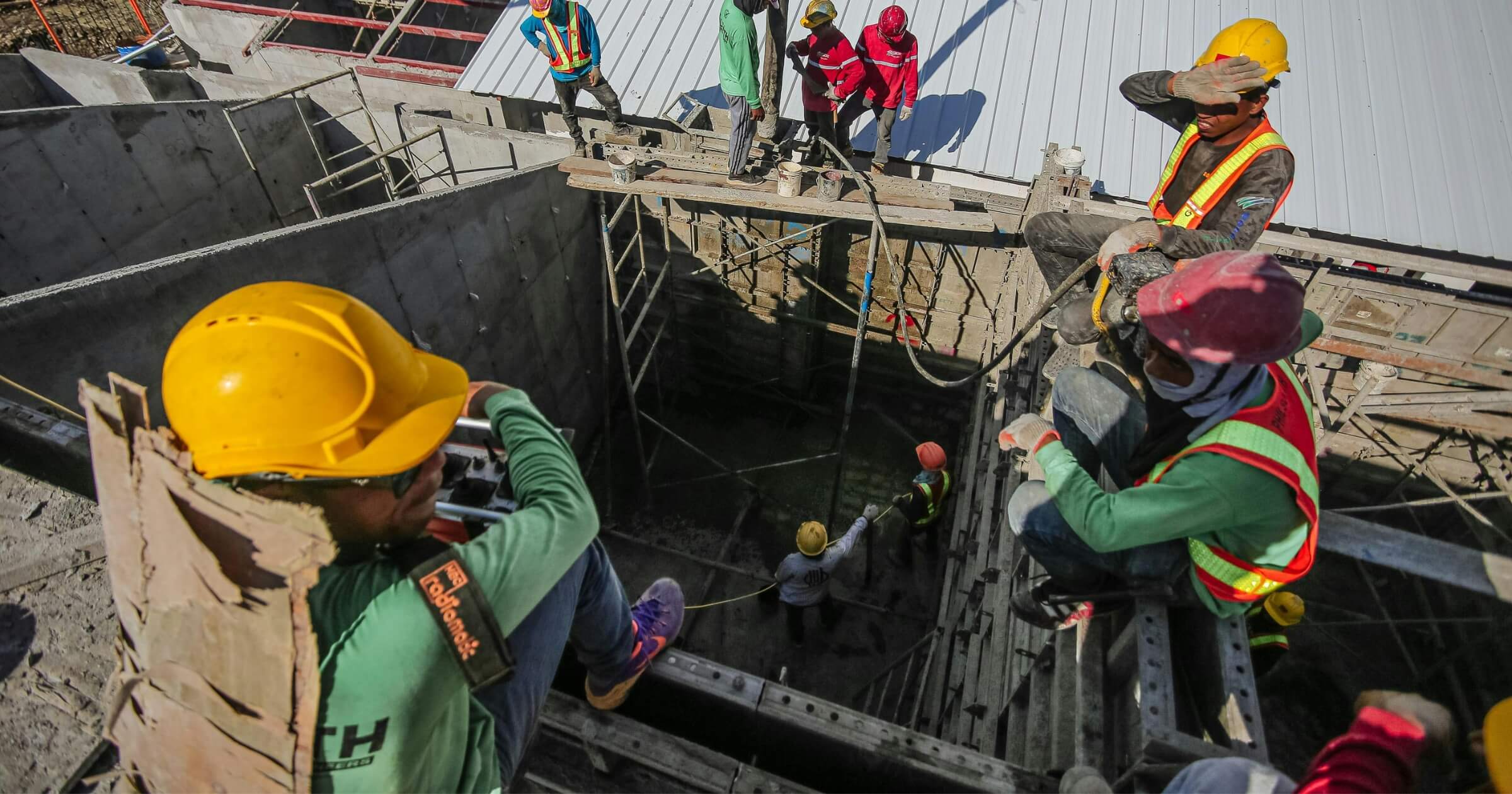
The U.S. construction industry is scrambling to fill nearly 1 million new jobs by the end of 2026 as demand for housing, infrastructure, and data centers surges nationwide. Contractors, educators, and industry groups are working together to recruit more people into the trades so that projects can stay on track and costs don’t skyrocket.
The workforce shortage is a real and growing issue. The industry will need to bring in an estimated 439,000 net new workers in 2025 and around 499,000 in 2026 to meet anticipated demand. Meanwhile, recent data shows that the median annual wage for a construction and extraction occupations worker was about $58,360 in May 2024, which is higher than the national median of $49,500.
Wages are rising, helping the industry sharpen its appeal. For full-time workers in construction and extraction occupations, the average hourly wage in 2023 was about $29.72. For a specific trade, construction laborers and helpers had a median annual salary of about $46,050 in May 2024.
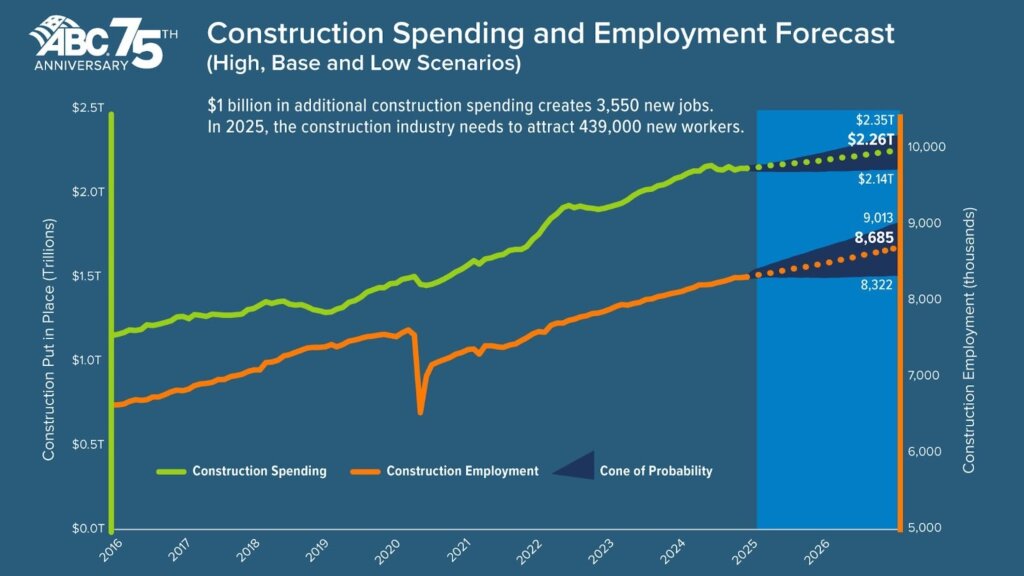
Construction workforce shortage and spending chart courtesy of ABC.
At the same time, schools and training programs are stepping up their outreach. In fact, now is a better time than ever for career-and-technical-education students to enter the construction field, including hands-on trades such as plumbing, carpentry, electrical work, HVAC, and welding.
The “earn-while-you-learn” model of apprenticeships is gaining traction. Many contractors are teaming up with schools, unions, and training centers so younger entrants can secure paid work and on-the-job training simultaneously.
However, changing career perceptions remains a major hurdle. Many young people and their families still believe the only path to good pay is a four-year college degree. The industry is pushing back by showing that construction offers solid wages, job stability, and advancement opportunities without necessarily incurring large student debt.
The requirement to recruit roughly half a million new workers each year is daunting—but the momentum is building. With wages rising, apprenticeships growing, and outreach campaigns gaining visibility, the path into construction is looking stronger than it has in years.
Want to stay updated on construction trends and career insights? Subscribe to our newsletter for monthly updates, job-path features, and industry outlooks.


3 comments