

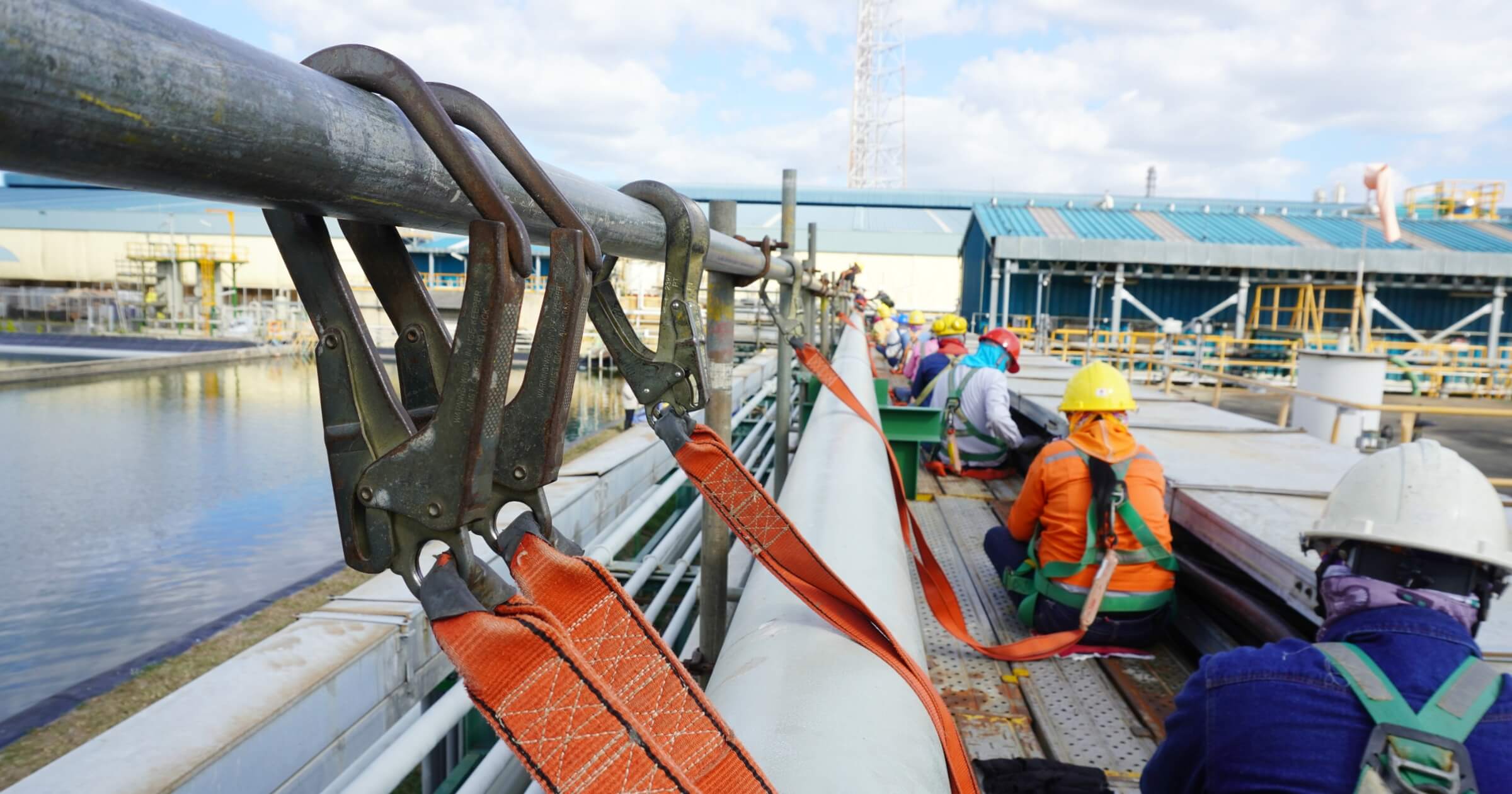
Scaffolds are a common sight on construction projects, but they carry serious risks if fall hazards aren’t managed. The goal of any fall protection program is to keep workers safe by first meeting legal requirements and then adding measures that exceed compliance. In the U.S., the Occupational Safety and Health Administration (OSHA) sets the minimum standards, whereas in Canada, rules are overseen by provincial agencies such as WorkSafeBC or the Canadian Centre for Occupational Health and Safety. Because rules vary by region, contractors and site managers should always verify local requirements before work begins. This article explains the baseline fall protection system requirements for scaffolding and highlights smart upgrades that improve safety and compliance.
Fall protection system requirements (compliance baseline)
Fall protection at 10 feet or higher
OSHA mandates fall protection on scaffolds starting at 10 feet (3.1 meters) above a lower level. This is lower than the 15-foot threshold that applies to steel erection and higher than the 6-foot threshold for general construction work. Scaffold users must be protected by either guardrails, a personal fall arrest system (PFAS), or both, depending on the type of scaffold being used. Ignoring this rule exposes workers to severe risk and puts the company at risk of fines and stop-work orders.
Guardrails or PFAS
On supported scaffolds, guardrails or a PFAS must be in place once the platform exceeds 10 feet. Suspended scaffolds, such as single-point or two-point swings, require both guardrails and a PFAS. Each suspended scaffold must also be tied back or otherwise secured to prevent tipping. Choosing the right system depends on the scaffold design; however, this requirement is not optional.
Guardrail specifications
Guardrails need to meet specific height and strength requirements. The top edge must measure between 38 and 45 inches above the platform, with a midrail installed halfway between the top edge and the platform. The guardrails must withstand at least 200 pounds of force applied in any direction. Every open side and end of the scaffold must be guarded, and toe boards are required where falling objects could strike workers below.
Access to platforms
Safe access to scaffold platforms must be provided through ladders, stair towers, or ramps. Workers should never climb scaffold cross-braces to reach a platform, as this is both unsafe and a direct violation of OSHA standards. Access systems must be stable, secured, and able to handle the expected load.
Many contractors don’t realize how much time is wasted when crews take shortcuts to get on a scaffold. Improvised access points slow the job down and create unnecessary risks. Setting up ladders or stair towers from the start reduces fall hazards and maintains steady, organized movement on the platform. Investing in modular stair towers or secured ladders pays off in both safety and productivity because workers can move tools and materials with less risk of slips or dropped objects.
Scaffold inspection requirements
A competent person must inspect each scaffold before every work shift and after any incident that could affect stability, such as high winds, impacts, or modifications. This inspection covers the structural integrity, planking, guardrails, and anchorage. If issues are found, the scaffold must be taken out of service until the problems are corrected.
Many accidents stem from simple oversights, such as unsecured planks or uneven ground beneath the scaffold. Using a written inspection checklist ensures nothing gets overlooked during scaffold checks. Many crews now use digital apps that record timestamps and can quickly share results with supervisors or safety managers. Maintaining consistent inspections is one of the simplest and most effective ways to prevent accidents on site.
If you’re looking to inspect scaffolding soon and want a simple guide, our scaffold fall protection checklist will help you get started.
To learn more about what’s needed in a safety checklist, visit the OSHA website.
Recommended practices beyond the minimum
Full toe boards, debris nets, and tool lanyards
Busy job sites increase the risk of tools or materials falling from platforms. Installing full toe boards on every edge, adding debris nets, and requiring tool lanyards reduce that hazard. These upgrades go beyond the minimum OSHA rules and provide peace of mind for crews working underneath scaffolds.
Pre-plan rescue and retrieval
Even with solid fall protection systems, a worker may still require rescue after a fall. Every site should have a written rescue and retrieval plan that is specific to the scaffolds in use. This plan identifies the available equipment, assigns roles, and establishes a practice drill schedule. Without prior planning, rescue operations can be delayed, thereby increasing the risk of injury and harm.
Weather and power line limits
Wind, ice, and storms can quickly turn scaffolds unsafe. Set clear thresholds for stopping work, such as maximum wind speeds or temperature conditions, and stick to them. Scaffolds near power lines require special clearance and may need insulating barriers. Site supervisors should monitor weather and electrical hazards daily, not just at the start of a project.
Keep platforms clear and within load ratings
Platforms should never be used for storage beyond the materials needed for the immediate task. Excess clutter increases trip hazards and may overload the planks. Each scaffold has a manufacturer’s load rating, and exceeding it risks collapse. Supervisors should enforce a “clear deck” policy and verify that only necessary tools and materials are on the platform.
Training and documentation
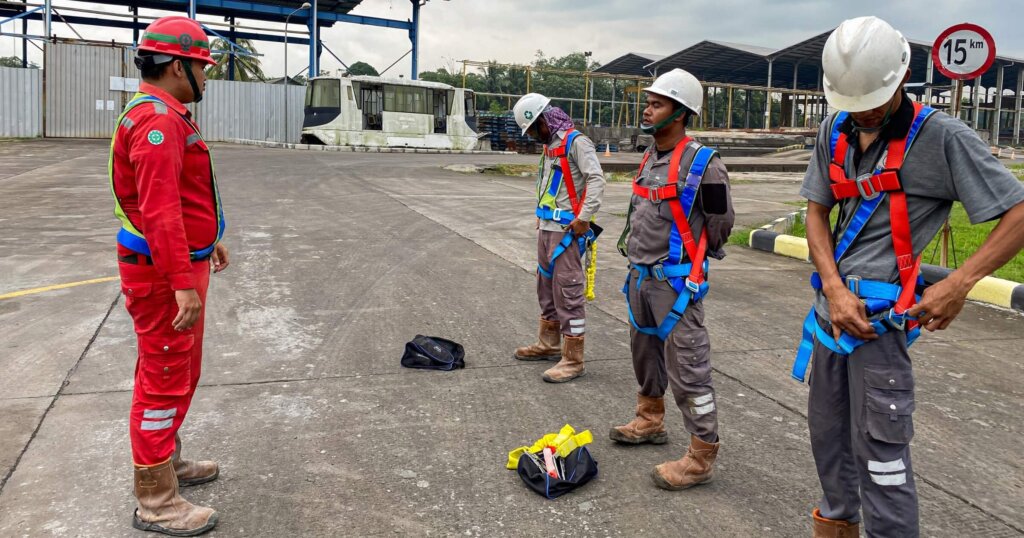
Fall protection training in session. Photo courtesy of https://www.shutterstock.com/
Everyone working on scaffolds requires proper training to identify fall hazards and use fall protection equipment correctly. This training should adhere to OSHA regulations and the equipment manufacturer’s instructions. Whenever the scaffold setup changes, or after a near-miss or incident, workers should undergo retraining to refresh their skills.
Hands-on practice is crucial. Workers should climb and secure themselves under supervision so they can handle real-life situations, such as attaching a lanyard correctly or recognizing when a guardrail is unsafe. Including supervisors in the training helps ensure rules are applied consistently across all crews and shifts.
Keeping thorough records is just as important as training itself. Inspection logs, scaffold tags, and training documentation should be stored on-site and easily accessible. These records demonstrate that safety is being actively managed and can protect the company in the event of questions arising after an incident.
Key takeaways
Meeting fall protection system requirements on scaffolds is about more than just avoiding fines; it keeps workers safe and projects moving. The OSHA minimums—10-foot fall protection, guardrails or PFAS, safe access, and regular inspections—set the baseline. Adding debris nets, tool lanyards, rescue plans, weather protocols, and clear platform rules enhances safety and facilitates compliance management.
If you want to go further, explore related articles on fall protection measures for roofing injuries, common fall protection mistakes, why falls remain the top hazard, and workplace injury prevention strategies.
For more articles on construction safety and jobsite requirements, join the Under the Hardhat newsletter. It’s a practical way to stay updated on fall protection system requirements and other safety measures that impact your projects daily.


3 comments