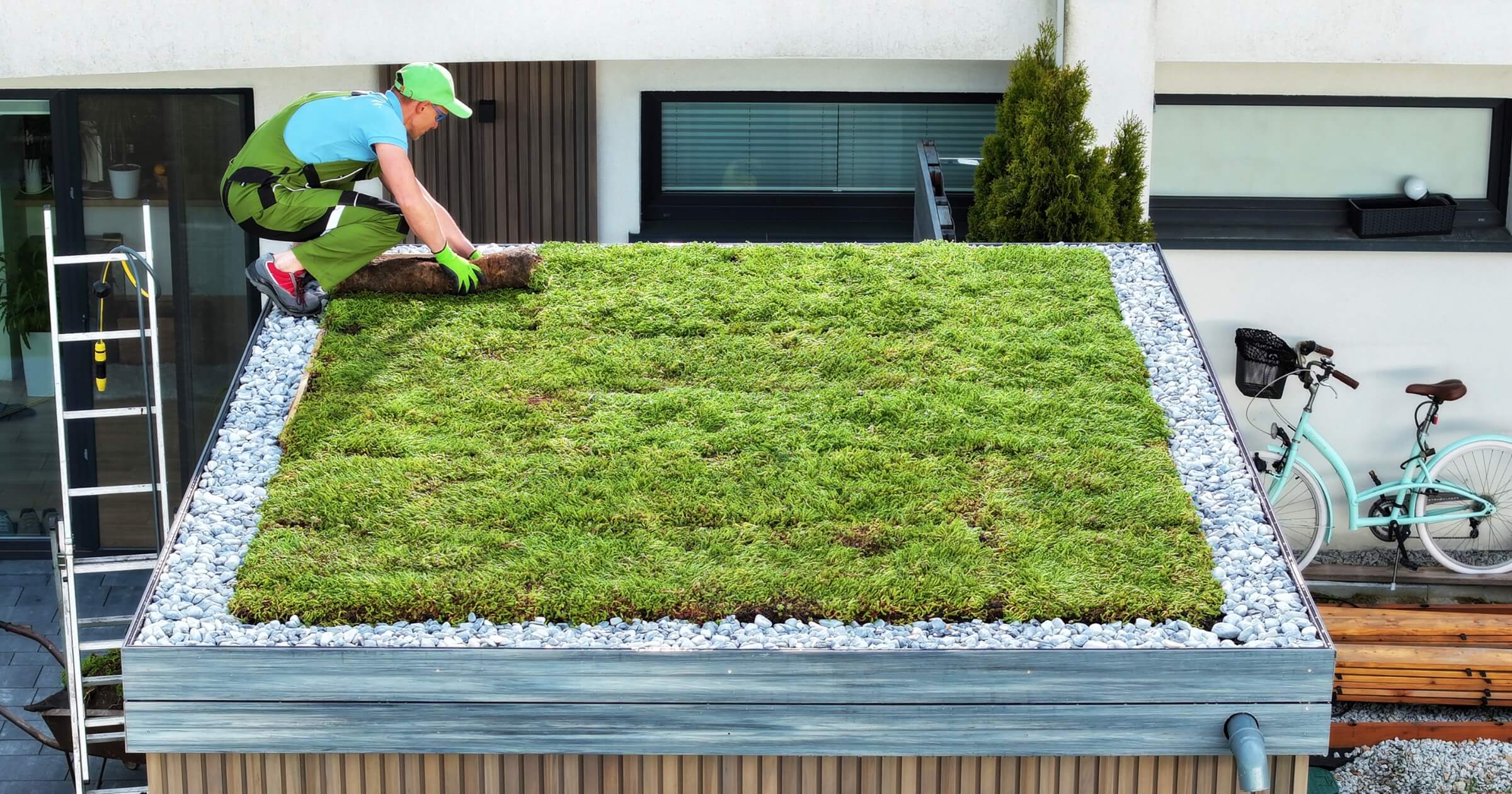
Green roof companies have moved from niche suppliers to everyday partners on commercial, institutional, and even industrial projects. If you’re planning a green roof or amenity deck, you’re not just picking plants—you’re choosing a system that affects structure, waterproofing, maintenance budgets, and tenant appeal. The U.S. green roof market is growing rapidly, with more contractors seeking reliable green roof installation companies that can provide technical support and attractive roofs. In this guide, we’ll look at where the industry is heading, then walk through 10 U.S.-based firms, from small specialty shops to national leaders. Names you’ll see include Hanging Gardens, Recover Green Roofs, Columbia Green Technologies, and American Hydrotech.
The green roof industry
Green roofs have shifted from “nice to have” features to practical infrastructure for stormwater management, urban heat mitigation, and tenant amenities. Market analysts expect the U.S. green roof market to reach about US$678.6 million by 2030, growing at a roughly 18.7% CAGR between 2025 and 2030. Globally, green roofs were valued at around US$2.66 billion in 2024, with forecasts pointing to US$4.75 billion by 2032, at an annual growth rate of about 17%. That kind of climb shows up on the ground: municipal incentive programs, LEED targets, WELL certifications, and corporate ESG reporting all now point design teams toward vegetated roofs and podium decks.
One recent market review estimates that the United States accounts for about 19% of global green roof installations, led by cities such as Chicago, Washington, D.C., and San Francisco, with roughly 48 million square feet of green roofing already in place and over 11 million square feet of new systems installed in 2023. These roofs aren’t just marketing pieces; performance studies have documented improved stormwater retention, lower roof-surface temperatures, increased PV yield when solar is combined with vegetation, and even higher rental revenue than comparable buildings with conventional roofs. As a result, more owners now view green roofs as infrastructure assets with measurable payback, not just an architectural flourish.
The best green roof companies to hire in the U.S.
9. Hanging Gardens (Milwaukee, Wisconsin)
- Market cap/revenue: Private; small multi-million-dollar revenue
- Employees: 6–20 (small specialist team)
- CEO: Anthony Mayer (founder)
- Founded: 2009
Hanging Gardens is a Milwaukee-based stormwater and green roof supplier that focuses on giving small- and mid-size projects the same technical attention as flagship roofs. Early coverage put the firm at just six full-time employees, yet it had an outsized catalog—hundreds of SKUs spanning pavers, roof membranes, drainage mats, plants, and stormwater products for architects and contractors.
Their bread and butter is helping project teams in older Great Lakes cities retrofit roofs and terraces for detention and amenity use, often in areas with combined sewers and aging infrastructure, where runoff is a headache. For contractors, Hanging Gardens is a good fit when you want a nimble partner who can quickly pull together vegetated roof assemblies, blue-green roof strategies, and matching paver systems without getting lost in big-company bureaucracy.
8. Omni Ecosystems (Chicago, Illinois)
- Market cap/revenue: Estimated US$5–10 million annually
- Employees: 20–25
- CEO: Molly Meyer (founder and CEO)
- Founded: 2009–2010
Omni Ecosystems describes its mission as “democratizing nature,” and it backs that up with deep technical work on lightweight, high-performance soil systems and “working landscapes” that include rooftop farms. Founder and CEO Molly Meyer learned green roof design in Germany before relocating to Chicago, where the company now designs and builds green roofs, podium landscapes, and urban agriculture projects.
Omni’s team has roughly two dozen staff members with revenue in the mid-single-digit millions, putting them in a sweet spot for complex yet still hands-on projects. Contractors and owners who want food-producing roofs, pollinator-friendly planting, or deeper soils for shrubs and small trees tend to gravitate toward Omni, especially in the Midwest and on the East Coast.
7. Roofmeadow/Roofmeadow Services (Philadelphia, Pennsylvania)
- Market cap/revenue: Estimated US$6–7 million annually for Roofmeadow; ~US$3–4 million for Roofmeadow Services
- Employees: 20–25 across design and services entities
- CEO: Studio Sustena (formerly Roofmeadow) is now led by a broader leadership team; the founder and long-time president is Charlie Miller, P.E.
- Founded: 1997 (originally as Roofscapes, Inc.)
Roofmeadow is one of the original North American green roof companies and has had an outsized influence on the industry. Charlie Miller founded Roofscapes—now Roofmeadow and Studio Sustena—in 1997 to bring German-style green roofs to U.S. stormwater management practice, later helping author several ASTM green roof standards. The firm’s project list includes the Chicago City Hall green roof and numerous Philadelphia installations tied to the city’s Green City, Clean Waters program.
Roofmeadow Services, spun out in 2014, focuses on construction, long-term maintenance, and remediation of existing green roofs—a combination that appeals to contractors who want a single design partner involved from layout through stewardship.
6. Recover Green Roofs (Somerville/Boston, Massachusetts)
- Market cap/revenue: Estimated US$100,000–5 million annually
- Employees: 25–100, small-to-mid-sized design-build team
- CEO: Mark Winterer (co-founder and owner)
- Founded: 2009
Recover Green Roofs is a New England design-build firm specializing in green roofs, rooftop farms, amenity decks, and intensive rooftop landscapes. Co-founder Mark Winterer has become a familiar name in the Boston sustainability scene; Recover’s portfolio includes work at Fenway Park, the Prudential Center, and the Amherst College Science Center, where Recover installed over 17,000 sedum plugs across the roof.
Compared with pure manufacturers, Recover is very hands-on: they handle design, installation, and maintenance, often partnering with Roofmeadow and Hydrotech on complex assemblies. For general contractors and CMs in the Northeast, Recover is a strong option when you want a single point of contact who can price, build, and keep the roof alive over time.
5. Xero Flor America (Durham, North Carolina)
- Market cap/revenue: About US$6.9 million annual revenue
- Employees: 18
- CEO: Leadership not widely public; company operates as Xero Flor America LLC
- Founded: 2002
Xero Flor America is the official U.S. distributor of the German Xero Flor pre-vegetated mat system, headquartered in Durham, North Carolina. Pre-grown mats give installers an advantage: contractors crane up a carpet of vegetation rather than individual trays or plugs, which cuts installation time and reduces the “bare” period after completion.
The company’s mats are grown on regional farms, branded as 100% American-made, and have been used on high-profile roofs, including the Empire State Building. For design teams, Xero Flor is a good fit when wind uplift, thin build-ups, or fast turnarounds are driving the spec; for contractors, the mat format can simplify labor planning, especially on large, flat roofs.
4. Columbia Green Technologies (Portland, Oregon)
- Market cap/revenue: Estimated US$5–9 million annually
- Employees: 23–27
- CEO: Vanessa Keitges (President and CEO)
- Founded: 2006
Columbia Green Technologies is a widely recognized supplier of layered and tray-based green roof systems, amenity decks, and blue-green roofs. The company has supplied systems to Amazon’s downtown Seattle headquarters, where green roofs capture stormwater and tie into on-site reuse systems, and to the Perch at Capital One Center, among many other mixed-use and office projects.
Columbia Green actively markets to architects and developers seeking amenity decks that feel like small parks, with pavers, planters, and seating integrated into a single package. For contractors, their draw is a tested set of assemblies and strong technical documentation, which makes coordination with waterproofing trades a little less painful on tight schedules.
3. Greenrise Technologies (Nashville, Tennessee)
- Market cap/revenue: Estimated US$37.9 million annually
- Employees: 160+
- CEO: James Marshall
- Founded: 2007
Greenrise Technologies positions itself as a full green infrastructure provider, with engineered systems for green roofs, stormwater detention, bio-retention cells, and rainwater harvesting. With roughly 160 employees and nearly US$38 million in estimated annual revenue, it’s one of the larger dedicated green roof companies in the U.S.
Greenrise focuses heavily on code compliance—erosion and sediment control, nutrient management, and permit documentation—so civil engineers and public-sector owners tend to bring them in early. On the contracting side, they’re often seen on large institutional and healthcare projects, where the vegetated roof is tightly tied to stormwater credits and local regulations.
2. LiveRoof Global/LiveRoof, LLC (Spring Lake / Nunica, Michigan)
- Market cap/revenue: Estimated US$3–25 million annually across LiveRoof entities (Datanyze)
- Employees: 50
- CEO: Dave MacKenzie (founder, owner, and president)
- Founded: 2006
LiveRoof is a Michigan-based supplier whose “hybrid green roof” modules come pre-grown and designed to knit together into a continuous layer of vegetation. The company grew out of Hortech, a perennial grower, with founder Dave MacKenzie applying decades of plant expertise to roof systems. LiveRoof’s projects range from schools and civic buildings to major healthcare facilities, including a 13,192-square-meter green roof installation at Humber River Hospital in Toronto—one of the largest LiveRoof projects worldwide.
The system appeals to contractors who want predictable logistics (modules are craned and set like pavers) and to owners who care about long-term performance; LiveRoof’s own data highlights extended roof life and energy savings that can reach roughly 25% on heating and cooling.
1. American Hydrotech (Chicago, Illinois; now part of Sika)
- Market cap/revenue: About US$131.8 million annually
- Employees: 115
- CEO: Now integrated into Sika’s North American roofing and waterproofing division; leadership is part of Sika Corporation.
- Founded: 1977
American Hydrotech started as a waterproofing company in 1977 and became one of the earliest promoters of green roofs in North America through its Garden Roof® Assembly. The firm, headquartered in Chicago, has supplied membranes and vegetated roof assemblies for more than 2 billion square feet of installations globally, and it has been recognized as a North American market leader in green and garden roofs.
In 2021, Sika acquired American Hydrotech and, by 2025, fully integrated it into its roofing and waterproofing division, giving the Garden Roof system access to Sika’s manufacturing and technical network. For architects, engineers, and contractors, Hydrotech is often the go-to when large civic or cultural projects demand proven waterproofing under complex, intensive roofs—think museums, hospitals, and high-profile plazas with slopes, deep soils, and heavy public use.
Hydrotech sits at the top of this list not just for revenue, but also because many smaller green roof installation companies on this list—Recover, Roofmeadow, Omni, and others—regularly work with Hydrotech membranes and assemblies on marquee jobs.
How to use this list on your next project
From small stormwater retrofits to stadium-sized amenity decks, the U.S. has a healthy bench of green roof installation companies and system providers. Smaller firms like Hanging Gardens, Omni Ecosystems, and Recover Green Roofs can give you tight coordination, detailed shop drawings, and hands-on site support. Mid-sized players like Roofmeadow, Xero Flor America, and Columbia Green Technologies bring a long track record and proven systems that keep plan reviewers and insurers comfortable. At the top end, Greenrise, LiveRoof, and American Hydrotech operate at a scale that suits airports, hospitals, higher-ed campuses, and multi-tower urban developments.
For architects, general contractors, and engineers reading this, the takeaway is simple: these green roof companies are no longer fringe suppliers. They’re doing real structural coordination, stormwater modeling, and long-term maintenance planning alongside you.
If you want to keep up with where this part of the industry is headed, subscribe to our newsletter at Under the Hard Hat for more deep dives into construction, design, and building performance.