

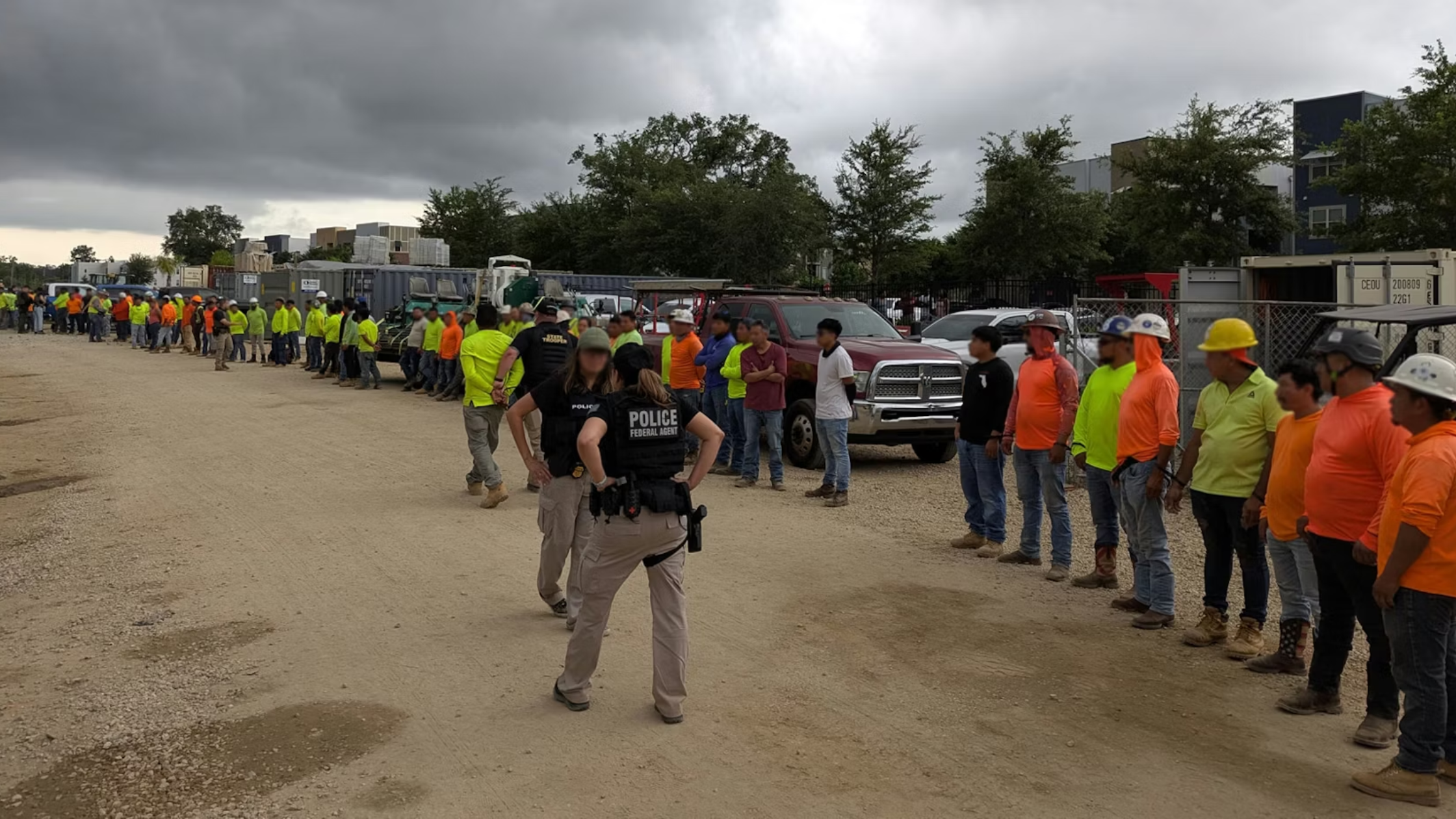
Under the Trump Administration, the Immigration and Customs Enforcement (ICE) program has become a growing threat to the construction industry. Because of the low educational barrier to entry and the mostly physical nature of blue-collar work, many immigrants turn to AEC spaces for work and a first chance at American life. But as ICE raids ramp up with seemingly no rhyme or reason for arrests, many businesses are losing workers in droves.
The ICE program, according to President Trump and top officials, was set to target gangs, murderers, and rapists. However, more than one-third of the 220,000 people arrested by ICE in the first 9 months of this year have had no criminal background, according to an internal ICE office that handles deportation data.
The fallout from the ICE raids has not only torn apart countless families but also widened the gap in an already chronic construction labor shortage. Recent numbers show the industry has a shortage of almost 440,000 workers, and the immigrants who already make up a considerable share of the workforce are now at risk.
How ICE slows project progress
According to Reuters interviews, growing ICE raid crackdowns are causing lengthy disruptions to construction across the country. The threats, arrests, and reported sightings are influencing workers to stay at home and stay safe with their families. In many instances, entire crews are off-site, with some failing to show up for days or weeks at a time.
Without skilled and unskilled laborers on the job, project timelines are pushed back. This means even integral infrastructure projects have come to a halt, putting increasing pressure on builders to move things forward at more than a snail’s pace.
Steps contractors can take
While ICE officers have proven countless times that they arrest without cause, companies can still take precautions to protect their workers. The first step, of course, is to audit themselves and ensure employment verification and I-9 processes have been properly adhered to. Supervisors, leadership, and upper management should also be well-informed of the law and ready to step in should ICE agents arrive on site.
Even then, raids and arrests may happen. In these cases, companies will lose time and money that has been pre-allocated months in advance. The next best thing would be to have alternative labor they can call in a pinch to help them avoid potential fines and penalties under their contracts.
In the meantime, construction businesses are encouraged to leverage local industry groups and quickly source additional, less vulnerable workers. If relationships between local construction businesses and industry groups have been pre-established, the association, labor union, or merit group can help facilitate additional skilled laborers that many projects desperately need.
There’s no telling quite yet when the ICE officers will slow their pace or lighten the frequency of raids and arrests. So it’s better to play it safe, build industry relationships, and cross-check employee verification standards before that moment comes.
Like this and want more? Subscribe to our newsletter and follow us on LinkedIn to stay up to date with AEC news.

