
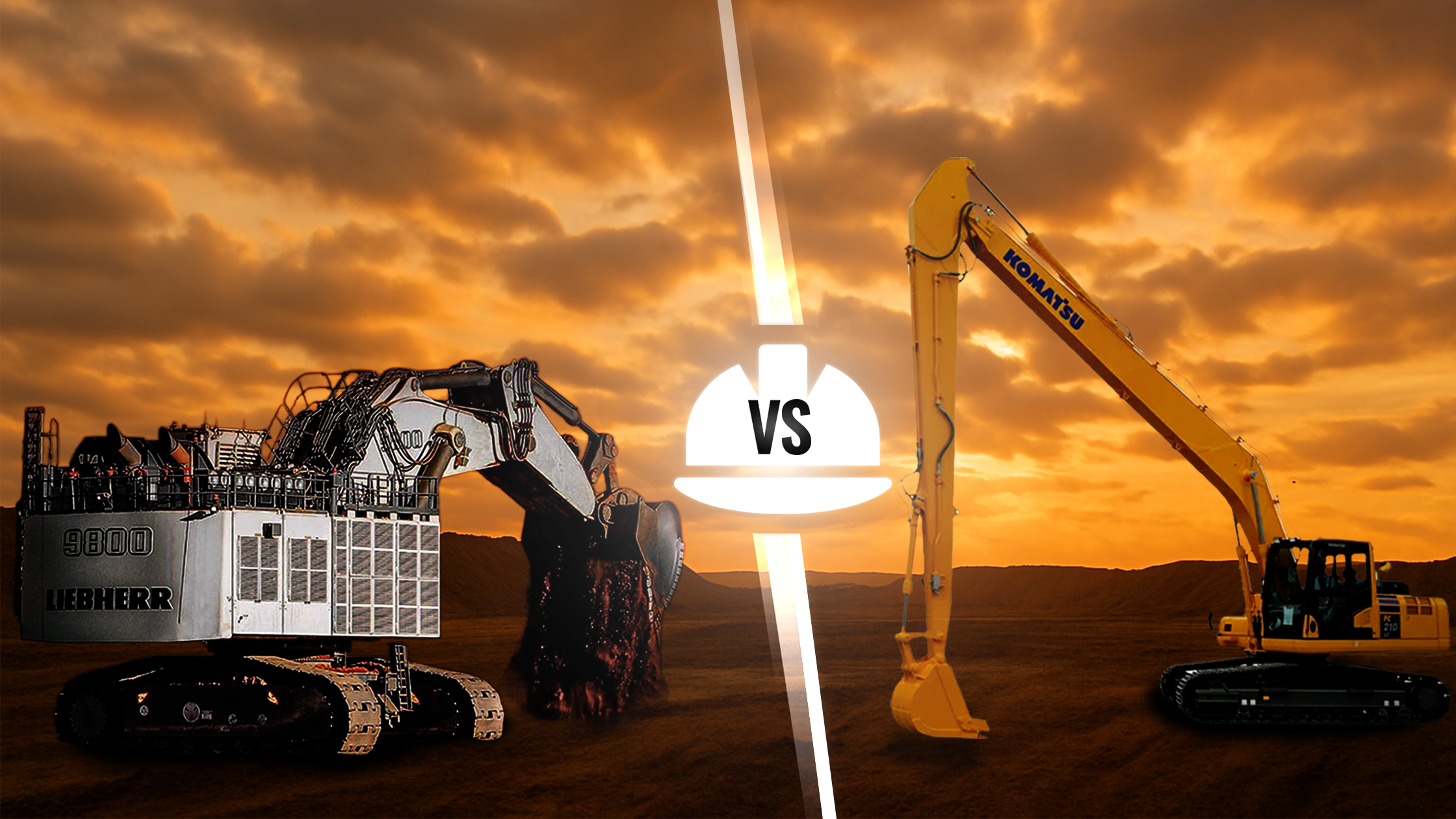
If you work in construction, mining, or heavy lifting, two names you’ve likely come across are Liebherr and Komatsu. Both are giants in the heavy equipment world, supplying everything from excavators to mining trucks. Choosing between them isn’t just about specs on paper—it’s about which machines perform best under pressure, hold their value, and fit the way you work. This comparison of Liebherr vs Komatsu is designed for contractors, equipment managers, and trades professionals who are trying to decide where to invest. We’ll look at their history, best-selling machines, price points, and features before giving a final verdict on which brand might serve you better.
Overview of each heavy equipment brand: Komatsu vs Liebherr
Komatsu in a nutshell
Komatsu was founded in 1921 in Komatsu City, Japan, originally as a mining equipment manufacturer. Over the last century, it has evolved into the world’s second-largest construction equipment company, trailing only Caterpillar. Komatsu has a significant presence in North America, South America, Europe, and Asia, with equipment plants and dealers spread worldwide.
Its product line is broad, covering excavators, bulldozers, wheel loaders, motor graders, mining trucks, and underground equipment. Komatsu is known for strong support networks and dealer services, which are major factors for buyers who want reliable parts availability. In recent decades, Komatsu has invested considerable effort in developing hybrid and fuel-efficient machinery, including hybrid excavators that reduce fuel consumption on large job sites. For many mid-size contractors in the US, Komatsu represents a dependable alternative to Caterpillar with a reputation for steady performance and competitive pricing.
Liebherr in a nutshell
Liebherr began in 1949 in Kirchdorf, Germany, when Hans Liebherr designed a tower crane to aid in the postwar reconstruction of Europe. Unlike Komatsu, which is a public corporation, Liebherr remains privately owned by the Liebherr family. That independence has given it a reputation for long-term thinking and engineering precision.
Today, Liebherr has over 50,000 employees worldwide and produces a wide range of heavy equipment. While cranes remain its signature product, the company also builds mining trucks, hydraulic excavators, wheel loaders, and specialized deep foundation machines. Liebherr has a strong presence in Europe, the Middle East, and parts of Africa, but its cranes and mining equipment are also widely used in the Americas. Many contractors choose Liebherr for its engineering detail, operator comfort, and equipment longevity. The company’s commitment to in-house manufacturing—building engines, hydraulics, and electronics themselves instead of outsourcing—also sets them apart.
Quick look comparison: Liebherr vs Komatsu
| Komatsu | Liebherr | |
| Founded | 1921, Japan | 1949, Germany |
| Core products | Excavators, bulldozers, wheel loaders, mining trucks | Cranes, mining trucks, hydraulic excavators, wheel loaders |
| Strengths | Strong dealer network in the US, competitive pricing, hybrid/fuel-efficient options | Premium durability, operator comfort, long-term resale value |
| Best sellers | D65/D85 dozers, PC series excavators, haul trucks | All-terrain & crawler cranes, mining trucks, large excavators |
| Price point | Generally lower upfront cost, easier parts access | Higher upfront cost, strong resale, longevity |
| Customer fit | Mid-size contractors, roadwork, general construction | Large-scale projects, cranes, mining, long-term investments |
Offerings comparison: How do Liebherr and Komatsu compare?
Komatsu heavy machines
Komatsu’s best-selling machines include hydraulic excavators and bulldozers, which have become staples across construction and infrastructure projects in the United States. The company’s mid-size and large excavators, like the PC210 and PC360 series, are popular with contractors because they offer steady fuel performance, smart hydraulics, and operator-friendly controls that make long shifts easier.
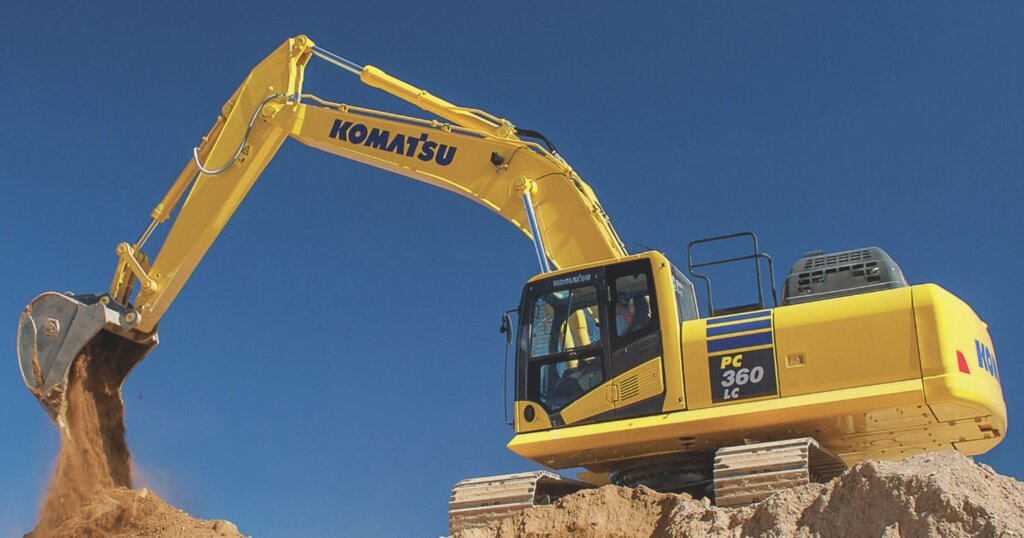
Photo of PC360LC-11 Komatsu excavator. Courtesy of https://www.komatsu.com/
For earthmoving and grading, Komatsu’s D65 and D85 bulldozers are frequently chosen for roadbuilding and land clearing jobs. These models strike a sweet spot between power and maneuverability, enabling crews to push heavy loads while working efficiently on tighter job sites.
Beyond construction, Komatsu has also built a strong presence in mining with its line of haul trucks, which are among the largest in the world. Models such as the 930E and 980E are common on mine sites in North and South America, where their payload capacity and reliability make them direct competitors to Caterpillar.
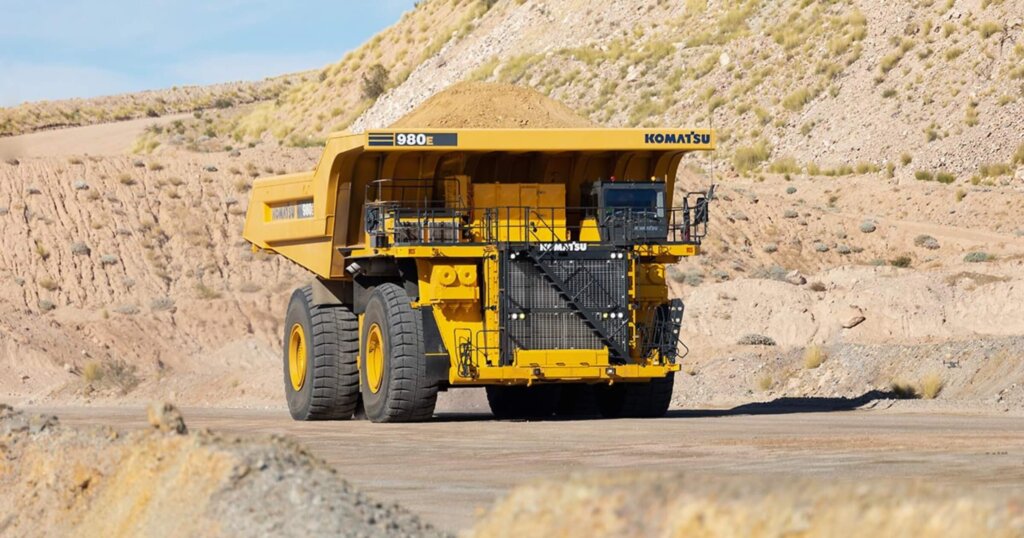
Image of 980E-5 Electric drive mining truck from Komatsu. Courtesy of https://www.komatsu.com/
Liebherr heavy machines
Liebherr, on the other hand, has carved out a reputation for excellence in cranes and large-scale earthmoving machinery. Its all-terrain cranes are widely used in high-rise construction, where mobility and lifting power need to go hand in hand, and its crawler cranes remain a top choice for projects that demand stability and strength—everything from bridge building to offshore wind installations. In the mining sector, Liebherr haul trucks and massive hydraulic excavators, like the R 9800, are built to withstand some of the harshest conditions on earth.
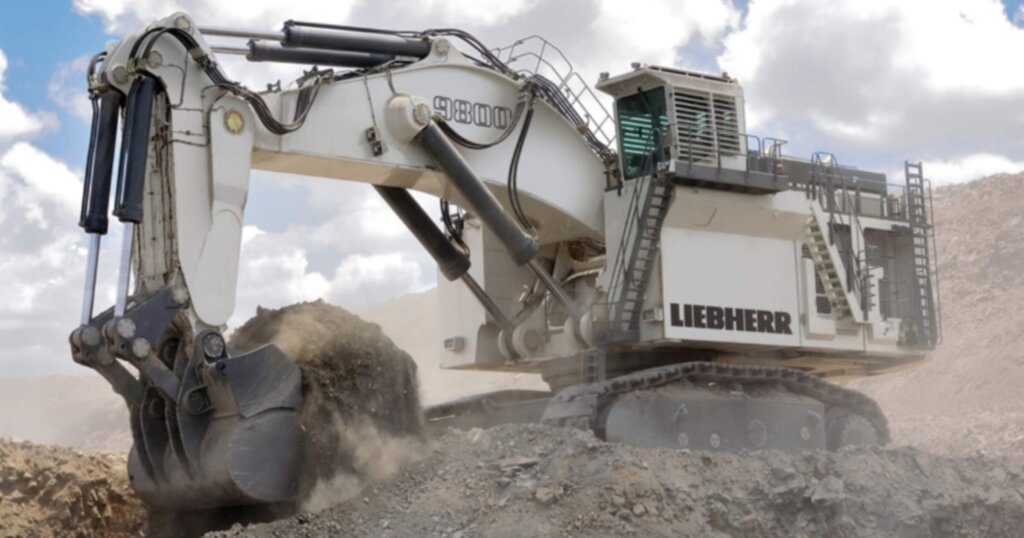
Photo of Liebherr R 9800 G6 in a minig operation. Courtesy of https://www.liebherr.com/
These machines are known for their durability, fuel economy, and ability to perform under extreme loads. Liebherr’s wheel loaders are another standout, especially in European quarries and aggregate operations. Contractors rely on their longevity and rugged build to keep material moving day after day without a lot of downtime.
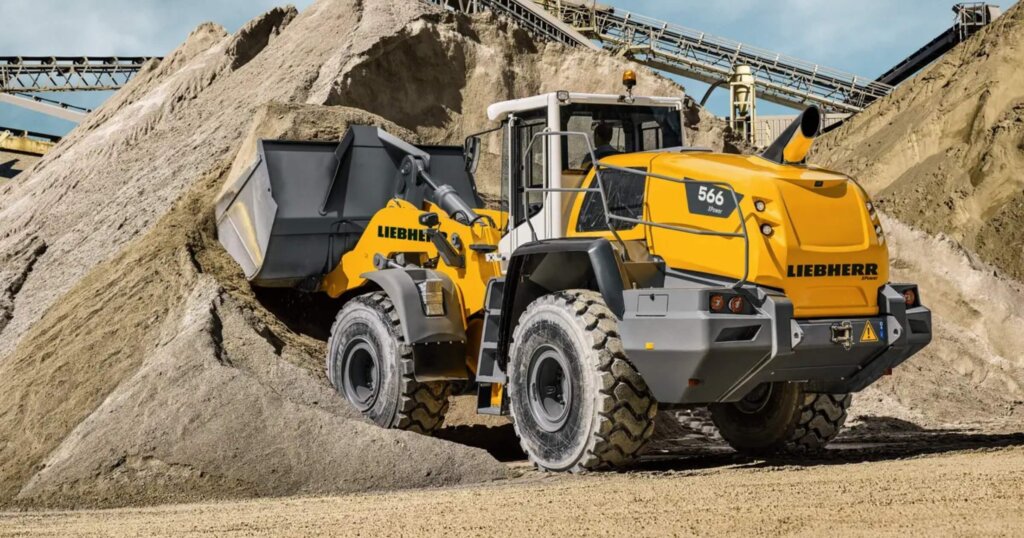
Liebherr 566 Wheel loader in a mining operation. Courtesy of https://www.liebherr.com/
When you put the two side by side, the distinction becomes clearer. Komatsu has a stronghold on everyday heavy machinery, particularly dozers and excavators that appear on nearly every infrastructure site in America. Liebherr excels in specialized equipment, including cranes, large-scale mining gear, and high-capacity loaders, where performance and durability take precedence over the need for lower upfront costs.
Price and value: Which brand gives more bang for your buck?
Comparing prices between Komatsu and Liebherr can be challenging due to differences in regional markets, dealer networks, and available financing options. Generally, Komatsu equipment comes in at a lower starting price compared to Liebherr, particularly for excavators and bulldozers. Many contractors in North America choose Komatsu because the cost-to-performance ratio is well-suited for mid-sized construction firms.
However, Liebherr machines often command higher resale value, especially in cranes and mining trucks. Contractors who invest in Liebherr frequently cite durability as the reason—machines often last decades with proper maintenance. A crane or loader from Liebherr might cost more upfront, but it can outlast cheaper equipment by many years, saving money in the long run.
Operating costs also come into play. Komatsu has invested heavily in hybrid excavators and fuel-efficient engines, giving them an edge on sites where fuel costs are a concern. Liebherr, meanwhile, focuses on premium components and comfort features, which can result in higher maintenance costs but also lead to better uptime and operator satisfaction.
On forums like Heavy Equipment Forums, users often note that Komatsu parts and servicing are easier to access in the US compared to those of Liebherr, which sometimes have longer wait times. This makes Komatsu the more practical choice for contractors who can’t afford downtime, while Liebherr appeals to buyers focused on long-term reliability and performance.
Features and accessories: What extra features do they offer?
Komatsu has made headlines in recent years with its hybrid excavators, which pair a diesel engine with an electric swing motor to cut down on fuel use and emissions. These machines are designed to deliver the same digging power as their standard counterparts while reducing fuel consumption by up to 20 percent—a significant savings for contractors operating machines daily.
Another impressive feature is KOMTRAX, Komatsu’s telematics system, which gives owners and fleet managers access to real-time data on equipment location, usage hours, and maintenance needs. Managers can now spot potential problems early, reduce idle time, and schedule service before breakdowns occur. For companies operating large fleets across multiple sites, this type of data tracking directly translates into longer machine life and reduced operating costs.
Liebherr approaches technology from a different angle, often prioritizing operator comfort and machine customization. Many of its excavators and cranes are equipped with large, air-conditioned cabs, ergonomic joystick controls, and panoramic visibility to reduce fatigue during long shifts. Operators frequently point out that Liebherr’s cabins feel more like truck interiors than those of construction equipment, which makes a difference on projects that require 10–12 hours of seat time.
Liebherr’s vertical integration is also noteworthy: the company designs and manufactures its own engines, hydraulics, and drive components. This enables the parts to work together seamlessly without relying on third-party suppliers, which can enhance reliability and simplify servicing. Liebherr cranes also feature advanced options, such as VarioBase, a system that allows operators to adjust each outrigger independently. On crowded or uneven job sites, this feature provides more stability and flexibility, giving crews the ability to safely lift heavier loads in conditions that would sideline other machines.
Which heavy equipment brand should you buy?
So, when it comes to Liebherr vs Komatsu, which one makes better heavy equipment? The answer depends on the type of work you do.
- If you’re a contractor in the US working on infrastructure, road building, or general construction, Komatsu is often the more practical option. It’s easier to source parts, dealer support is strong, and the machines balance cost with performance.
- If your projects involve cranes, mining, or specialized large-scale lifting, Liebherr is hard to beat. Their machines last decades, hold strong resale value, and offer engineering features that competitors struggle to match.
In short, Komatsu makes sense for day-to-day construction work where cost and uptime matter most, while Liebherr shines in specialized heavy lifting and high-capacity applications. Both brands build world-class machines, but the best choice depends on your work environment, budget, and long-term goals.
For construction managers weighing big investments, the decision might even come down to mixing both: Komatsu for your fleet of excavators and dozers, Liebherr for cranes and mining-scale gear.
Final thoughts
The debate of Liebherr vs Komatsu isn’t about who makes better machines across the board—it’s about fit. Komatsu gives contractors dependable, widely supported equipment at a competitive price, while Liebherr offers premium durability and specialized solutions for large-scale projects. Both have their place on job sites worldwide.
If you’re deciding which brand to go with, think about what matters most for your business: upfront price, dealer support, or long-term durability. Contractors who use both often say the two brands complement each other, filling different needs in the fleet.
Want more comparisons and construction insights like this? Check out our related articles on how to become a heavy equipment operator and anti-theft devices for heavy equipment. And if you’d like to stay updated on tools, trends, and guides for construction professionals, sign up for our newsletter.